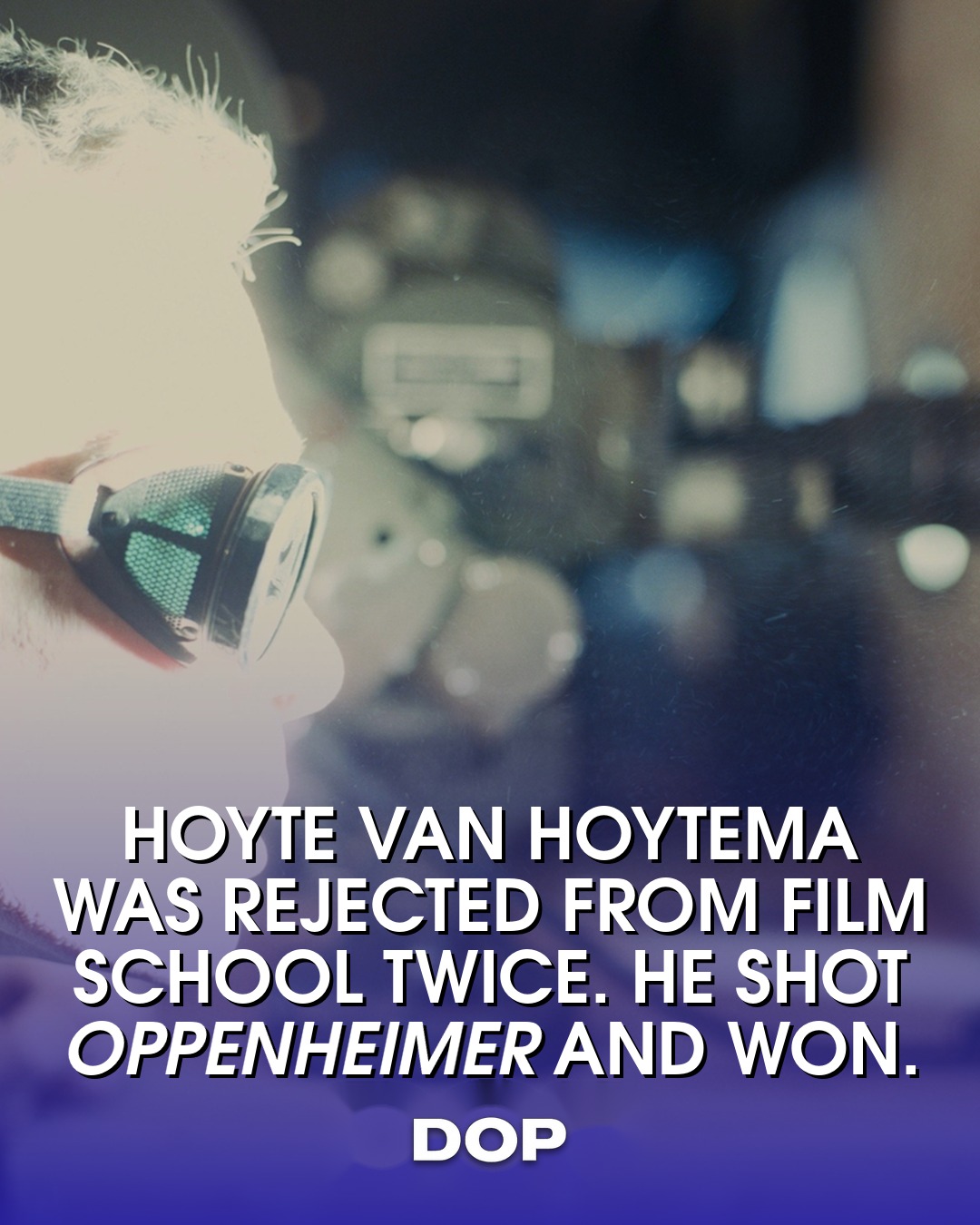
The journey of Hoyte van Hoytema, the Dutch maestro behind the lens, is a testament to perseverance and the transformative power of a ‘detour.’ Twice rejected by the Netherlands Film Academy, van Hoytema’s path led him to the esteemed Lodz Film School in Poland. This seemingly circuitous route wasn't a setback; it was a crucible that forged one of the most distinctive and sought-after cinematographers working today. His unique visual language, honed far from conventional expectations, ultimately propelled him to the pinnacle of his craft, culminating in an Academy Award for his breathtaking work on Christopher Nolan’s Oppenheimer.
Van Hoytema’s collaboration with Christopher Nolan has become legendary, a partnership built on a shared ambition for pushing cinematic boundaries. From the interstellar vistas of Interstellar to the visceral immediacy of Dunkirk and the temporal complexities of Tenet, their work together has consistently redefined what’s possible with large-format filmmaking. This synergy reached its zenith with Oppenheimer, a film that demanded a visual style as monumental and intricate as its subject. Van Hoytema’s approach is never merely about spectacle; it’s about immersion, about crafting an experience that transcends the screen and deeply embeds the audience within the narrative.
The Grandeur of Large Format: IMAX as a Narrative Tool
At the heart of van Hoytema’s signature style, particularly in his collaborations with Nolan, lies an unwavering commitment to large-format film, especially IMAX. For Oppenheimer, this wasn't just a technical choice for visual grandeur; it was a fundamental narrative decision. The sheer resolution and expansive aspect ratio of IMAX film allowed for an unparalleled sense of scale, crucial for depicting both the vastness of the theoretical physics and the devastating power of the atomic bomb. Shooting on 65mm and IMAX film stocks, van Hoytema employed a combination of Panavision System 65 and Panavision Sphero 65 lenses, renowned for their optical clarity and ability to render immense detail.
The tactile quality of film, its grain structure, and its unique color rendition were paramount. Van Hoytema and Nolan famously pushed for practical effects and in-camera solutions wherever possible, eschewing excessive CGI. This philosophy extended to the cinematography, where the richness of large-format negative captured the nuanced textures of period-specific sets, the stark landscapes of Los Alamos, and the intense close-ups of Cillian Murphy’s performance. The choice to shoot on Kodak VISION3 film stocks, including the first-ever black-and-white IMAX film, was pivotal. This bespoke black-and-white stock, developed specifically for Oppenheimer, provided a stark, almost documentary-like authenticity to key historical sequences, creating a striking contrast with the color footage.
“For Oppenheimer, the format wasn't just about making it big; it was about making it feel real, tactile. The grain, the depth, the way light falls on film, it’s an emotional connection.”
Lighting for Intensity and Introspection
Van Hoytema’s lighting philosophy for Oppenheimer was as complex and layered as the protagonist himself. He masterfully balanced the grandiosity of the historical epic with the intimate, psychological drama unfolding within J. Robert Oppenheimer. Natural light, often augmented and shaped, played a significant role, lending an organic, unforced quality to many scenes. However, for the more intense, character-driven moments, particularly the interrogation sequences, van Hoytema employed a starker, more dramatic chiaroscuro. Key lights were often hard and directional, carving out faces from shadow, emphasizing the internal turmoil and moral ambiguity.
The interplay of light and shadow was not merely aesthetic; it was deeply psychological. In scenes depicting Oppenheimer’s internal struggles or moments of scientific revelation, light often acted as a metaphor for clarity or impending doom. The color palette, predominantly desaturated with occasional bursts of vibrant, almost apocalyptic orange and red during the Trinity test, further underscored the film's thematic concerns. This meticulous control over light, shadow, and color, combined with the unparalleled resolution of large-format film, allowed van Hoytema to craft a visual narrative that was both intellectually stimulating and emotionally resonant. His Oscar win for Oppenheimer was not just an acknowledgment of technical brilliance, but a celebration of a cinematographer who understands that the camera is not just an observer, but an active participant in storytelling.
This article contains affiliate links. We may earn a small commission at no extra cost to you. Learn more.