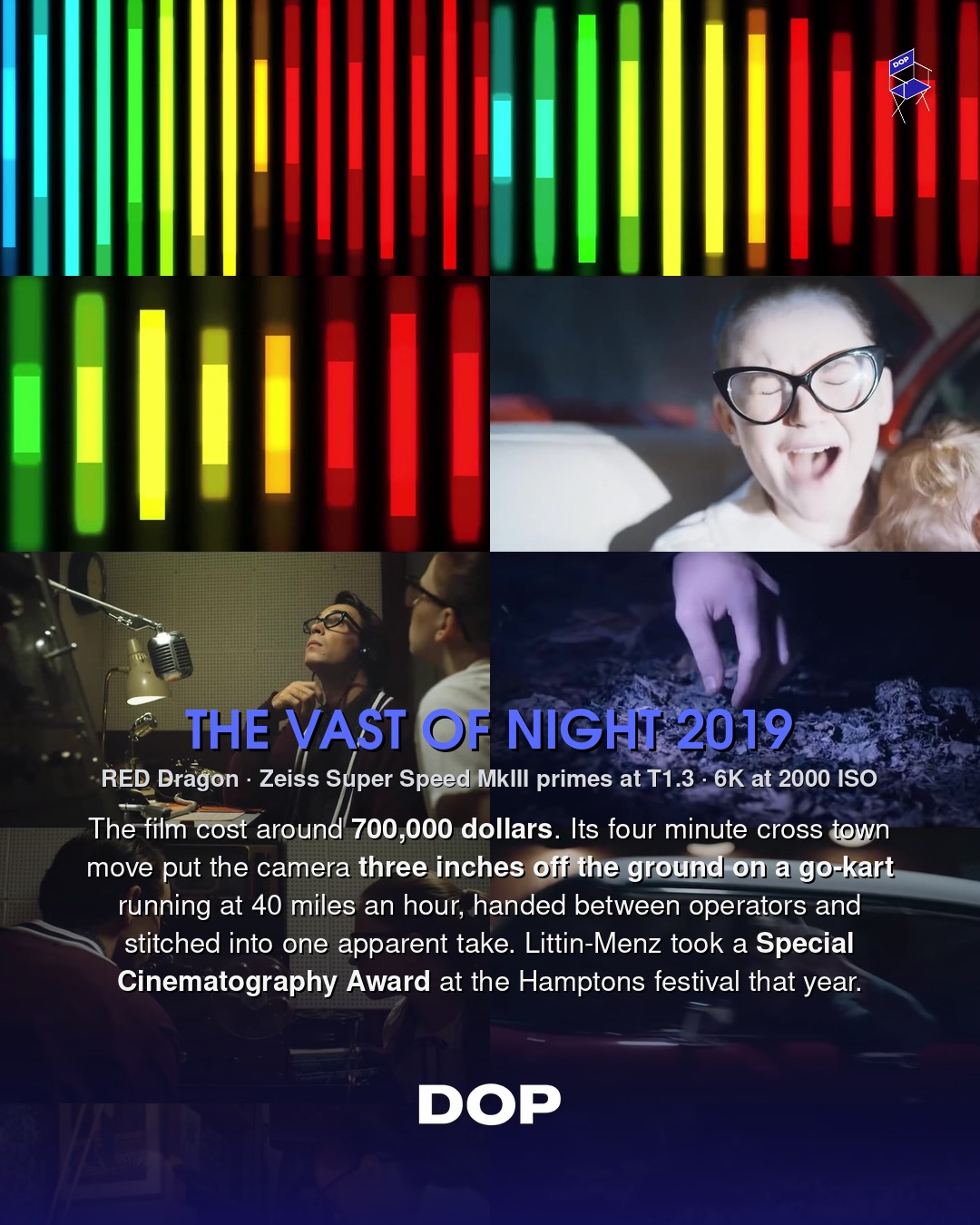
When Andrew Patterson’s The Vast of Night swept through the festival circuit, it immediately became a case study in how inventive cinematography can transcend budget limitations. Produced for roughly $700,000, this period sci-fi chamber piece set in 1950s New Mexico relies not on grand visual effects or star-studded casts, but on the hypnotic synergy between hyper-focused sound design and audacious, kinetic camera operating. At the center of the film’s technical lore is an astonishing four-minute sequence shot that glides through a deserted high school gym, charges across an entire town at breakneck speed, and enters a switchboard office without breaking visual stride.
Engineering the 40-MPH Go-Kart Stitch
Executing a continuous lateral journey across several square miles of dark rural asphalt on an indie budget requires discarding conventional playbook rules. Cinematographer M.I. Littin-Menz and Patterson bypassed heavy crane packages and technocranes in favor of raw mechanical ingenuity: a high-speed go-kart running mere inches above the pavement, fitted with a 3-axis gimbal rig. Moving at nearly 40 miles per hour, the camera grazed the asphalt with startling tactile velocity, transforming the mundane architecture of 1950s small-town America into an expansive, ghostly canvas.
To navigate interior-to-exterior transitions, the production relied on a relay of camera operators. As the camera moved through the crowded gymnasium during a basketball game, it was handed off mid-motion, flown out of the building, latched onto the moving vehicle, driven across town, and decoupled to slip through a window into the switchboard control room. Invisible digital stitches and subtle speed ramps masked the transitions, yielding a seamless, disembodied presence that mirrors the unseen extraterrestrial forces descending upon Cayuga.
"We wanted the camera to feel like an uninvited presence, a disembodied observer hovering mere inches above the asphalt, binding the geography of the town to its impending dread."
The 70mm Spark and Atmospheric Low-Light Philosophy
The visual audacity of the sequence originated from a road trip: Patterson and Littin-Menz drove to Dallas to project a restored 70mm print of David Lean’s Lawrence of Arabia. Inspired by Lean and Freddie Young’s mastery of scale and deliberate visual pacing, the duo resolved to make their low-budget feature feel massive by emphasizing spatial geography. If Lean utilized the vast, unforgiving horizons of the desert, Patterson and Littin-Menz weaponized the claustrophobic expanse of rural nightfall.
Lit primarily with low-output tungsten sources, sodium-vapor practical street lamps, and the ambient glow of vintage radio equipment, the visual palette is steeped in deep umbers, sickly greens, and crushing blacks. Littin-Menz leaned into modern high-sensitivity sensor performance paired with vintage glass, balancing modern dynamic range with vintage aberration and organic halation. Rather than over-lighting the darkness, the team embraced negative fill, allowing characters to dissolve into silhouettes against glowing switchboard dials and dimly lit gym bleachers.
A Lineage of Pure Visual Storytelling
Littin-Menz’s technical virtuosity in The Vast of Night, which earned him a Special Cinematography Award at the Hamptons International Film Festival, comes as no surprise given his cinematic pedigree. The son of renowned Chilean director Miguel Littín, he developed his keen sense of framing and realism through Latin American cinema, collaborating with auteur filmmakers like Pablo Larraín and Andrés Wood before transitioning into Hollywood productions such as Hands of Stone and Resistance.
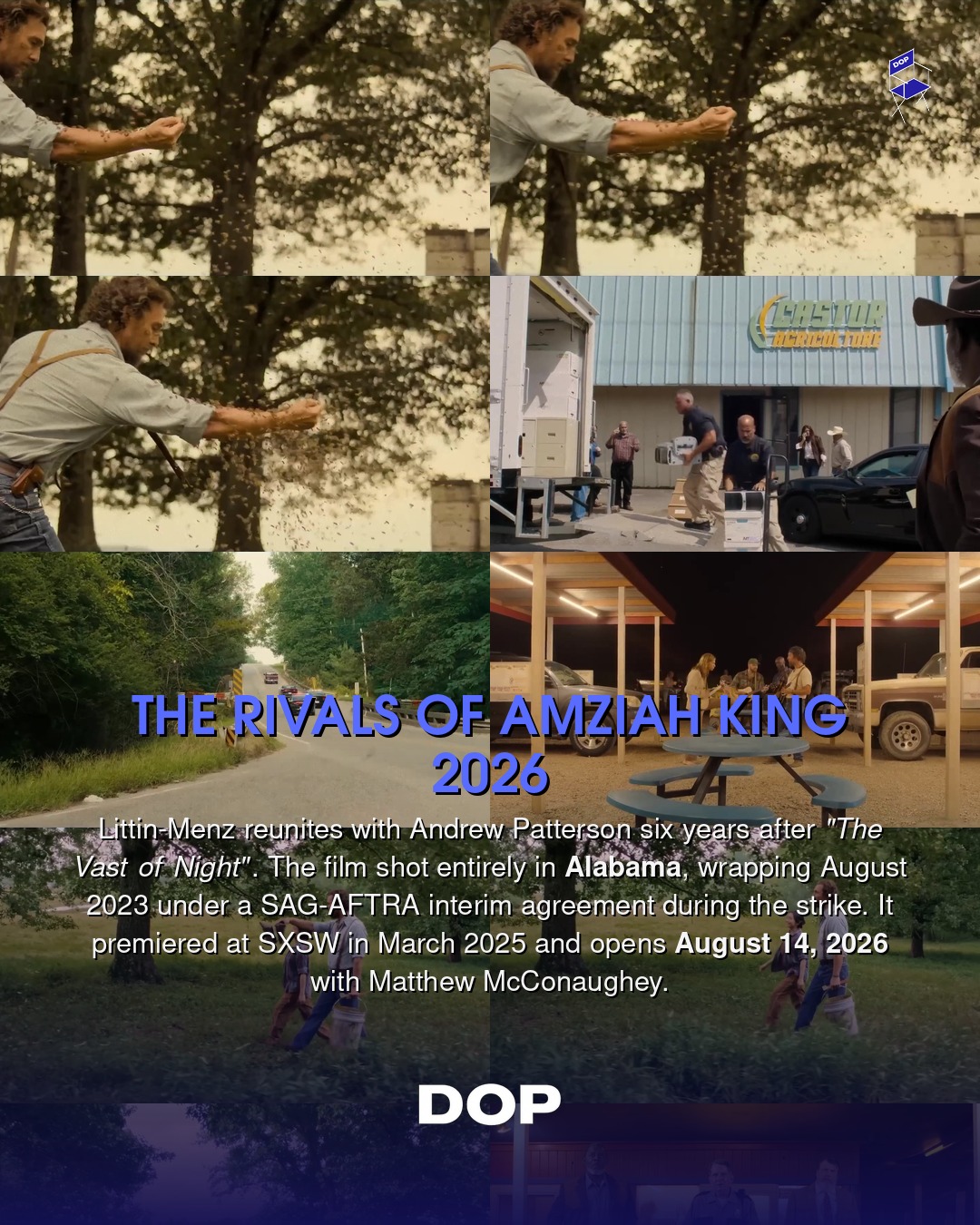
That instinct for grounded, tactile camera movement continues into his ongoing partnership with Patterson. The duo recently wrapped production on The Rivals of Amziah King, shot on location across Alabama with Matthew McConaughey. If The Vast of Night proved that a go-kart, a gimbal, and pure cinematic vision could rival a studio blockbuster’s technical polish, their upcoming work promises to push independent cinematography even further into uncharted territory.