When George Miller returns to the Wasteland, he demands an optical geometry that defies conventional cinema physics. For Furiosa: A Mad Max Saga, cinematographer Simon Duggan, ASC, ACS faced the daunting task of following in the footsteps of John Seale’s landmark work on Fury Road while forging an aesthetic uniquely calibrated to an epic, multi-decade narrative. Duggan’s answer was not to imitate, but to engineer: crafting custom optical packages and daring camera platforms capable of surviving the relentless kinetic demands of post-apocalyptic Australia.
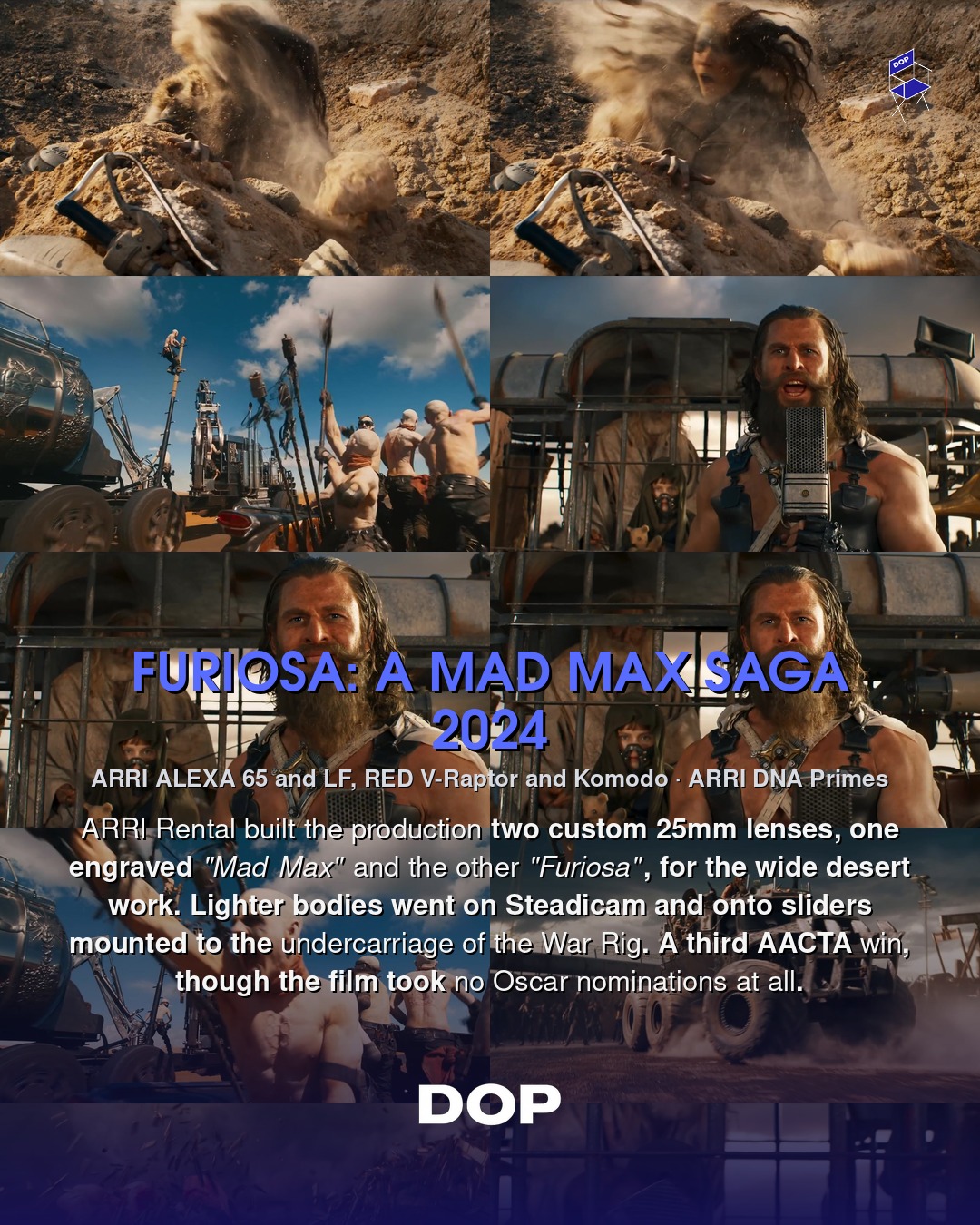
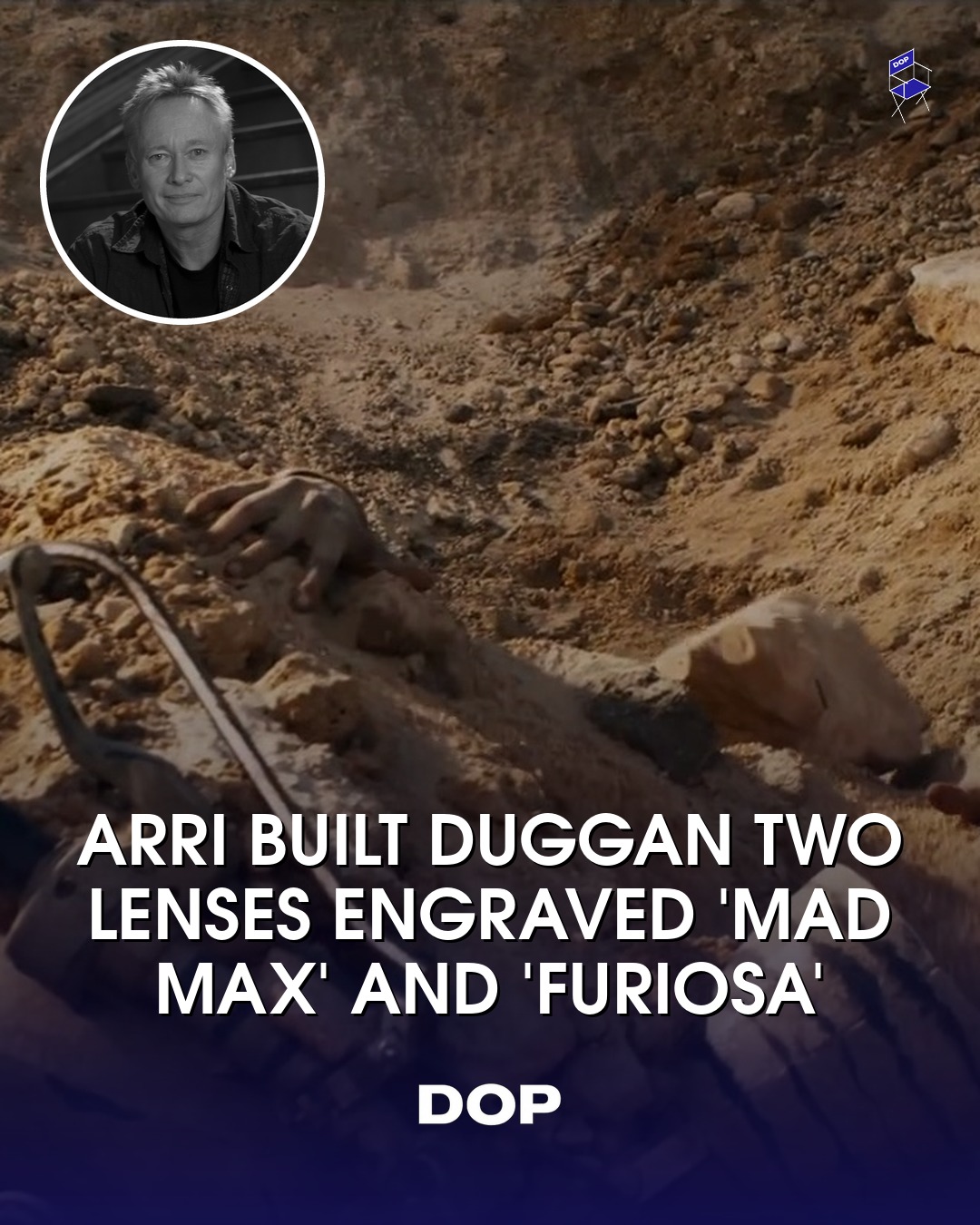
To anchor the film’s vast, sun-bleached desert vistas, Duggan collaborated closely with ARRI Rental to develop two bespoke 25mm prime lenses, custom engraved as “Mad Max” and “Furiosa.” Engineered specifically for the production, these custom optics offered ultra-wide fields of view with surgically controlled distortion and edge-to-edge optical clarity under blistering, high-contrast sunlight. When mounted to high-resolution large-format digital sensors, the glass rendered every grain of sand and blast of nitro with vicious precision, ensuring the Wasteland felt simultaneously sprawling and suffocatingly detailed.
Bespoke Glass and Undercarriage Rigs in the Wasteland
Translating Miller’s hyper-kinetic storyboards into physical capture required Duggan to construct an ultra-flexible camera ecosystem. Beyond the hero A-camera packages, the team deployed stripped-down, lightweight camera builds across every square inch of the production's mechanical monstrosities. Specialized sliders and low-profile remote heads were integrated directly into the steel undercarriage of the War Rig, capturing violent low-angle road velocity inches from churning tires.
These compact setups, alongside fluid Steadicam operating in rugged terrain, allowed Duggan to seamlessly transition between macroscopic vehicle warfare and intimate human drama. The dynamic range of the digital sensors was pushed to its absolute threshold, preserving critical shadow detail beneath grease-stained engine blocks while retaining highlight roll-off in explosive flame bursts and midday sky washes.
“Cinematography in high-velocity environments isn’t just about light and shadow; it’s an engineering discipline where sensor size, lens weight, and physical clearance dictate visual grammar.”
The Pragmatic Technician: From Hacksaw to Gatsby
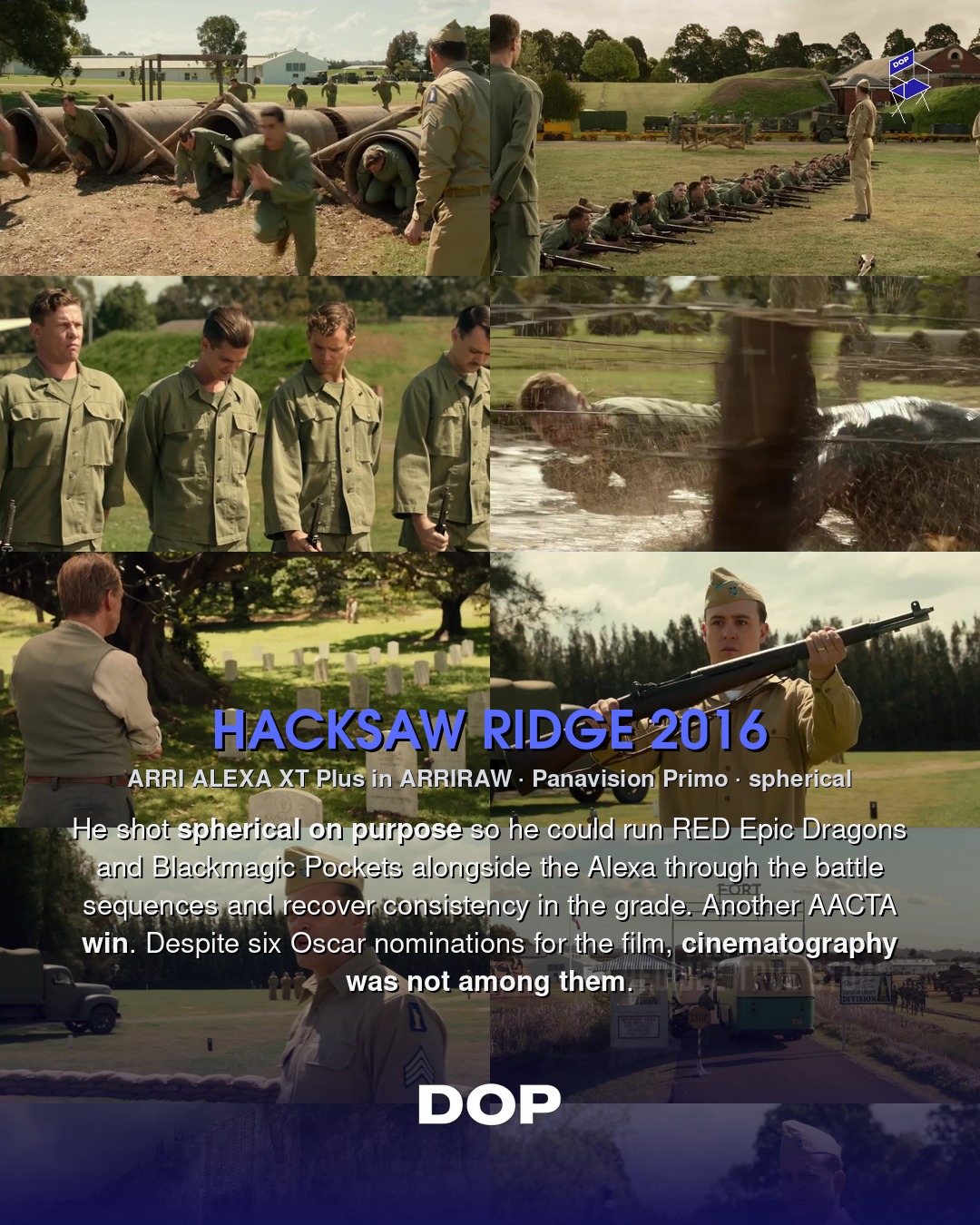
This technical pragmatism has long defined Duggan’s career. On Mel Gibson’s visceral World War II epic Hacksaw Ridge, Duggan made the deliberate, unconventional choice to shoot entirely spherical. This decision allowed him to seamlessly intercut primary ARRI Alexa XT Plus bodies with miniature Blackmagic Pocket Cinema Cameras tucked inside foxholes, strapped to stunt performers, and buried under pyrotechnic blast zones. By standardizing on spherical glass and leaning on a disciplined ACES color management pipeline in the digital intermediate, Duggan maintained seamless visual cohesion across vastly different camera sensors amid relentless battlefield chaos.
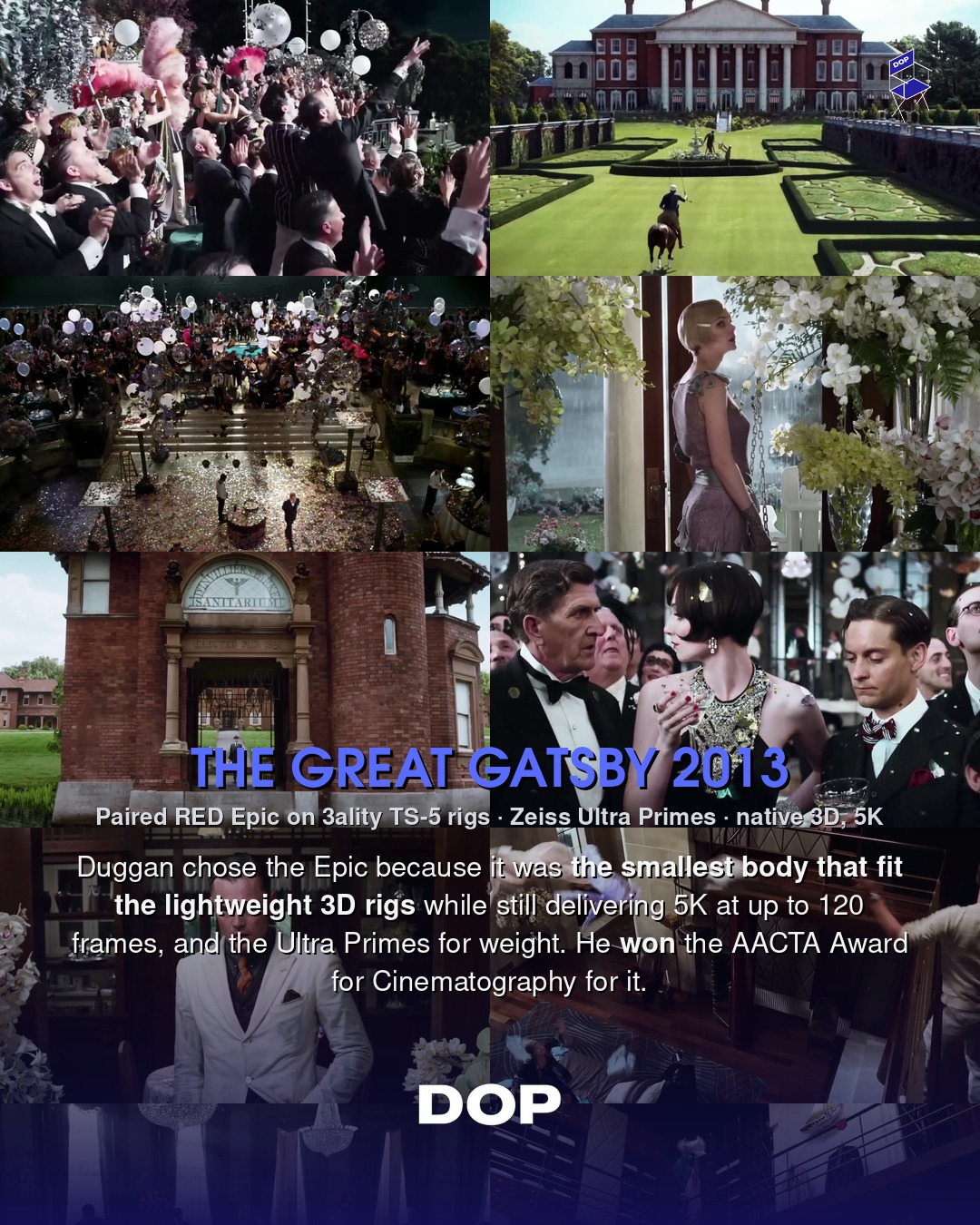
Similarly, when tasked with capturing Baz Luhrmann’s extravagant, hyper-stylized world in The Great Gatsby, Duggan navigated the uncompromising physical constraints of native stereoscopic 3D. He selected RED Epic bodies specifically for their compact form factor, enabling them to fit into customized lightweight 3D beam-splitter rigs without sacrificing resolution or overwhelming the camera department’s mobile crane packages.
Peer Honors, AACTA History, and Industry Politics
Duggan’s mastery on Furiosa earned him his third Australian Academy of Cinema and Television Arts (AACTA) Award for Best Cinematography. This milestone tied him with titans of Australian cinema: Russell Boyd, Peter James, Donald McAlpine, and Geoffrey Simpson. Yet, despite widespread critical acclaim and technical brilliance, the mainstream awards circuit, most notably the Oscars, often overlooks the immense logistical and technical hurdles inherent to high-octane genre filmmaking.
While Hacksaw Ridge collected six Academy Award nominations, cinematography was conspicuously absent from the ballot. Furiosa met a similar fate during awards season, celebrated for design and sound while its camera architecture went largely unheralded by Hollywood’s major voting bodies. But for cinematographers and camera operators who understand the sheer grit required to coordinate multi-camera warfare across unforgiving terrain, Duggan’s body of work stands as a masterclass in modern visual execution. In the trenches of visual storytelling, custom glass, raw problem-solving, and peer recognition carry far more weight than any single trophy.