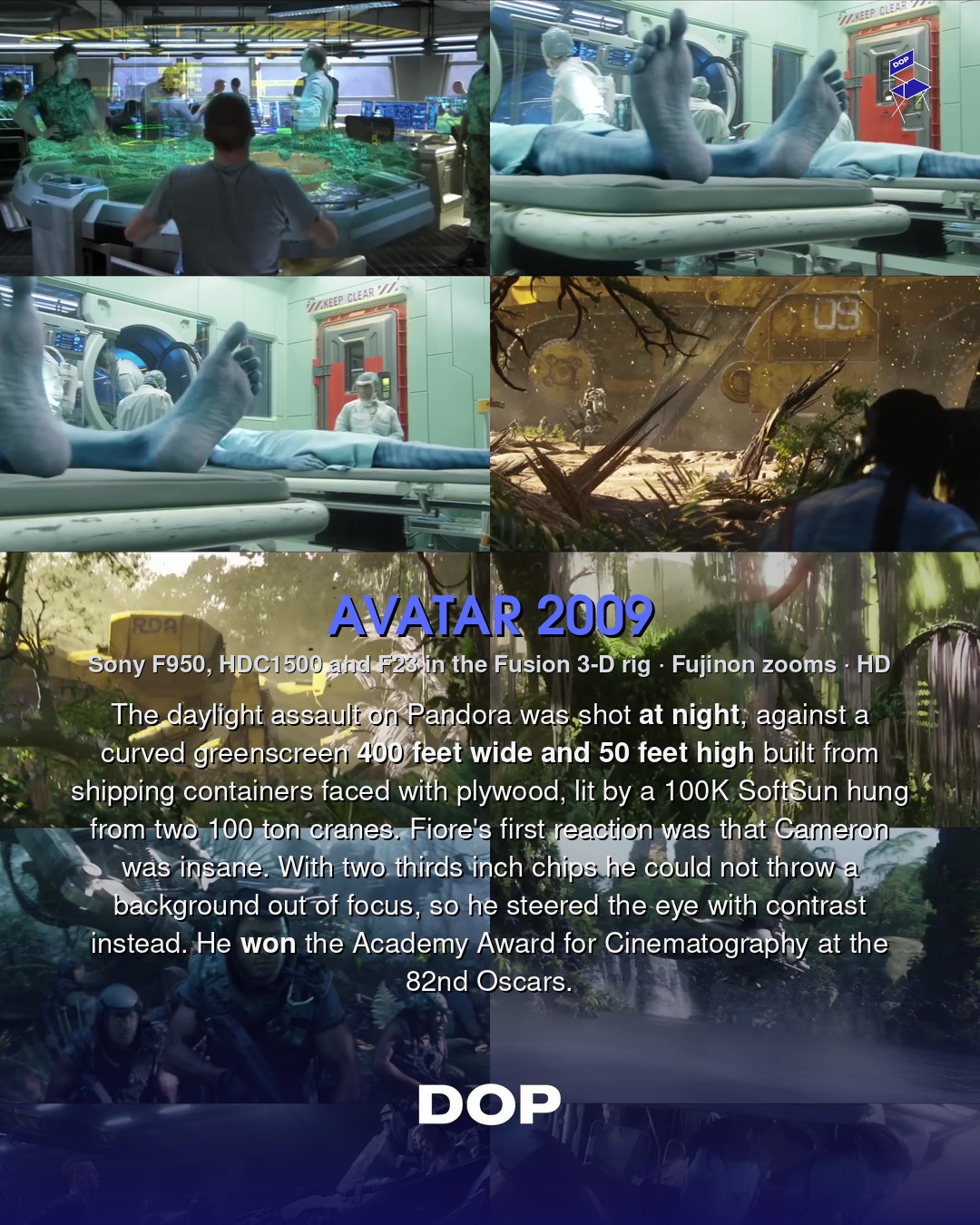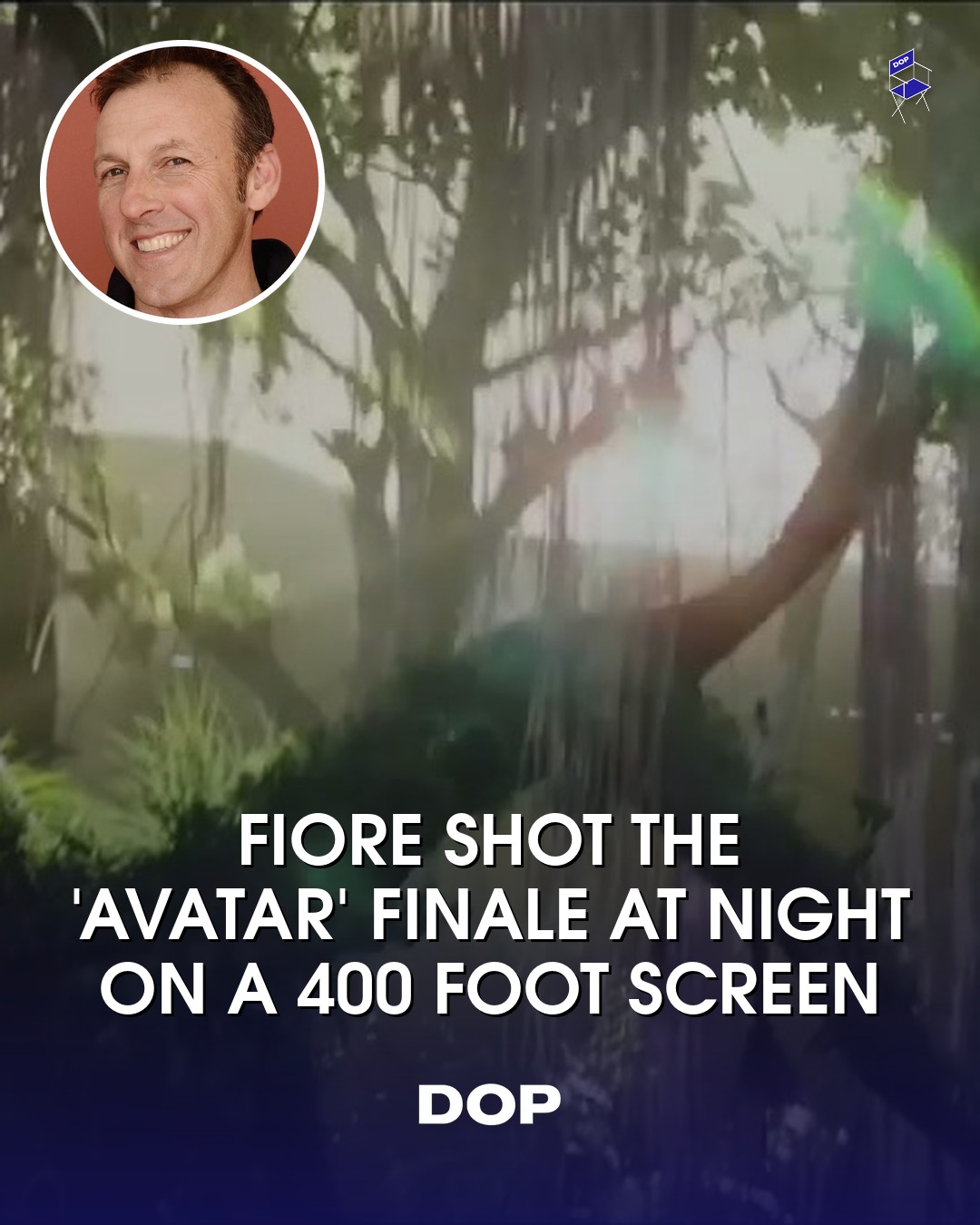
When James Cameron first pitched the methodology for shooting the climactic third-act assault on Pandora in Avatar, Mauro Fiore, ASC was convinced the director had lost his mind. The script demanded blinding, high-noon tropical daylight across a vast tactical terrain crawling with ground troops, heavy artillery, and alien flora. Cameron’s proposed solution was counterintuitive: they were going to shoot the entire sequence under the dead of night.
The engineering required to pull off Cameron’s vision remains one of the most audacious feats of modern exterior lighting. To give the visual effects team total control over integration and spill suppression, the production erected a monolithic, curved greenscreen measuring 400 feet wide and 50 feet high, constructed entirely from stacked industrial shipping containers faced with seamless plywood. Suspended above this colossal volume on a massive truss held aloft by twin 100-ton construction cranes hung a single 100K SoftSun fixture. It operated as an artificial celestial body, delivering a scorching, single-source key that carved hard, razor-sharp shadows across physical set pieces and performance capture plates without the uncontrolled shifting of the actual sun.
The Corman Crucible and the AFI Class of Titans
Fiore’s journey to the cutting edge of stereoscopic digital cinematography was forged in the low-budget, high-pressure trenches of independent filmmaking. Born in Marzi, Calabria, before immigrating to the Chicago area at age six, Fiore later attended the AFI Conservatory. His graduating cohort read like a future pantheon of modern visual stylists, counting Janusz Kamiński and Phedon Papamichael among his closest peers and lifelong collaborators.
Like so many legendary image-makers, Fiore cut his teeth under the notoriously thrifty tutelage of Roger Corman. On those guerrilla sets, there was no budget for cranes or 100,000-watt daylight heads; survival depended on speed, decisive framing, and extracting maximum contrast from minimal gear. That blue-collar efficiency laid the groundwork for Fiore’s distinct visual philosophy: bold, muscular, and unashamedly cinematic.
“To create believable daylight at that scale, you don't fight the elements, you build your own sun and dictate reality on your own terms.”
Anamorphic Glass and the Transition to Open-Gate Digital
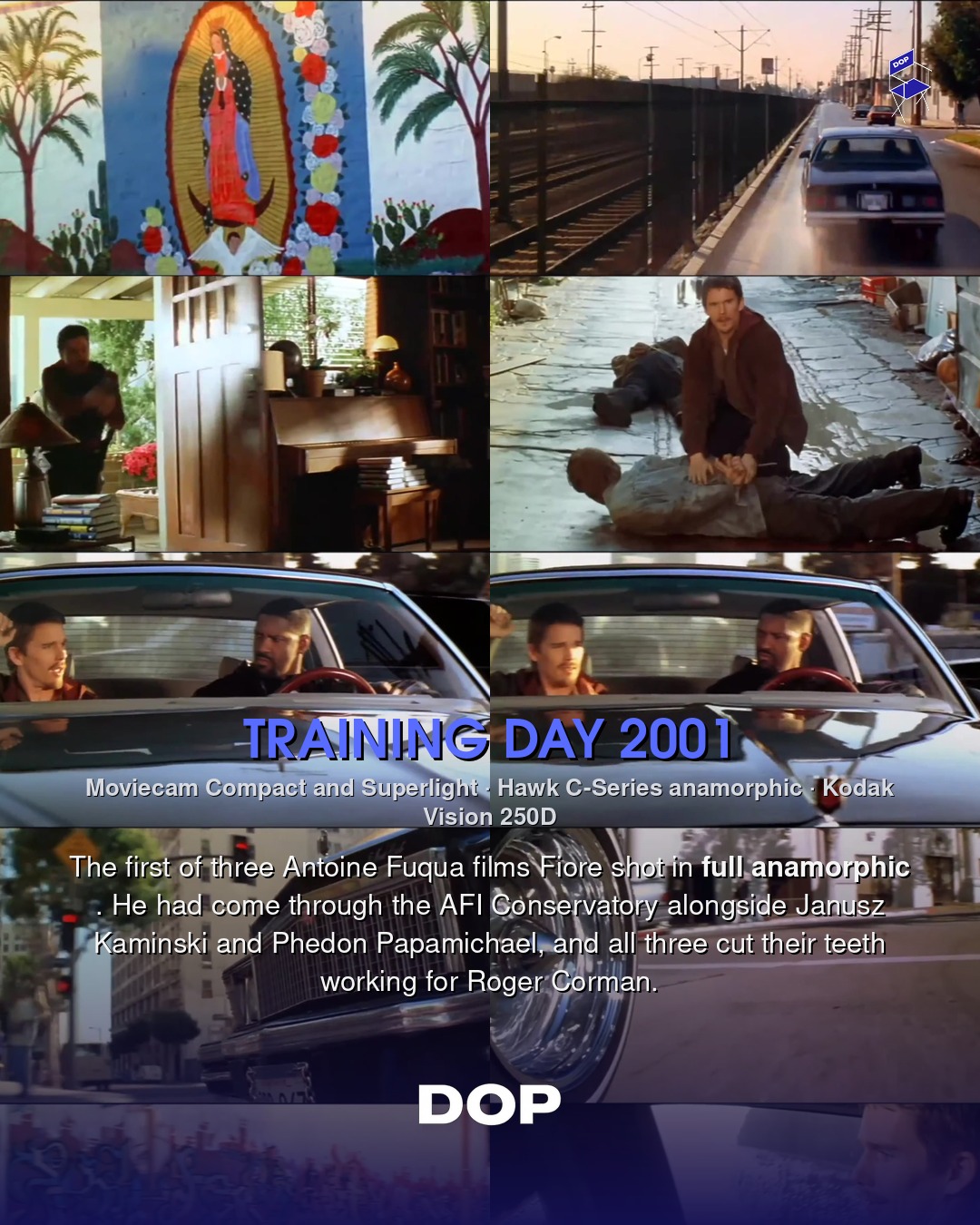
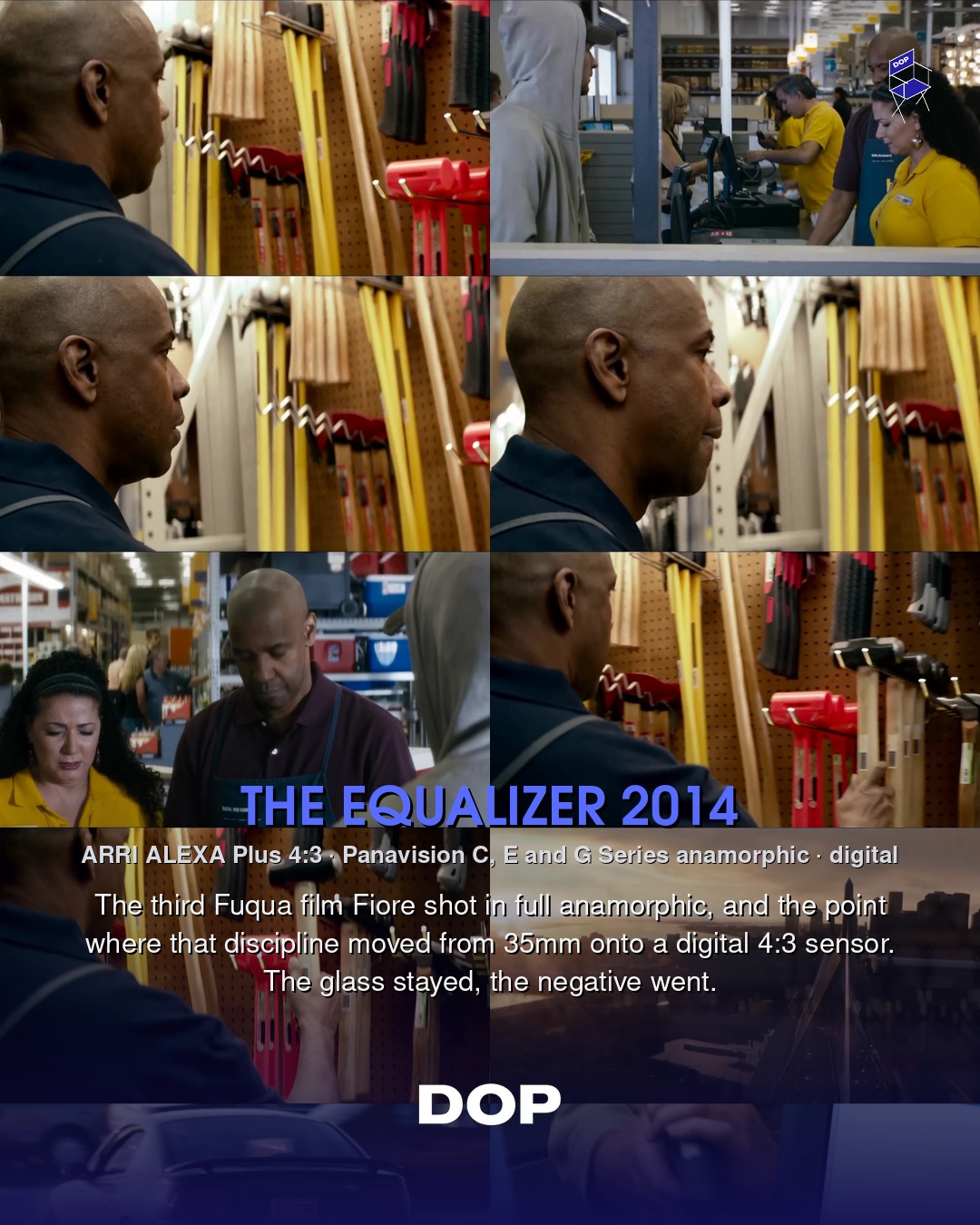
Outside of Pandora’s digital frontier, Fiore is best known for his defining creative partnership with director Antoine Fuqua. Across landmark films like Training Day, Tears of the Sun, and The Equalizer, Fiore championed the raw, textural grit of Panavision C- and E-Series anamorphic glass. On Training Day, his tactile exposure strategies on 35mm film captured the blistering heat of Los Angeles pavement, using hard directional keys and deep shadow falls to establish an environment of constant tension.
When digital acquisition matured, Fiore seamlessly translated that anamorphic discipline onto digital 4:3 open-gate sensors. Rather than succumbing to the clinical sterility that plagued early digital cinema, he retained the optical imperfections, anamorphic flare artifacts, barrel distortion, and shallow vertical depth-of-field, grounding high-resolution sensors with organic visual texture. Whether shooting with Cameron’s customized Sony HDC-F950 Fusion 3D rigs or modern large-format digital bodies, Fiore has consistently prioritized physical lighting contrast over post-production correction.
The Illusion of the Real
Fiore took home the Academy Award for Best Cinematography for Avatar, his first and only nomination to date, solidifying his reputation as a master of lighting continuity across mixed-reality workflows. Recreating absolute daylight on an outdoor night stage bypassed the atmospheric unpredictability of real weather, allowing Cameron and Fiore to shoot multi-camera stereoscopic setups for weeks with identical sun angles and uncompromised color fidelity.
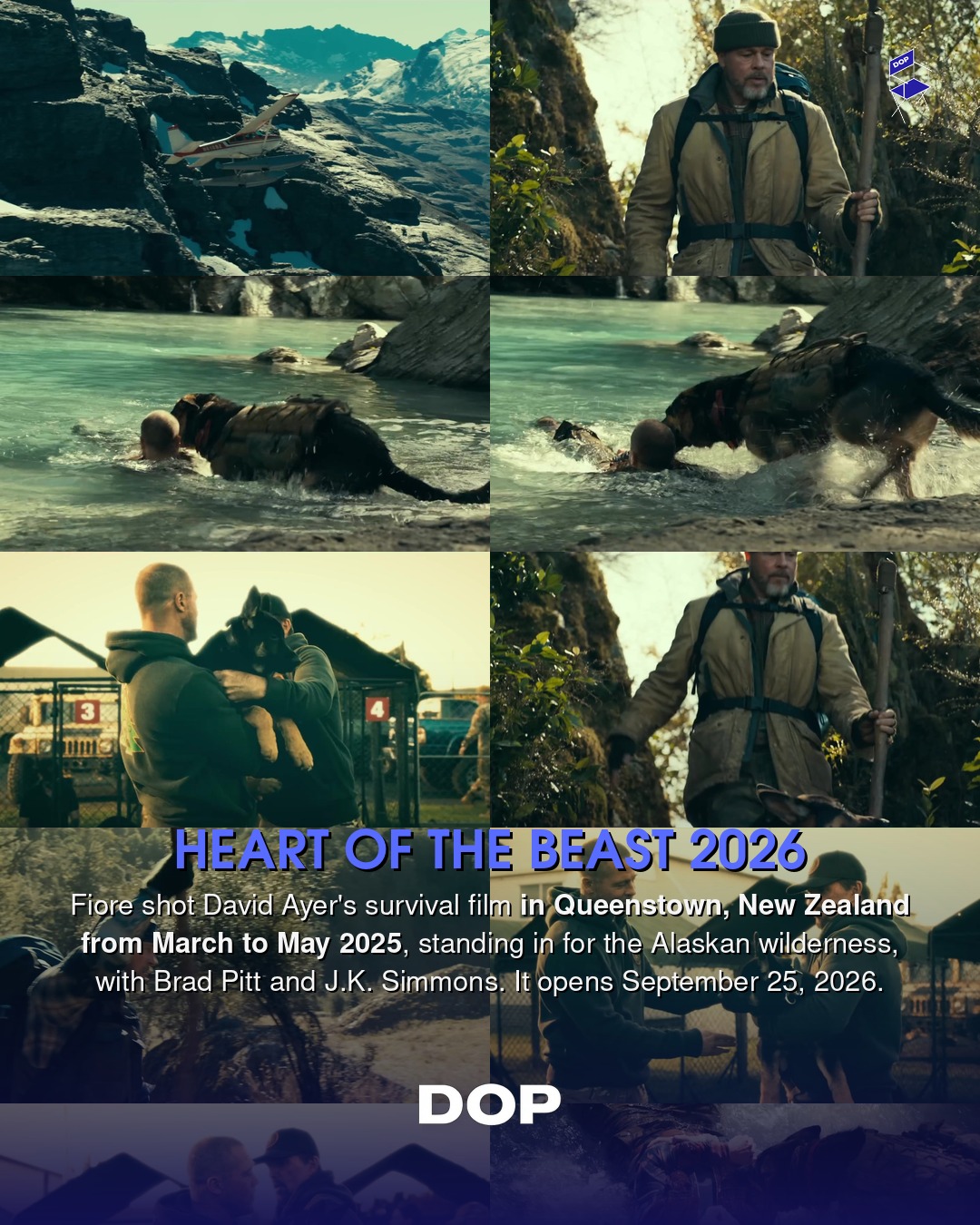
Now returning to grounded practical filmmaking with David Ayer’s survival thriller Heart of the Beast, shot on location across the demanding landscapes of New Zealand, Fiore continues to push the boundary between naturalism and visual drama. For cinematographers, the lesson of his Pandora assault remains timeless: true visual realism is rarely captured, it is rigorously engineered.