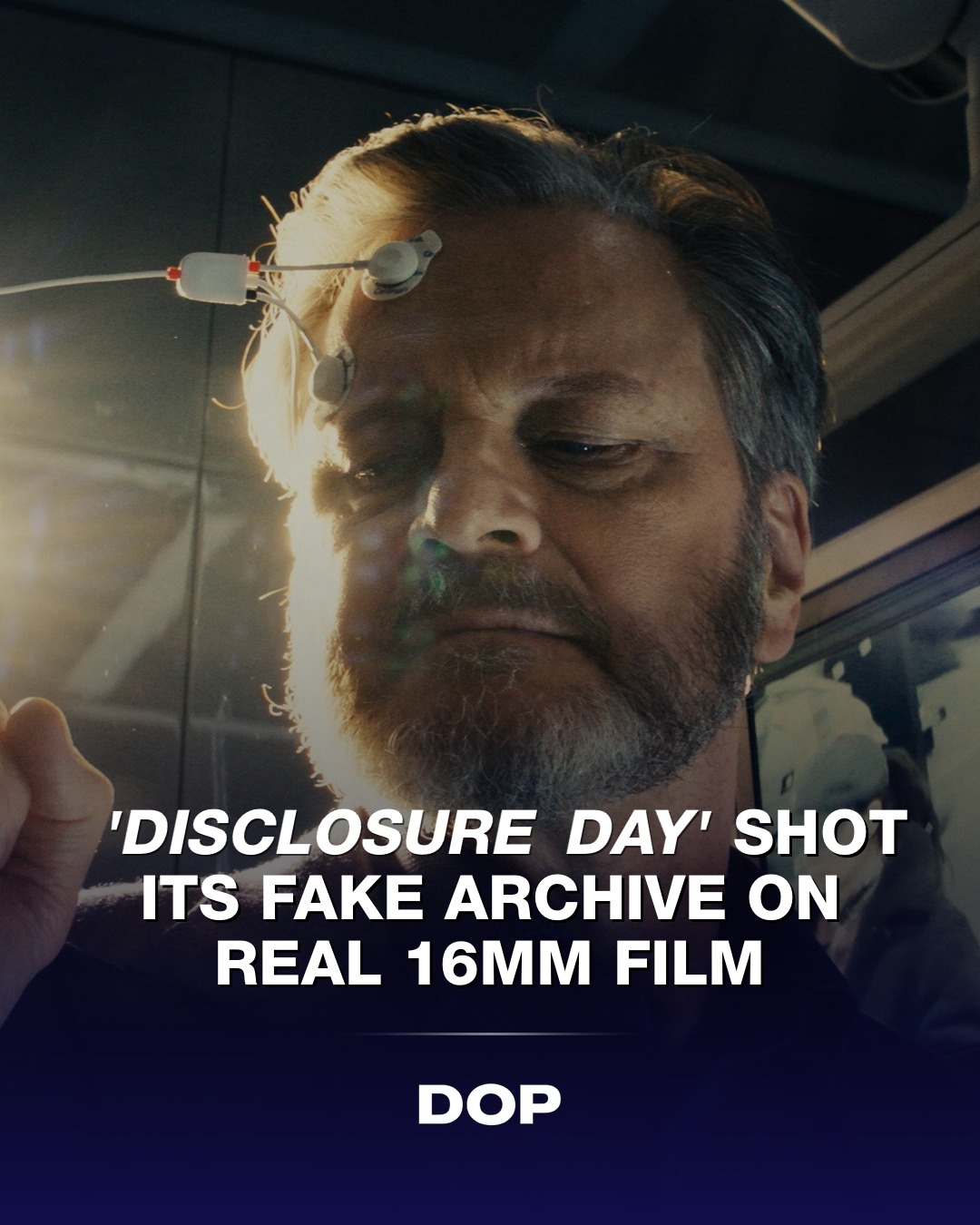
Across a three-decade partnership spanning twenty-one feature films, Janusz Kaminski and Steven Spielberg have rewritten the grammar of modern cinematography. From the bleached, desaturated battlefield shutter angles of Saving Private Ryan to the painterly bounce and expressive optical flares of Minority Report and West Side Story, Kaminski has never been a cinematographer to play it safe. On their latest endeavor, Disclosure Day, the veteran director of photography confronted a modern visual conundrum: how to render archival and found footage with palpable, tactile authenticity in an era saturated with synthetic post-production grain plugins.
The Photochemical Texture of True In-Camera Degradation
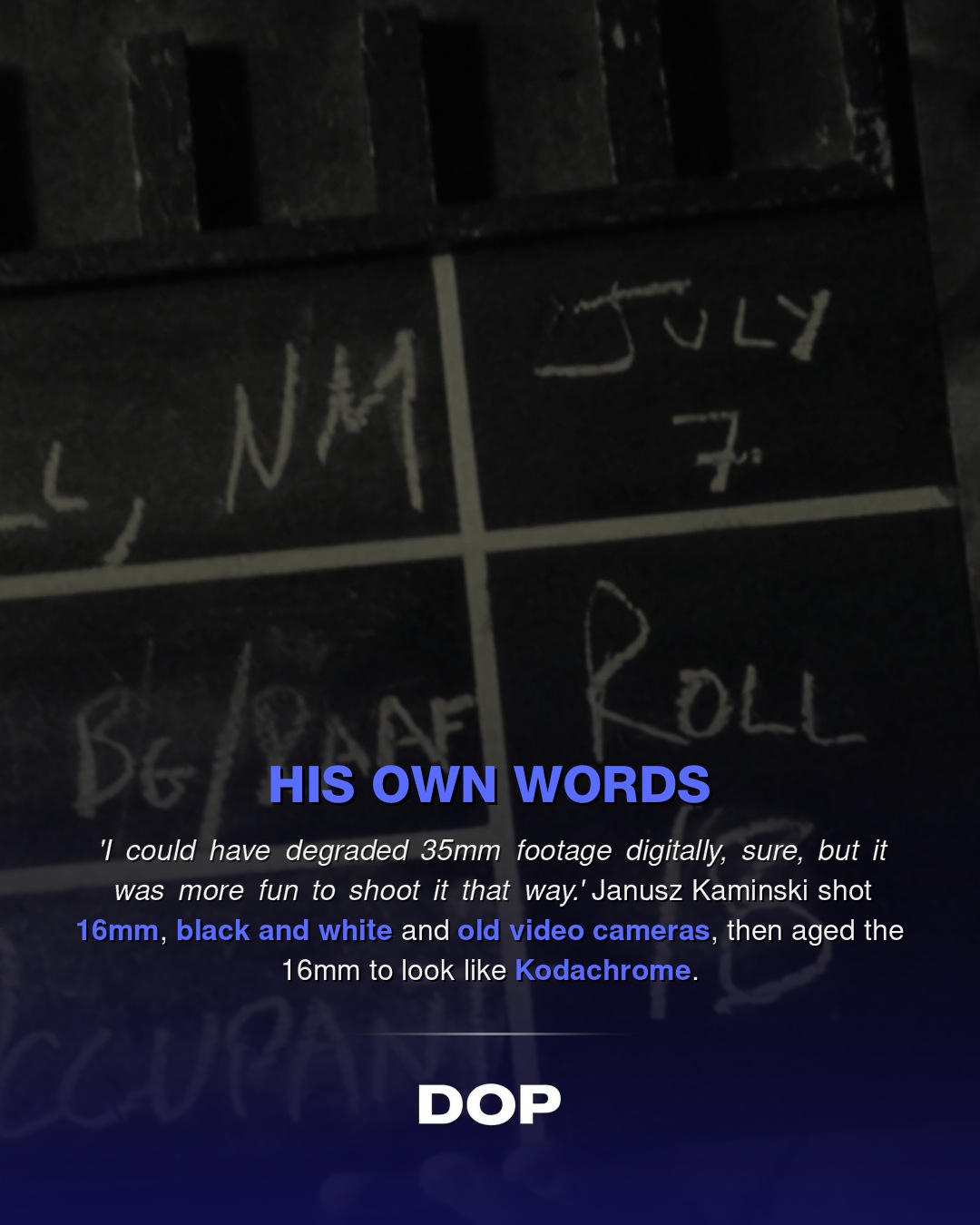
Rather than relying on modern digital sensors and degrading pristine 35mm captures inside a color grading suite, Kaminski made the deliberate, labor-intensive decision to shoot the film's embedded archival sequences on native formats. The production deployed a mix of 16mm reversal film, high-contrast black-and-white stocks, and vintage standard-definition broadcast video cameras to capture historical artifacts directly to their native mediums.
Kaminski's philosophy emphasizes physical photochemical response over digital emulation. By pushing 16mm stock to evoke the distinct color saturation, dense shadow roll-off, and vibrant halation of vintage Kodachrome, the DP achieved an organic unpredictability that digital algorithms consistently fail to reproduce. Emulsion grain clumping, optical aberrations from period-accurate glass, and mechanical transport weave delivered an immediate, unvarnished historical weight to the frame.
Digital distressing often looks like an Instagram filter laid across a pristine sensor. When you expose actual 16mm emulsion or early tube cameras, the physical medium reacts to light with its own unique chemistry and chaos.
Embracing the Digital Sensor for Practical Illumination
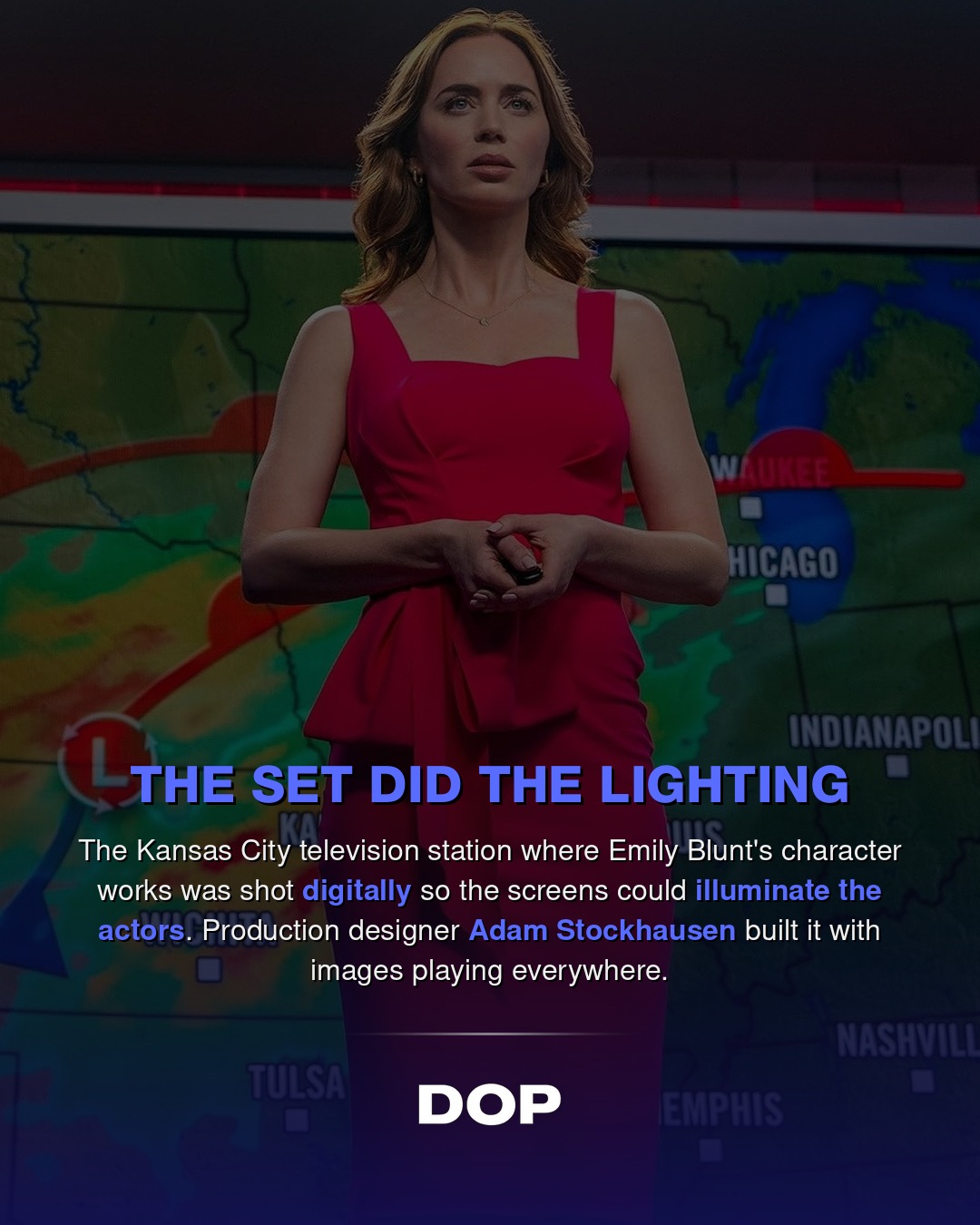
While the period elements demanded photochemical grit, other narrative sequences required the extreme latitude and low-light capabilities of modern digital cinema cameras. For a pivotal sequence set within a working Kansas City television broadcast station, Kaminski shifted entirely to digital capture. The decision was purely functional and rooted in lighting craft: the DP wanted the practical glow of television monitors, cathode-ray tubes, and broadcast control consoles to serve as the primary key and ambient sources for the actors.
By leveraging the high base ISO and low-noise floor of a modern sensor, Kaminski was able to capture the authentic, flickering luminescence of practical screens without needing to overpower the room with conventional tungsten or HMI units. This approach gave the control room sequence an oppressive, immersive atmosphere, wrapping actors in the cold, phosphorescent bounce of live television hardware while maintaining his trademark expressive contrast ratios.
The Velocity of Twenty-Five Setups a Day
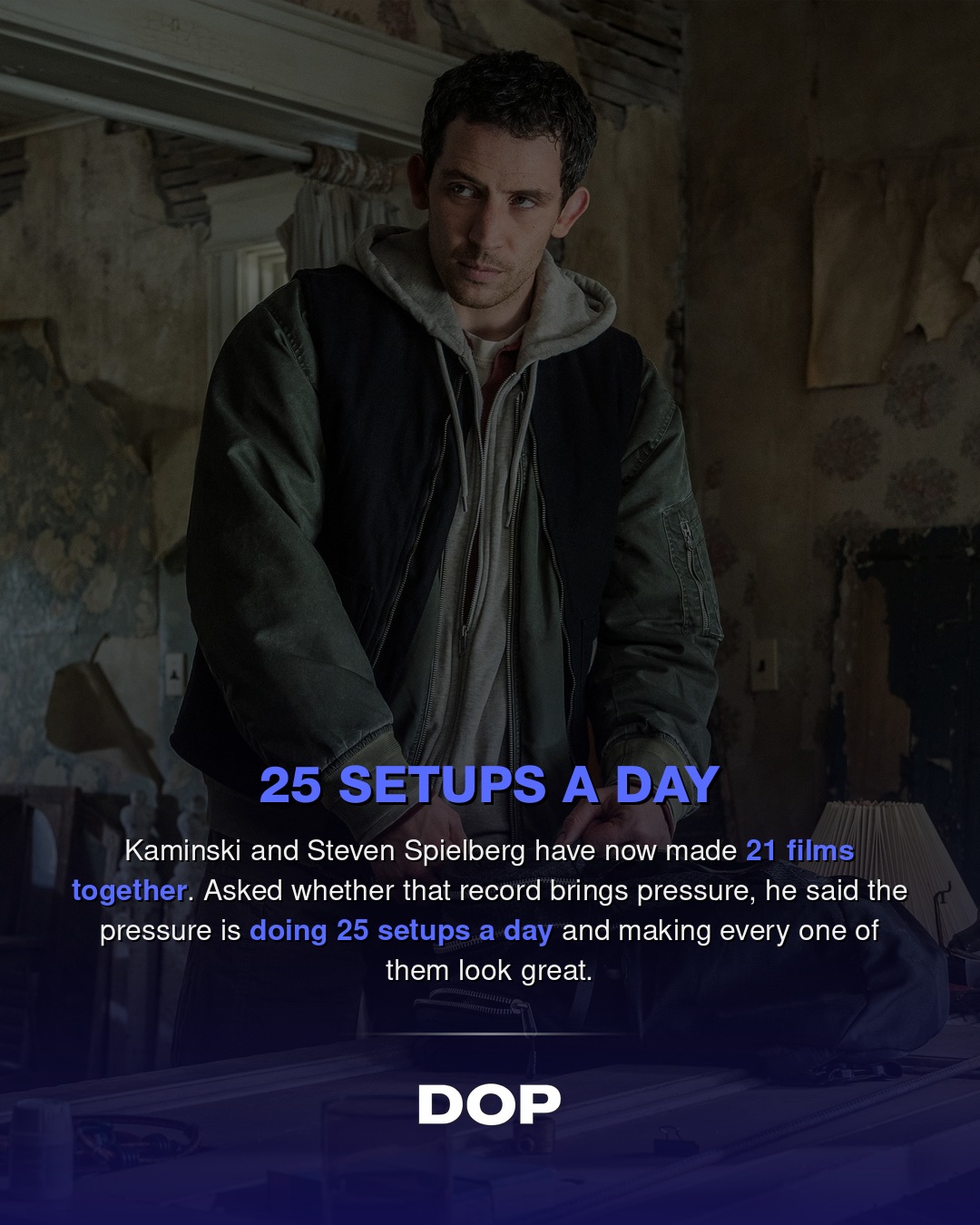
Executing a complex multi-format workflow, shifting between 35mm anamorphic, 16mm reversal, standard-definition video, and high-end digital sensors, requires extraordinary organizational discipline on set. Known for maintaining an aggressive production pace, Kaminski routinely executes upwards of twenty-five complex setups a day alongside Spielberg.
This relentless velocity is made possible by Kaminski's decisive, intuitive approach to lighting. Favoring hard, directional beams cutting through atmospheric haze over time-consuming diffused rigs, he shapes the space swiftly, relying on master camera operators and an innate understanding of lens behavior. Rather than letting the complexity of mixed formats slow the production down, Kaminski used the diversity of capture tools to build an immediate, layered visual language that honors the tactile history of the medium.