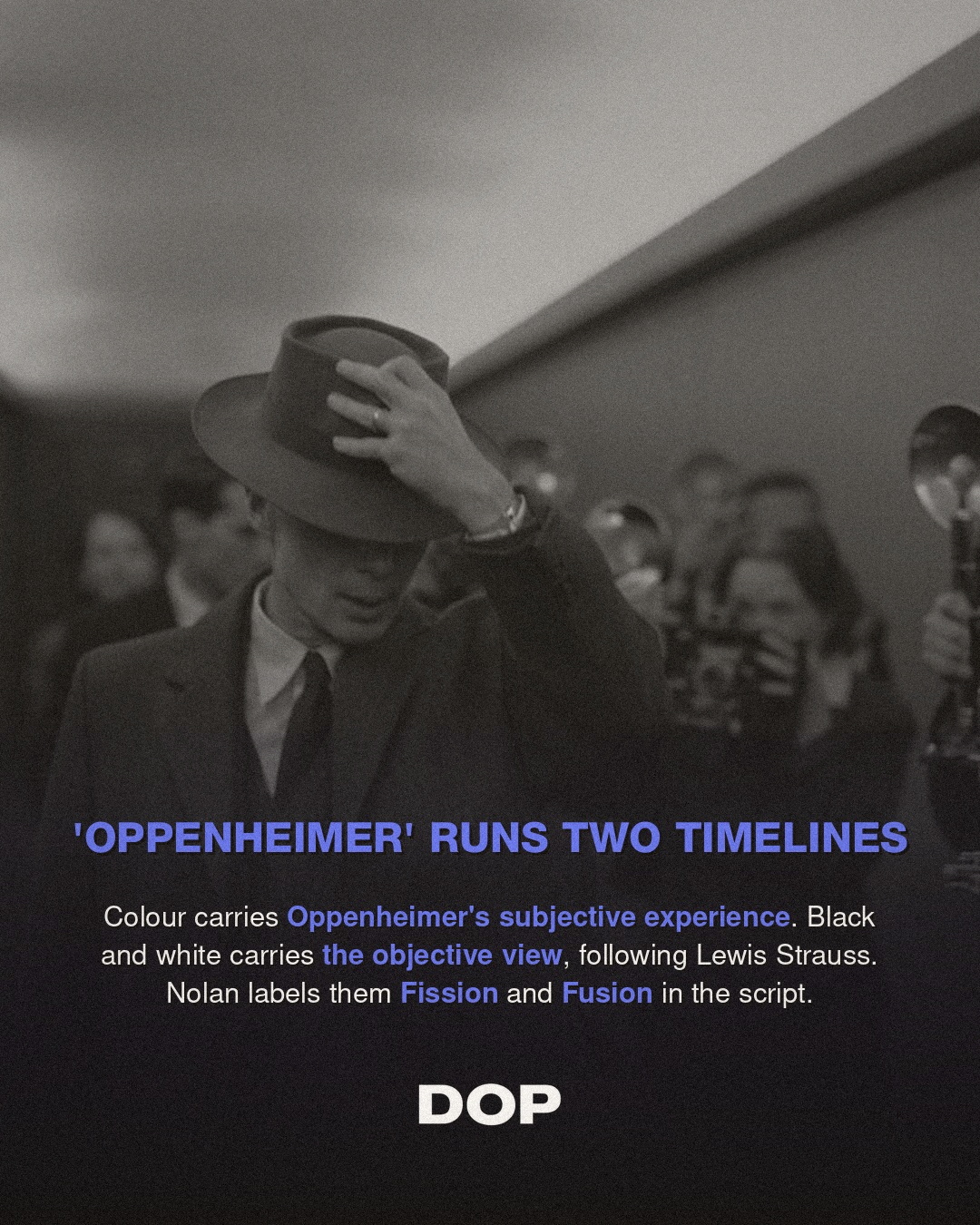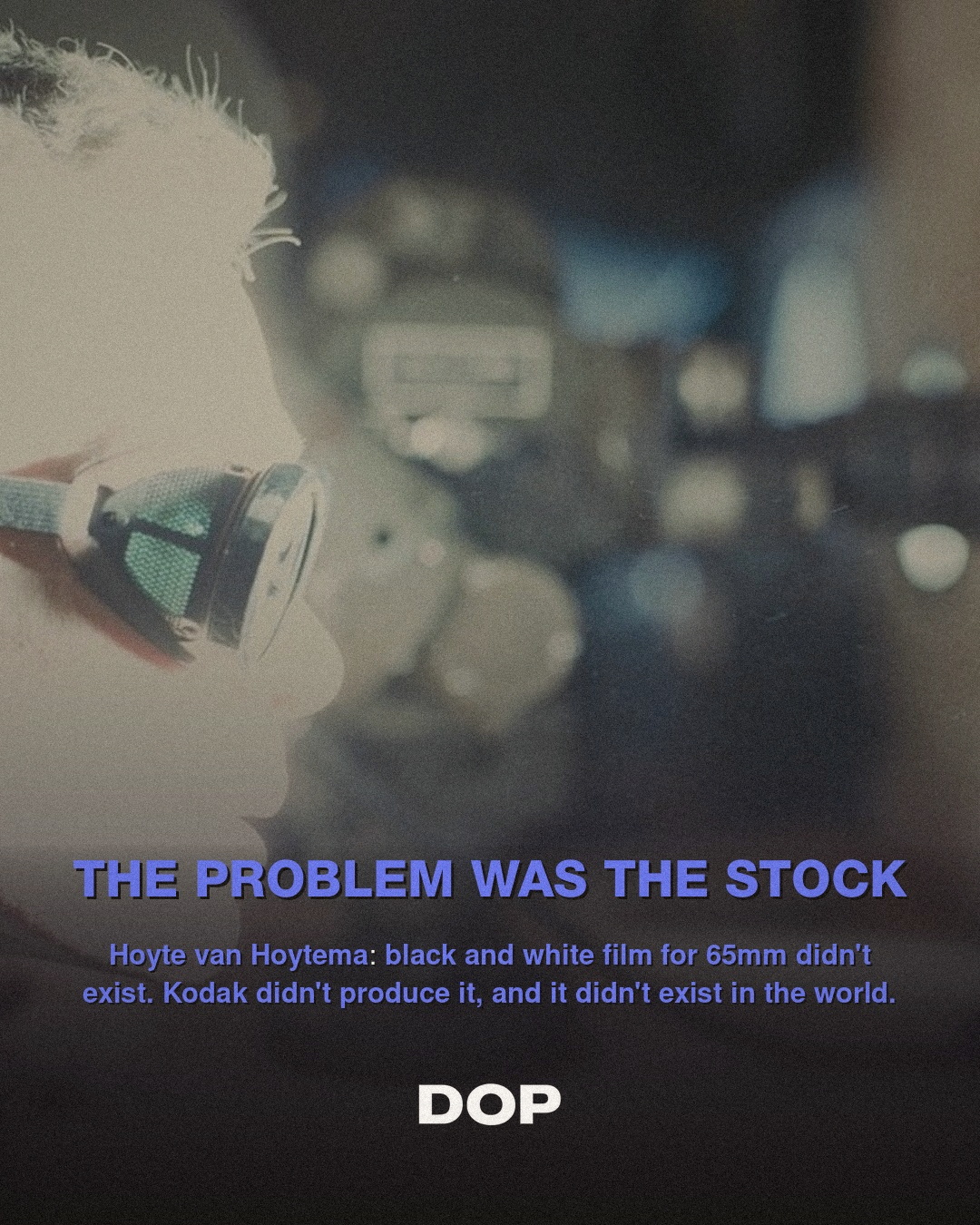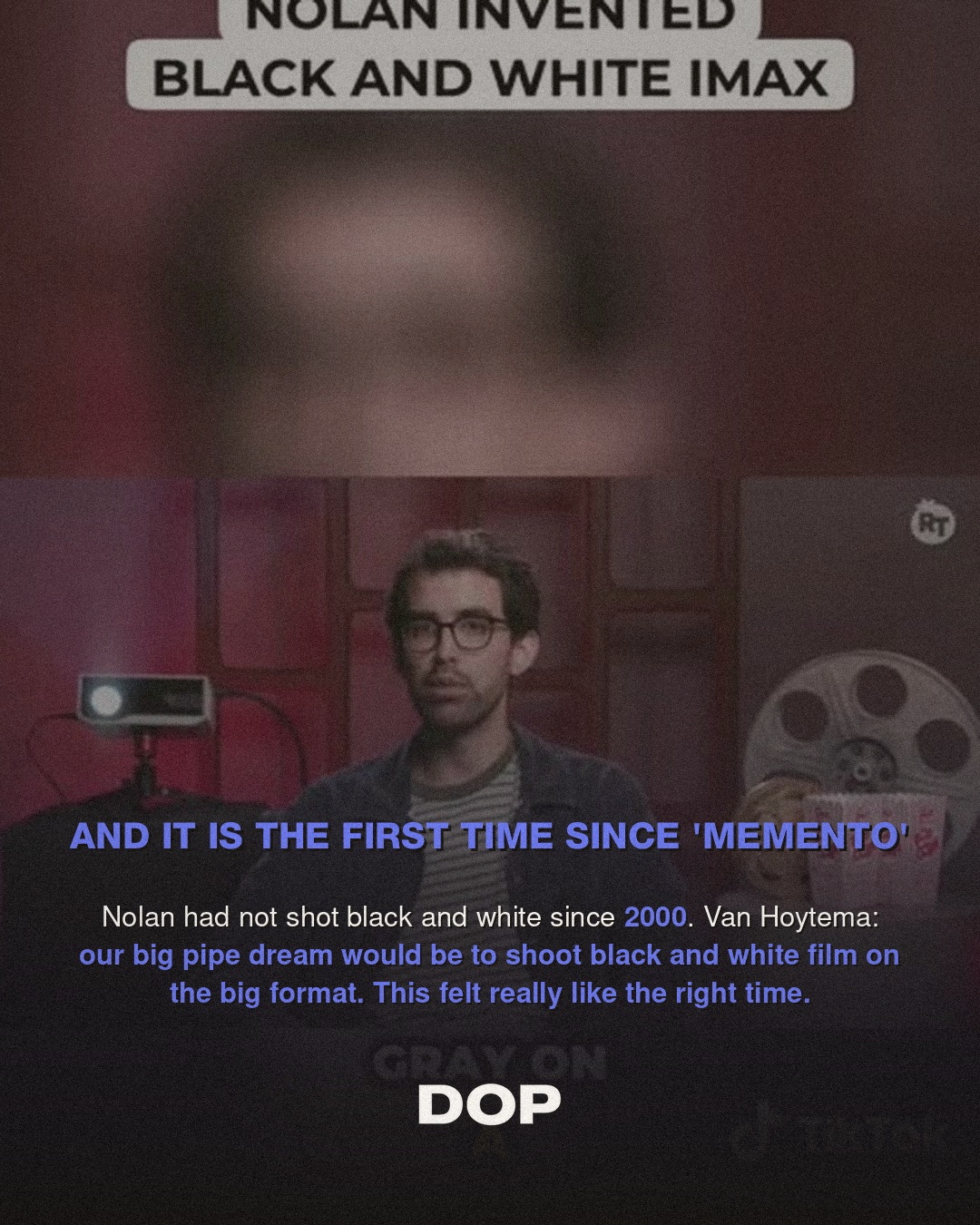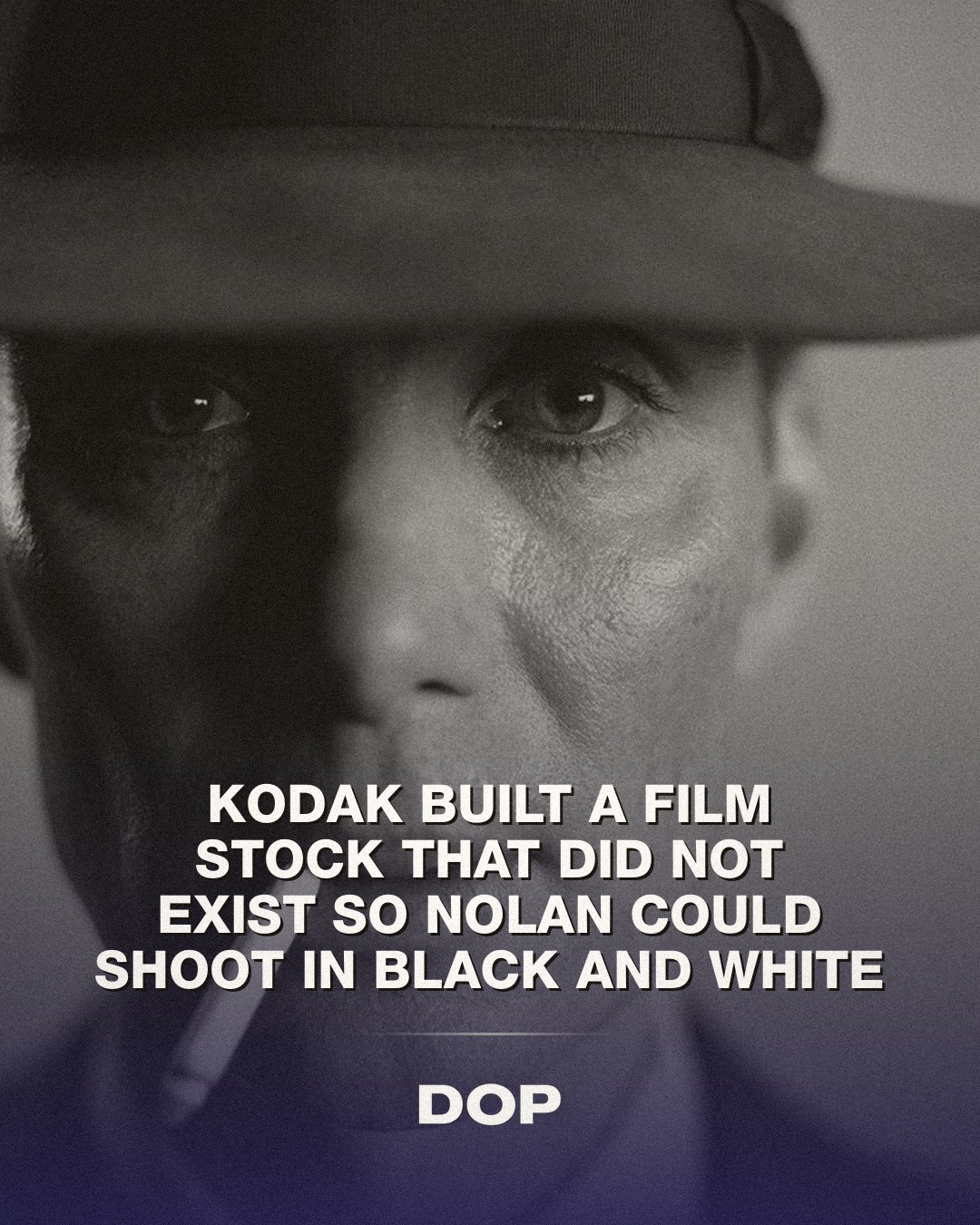
When Christopher Nolan conceived the structural framework for Oppenheimer, the narrative demanded a visual bifurcation. The subjective perspective of J. Robert Oppenheimer would unfold in rich, high-fidelity color, while the objective timeline centered around Lewis Strauss would be captured in stark, razor-sharp monochrome. For Director of Photography Hoyte van Hoytema, ASC, FSF, NSC, this artistic choice presented an immediate and unprecedented technical barrier: 65mm black-and-white negative film simply did not exist in modern cinema production.
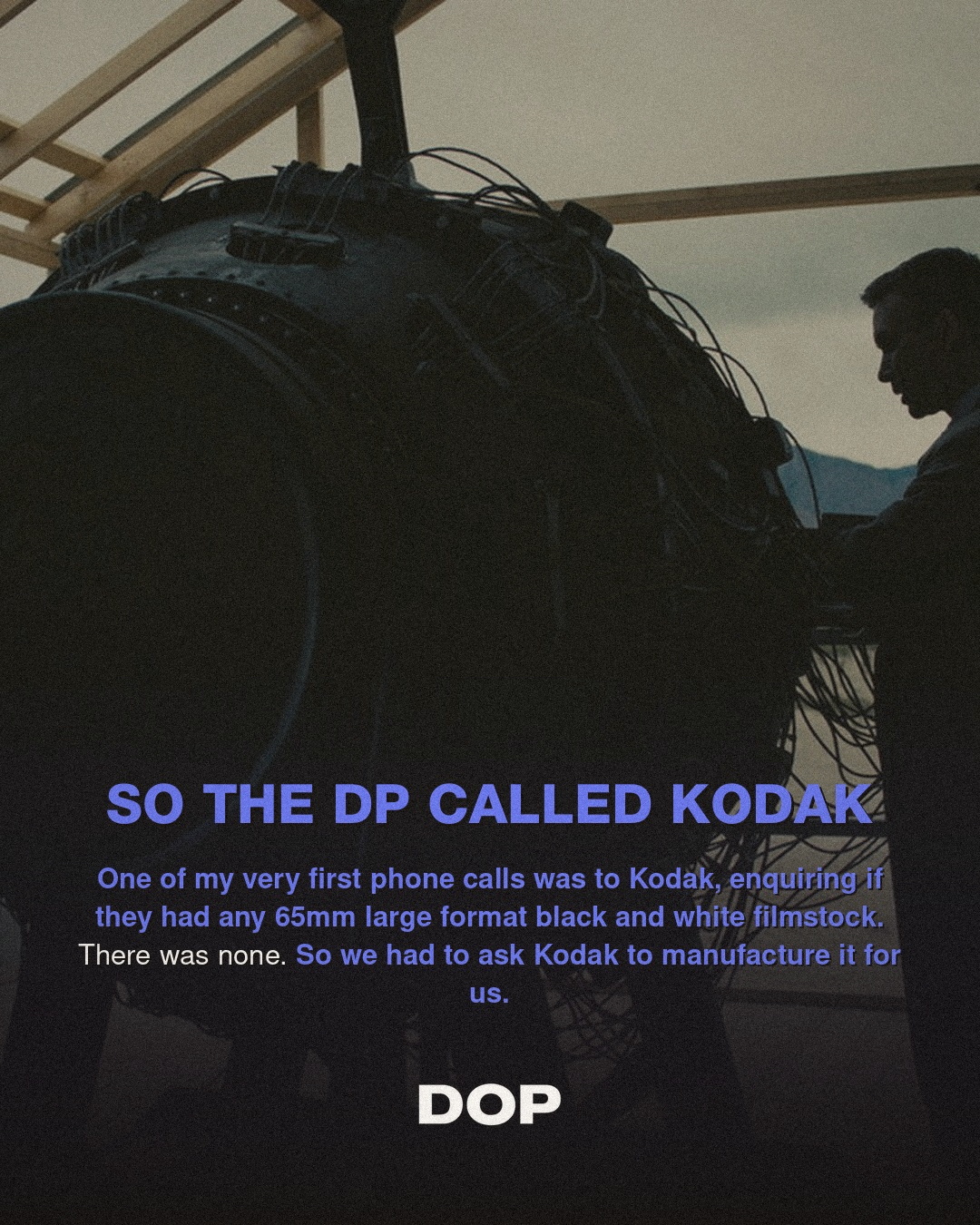
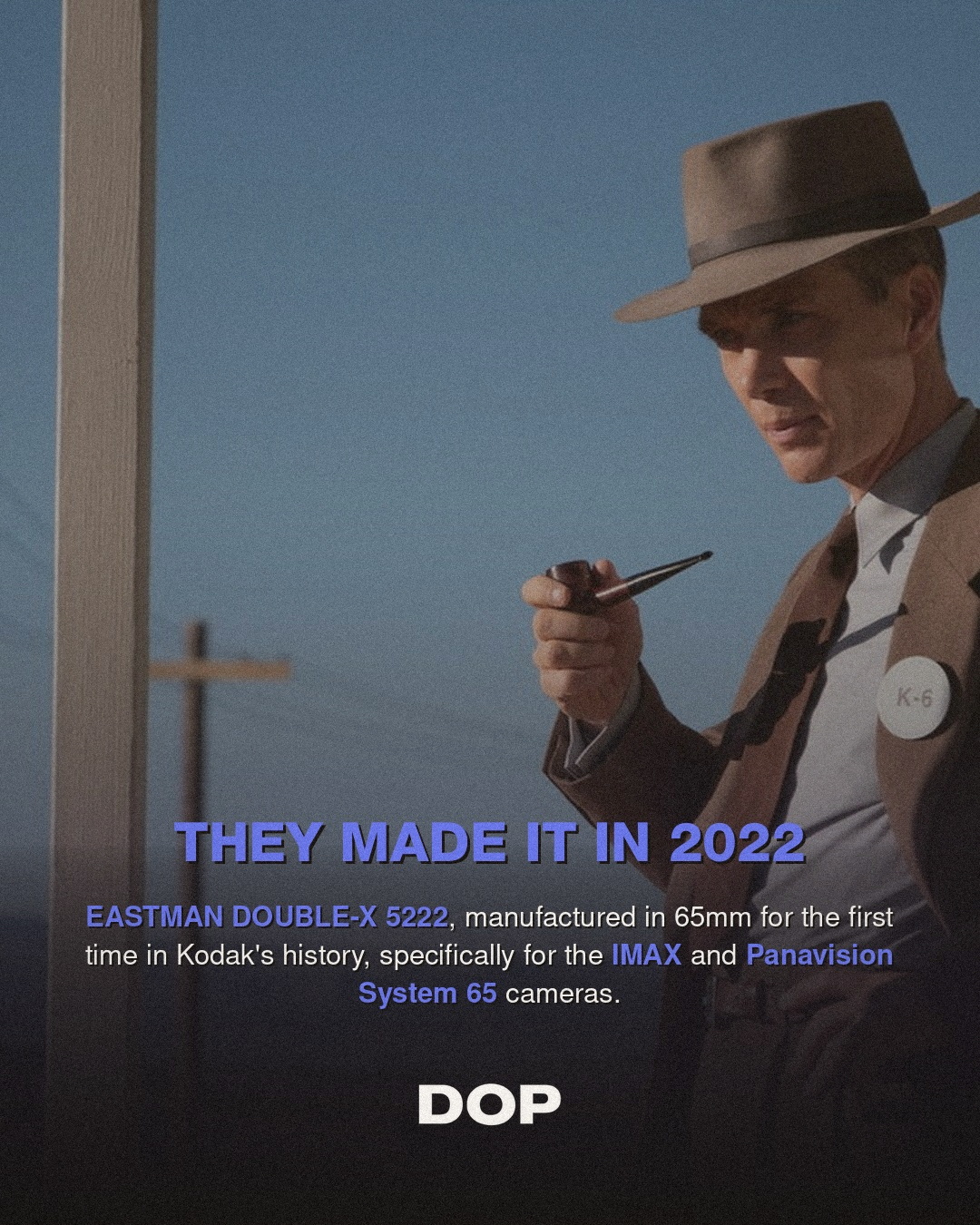
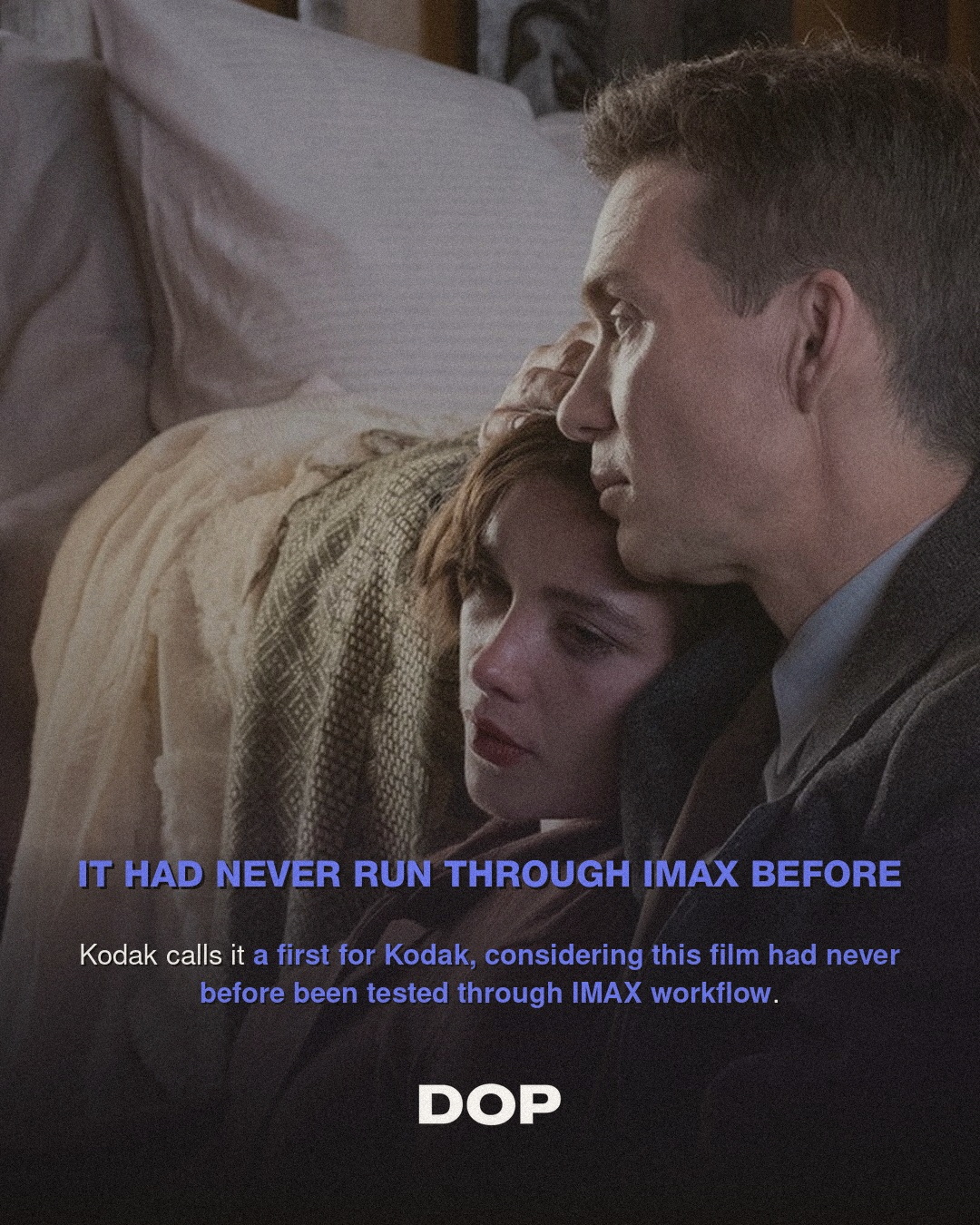
While Kodak’s classic EASTMAN DOUBLE-X 5222 emulsion had long been a staple of 35mm and 16mm cinematography, the Rochester factory had never coated, slit, or perforated the emulsion for large-format 5-perf 65mm or 15-perf IMAX capture. Van Hoytema picked up the phone to Kodak with an audacious proposition: formulate, manufacture, and spool a completely new large-format stock under an unforgiving pre-production deadline.
Engineering the Impossible Emulsion
Kodak’s technical team in Rochester embraced the challenge, but scaling a photochemical formulation to 65mm width involves profound chemical and physical obstacles. The emulsion thickness, anti-halation layer, and physical backing had to be re-engineered so the film would remain structurally sound under the extreme acceleration of 15-perf IMAX transport mechanisms, which pull film through the gate at roughly six feet per second.
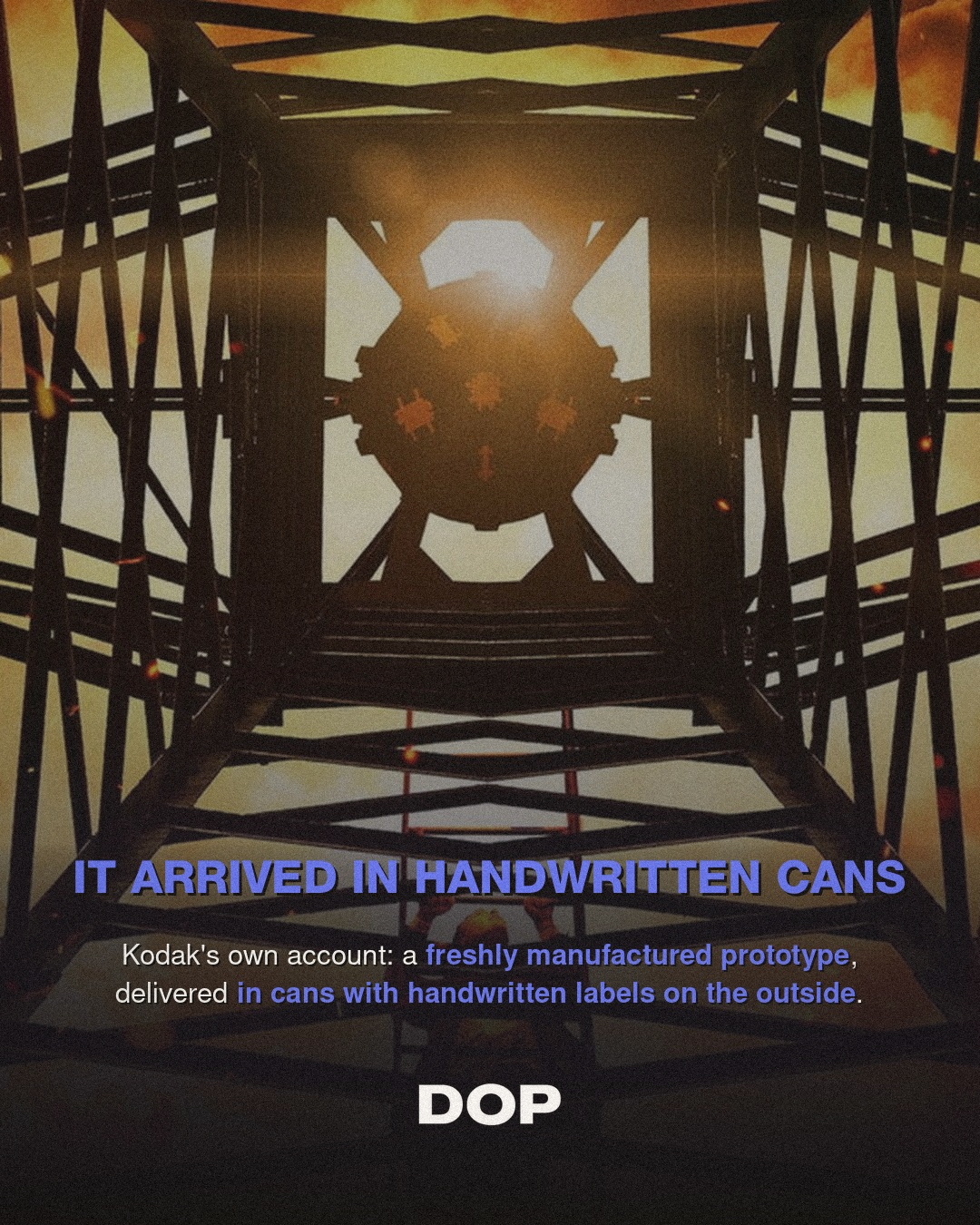
The initial experimental batches arrived at the production office in plain metal cans with handwritten labels. Upon threading these prototypes through IMAX MSM 9802 and Panavision System 65 cameras, the camera team encountered severe mechanical issues. Unlike standard color negative stocks that utilize a lubricated rem-jet backing, the monochrome stock caused immense friction, resulting in static discharge artifacts, dust accumulation, and severe gate scratching.
“We had to rebuild the camera internals from scratch. Every gate, pressure plate, and guide roller had to be microscopically smoothed so this new stock wouldn’t shred under the violent pull of the IMAX movement.”
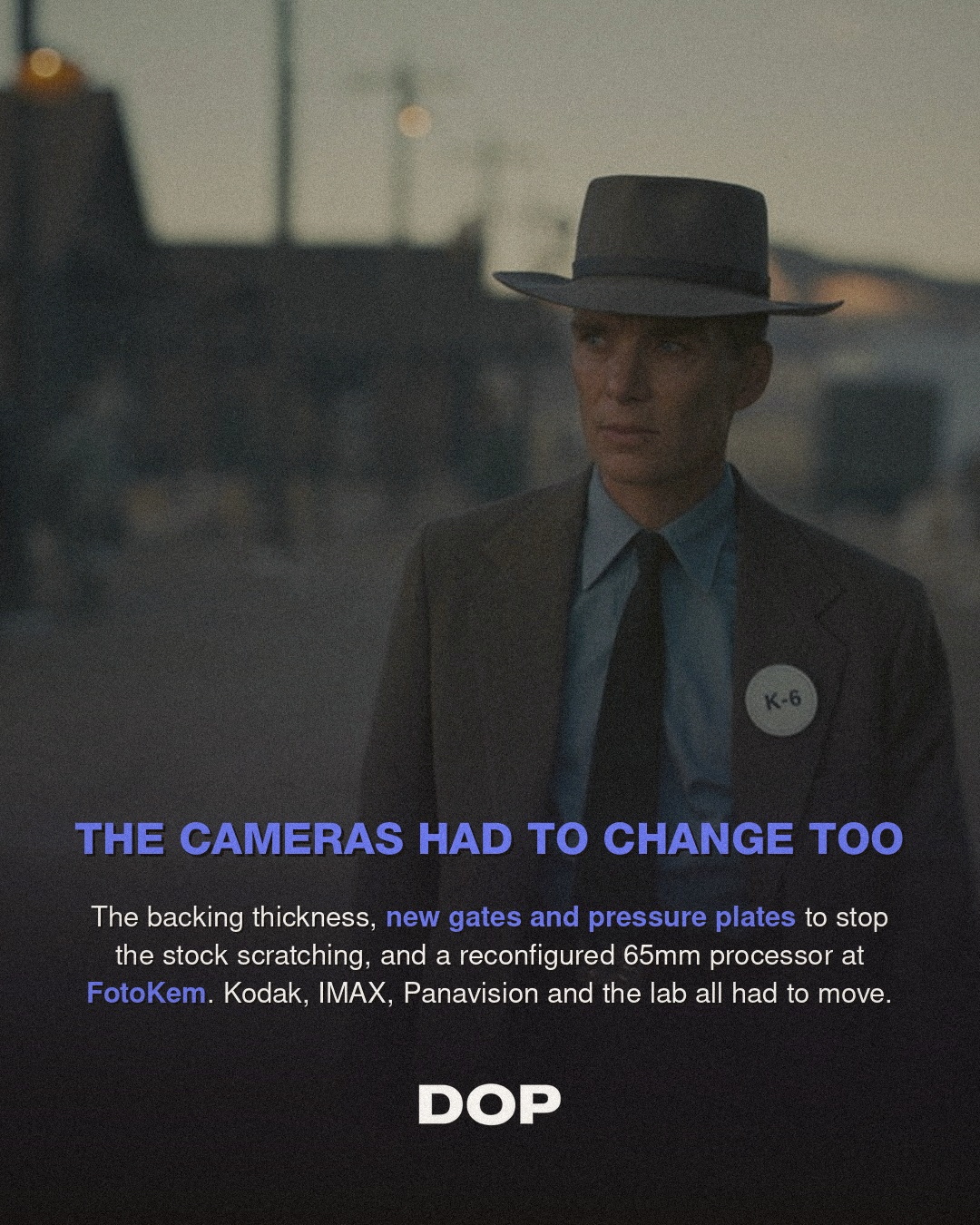
Panavision and IMAX engineers worked in tandem with legendary lab FotoKem to re-machine custom camera gates, Teflon-coated pressure plates, and custom continuous-feed processing racks. FotoKem modified their photochemical processing line to handle 65mm black-and-white development, establishing specialized bath chemistries to maintain consistent gamma curves and micro-contrast across miles of negative.
Lighting and Optics for 65mm Double-X
Shooting Double-X in large format demanded a fundamental shift in Hoyte van Hoytema’s lighting methodology. Rated conservatively around EI 250 in daylight and EI 200 in tungsten, the stock lacks the forgiving dynamic range and deep shadow latitude of modern color negative stocks like VISION3 500T 5219. Van Hoytema had to rely heavily on precise contrast ratios and key-to-fill balancing, utilizing large soft sources through unbleached muslin paired with hard negative fill to carve deep, sculptural dimensionality out of the actors’ faces.
Optically, the production paired Panavision Spherical 65mm lenses and modified Hasselblad medium-format glass with custom close-focus relays. Because large-format monochrome strips away color separation, every nuance of depth must be communicated through tonal gradation, surface texture, and optical falloff. The resulting imagery delivers an overwhelming sense of presence, an intimate, high-resolving silver gelatin portrait rendered on a monumental canvas.
Following their previous photochemical masterworks on Interstellar, Dunkirk, and Tenet, van Hoytema and Nolan once again pushed the boundaries of what physical celluloid can achieve. By forcing the industrial machinery of Kodak, FotoKem, and Panavision to innovate, they proved that photochemical filmmaking is not a nostalgic relic, but an evolving, state-of-the-art medium capable of unmatched visual power.
This article contains affiliate links. We may earn a small commission at no extra cost to you. Learn more.