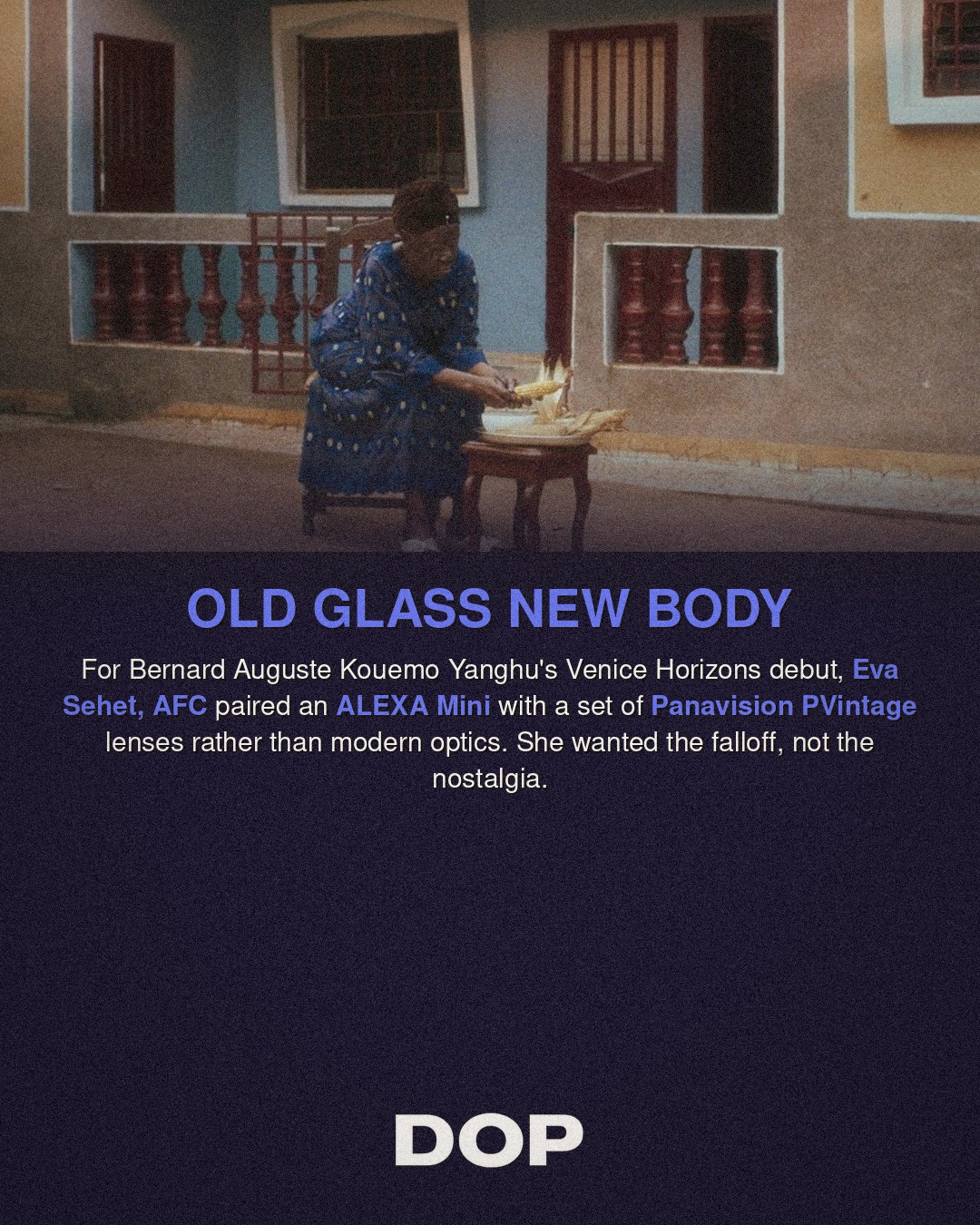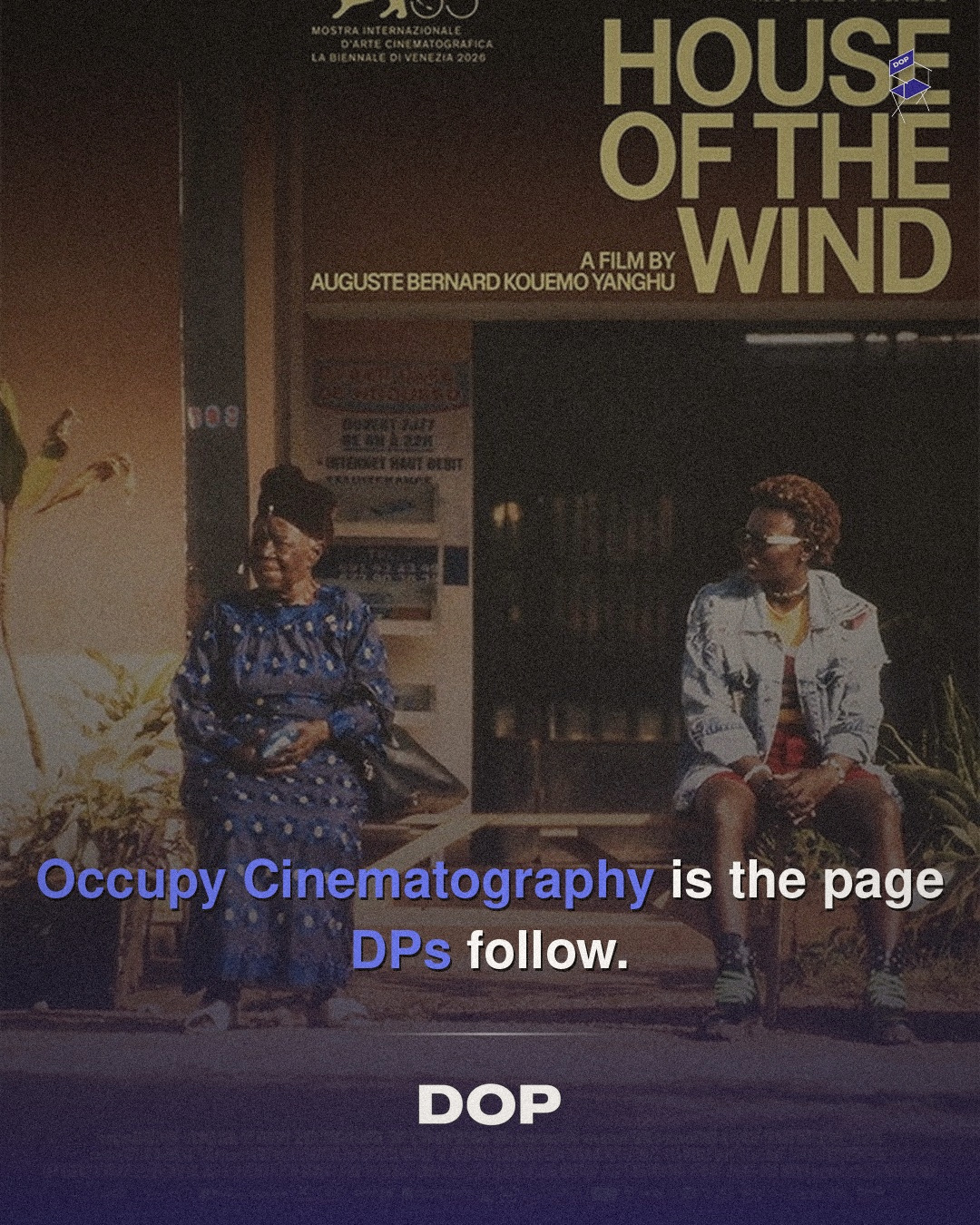
When a film turns its gaze upon domestic grief, the lens must do far more than merely resolve detail, it must negotiate intimacy. Premiering in the Horizons section of the Venice International Film Festival, House of the Wind follows an elderly matriarch stranded in the cavernous quiet of her family estate in Yaoundé, Cameroon, after her children depart for new lives in the West. It is a work defined by stillness, shifting generational tides, and the palpable weight of empty space.
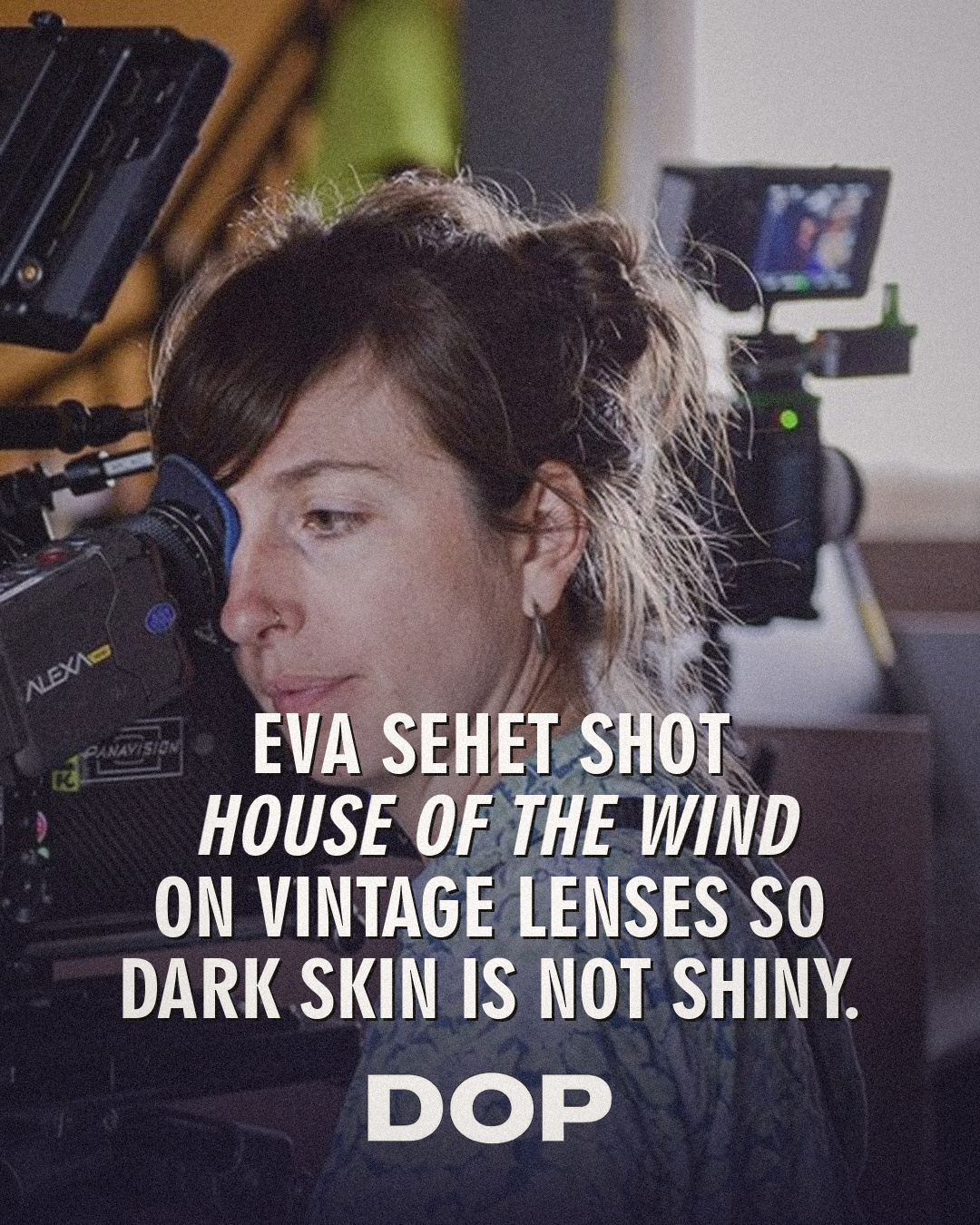
To articulate this emotional landscape, French cinematographer Eva Sehet, AFC looked past contemporary trends of clinical sharpness. While pairing her package with the proven latitude of the ARRI ALEXA Mini, Sehet made a deliberate, tactile choice for her primary optical train: Panavision’s PVintage series. The decision was not driven by a romanticized craving for retro artifacts, but by a rigorous optical calculation centered entirely on the human face.
Optics Tailored to Melanin: The PVintage Philosophy
Modern cinema lenses, designed to deliver razor-sharp MTF curves, ultra-low chromatic aberration, and aggressively controlled flare characteristics, can often prove hostile to deep skin tones. When exposed under digital sensors, modern multicoatings tend to exaggerate specular bounce, turning the natural oils of darker skin into harsh, reflective hot spots that read as synthetic sheen on camera.
Sehet recognized that honoring her lead actress required glass with a gentler micro-contrast signature. Panavision’s PVintage primes, re-housed vintage Ultra Speed optics originating from the 1970s, utilize single-layer optical coatings and classic spherical element formulas. This internal design introduces a gentle blooming around high-contrast transitions and lowers high-frequency sharpness just enough to wrap the subject in a velvety, naturalistic roll-off.
“The choice was skin, not nostalgia. Older glass offers a softer focus falloff and a velvety rendering that keeps deep complexions from picking up the synthetic shine modern optics impose.”
Through this optical combination, deep skin tones retain their rich, natural warmth, from deep mahogany to subtle copper highlights, without collapsing into oily specular kick. The ALEXA Mini’s ALEV III sensor, renowned for its organic, film-like color science, acted as a receptive digital canvas, effortlessly translating the subdued contrast curves produced by the PVintage glass.
Sculpting Equatorial Daylight and Domestic Shadows
Working on location in Yaoundé introduced severe exposure dynamic hurdles. Equatorial exterior sunlight routinely punched past ten stops over interior shadow values. Rather than battling the natural light of Cameroon with heavy artificial HMIs, Sehet embraced the environmental realities, orchestrating a nuanced balance of natural bounce and deliberate negative fill.
Inside the protagonist's sprawling residence, Sehet positioned large, diffused bounce sources, frequently unbleached muslin pushed with moderate daylight-balanced LEDs, to softly model the actress's features while maintaining deep, enveloping blacks within the background corridors. This contrast ratio underscored the protagonist’s shrinking universe: the harsh, blinding daylight of the outside world set against the cool, quiet shelter of an increasingly desolate home.
By managing her stops closely, frequently shooting near a T2.0 to lean into the sweet spot of the PVintage glass, Sehet allowed the shallow depth of field to gently isolate the matriarch against the softening architectural details of her rooms. The optical falloff at wide apertures produces an almost tactile sense of presence, rendering domestic clutter as impressionistic washes of memory.
Camera Language as an Instrument of Empathy
Camera movement in House of the Wind is practiced and restrained. The camera moves with the slow, deliberate cadence of its elderly subject, rarely imposing an external rhythm onto her routine. The physical footprint of the ALEXA Mini allowed Sehet to embed the camera in tight, domestic nooks without dictating unnatural blocking or forcing the performer to accommodate the gear.
In long, uninterrupted single-takes, the optical characteristics of the Panavision glass subtly activate. Subtle edge aberrations and organic, warm veiling glares from distant practical lamps inject an atmospheric vibration into the frame, preventing the stillness from slipping into sterility. The frame feels lived-in, worn smooth by decades of family life that has abruptly evaporated.
In an era where many cinematographers treat lens choice as a shortcut to stylized grain or vintage pastiche, Eva Sehet’s work on House of the Wind stands as a vital masterclass in physiological and emotional intention. By prioritizing the rendering of the human subject above resolution charts, Sehet delivers an image of profound dignity, capturing not just the mechanics of light on skin, but the interior weight of solitude.
This article contains affiliate links. We may earn a small commission at no extra cost to you. Learn more.