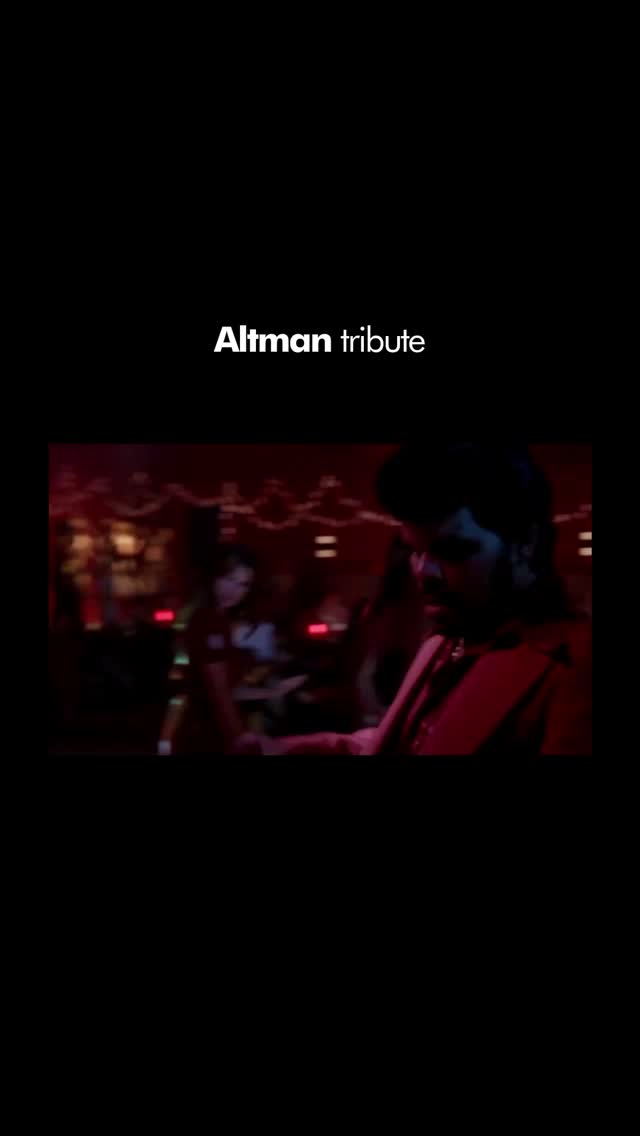
In October 1997, Paul Thomas Anderson announced his arrival as a major cinematic voice with the opening moments of Boogie Nights. Before a single line of substantial dialogue is delivered, the camera takes us on a breathless, three-minute unspooling through the neon-soaked exterior and crowded interior of the Hot Traxx nightclub. It remains one of the most audacious opening tracking shots in American cinema, establishing a visual language that defined the film's kinetic, immersive energy.
Lensed by veteran cinematographer Robert Elswit, ASC, the sequence functions less like a technical flex and more like an enthusiastic party guest weaving through a crowded room. Rather than observing the action from a clinical distance, Elswit’s camera glides past marquee lights, ducks around velvet ropes, and effortlessly tracks through dynamic character exchanges. It introduces over a dozen principal characters in a single unbroken Steadicam shot, effortlessly establishing character relationships and hierarchy.
The Technical Precision of Steadicam Mastery
Executed by legendary Steadicam operator Andy Shuttleworth, the shot required rigorous spatial planning and flawless practical lighting choreography. Captured on 35mm film using Panavision Panaflex cameras paired with classic Panavision Anamorphic lenses, the sequence presented massive exposure challenges. Moving from the brightly lit street marquee into the moody, warm interior of the nightclub meant Elswit had to meticulously balance practical neon sources with hidden ambient fills without ever catching an accidental lens flare.
Elswit relied heavily on the rich color rendition of Kodak Vision film stocks to capture the era's signature disco gold and deep amber hues. The anamorphic glass provided a painterly, wide aspect ratio that let characters enter and exit frame peripherally while keeping the central action tightly focused. The subtle falloff and gentle distortion at the edges of the frame heightened the fever-pitch nostalgia of the 1970s San Fernando Valley.
"The camera wasn't just observing the party; it was dancing with the characters, establishing a fluid kinetic relationship between audience and atmosphere."
Altmanesque Homage and the San Fernando Valley
The influence of Robert Altman, specifically the iconic opening of The Player and the multi-narrative tapestry of Nashville, is felt in every frame. Yet, Anderson and Elswit infused this homage with the aggressive, musical pacing of Martin Scorsese’s Goodfellas. The camera moves with a relentless rhythm synced to the disco track "Machine Gun" by Commodores, transforming the San Fernando Valley into a mythic landscape of ambition, excess, and found family.
What makes the shot truly remarkable is its narrative efficiency. In three continuous minutes, we meet Jack Horner, Amber Waves, Rollergirl, Buck Swope, and finally, Eddie Adams washing dishes in the back room. Each character interaction feels organic, catching fleeting beats of vanity, desire, and insecurity. The visual handoffs between characters require frame-accurate blocking and light cues, making the camera an active storyteller rather than a passive observer.
The Birth of a Visionary Collaboration
Boogie Nights marked the early stages of one of modern cinema’s most fruitful director-cinematographer partnerships. Elswit and Anderson would go on to collaborate on Magnolia, Punch-Drunk Love, and the masterpiece There Will Be Blood, for which Elswit won the Academy Award for Best Cinematography. The foundation for that visual shorthand was forged right here in the heat of the Valley.
Decades later, this opening sequence stands as a masterclass in visual storytelling, technical execution, and thematic tone-setting. Through precise camera operating, warm anamorphic glass, and an unyielding commitment to immersion, Elswit and Anderson constructed an indelible gateway into a bygone era of American filmmaking.