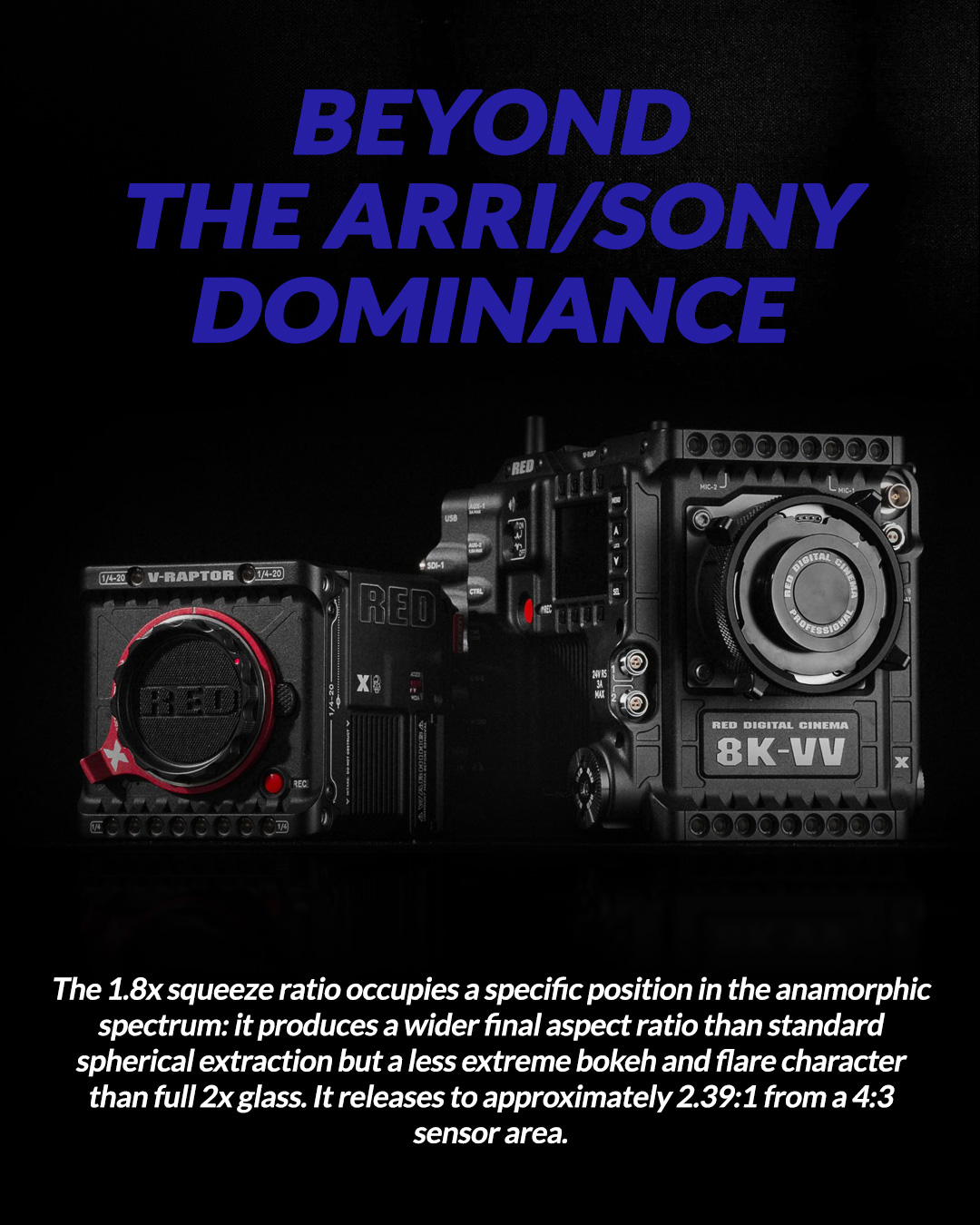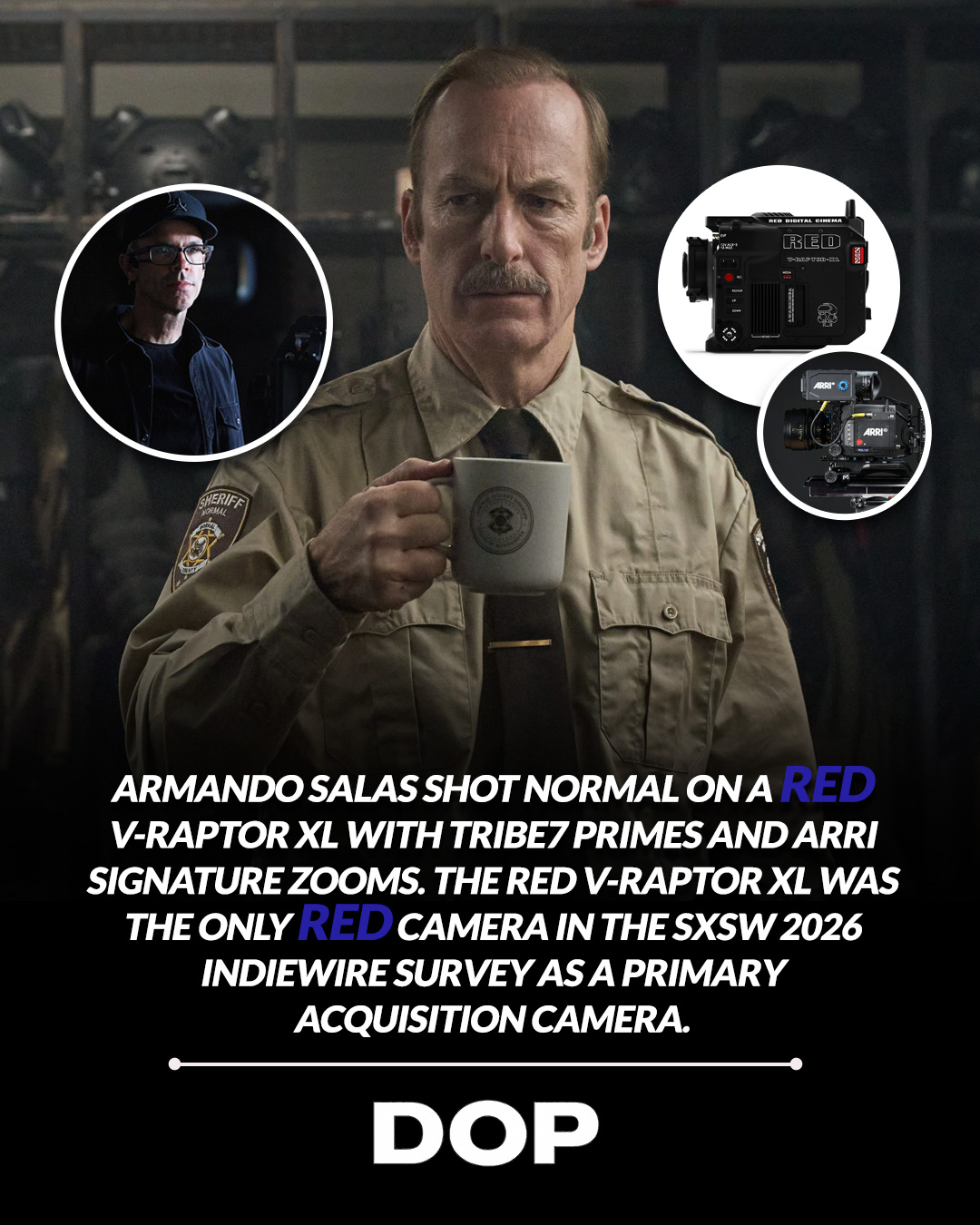
Every year, festival equipment surveys tell a predictable story. Browse through the technical rundowns of Sundance or SXSW, and you are bound to see an overwhelming consensus: the ARRI ALEXA Mini LF, the ALEXA 35, and the Sony VENICE consistently account for the lion’s share of narrative competition entries. The prevailing indie grammar leans heavily toward painterly, warm-toned, forgiving digital textures. Yet when IndieWire published its SXSW 2026 cinematographers survey, one title stood out as an unmistakable outlier: Armando Salas chose the RED V-RAPTOR XL as his primary acquisition tool for Normal.
Out of fifty narrative features polled, Normal was the sole production to rely on RED’s flagship multi-format 8K camera as its A-camera system. In an ecosystem where DPs often gravitate toward established festival-friendly color pipelines, Salas, whose nuanced, atmosphere-heavy work on shows like Ozark and The Terminal List has demonstrated a masterclass in modern digital control, embraced the V-RAPTOR XL's unique capture capabilities to deliver something visually deliberate.
The Resolution vs. Texture Equation
The RED V-RAPTOR XL is a technical powerhouse, boasting a VistaVision-format 35.4-megapixel CMOS sensor capable of capturing 8K at up to 120 frames per second. However, among narrative cinematographers, modern RED sensors have often carried an unfair reputation for clinical sterility. Where ARRI’s ALEV III and ALEV 4 architectures emphasize a gentle highlight roll-off and organic color reproduction out of the box, RED’s IPP2 color science prioritizes maximum dynamic latitude, micro-contrast, and pristine spatial resolution.
The modern cinematographer's role is not simply to soften a digital sensor, but to treat high-resolution capture as a pristine negative waiting for the right optical friction.
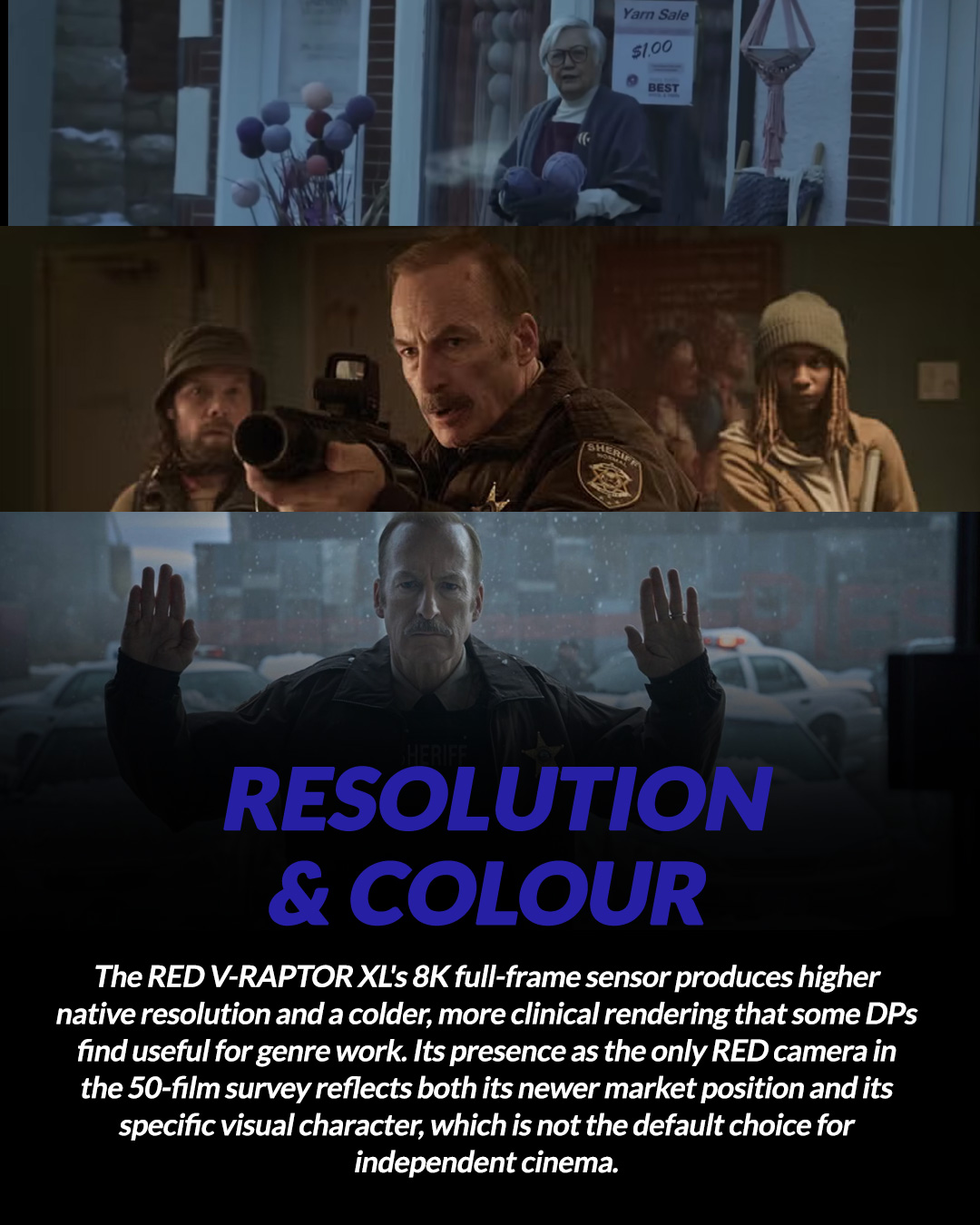
When shooting a character-driven project like Normal, an unchecked 8K full-frame sensor can easily render skin and environments with harsh, hyper-real detail. The solution, as seasoned DPs know, is never to fight the sensor’s resolution, but to curate glass that injects organic aberration, dimensional focus falloff, and tactile texture directly onto the silicon.
Taming the Sensor with Tribe7 Optics
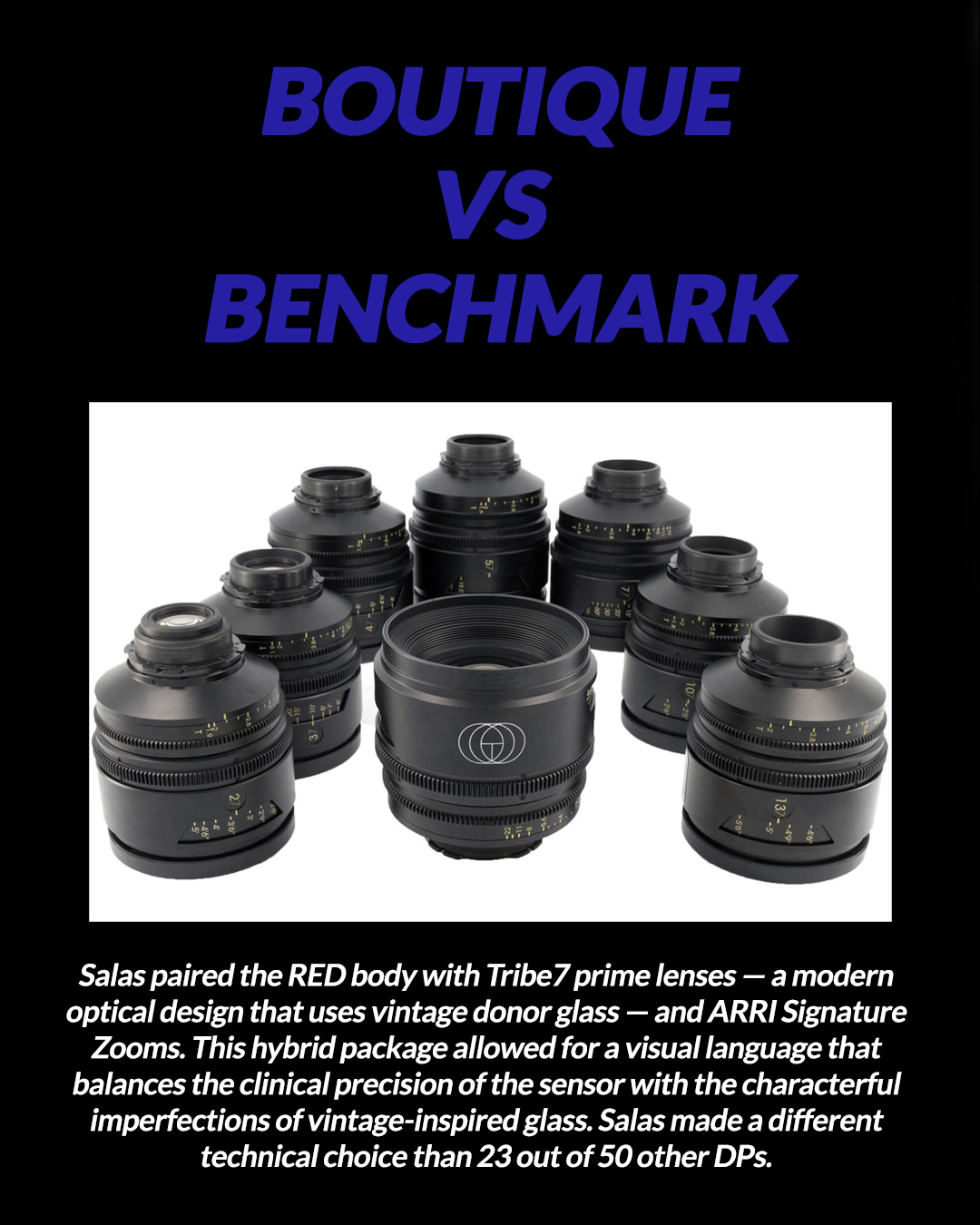
To counteract the clinical tendencies of the 8K sensor, Salas turned to Tribe7 Blackwing7 prime lenses. Engineered by Bradford Young, ASC, and Neil Fanthom with mechanical housing expertise from True Lens Services (TLS), Tribe7 lenses were designed specifically to give cinematographers control over expressive optical characteristics. Utilizing proprietary vintage-inspired elements, the Blackwing7 range introduces nuanced flaring, controlled peripheral softness, and a flattering rendering of complex skin tones that takes the sharp digital edge off the RED sensor.
By pairing the wide-format V-RAPTOR XL with Tribe7 glass, Salas constructed an imaging chain that delivers the best of both worlds. The camera’s immense resolving power preserves fine spatial detail, deep shadow nuance, and generous reframing latitude in post-production, while the optics ensure that faces retain an inviting, analog warmth and gentle focus roll-off. It is an intentional push-pull dynamic: the sensor delivers absolute fidelity, while the glass imprints artistic intent.
A Hybrid Optical Strategy for Modern Production
To supplement the Tribe7 primes during high-pace shooting scenarios, the production integrated ARRI Signature Zooms. While zoom lenses can occasionally introduce clinical uniformity, the Signature Zooms are celebrated for their gentle tonal transitions, creamy out-of-focus backgrounds, and warm, lifelike skin rendition across the focal range. Their lightweight magnesium housings and telecentric design kept the V-RAPTOR XL package agile for on-set maneuverability without sacrificing optical character.
Ultimately, Salas’s approach on Normal demonstrates that the dominance of any single camera brand on the festival circuit is more a matter of industry habit than creative limitation. By pairing one of the industry's most advanced high-resolution sensors with deliberately expressive, character-rich glass, Salas proved that the RED V-RAPTOR XL can produce a rich, cinematic image capable of standing out in a crowded landscape of conventional festival aesthetics.
This article contains affiliate links. We may earn a small commission at no extra cost to you. Learn more.