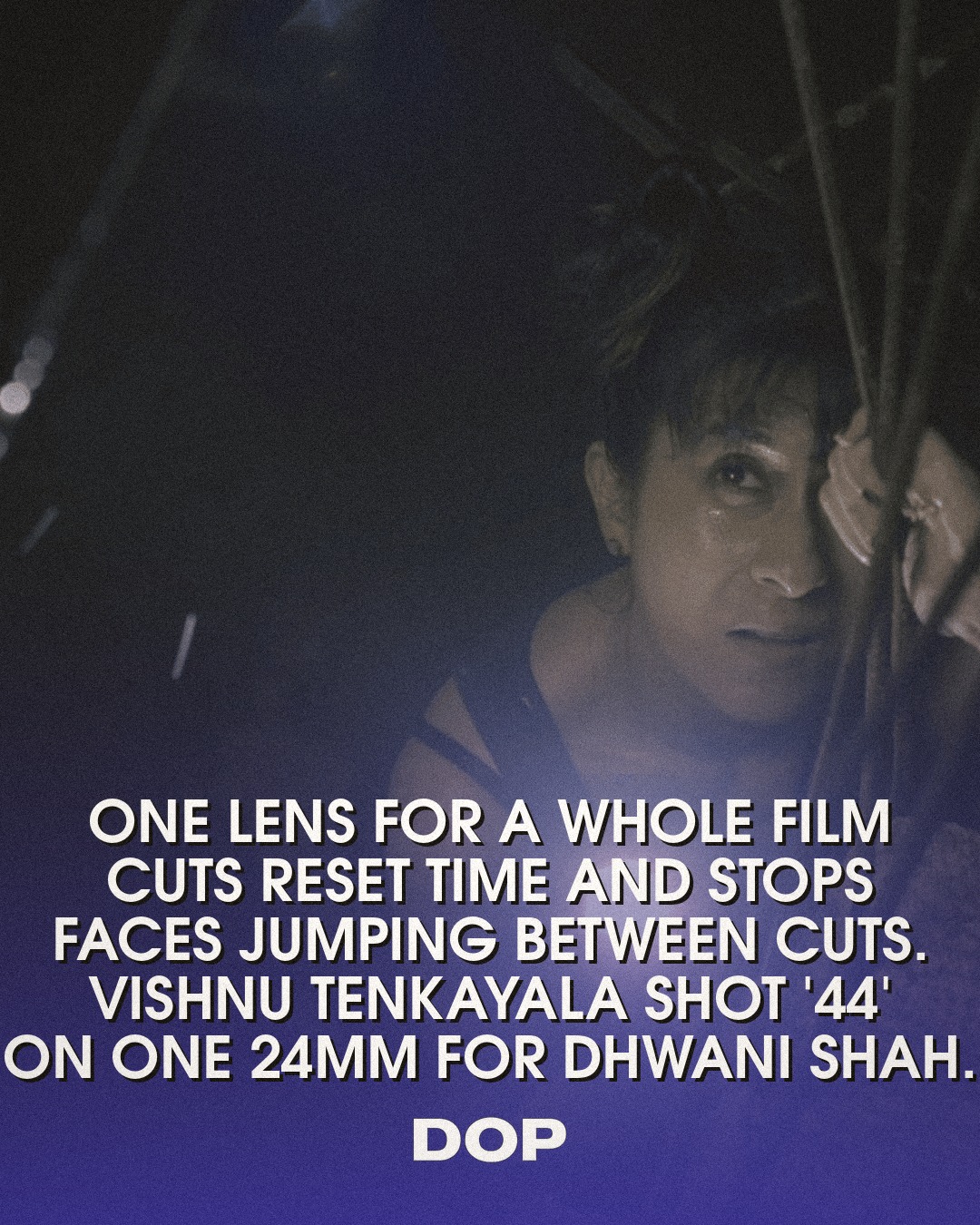
Micro-budget genre filmmaking has long been the ultimate proving ground for cinematographic ingenuity. When resources are stripped to the bone, visual storytelling cannot hide behind bloated grip trucks or high-end lighting packages. In the case of 44, a self-produced horror short directed by Dhwani Shah and shot by cinematographer Vishnu Tenkayala, radical technical constraints became the foundation for a cohesive, anxiety-inducing visual language.
The Spatial Tension of a Single Focal Length
Rather than lugging a sprawling lens case to a tight, volunteered location, Tenkayala made the bold decision to capture the entirety of 44 on a single prime: the Sony FE 24mm f/1.4 G Master mounted to a Sony FX6. Committing to a single focal length is one of the purest ways to impose visual discipline on a production. At 24mm on a full-frame sensor, the field of view sits squarely in the immersive wide realm without crossing over into the distracting optical distortion of ultra-wides.
This focal choice forced the camera into intimate proximity with the protagonist. In psychological horror, distance equals detachment; by physically moving the 24mm close to the subject’s face, Tenkayala exploited the subtle perspective exaggeration to heighten vulnerability. The background recedes just enough to emphasize spatial isolation while maintaining environmental context, crucial for establishing geography in suspense-driven scenes.
"Locking the production into a single 24mm prime eliminated reset latency between setups and locked down facial geometry, giving every cut an unbroken psychological continuity."
Beyond aesthetic intimacy, the decision solved a critical editorial challenge. By maintaining identical perspective rendering and depth compression across every setup, cutting between wide master shots and tighter singles avoided the jarring optical shifts that frequently plague low-budget indie productions. The geometry of the face remained constant, lending the edits an effortless visual cadence that sustained tension rather than shattering it.
Sculpting Darkness with Tactical Flashlights
In low-light horror cinematography, what you leave in the dark is just as critical as what you illuminate. The technical synergy between the FX6’s back-illuminated full-frame sensor and the f/1.4 aperture of the G Master allowed Tenkayala to leverage the camera’s dual-base ISO, specifically the high-sensitivity 12,800 base, to work at exceptionally low foot-candle levels.
Instead of relying on heavy cinematic heads and diffusion frames, the team keyed significant portions of the film with a high-intensity Fenix hunting torch. Tactical hunting flashlights offer a distinct throw: an intense, razor-sharp hotspot surrounded by a steep drop-off into rapid falloff. When weaponized on set, this hard beam cut through the frame, generating stark, high-contrast chiaroscuro with aggressive specular highlights and deep, inky shadows.
Managing this raw, undiffused source demanded exact spatial choreography. With the FX6’s wide dynamic range holding highlight detail in the flashlight's central beam, the crew could embrace deep negative fill, letting ambient room noise fade into the noise floor of the sensor while keeping the focal point razor-sharp and dynamic.
Efficiency as a Narrative Engine
On a micro-budget indie set staffed by volunteers, time is the rarest commodity. Every lens swap eats precious minutes, disrupting performance momentum and exhausting the crew. By eliminating glass changes entirely, the production preserved continuity of rhythm on set, enabling Shah and Tenkayala to capture nuanced coverage under punishing schedule limits.
The visual success of 44 proves that intentionality consistently outperforms extravagance. By unifying optical perspective on a single high-speed prime and embracing unconventional, high-output tactical practicals, the filmmakers turned budgetary limitations into a masterclass in atmospheric genre cinematography.
This article contains affiliate links. We may earn a small commission at no extra cost to you. Learn more.