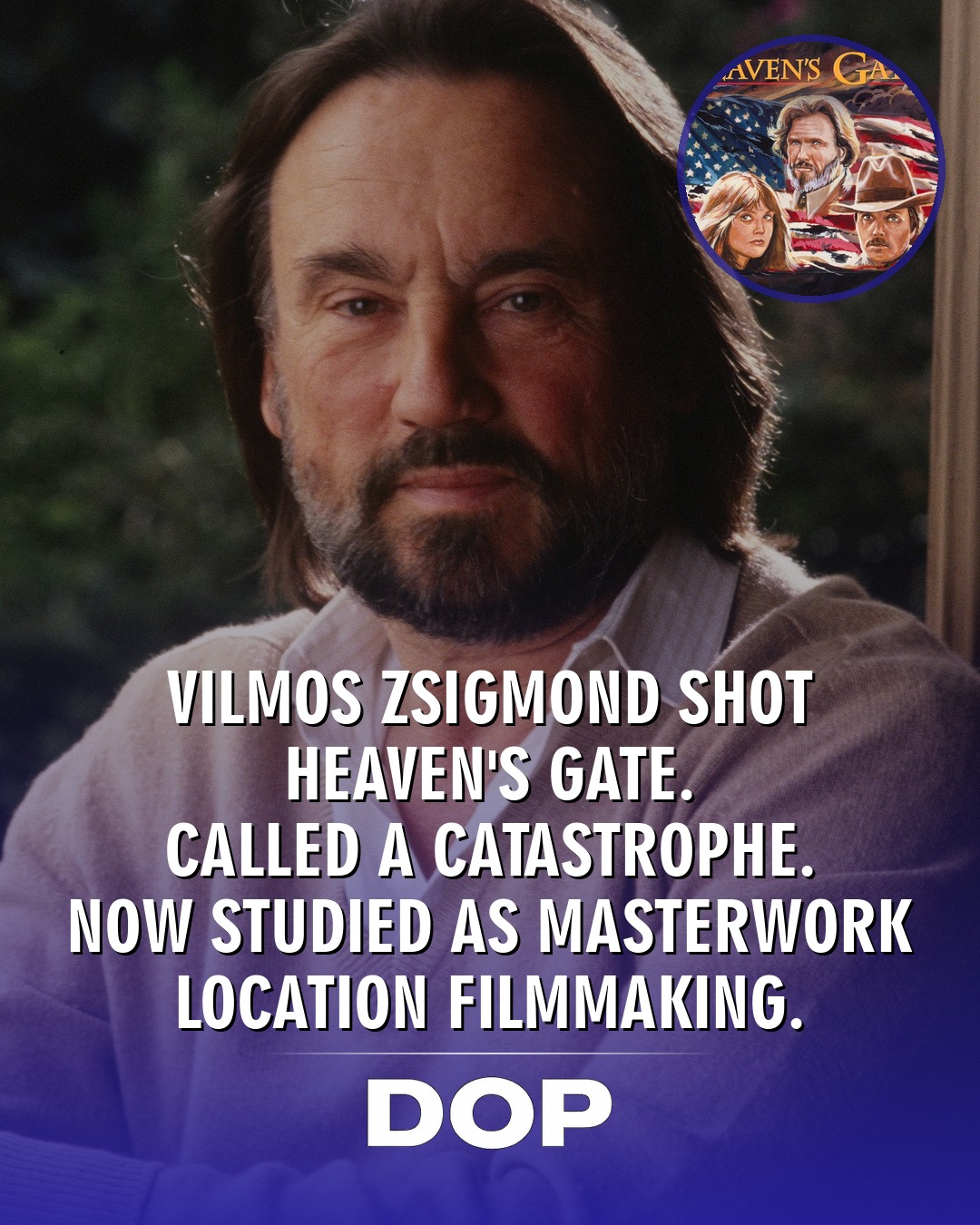
The saga of Michael Cimino’s Heaven’s Gate is etched into the annals of Hollywood lore, a cautionary tale of hubris, extravagance, and catastrophic failure that nearly brought down a legendary studio. Yet, beneath the sensational headlines and financial ruin, a quiet redemption has steadily unfolded. What was once dismissed as an overindulgent disaster is now, decades later, being re-evaluated through a critical lens, particularly for its breathtaking cinematography by the inimitable Vilmos Zsigmond, ASC. His work on Heaven’s Gate, initially lost in the film’s controversy, has emerged as a towering achievement in visual storytelling, a testament to the power of the image to transcend narrative missteps and industry verdicts.
Zsigmond’s approach to Heaven’s Gate was nothing short of audacious, a deliberate pursuit of a "faded photo" aesthetic that aimed to transport audiences back to the American West of the late 19th century. Filmed predominantly on location in the unforgiving landscapes of Montana, the production was a monumental undertaking, demanding an unparalleled commitment to naturalism. Zsigmond, known for his masterful use of available light and his ability to imbue even the most mundane scenes with a painterly quality, leaned heavily into practical lighting and atmospheric elements. Dust, smoke, and the golden hour became his primary tools, transforming the expansive sets and rugged terrain into living, breathing tableaux.
Crafting the Faded Canvas: Zsigmond's Vision
The visual signature of Heaven’s Gate is its extraordinary commitment to a period-accurate, almost sepia-toned reality. Zsigmond achieved this through a meticulous combination of filtration, exposure, and a deep understanding of natural light. He famously pushed the boundaries of film stock, often underexposing to crush the blacks and overexposing to blow out highlights, mimicking the limitations and unique qualities of early photographic processes. While specific camera and lens choices from such a sprawling production can be challenging to pin down definitively, Zsigmond was a known proponent of Arriflex cameras and a variety of prime lenses, likely favoring older, less corrected glass to introduce subtle imperfections and character. His preference for longer lenses for portraiture and wider lenses for expansive landscapes is evident throughout the film, capturing both the intimate struggles of its characters and the vast, indifferent beauty of the American frontier.
“The industry’s original verdict and film history’s verdict are not the same.”
One of the most striking aspects of Zsigmond's work is his profound understanding of atmosphere. The interiors of the Harvard sequence, for instance, are bathed in a soft, diffused light, evoking a sense of nostalgic elegance. In contrast, the dusty, sun-drenched exteriors of the Wyoming plains are often filled with particulate matter – whether natural dust stirred by horses or carefully introduced smoke – creating a tangible sense of air and depth. This wasn't merely decorative; it was integral to the storytelling, underscoring the harsh realities of frontier life and the often-gritty existence of the immigrants. The resulting images are not just beautiful; they are tactile, allowing the audience to feel the grit, the heat, and the very air of the period.
Beyond the Hype: Technical Mastery and Enduring Influence
The technical challenges of shooting Heaven’s Gate were immense. Working with a large cast, thousands of extras, and extensive period sets in remote locations required an extraordinary level of logistical planning and creative problem-solving. Zsigmond’s ability to maintain a consistent visual language across such a diverse range of environments, from the opulent ballrooms of Harvard to the desolate shantytowns of Casper, Wyoming, speaks volumes about his mastery. His collaboration with Cimino, while famously contentious at times, ultimately yielded a visual tapestry that is both grand in scale and intimate in its details.
The film’s notorious budget overruns and production woes led to its initial critical and commercial failure, overshadowing its artistic merits for decades. The heavily re-edited theatrical cut, shorn of much of its contemplative pacing and visual grandeur, did Zsigmond’s work a grave disservice. It wasn't until the restoration and re-release of Cimino's director's cut that the full scope of Zsigmond’s achievement truly began to resonate. This longer version allowed the cinematography to breathe, revealing its deliberate pacing and intricate visual design.
Today, Heaven’s Gate is no longer merely a footnote in Hollywood's cautionary tales. It has ascended to a position of academic reverence, frequently studied in film schools for its ambitious scope and, most crucially, for Zsigmond’s groundbreaking cinematography. His work on this film, alongside his legendary contributions to The Deer Hunter, Close Encounters of the Third Kind, and McCabe & Mrs. Miller, cemented his legacy as one of the most influential cinematographers of his generation. The "faded photo" aesthetic he pioneered here continues to inspire DPs seeking to infuse their historical narratives with a sense of authentic, lived-in reality. Heaven’s Gate, once a symbol of cinematic excess, has been redeemed by the enduring power of its images, proving that true artistry, even when initially misunderstood, will ultimately find its place in history.
The journey of Heaven’s Gate from catastrophe to cinematic canon is a powerful reminder that the immediate reception of a film does not always dictate its long-term artistic value. For cinematographers, it offers a profound lesson: commit to your vision, master your craft, and trust that the visual language you create will, in time, speak for itself, regardless of the storms it initially weathers.