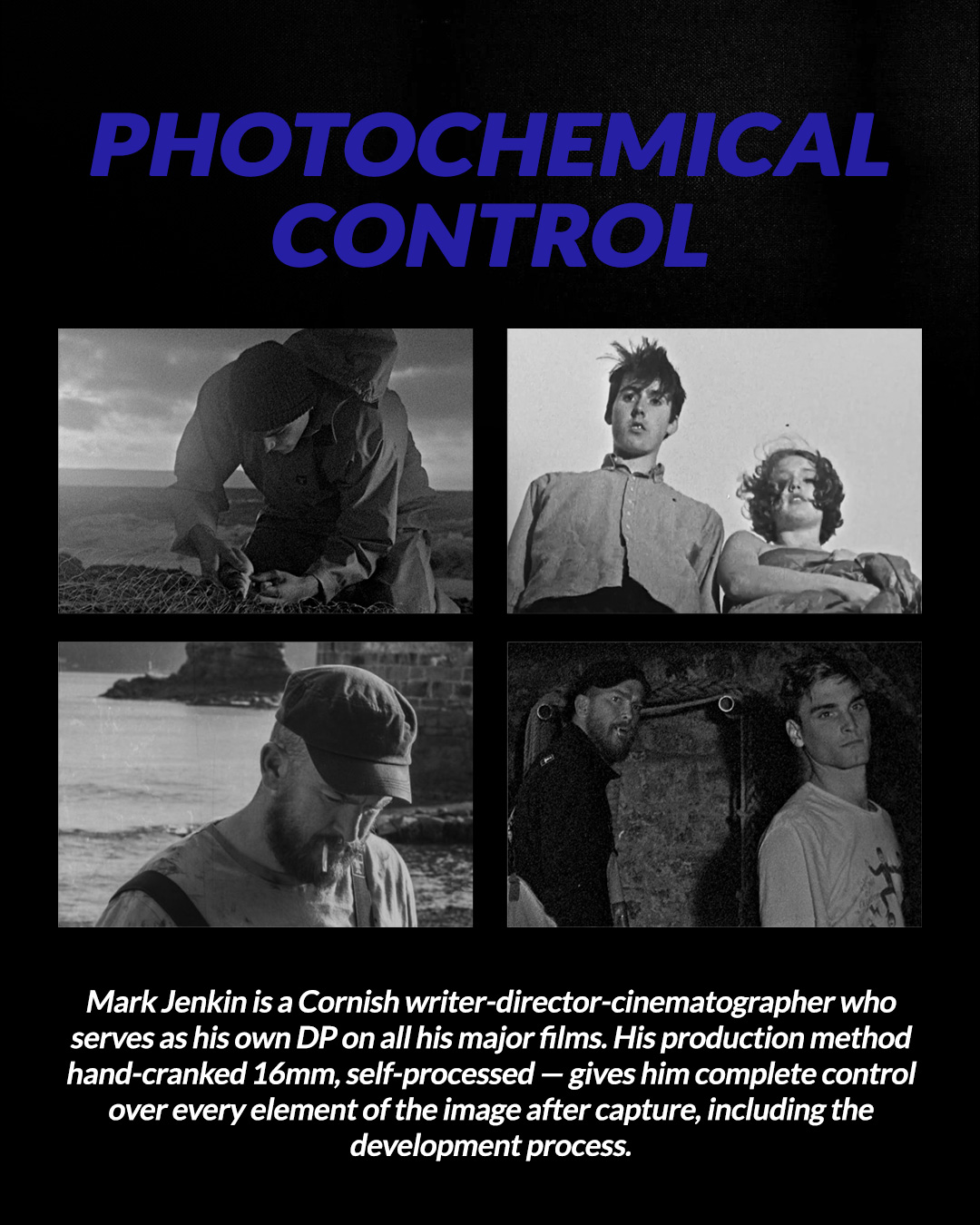
In an era dominated by hyper-clean large-format digital sensors and algorithmic color management pipelines, Cornish auteur Mark Jenkin represents something rare and essential: a filmmaker for whom the photographic medium is not merely a capture format, but an active, volatile collaborator. Serving as his own writer, director, cinematographer, and post-production artisan, Jenkin creates work where the tactile texture of the image carries as much emotional resonance as the narrative it contains.
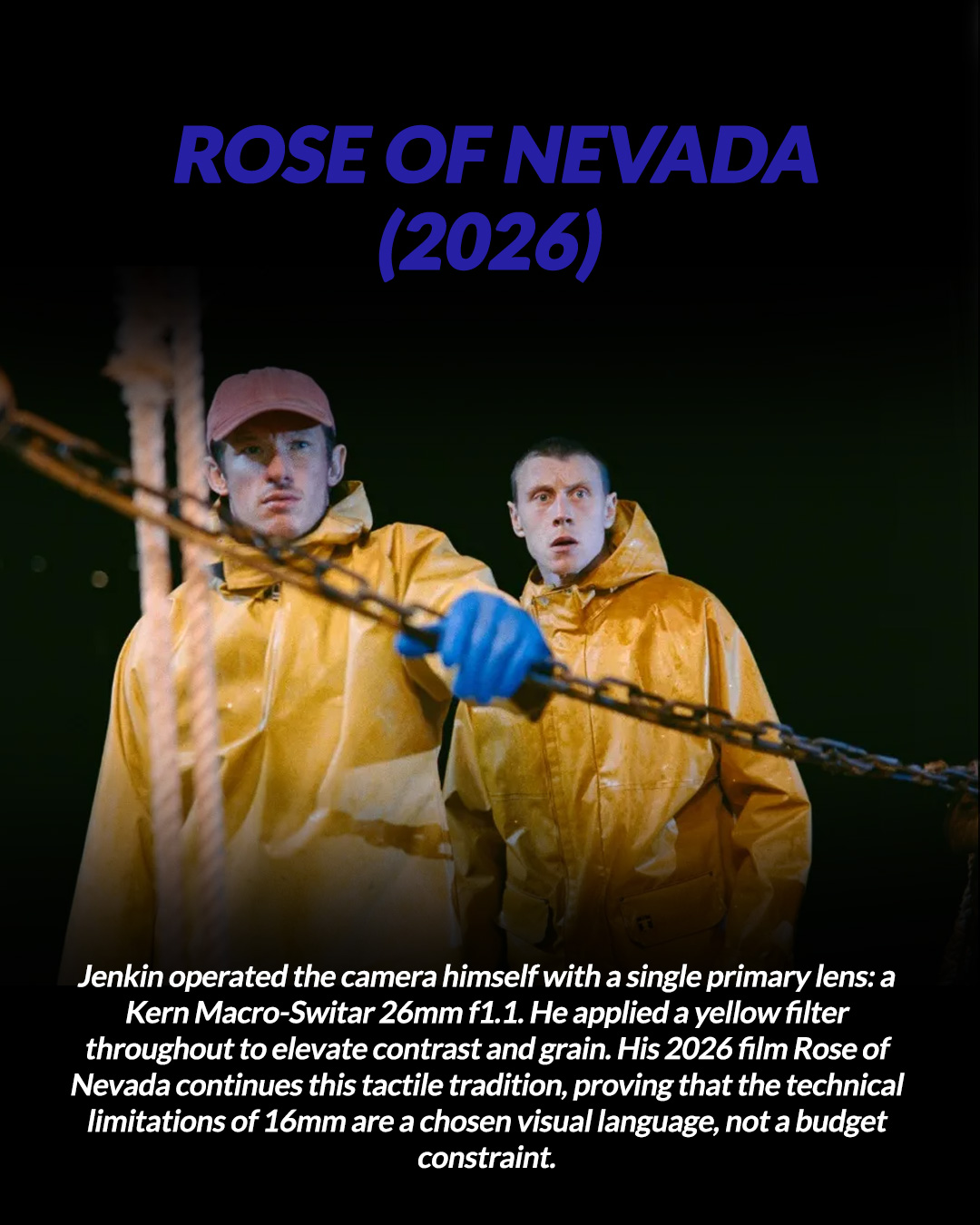
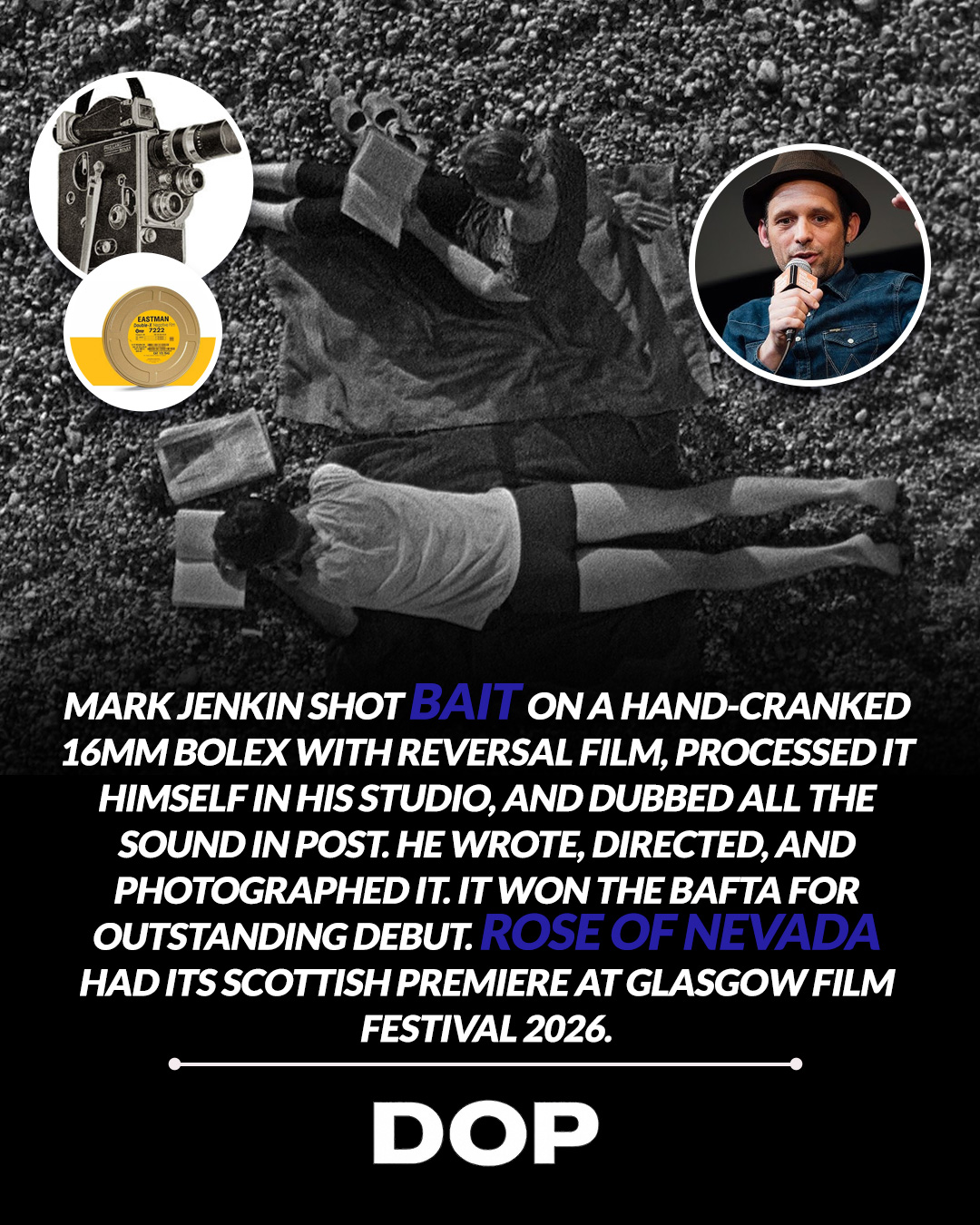
The breakthrough came with Bait (2019), a masterclass in low-budget formal radicalism that earned Jenkin the BAFTA for Outstanding Debut. Shot on a clockwork 16mm Bolex H16 camera using Kodak EASTMAN DOUBLE-X 7222 black-and-white negative stock, the visual language of the film feels both ancient and aggressively contemporary. Jenkin mounted a razor-sharp vintage Kern Macro-Switar 26mm f/1.1 lens to the turret, shooting with a yellow contrast filter baked in across nearly every frame. The yellow filtration cut through atmospheric haze over the Atlantic, darkening blue skies and pulling dramatic tonal separation out of Cornish granite and seafoam.
Photochemical Alchemy in the Darkroom
Crucially, Jenkin does not outsource his negative to commercial labs. Instead, he processes his film by hand in his studio in Newlyn, Cornwall, using Rewind tanks and custom chemical brews. This manual developing process completely upends traditional notions of clean exposure latitude. By manipulating temperature, agitation, and developer chemistry, Jenkin deliberately coaxes reticulation, chemical staining, and heavy silver grain clumps to the surface of the emulsion.
Self-processing celluloid allows adjustments to development chemistry that commercial labs simply cannot offer. This is not an aesthetic limitation, it is the cinema itself.
The result is a volatile moving image where halation flares unpredictably around high-contrast edges and microscopic dirt particles burn across the gate. Rather than flaws, these physical artifacts function as visual meter, pulses of light and matter that remind the viewer of cinema's mechanical and chemical foundations.
The Dislocated Image: Post-Sync Sound as Visual Strategy
Because the spring-driven Bolex runs loud and cannot record sync audio, Jenkin embraces the discipline of early sound cinema. Every single sound element, from ambient coastal winds and creaking fishing boats to dialogue and the Foley clatter of a pint glass, is rebuilt from scratch and dubbed entirely in post-production. This asynchronous audio track alters how we interpret the cinematography.
When dialogue does not match lip movements with digital precision, the viewer’s eye is freed to study the frame's graphic composition, the harsh directional light, and the deep shadow density carved out by the Double-X stock. It transforms everyday observational shots into haunting, montage-driven visual poems reminiscent of Soviet montage and early British Free Cinema.
Expanding the Canvas: From Bait to Rose of Nevada
Jenkin continued refining this handmade methodology in his 2022 color folk horror Enys Men, shot on 16mm color negative and cross-processed to push saturation into otherworldly territory. With his latest feature, Rose of Nevada, which held its Scottish premiere at the Glasgow Film Festival 2026, Jenkin scales up his vision with actors George MacKay and Callum Turner while maintaining his artisanal production ethos.
For cinematographers navigating a landscape increasingly flattened by digital uniformity, Mark Jenkin’s body of work serves as a vital provocation. By stripping the filmmaking apparatus down to its photochemical bare essentials, he demonstrates that singular visual style is not born from high-end camera packages, but from an uncompromising, physical relationship with the craft of light and emulsion.