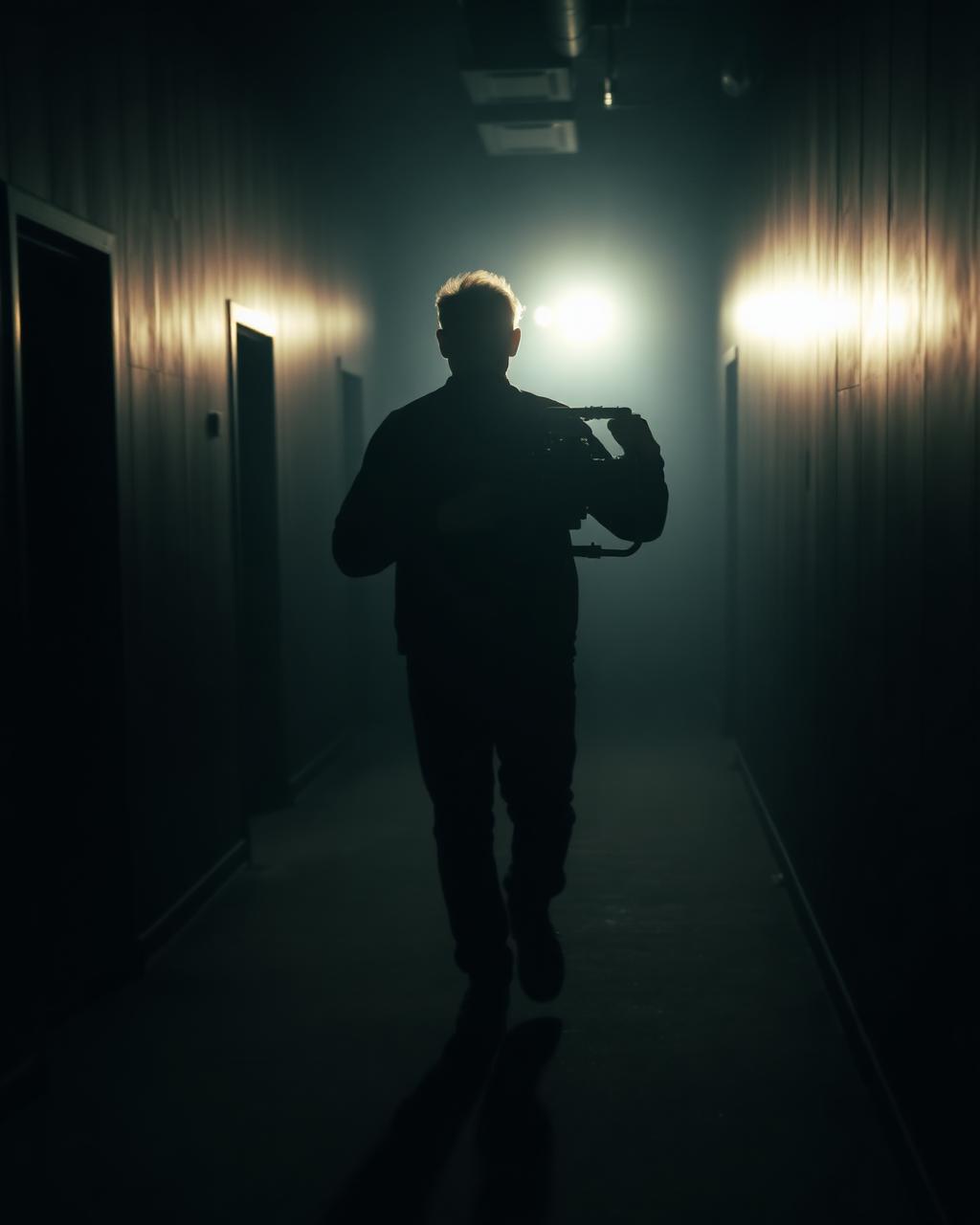
Benjamin Loeb shot Zi handheld throughout Hong Kong without stabilizing the camera. This is not a stylistic choice. This is a philosophical commitment to using the camera's movement as a direct representation of the character's internal state. SLUG Magazine described the approach precisely: "Benjamin Loeb uses a shaky handheld camera, alternating between uncomfortably close shots that feel like intruding on the trio's strange dynamic, and extreme wide shots that emphasise their insignificance in the enormous, beautiful city that envelops them."
The absence of stabilization is significant. A gimbal or Steadicam would smooth the anxiety out of the image, creating movement that feels controlled and cinematic. Loeb rejected this control. The camera breathes. It shifts. It moves with uncertainty. The handheld becomes the visual representation of a mind that cannot settle. Every frame contains slight instability, slight correction, the sense that the image is being held rather than locked.
This approach requires discipline in a different direction. It would be easy to make handheld cinematography feel sloppy or unprofessional. The challenge is to use handheld in a way that feels intentional, that serves the story, that communicates the specific quality of anxiety rather than general uncertainty. Loeb accomplishes this through the rhythm he creates: moments of extreme proximity followed by moments of vast distance.
When the camera is close—uncomfortably close to the characters—the handheld instability creates the sense of intrusion. The viewer feels the presence of the camera. The slight movement makes the camera's observation feel active, present, almost invasive. The character cannot hide from this attention. The instability prevents the viewer from settling into observation. You are not watching a scene unfold. You are navigating a moment with uncertainty.
Then Loeb cuts to extreme wide shots that emphasize the character's insignificance in the city. Here, the handheld has a different effect. The slight movement becomes evidence of the camera's presence in this vast space. The instability communicates the insignificance of the camera's gaze against the scale of the environment. The character is small. The camera is smaller. The city is enormous. The handheld reflects this disproportion.
The combination of close/unstable and extreme wide/unstable creates a rhythm that mirrors anxiety. Anxiety alternates between hyperawareness of immediate threat and dissociative awareness of overwhelming scale. The camera's grammar—close/shaky, then wide/shaky—maps directly onto this experience. The cinematography does not explain anxiety. It photographs anxiety as physical sensation.
For cinematographers considering unstabilized handheld cinematography, the key is intentionality. Handheld cinematography can feel amateur if it reads as the absence of skill or control. Loeb's handheld reads as a precise artistic choice. The camera is not shaky because the operator is inexperienced. It is shaky because the cinematography is arguing that shaking is the correct visual language for this story.
The handheld also requires trust in the actors. The camera is close enough that every micro-movement is visible. The actors cannot hide behind performance technique. They must inhabit the space with physical authenticity. The handheld creates a specific kind of intimacy between the viewer and the actor—not the controlled intimacy of a crafted close-up, but the raw intimacy of presence. The viewer is watching a person move in space, not watching a performance.
Loeb's approach demonstrates that handheld cinematography is not inherently less rigorous than locked-off cinematography. It is differently rigorous. The technical challenge is not achieving smooth motion. It is achieving meaningful motion. The camera's movement has to serve the story's emotional register. In Zi, that register is anxiety. The camera breathes like a person under pressure. The cinematography proves that unsettled camera is the correct tool for an unsettled story.
Gear Recommendations
- DJI RS 4 Pro Gimbal – Amazon
- Easyrig Vario 5 | Adorama – B&H Photo
- Kodak Vision3 500T 5219 35mm | Adorama – B&H Photo
- Kodak Vision3 50D 5203 16mm | Adorama – B&H Photo
- Kodak Vision3 200T 5213 | Adorama – B&H Photo
Note: Links above are affiliate links. Occupy Cinematography may earn a commission on qualifying purchases at no additional cost to you.