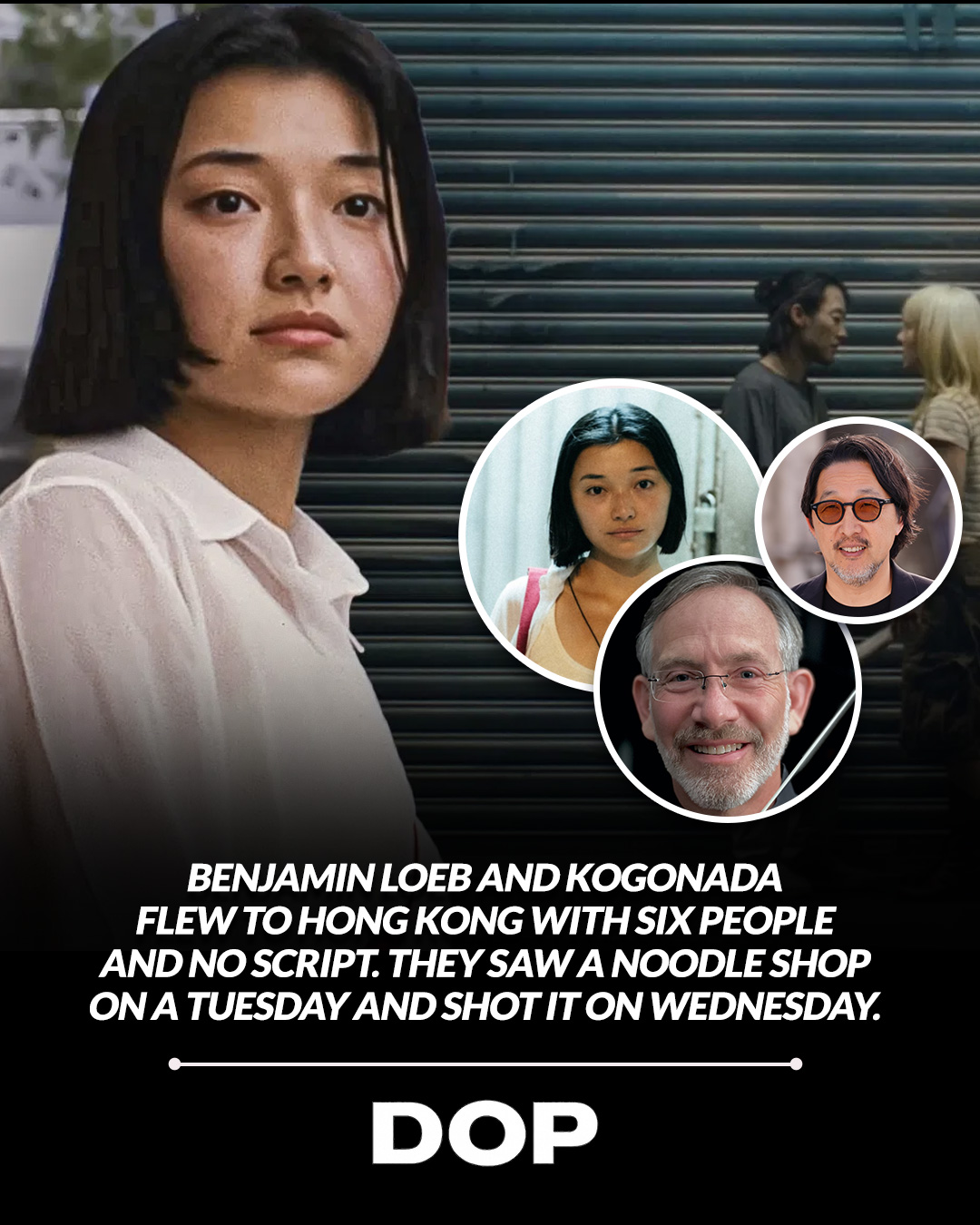
In an industry often defined by meticulous pre-production, sprawling crews, and rigid schedules, the story behind Kogonada's latest collaboration with cinematographer Benjamin Loeb, Zi, is nothing short of an exhilarating counter-narrative. Premiering in the NEXT section at Sundance 2026, the film’s genesis – a six-person crew, no script, and a spontaneous flight to Hong Kong – reads less like a traditional production brief and more like a jazz improvisation. This audacious approach, however, is not mere recklessness; it is, as the filmmakers themselves articulate, the very argument of the film, a testament to the power of observation and the poetry found in the unscripted.
Loeb, a consistent collaborator with Kogonada across all three of his narrative features (Columbus, After Yang, and now Zi), has developed a visual language perfectly attuned to the director's contemplative and deeply humanistic style. While Columbus explored architectural stillness and After Yang delved into the melancholic beauty of a futuristic domesticity, Zi seems to lean into a raw, almost verité aesthetic. The reported seven-person crew and three-week timeline for a feature film are staggering, demanding an unparalleled level of adaptability and trust between director and cinematographer. This lean operation undoubtedly informed the film’s aesthetic choices, pushing Loeb to find profound imagery within inherent limitations rather than despite them.
The Unveiling of a City
The decision to shoot in Hong Kong, and crucially, how to shoot it, is where Zi truly distinguishes itself. Foreign productions frequently fall into the trap of fetishizing Hong Kong's iconic neon glow and cinematic skylines, reducing a vibrant metropolis to a series of exotic backdrops. Kogonada and Loeb deliberately eschewed this well-trodden path. Their Hong Kong is one of noodle shops, bustling cemeteries, and unvarnished outdoor karaoke bars. This wasn't a budgetary necessity; it was a philosophical stance, a conscious effort to peel back the layers of tourist-brochure imagery and reveal the city's living, breathing pulse.
"Most of this film, in a weird synchronous way, presented itself to us."
Loeb's quote to the Roger Ebert Foundation – "Most of this film, in a weird synchronous way, presented itself to us" – encapsulates this ethos beautifully. It speaks to a profound respect for the environment, an openness to letting the location dictate the narrative rather than forcing a pre-conceived story onto it. This demands a cinematographer with an exceptional eye for composition, an intuitive understanding of natural light, and the ability to react instantaneously to unfolding moments. We can infer that Loeb likely relied on highly sensitive camera sensors, perhaps a Sony VENICE or an ARRI Mini LF, to capture detail in the notoriously challenging low-light environments of a bustling city at night, without resorting to overly aggressive artificial lighting that would betray the film's observational spirit.
Crafting the Unplanned Aesthetic
The reported aesthetic choices further illuminate this guerrilla approach: handheld cinematography throughout, a boxy aspect ratio, and shadows from fluorescent nighttime sources. Handheld camera work inherently injects a sense of immediacy and intimacy, placing the viewer directly within the lived experience of the characters and the environment. It underscores the film's improvisational spirit, suggesting a dynamic dance between camera and subject, rather than a rigidly choreographed ballet. The boxy aspect ratio, likely 1.33:1 or 1.66:1, would further constrain the frame, focusing attention on specific details and faces, enhancing the sense of observation and introspection that defines Kogonada's work. It’s a deliberate move away from the expansive, sweeping vistas often associated with travelogues, instead favoring a more personal, almost portrait-like view of the city.
The embrace of "shadows from fluorescent nighttime sources" is particularly telling. Rather than fighting the often harsh and color-spiking characteristics of practical fluorescent lights, Loeb appears to have integrated them into the visual fabric of the film. This suggests a masterful understanding of color science and light temperature, allowing these sources to sculpt the scene rather than simply illuminate it. It’s a move that prioritizes authenticity over conventional beauty, creating a grittier, more lived-in texture that resonates with the film’s overall argument about seeing a city for what it truly is, beyond its glossy facades. We can imagine Loeb utilizing specific lens choices – perhaps vintage glass or lenses with distinct character – to further enhance the raw, unpolished feel, allowing for subtle flares or unique bokeh that contribute to the film’s distinct visual signature.
Zi, through its unconventional production and its deliberate aesthetic choices, stands as a powerful reminder that the most compelling cinema often emerges from a willingness to surrender to the moment, to observe rather than merely orchestrate. Benjamin Loeb and Kogonada have once again proven that true visual storytelling isn't always about the biggest budget or the most elaborate setup, but about the profound honesty captured when a lens truly looks, sees, and feels the world around it.
This article contains affiliate links. We may earn a small commission at no extra cost to you. Learn more.