In an era dominated by digital acquisition and pixel-perfect clarity, the true artistry of cinematography often lies in its deliberate subversion of convention. Greig Fraser, ASC, ACS, a name synonymous with groundbreaking visual storytelling, once again proves his mastery not just of light and shadow, but of process itself. For the much-anticipated adaptation of Andy Weir’s Project Hail Mary, Fraser pulled a rabbit out of his analog hat, employing a technique he affectionately dubs the 'Scooby-Doo Effect', a testament to his playful yet profoundly impactful approach to cinematic texture.
The 'Scooby-Doo Effect' is a stroke of genius, a practical, in-camera solution to achieve a specific, unsettling visual quality for flashback sequences. Instead of relying on post-production filters or digital degradation, Fraser opted for a tactile, photochemical method. He took finished digital footage intended for flashbacks, played it back on a high-resolution 4K monitor, and then re-photographed it. But not with just any camera: he used an Arri 435, a workhorse 35mm film camera, deliberately mis-timing its shutter. This intentional mechanical imperfection introduced a unique optical artifact, a subtle smearing and beating of the image that instantly communicates a sense of memory, distortion, and the unreliable nature of recollection. It's a bold move that embraces the inherent 'flaws' of film to create a stylized, dreamlike quality that digital manipulation often struggles to replicate with authenticity. This isn't just a technique; it's a philosophy of embracing the medium's character.
The Art of the Filmout: Echoes of Cinematic History
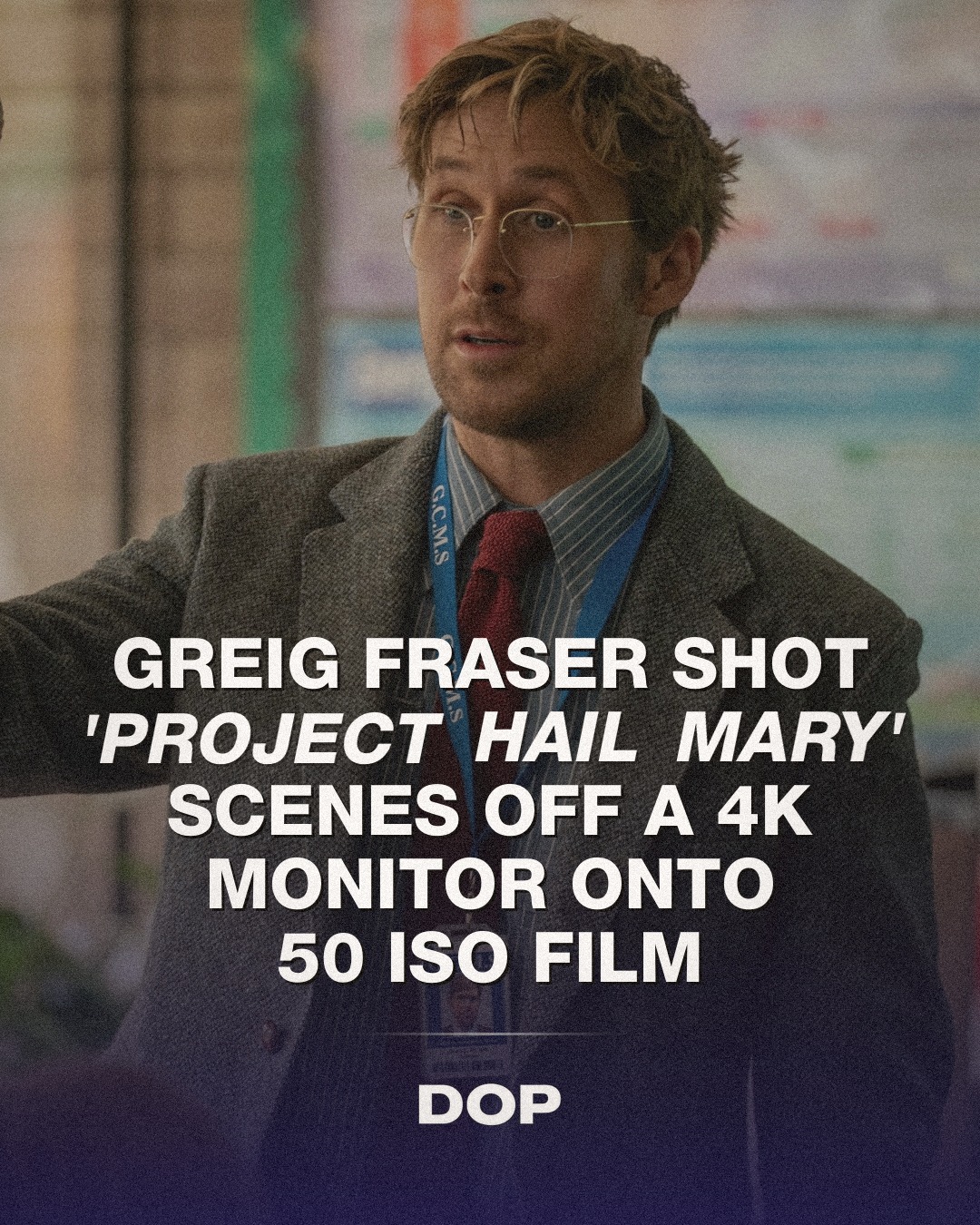
Fraser’s commitment to texture extends far beyond a single effect. His choices for the filmout process for Project Hail Mary reveal a profound understanding of film stock characteristics and a lineage of cinematographic innovation. He meticulously selected two distinct Kodak stocks, each serving a specific narrative purpose. For the vastness of space and the sleek, sterile interiors of the ship, he opted for Kodak 5203, a 50 ISO daylight-balanced stock. This choice suggests a desire for fine grain, deep blacks, and a clean, almost clinical aesthetic that emphasizes the isolation and technological prowess of the setting. It’s a stock known for its low contrast and excellent color rendition, allowing for precise control in grading.
Conversely, for the Earth sequences, Fraser reached for Kodak 5254, a slower, finer-grain stock often used for visual effects or specific atmospheric looks, and critically, processed with silver retention. This technique, also known as bleach bypass, skips or reduces the bleaching step during development, leaving metallic silver in the emulsion along with the color dyes. The result is a desaturated, high-contrast image with deep shadows, stark highlights, and a palpable grittiness. It’s a look that grounds the Earth scenes in a raw, almost melancholic reality, contrasting sharply with the pristine vacuum of space.
“The 'Scooby-Doo Effect' isn't just a gimmick; it's a profound statement on the enduring power of analog imperfection to convey narrative truth.”
A Legacy of Innovation: From Kaminski to Fraser
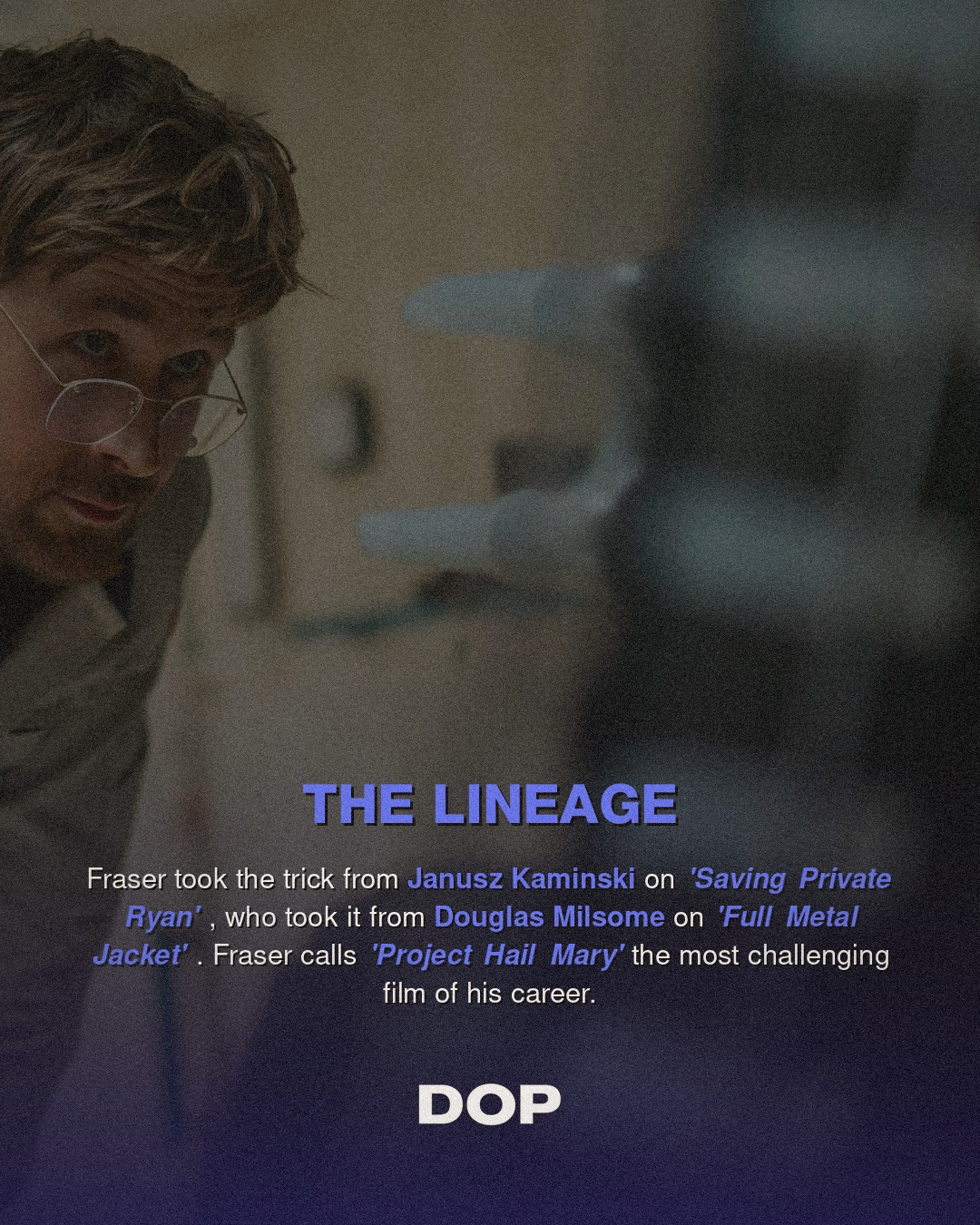
The use of silver retention is not a new trick, but its deployment by Fraser is a powerful nod to cinematic history. He openly credits taking this page from the playbook of Janusz Kaminski, ASC, whose groundbreaking work on Steven Spielberg’s Saving Private Ryan redefined the visual language of war films. Kaminski famously employed bleach bypass to achieve the desaturated, high-contrast, almost monochromatic look that evoked the archival footage of WWII, lending the film an undeniable sense of historical realism and stark brutality. This technique, in turn, was reportedly inspired by Douglas Milsome, BSC, who used similar methods on Stanley Kubrick’s Full Metal Jacket, particularly for the harrowing Vietnam sequences.
This lineage highlights a crucial aspect of cinematography: the continuous evolution and reinterpretation of techniques across generations. Fraser isn't just copying; he's understanding the historical context and applying it to his contemporary vision. His work on films like Dune (shot on Arri Alexa LF and Mini LF with custom lenses to achieve a specific large-format, textural look) and The Batman (employing a unique anamorphic lens set and digital grain to evoke a gritty, neo-noir aesthetic) consistently showcases his commitment to pushing visual boundaries, often through meticulous control over texture and light.
The Fraser Philosophy: Embracing the Imperfect Pixel and Grain
Fraser's approach to Project Hail Mary epitomizes his philosophy: every technical choice serves the story. The 'Scooby-Doo Effect' doesn't just look cool; it creates a psychological distance, a visual metaphor for fragmented memory. The specific film stocks and processing aren't arbitrary; they define the emotional and thematic contrast between two worlds. While he is a master of digital cinematography, his willingness to re-introduce analog processes, even to re-photograph digital images onto film, speaks volumes about his pursuit of authentic, organic textures that resonate deeply with an audience. It’s a reminder that sometimes, the most sophisticated visual effects are achieved not by adding more, but by strategically embracing the beautiful imperfections of the medium. Greig Fraser continues to inspire DPs worldwide by demonstrating that the craft isn't just about capturing an image, but about crafting an experience, one grain, one smear, one perfectly imperfect frame at a time.