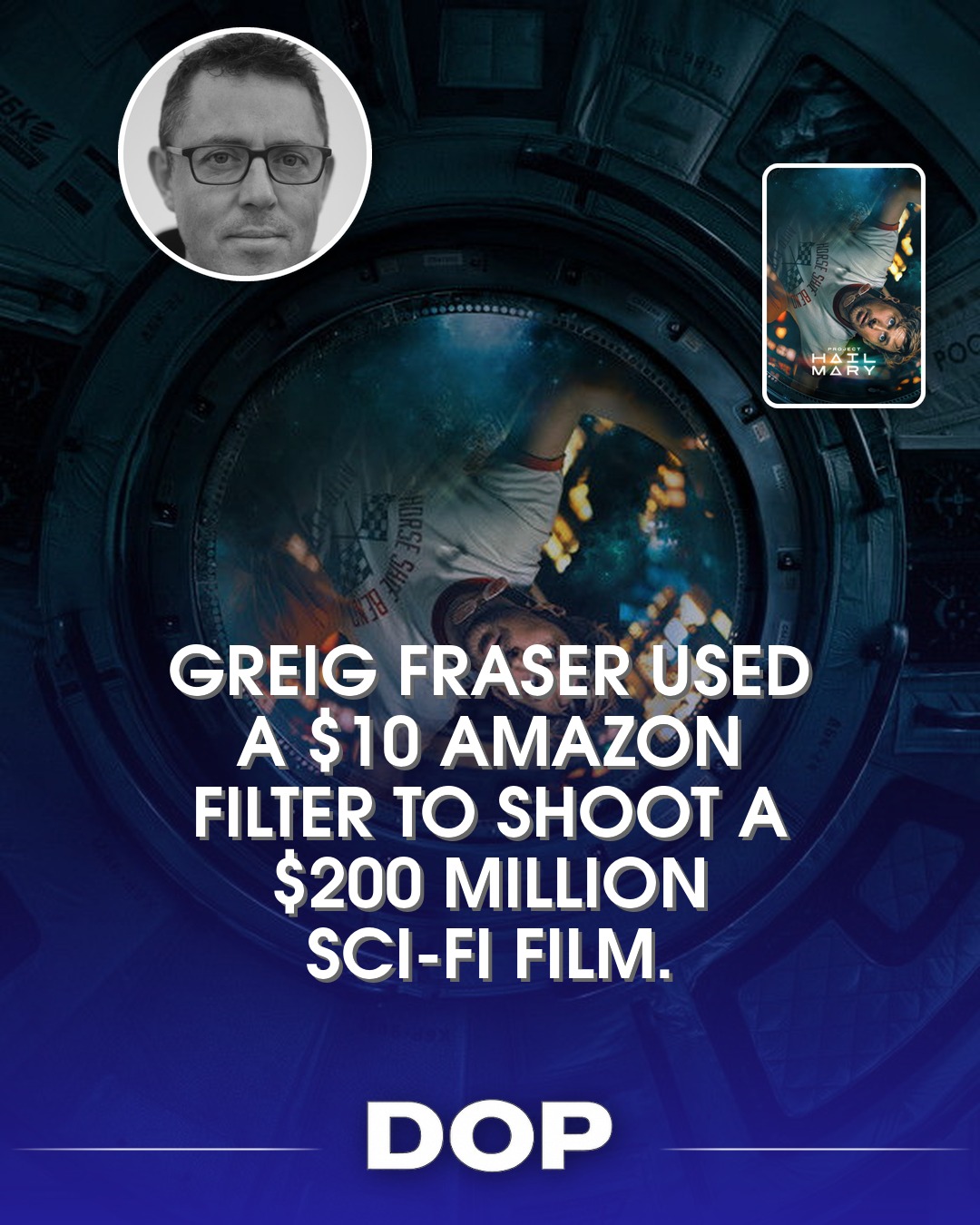
In an industry often obsessed with ever-pricier glass, the latest revelation from Oscar-winning cinematographer Greig Fraser offers a refreshing, almost subversive, perspective. Known for crafting some of the most iconic and visually arresting cinematic landscapes of the past decade, from the desolate grandeur of Dune to the neo-noir grit of The Batman, Fraser recently confessed to a surprising secret weapon on his latest blockbuster, Project Hail Mary: a humble, inexpensive rainbow filter sourced from Amazon. This isn't just a quirky anecdote; it's a profound statement about the enduring power of creative vision over fiscal excess, and a testament to the resourcefulness that defines true mastery of the craft.
The Art of Intentional Imperfection
Fraser's choice to deploy an off-the-shelf, budget-friendly rainbow filter on a $200 million sci-fi epic speaks volumes. He described how this unassuming piece of glass created "beautiful rainbow streaks to the highlights," transforming a potential artifact into a deliberate, thematic visual motif. This isn't about compromising; it's about embracing and elevating. While industry discussions often revolve around the pristine clarity and clinical perfection of high-end anamorphics or the nuanced character of vintage rehoused primes, Fraser demonstrates that intentional imperfection, when wielded with purpose, can forge a distinctive aesthetic signature. It's a reminder that the most compelling visual effects often stem from analog, in-camera techniques, rather than post-production wizardry.
"The technique proves that creative vision and resourcefulness matter more than expensive glass."
This philosophy resonates deeply with Fraser’s established style. His work on Dune, for instance, masterfully balanced vast, sweeping vistas with intimate, textural close-ups, often employing a desaturated palette punctuated by strategic bursts of color or light. The Batman plunged audiences into a perpetually rain-slicked, shadowy Gotham, where the interplay of practical light sources and atmospheric haze defined every frame. In both instances, his lens choices and lighting philosophy were dictated by the narrative and emotional core of the film, not by prevailing trends or the latest sensor specifications. His ability to find beauty and utility in a cheap Amazon filter for Project Hail Mary is simply an extension of this deeply ingrained, character-driven approach to cinematography.
Practicality Meets Cosmic Scale
Project Hail Mary, directed by the inventive duo Phil Lord and Christopher Miller, presented unique challenges that pushed Fraser to his limits, a film he candidly called "the most challenging film I've ever done, by far." The narrative, featuring Ryan Gosling as an accidental astronaut tasked with saving Earth, demanded a blend of scientific realism and cosmic wonder. Fraser's team tackled this by building the spaceship set practically, a decision that allowed Gosling to physically interact with his environment, imbuing the performances and the visual storytelling with an undeniable sense of tangible reality. This commitment to practical effects and immersive sets is a hallmark of Fraser's work, grounding even the most fantastical narratives in a believable physical space.
The practical approach extended to the lighting as well, particularly for the alien tunnel sequences. Here, Fraser's team opted for old-school tungsten lights, pixel-mapped to create the required effects. This choice, driven by the sheer output needed – a level that contemporary LED rigs simply couldn't achieve – speaks to a pragmatic, problem-solving mindset. It’s a powerful illustration of how cinematographers often blend cutting-edge technology with time-honored techniques, prioritizing the desired visual outcome above all else. The warmth and spectral richness of tungsten, especially when pushed, can create a unique character that is often difficult to replicate with cooler, more efficient LED sources, making it a compelling choice for otherworldly environments.
The success of Project Hail Mary, already crossing $500 million worldwide, is a testament not only to its engaging story and performances but also to the visual artistry that underpins it. Fraser’s ability to imbue a massive blockbuster with such distinct visual character, using both cutting-edge practical builds and an unexpected, low-cost filter, reaffirms a fundamental truth of our craft: the most impactful images are born not from the size of the budget, but from the boundless ingenuity and audacious vision of the cinematographer. It’s a rallying cry for DPs everywhere to look beyond the spec sheets and embrace the unexpected, proving that sometimes, the greatest magic can indeed be found in the most unassuming of places.
This article contains affiliate links. We may earn a small commission at no extra cost to you. Learn more.