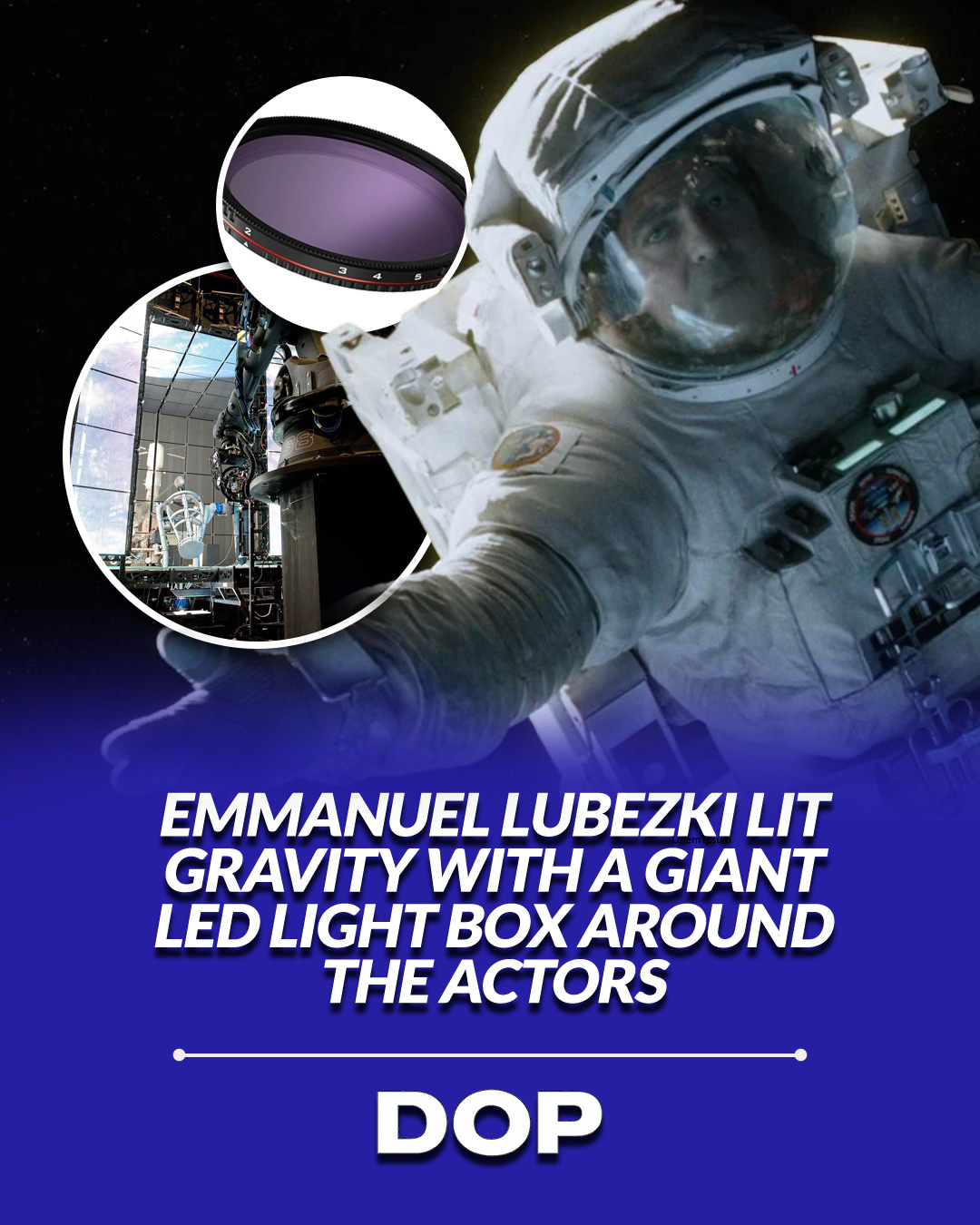
Alfonso Cuarón’s 2013 masterpiece, Gravity, remains a touchstone for its immersive visual storytelling and groundbreaking technical achievements. While much has been rightly lauded about its seamless visual effects and visceral depiction of space, the true genius lies in its cinematography, particularly Emmanuel ‘Chivo’ Lubezki’s audacious approach to lighting. The film didn't just push the boundaries of VFX; it redefined the symbiotic relationship between digital artistry and practical illumination, offering a blueprint for future productions that dare to blend the two from the ground up.
At the heart of Lubezki’s innovation was the now-legendary LED 'light box.' Instead of traditional green screens and motion-controlled lighting rigs, a bespoke apparatus was constructed: a massive cube of LED panels encompassing actors Sandra Bullock and George Clooney. These panels weren't merely displaying background plates; they were dynamic, animated light sources. Imagine walls of high-resolution screens projecting shifting earthlight, the harsh glare of the sun, or the subtle reflections off a space station. This wasn't just about efficiency; it was about authenticity.
The Fusion of Light and Environment
The brilliance of the LED box lay in its dual function. It served as both the virtual environment and the primary light source. This meant that as the digital 'camera' moved through the simulated space, the light hitting the actors’ faces and helmets, the key, fill, and even subtle reflections, was generated in real-time by the surrounding LED panels. This eliminated the painstaking and often artificial process of painting in complex, moving light cues in post-production. The light was inherent to the environment, making the integration of the actors into their digital surroundings remarkably seamless and believable.
“Once your environment is an image, you can use it as your key if you're willing to design the two departments together from the start.”
Consider the challenge of lighting a spacewalk. The light in space is constantly shifting, reflecting off surfaces, and casting dynamic shadows. Traditionally, this would require an army of motion-controlled fixtures, intricately programmed and perfectly synchronized with the digital environment. Lubezki and the VFX team bypassed this complexity by making the environment itself the light source. This wasn't just a technical workaround; it was a fundamental shift in lighting philosophy, treating the digital world not as a backdrop, but as an active, luminous participant in the scene.
Lubezki's Signature and Technical Mastery
Lubezki’s filmography, characterized by his fluid camera work and naturalistic lighting, found a new canvas in Gravity. While often celebrated for his long takes and organic approaches to illumination in films like Children of Men and The Revenant, Gravity showcased his adaptability and willingness to embrace cutting-edge technology to serve narrative. The choice of the ARRI Alexa, known for its exceptional dynamic range and ability to capture subtle nuances in light and shadow, was crucial here. The Alexa's sensor could gracefully handle the extreme contrasts inherent in space, from the blinding sun to the deep, inky blackness, and crucially, the nuanced light emanating from the LED panels.
While specific lens choices might seem less critical when the 'background' is a projection, the character of the glass still played a vital role in how the light was rendered on the actors. Lubezki often favors lenses that offer a clean, yet organic look, avoiding overly sterile or clinically sharp images. For Gravity, this likely meant a careful balance, ensuring the projected light translated with a cinematic quality, rather than a flat, video-like appearance. The color science, too, was meticulously managed, ensuring that the light generated by the LEDs matched the film’s overall aesthetic and the specific color temperatures dictated by the narrative, be it the warm glow of Earth or the stark white of the sun.
The collaborative spirit between Lubezki and the visual effects team was paramount. This wasn't a case of one department handing off to another; it was a genuine co-creation from pre-production. The lighting design and the virtual environment were conceived as a single entity, allowing for an unprecedented level of integration. This synergy is what ultimately allowed Gravity to achieve such a profound sense of immersion and realism, setting a new benchmark for how filmmakers can harness technology to illuminate their stories.
For cinematographers today, Gravity stands as a powerful testament to the idea that innovation often lies at the intersection of disciplines. It's a call to embrace new tools, to challenge conventional methods, and to foster deep collaboration with all departments, especially VFX. When the environment itself becomes the light, the possibilities for visual storytelling are truly boundless.
This article contains affiliate links. We may earn a small commission at no extra cost to you. Learn more.