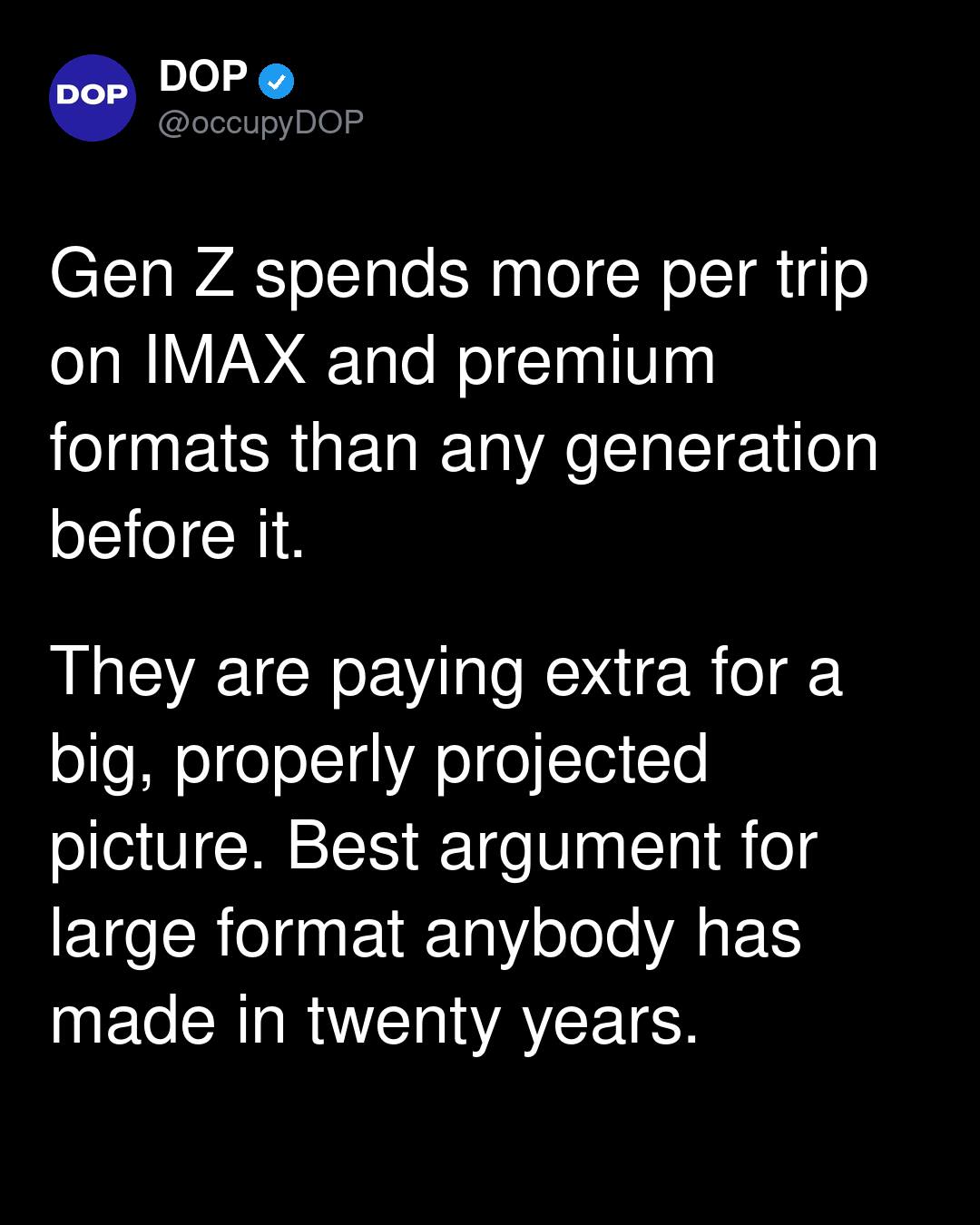
In an era dominated by streaming and the shrinking screen, a surprising trend has emerged, offering a beacon of hope for large-format cinema: Gen Z's unwavering commitment to premium theatrical experiences. While older generations might lament the decline of the communal moviegoing experience, Gen Z is actively embracing and, more importantly, paying a premium for it. This isn't just about watching a film; it's about experiencing it, a distinction that speaks volumes about the enduring power of the cinematic spectacle.
The data is compelling: Gen Z spends more per trip on IMAX and other premium formats than any preceding generation. This isn't a passive consumption; it's an active choice, a deliberate investment in a superior visual and auditory journey. They are seeking out the grandeur, the immersive scale, and the pristine presentation that only a properly projected, large-format screen can deliver. This generation, often characterized by its digital native status, is paradoxically championing the very physical, shared experience that many thought was on the wane.
The Allure of Immersion: Beyond the Small Screen
What drives this phenomenon? It's multifactorial, but at its core, it's about immersion. In a world saturated with content, where attention spans are fragmented, the premium cinema experience offers a sanctuary. It’s a deliberate escape, a chance to be enveloped by a story on a scale that simply cannot be replicated on a phone, tablet, or even a home theater system. The sheer size of an IMAX screen, coupled with its precision projection and powerful sound systems, transforms viewing into an event.
This isn't merely about higher resolution; it's about the psychological impact of scale. When a film like Christopher Nolan’s Oppenheimer, shot predominantly on IMAX film cameras (specifically the Panavision System 65 and Arriflex 765, among others, paired with Panavision Sphero 65 and Hasselblad lenses), fills your peripheral vision, the world outside the frame ceases to exist. The meticulous work of Hoyte van Hoytema, ASC, FSF, NSC, in capturing those sprawling vistas and intimate close-ups on such a massive canvas, truly comes alive. The texture of the film grain, the subtle nuances of light and shadow, these elements are amplified, becoming part of the visceral experience.
“Gen Z isn't just watching movies; they are investing in the experience, demonstrating a profound understanding of what truly elevates cinematic art.”
Technical Prowess and the DP's Vision
For cinematographers, this trend is nothing short of a validation. It reinforces the importance of crafting images for the largest possible canvas. When DPs like Greig Fraser, ASC, ACS, choose to shoot Dune (and Dune: Part Two) with ARRI Alexa LF and Mini LF cameras, employing Panavision Ultra Vista 1.65x anamorphic lenses to capture that epic scope, they are designing for this exact premium experience. The decision to shoot large format isn't arbitrary; it's a creative choice that directly impacts how the audience perceives the world of the film.
The expanded dynamic range, the shallower depth of field that large-format sensors afford, and the unique character of specific large-format lenses contribute to a visual language that is both grand and intimate. Consider the subtle fall-off in focus, the way light plays across a subject's face, or the breathtaking sweep of a landscape, these are elements that gain profound impact when projected on a towering screen. This is where the cinematographer's art truly shines, where their deliberate choices in camera, lens, lighting, and color science are fully realized and appreciated by an engaged audience.
The Future is Big: A Call to Arms for Filmmakers
Gen Z's spending habits are a clear signal: there is a hunger for quality, for spectacle, and for an experience that transcends the everyday. This generation, often dismissed as being glued to TikTok, is proving to be a discerning audience that values the integrity of a cinematic presentation. They are paying extra for a big, properly projected picture, and in doing so, they are making the best argument for large format that anyone has made in twenty years.
This should serve as a powerful impetus for filmmakers and cinematographers alike. It’s a call to continue pushing the boundaries of visual storytelling, to embrace the technical capabilities of large-format cameras and lenses, and to craft images that demand to be seen on the biggest screen possible. The future of cinema, it seems, is not shrinking; it's expanding, thanks in no small part to the discerning eyes of Gen Z.
This article contains affiliate links. We may earn a small commission at no extra cost to you. Learn more.