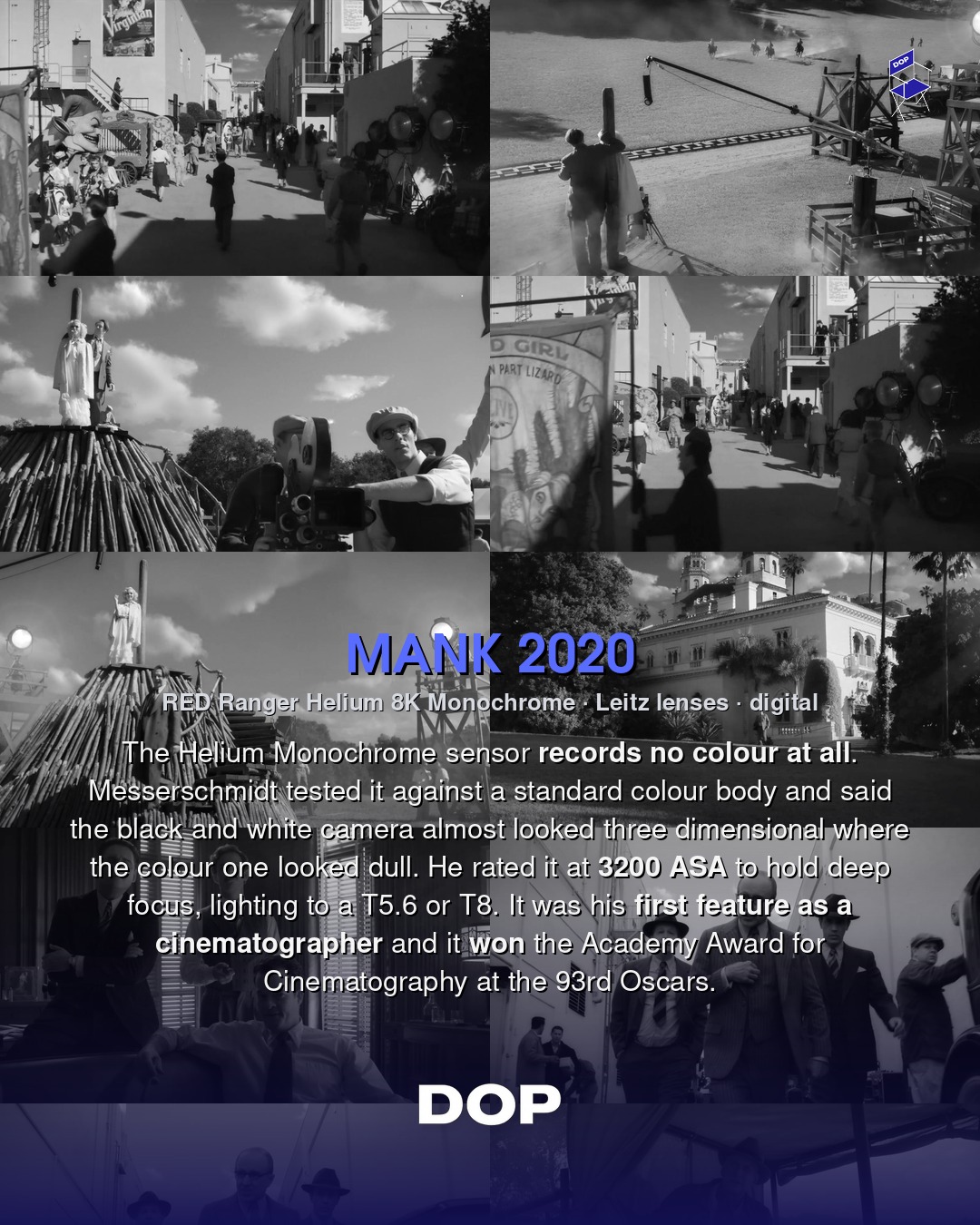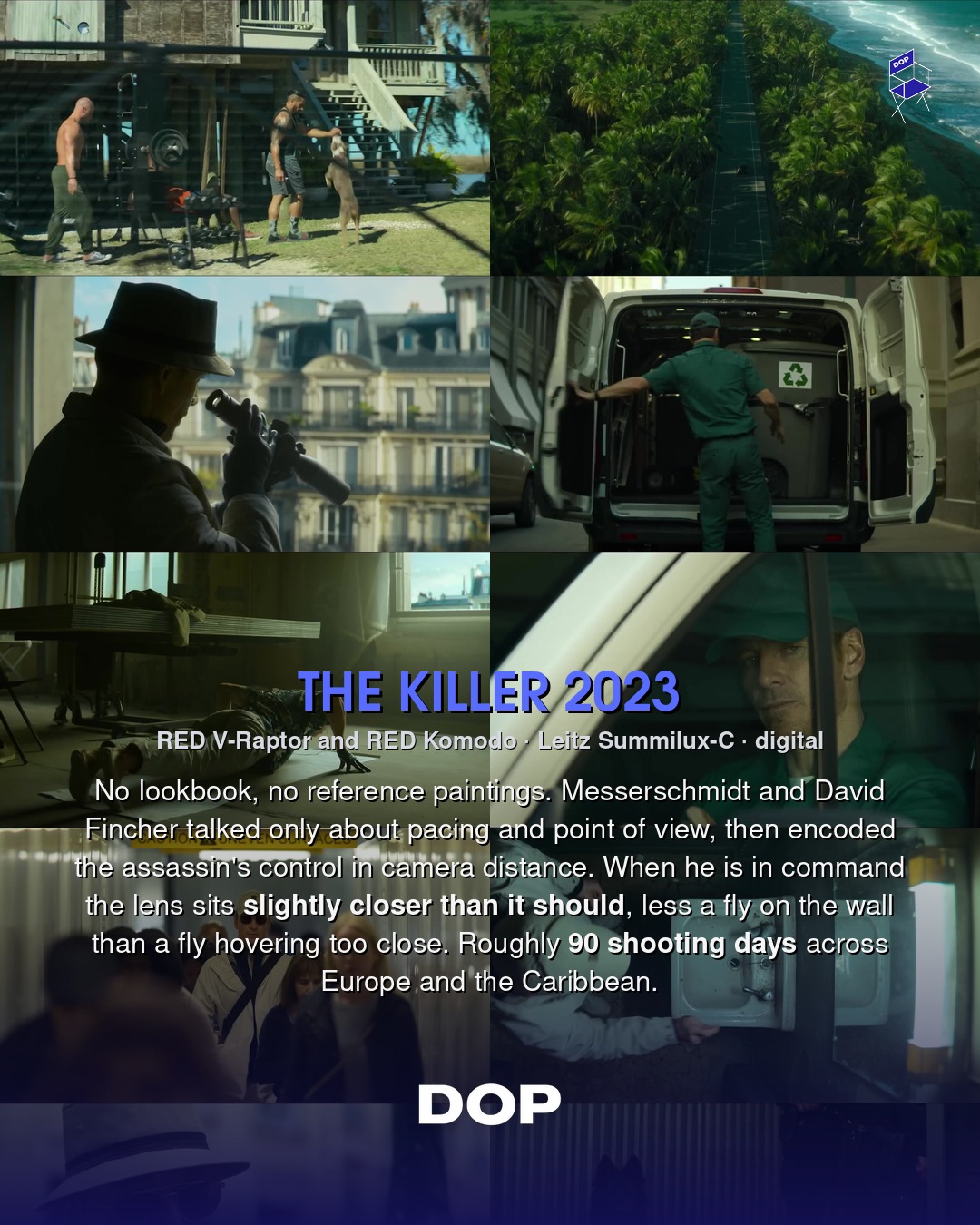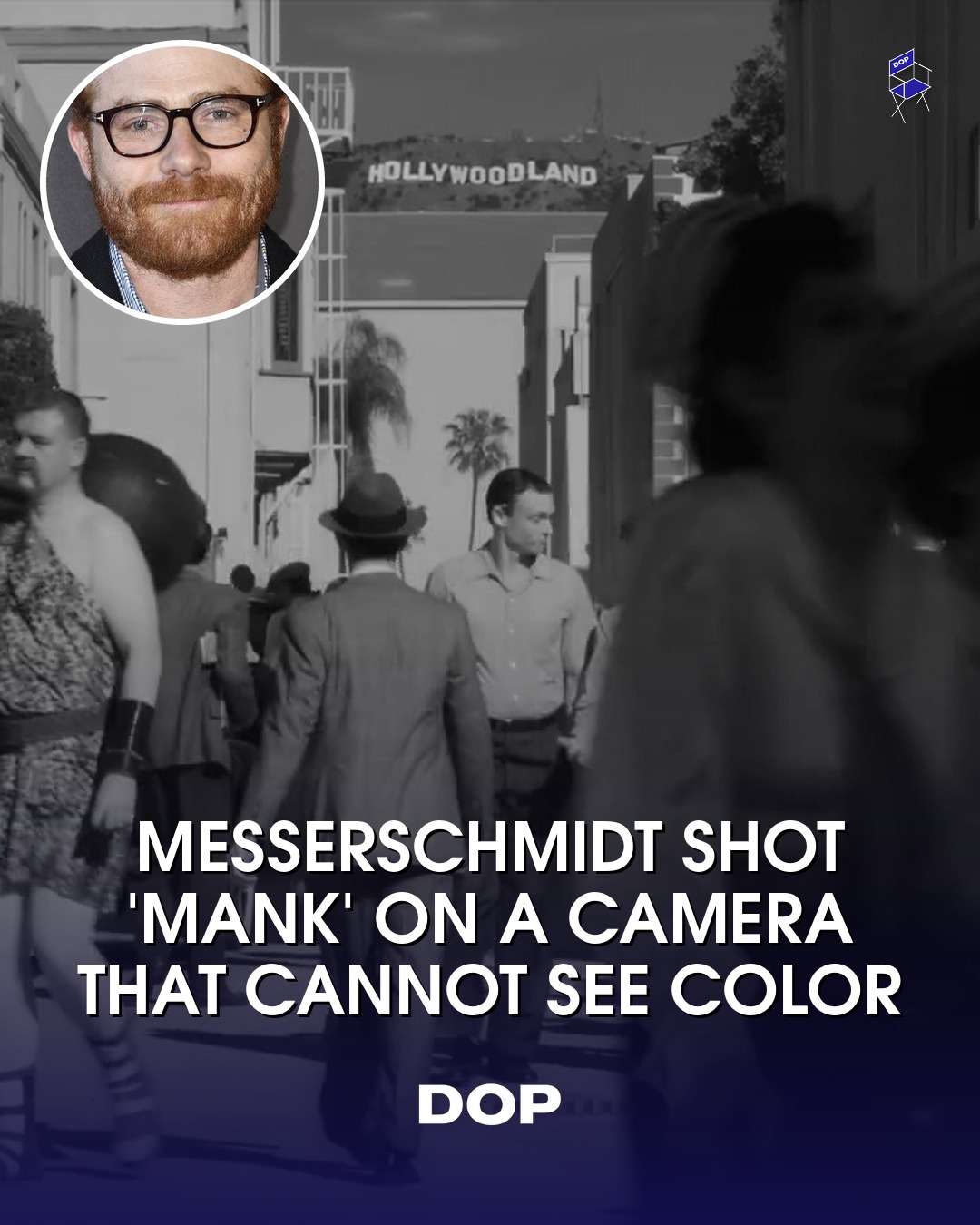
When Erik Messerschmidt, ASC took home the Academy Award for Best Cinematography for Mank, it marked a rare and triumphant moment in modern film history: an Oscar win for a DP’s debut feature as sole director of photography. Yet Messerschmidt was far from a novice when he stepped onto David Fincher’s set. Having spent years in the lighting department, most notably as gaffer for cinematographer Jeff Cronenweth, ASC on Fincher’s Gone Girl, Messerschmidt possessed a master technician’s understanding of exposure, light quality, and sensor behavior before ever taking the top spot on the camera department call sheet.
It was Fincher who first elevated Messerschmidt to lead cinematographer on Netflix’s critically acclaimed series Mindhunter. That partnership forged a distinct visual grammar rooted in absolute precision, rigorous prep, and an uncompromising commitment to pushing digital camera systems to their absolute physical limits. When the time came to mount 1930s-set Hollywood fable Mank, Messerschmidt and Fincher bypassed conventional digital workflows entirely in favor of a radical optical strategy.
Pure Luminance: The Monochrome Philosophy of Mank
Rather than shooting on a standard digital camera and stripping color in post-production, Messerschmidt chose the RED Ranger Helium Monochrome, a bespoke 8K sensor lacking a Color Filter Array (CFA). In a standard Bayer-pattern sensor, chromatic filters block light and require interpolation software to reconstruct color data, inherently softening spatial resolution and introducing subtle artifacts. By removing the CFA, every pixel on the Helium Monochrome chip reads raw, unfiltered luminance.
The results were transformative during pre-production side-by-side tests. When compared to a standard color digital sensor converted to black-and-white in the suite, the true monochrome sensor yielded extraordinary micro-contrast and resolution. The absence of debayering created an almost sculptural rendered depth where midtone gradations rolled off with absolute smooth fidelity.
"When you eliminate the Bayer pattern, every single pixel is dedicated purely to luminance. The image acquires an almost tactile, three-dimensional depth that post-conversion simply cannot replicate."
To channel the high-key, deep-focus aesthetic of Gregg Toland, ASC’s iconic work on Citizen Kane, Messerschmidt needed extreme depth of field across sprawling period interiors. That required stopping down his customized Leitz PRIMO lenses to a punishing T5.6 or T8. To achieve workable exposure levels on large interior stages without cooking his actors under unmanageable lighting loads, Messerschmidt rated the camera at an aggressive ISO 3200. The monochromatic noise profile read not as ugly digital grain, but as organic silver halide texture, granting Mank its uncanny, period-accurate patina.
Tactile Realism: Adaptability on Ferrari and Beyond
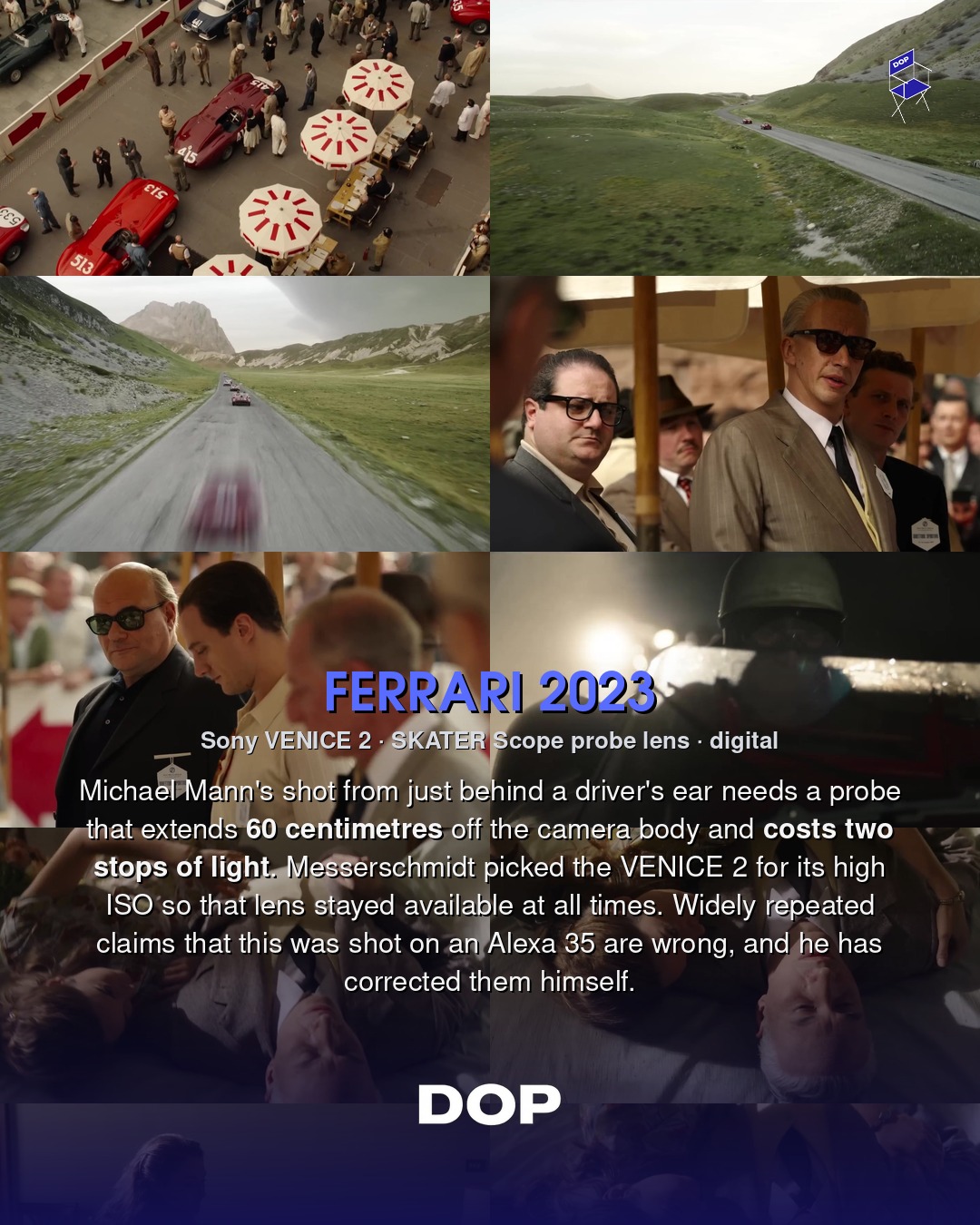
Messerschmidt’s gaffer roots, where problem-solving is dictated by physical laws and spatial mechanics, make him uniquely adaptable across vastly different directorial sensibilities. For Michael Mann’s high-octane period drama Ferrari, the visual requirements shifted from Fincher’s controlled studio environments to chaotic, high-speed kinetic realism. Mann demanded hyper-intimate camera placement inside the tight cockpits of 1950s race cars.
To fulfill Mann’s vision, Messerschmidt selected the Sony VENICE 2, taking full advantage of its Dual Base ISO (800/3200) and modular Rialto extension system. This architecture allowed the production to deploy custom probe lenses extending up to 60 centimeters off the camera body. Despite these specialty optics eating up to two full stops of light, the VENICE 2 sensor performance at high sensitivity allowed Messerschmidt to maintain deep focus and tack-sharp exposure while hurtling down open roads at breakneck speeds.
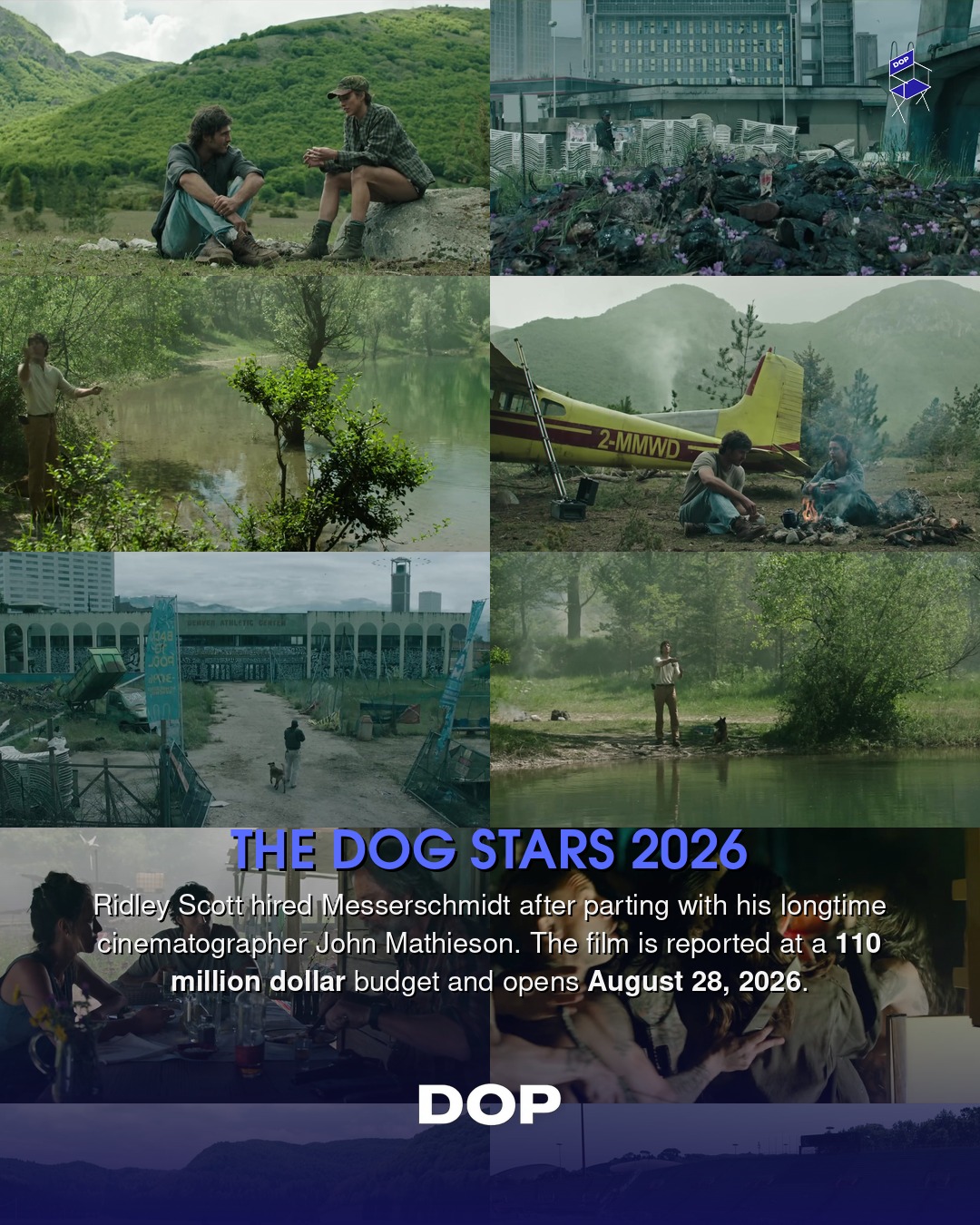
The career arc from lighting crew to top-tier DP remains one of the most practical and respected pathways in cinematography. By building his foundation on photometrics, power distribution, and set management, Messerschmidt approaches every frame with a dual mindset: the soul of an artist and the precision of an engineer. As he prepares to bring Ridley Scott’s upcoming feature The Dog Stars to theaters, Messerschmidt continues to demonstrate that real visual innovation happens when technical mastery serves pure storytelling.
This article contains affiliate links. We may earn a small commission at no extra cost to you. Learn more.