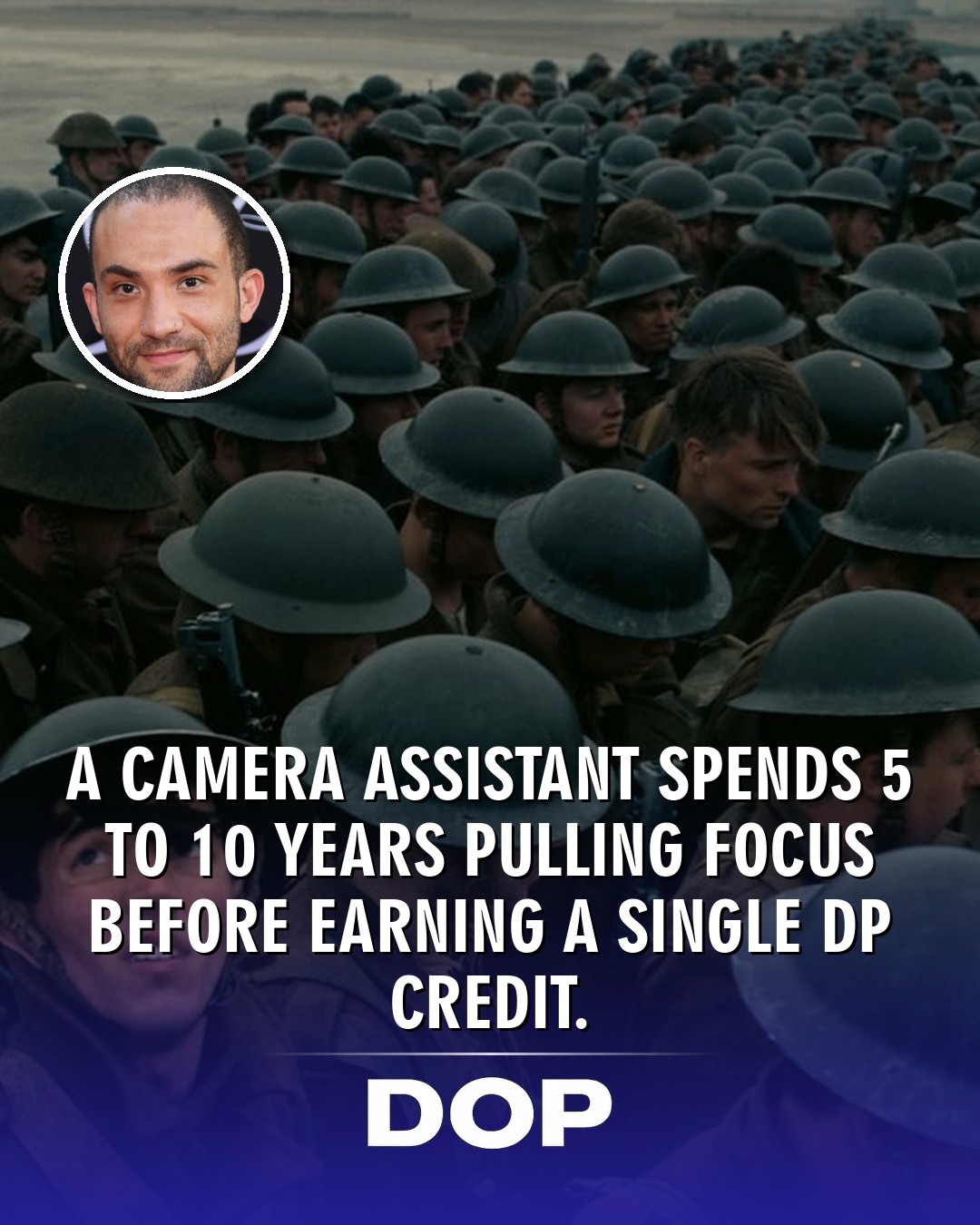
The path to becoming a Director of Photography is not a sprint, but a marathon, often spanning a decade or more spent in the trenches as a camera assistant. This isn't merely a job; it's an immersive, unparalleled education in the minutiae of image-making. During these formative years, an aspiring DP, often pulling focus on union features, becomes intimately acquainted with every lens format imaginable – from the unforgiving precision of Ultra Primes to the organic breath of vintage anamorphic glass. They navigate the intricacies of diverse camera systems, be it the robust Alexa LF, the agile VENICE, or the nuanced RED Monstro, understanding their respective sensor characteristics, color science, and operational eccentricities. More profoundly, they internalize the distinct lighting philosophies and operating styles of the myriad DPs they serve, absorbing a rich tapestry of visual approaches that will, consciously or unconsciously, inform their own nascent aesthetic.
This prolonged apprenticeship is less about rote memorization and more about an osmotic absorption of practical knowledge. A proficient 1st AC isn't just hitting marks; they're anticipating the DP's needs, understanding the subtle interplay of light and shadow, the emotional weight of a particular focal length, and the rhythm of a scene. They learn to troubleshoot under pressure, to maintain focus on a moving subject in challenging lighting, and to communicate seamlessly with the grip and electric departments. This period is a crucible, forging not just technical expertise but also the invaluable soft skills of collaboration, problem-solving, and grace under fire. It's a hands-on masterclass in the operational mechanics and artistic nuances of a film set, preparing them for the immense responsibilities that lie ahead.
Beyond the Technical: The Art of Trust and Opportunity
Yet, the transition from technically impeccable camera assistant to a credited Director of Photography is a chasm that many never successfully bridge. It demands more than just a flawless understanding of depth of field or the ability to load a magazine blindfolded. It requires the profound trust of directors and producers, individuals willing to stake their creative vision and substantial budgets on a first-time cinematographer. This is where the industry’s opaque mechanisms truly come into play. There's no formal certification or clear-cut promotion structure. Many assistants, despite their encyclopedic knowledge and years of dedicated service, find themselves marooned, perpetually excellent in their current role but unable to make the leap.
“The shift often depends on portfolio building done on off-days and the social capital required to secure a debut.”
This quote from the original post encapsulates the unspoken truth of the industry. The 'off-days' become crucial battlegrounds where aspiring DPs shoot short films, music videos, and commercials, often for little to no pay, meticulously crafting a reel that showcases their visual voice. This isn't just about demonstrating technical skill; it's about articulating a unique perspective, a distinct style that sets them apart. Is their lighting bold and theatrical, like Roger Deakins' work in Blade Runner 2049, or naturalistic and painterly, akin to Bradford Young's cinematography in Arrival? Do they favor the wide, immersive canvases of anamorphics or the intimate precision of sphericals? These formative projects become their visual resume, their argument for being entrusted with a feature.
Cultivating Social Capital and a Distinct Visual Voice
Equally vital, and perhaps even more elusive, is the cultivation of social capital. This isn't about mere networking; it's about building genuine relationships, fostering a reputation for reliability, creativity, and a collaborative spirit. Directors, producers, and even fellow crew members are more likely to recommend or hire someone they know, respect, and trust implicitly. A DP's journey is intrinsically linked to their ability to communicate their vision effectively, to inspire confidence, and to maintain a positive, problem-solving attitude under pressure. It's about being the person a director wants in their corner when the clock is ticking and the sun is setting.
Consider the trajectory of a DP like Rachel Morrison, who honed her craft on countless projects before breaking through with Mudbound, earning an Oscar nomination. Her extensive experience as a 1st AC and then a B-camera operator undoubtedly informed her nuanced approach to framing and lighting. Or think of Greig Fraser, who, after years of lensing independent features and commercials, brought his distinctive, often chiaroscuro style to blockbusters like Dune. These DPs didn't just understand cameras; they understood storytelling, light, and the human element.
The sensor choice, lens character, and lighting philosophy that define a DP's work are not born overnight. They are the culmination of years of observation, experimentation, and a deep understanding of how these elements impact narrative and emotion. A DP's signature might involve embracing the organic fall-off of vintage Panavision C-Series lenses, or meticulously crafting hard light with an Arri SkyPanel, or perhaps leveraging the dynamic range of an ARRI ALEXA 65 to capture breathtaking landscapes. This technical mastery, combined with a unique artistic vision and the invaluable social currency earned through years of dedicated service, is what ultimately propels a camera assistant into the demanding, yet profoundly rewarding, role of Director of Photography. It is a testament to the fact that in cinematography, true mastery is forged not just in the studio, but in the crucible of countless hours spent pulling focus, observing, and dreaming in images.
This article contains affiliate links. We may earn a small commission at no extra cost to you. Learn more.