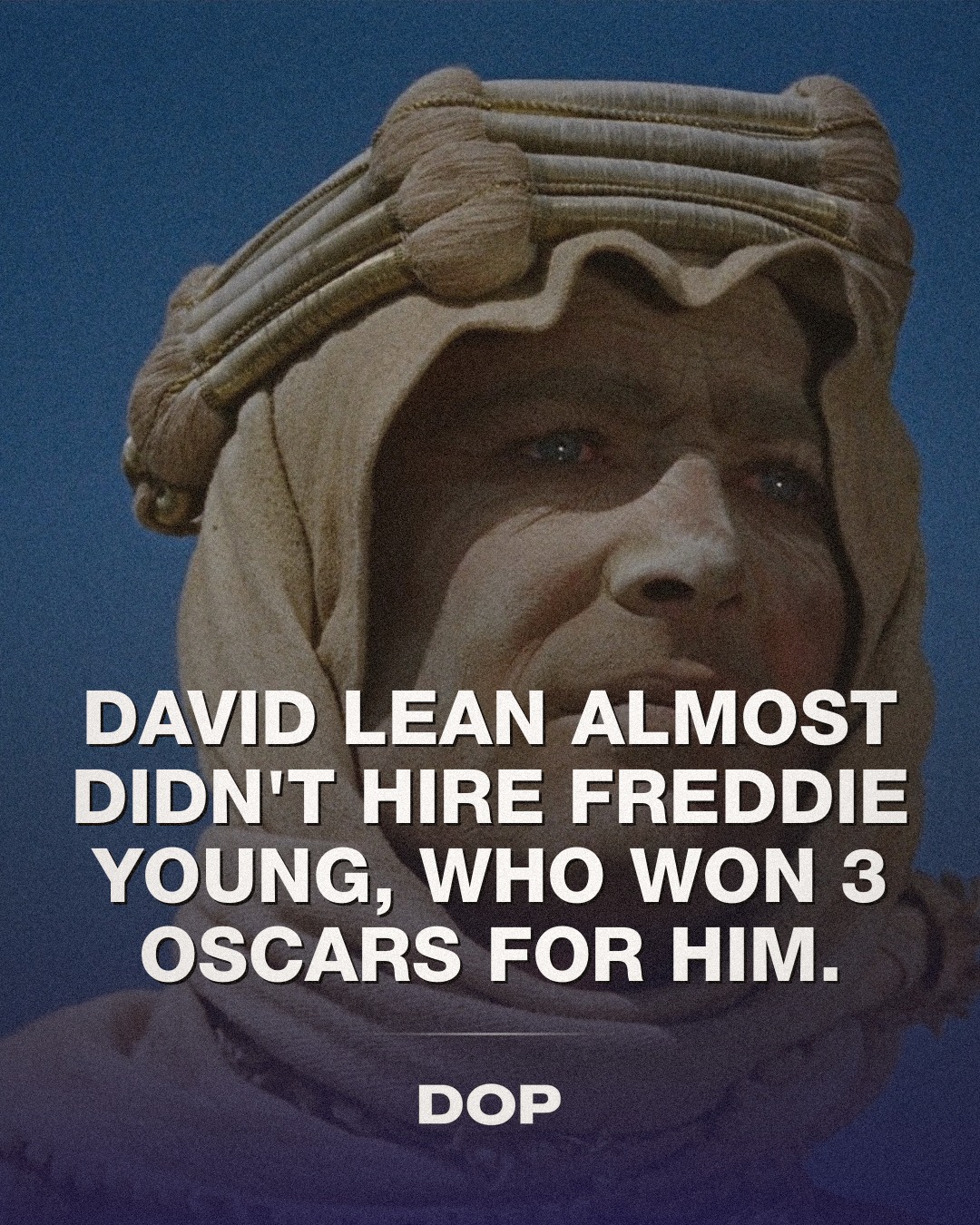
In the annals of cinematic history, few director-cinematographer pairings have achieved the mythical status of David Lean and Freddie Young. What began as a relationship of reluctant necessity blossomed into a synergy that birthed three of the most visually arresting epics ever committed to celluloid: Lawrence of Arabia, Doctor Zhivago, and Ryan's Daughter. Young’s unparalleled vision and technical bravado earned him an Academy Award for Best Cinematography for each of these masterpieces, cementing his legacy as a titan of the craft.
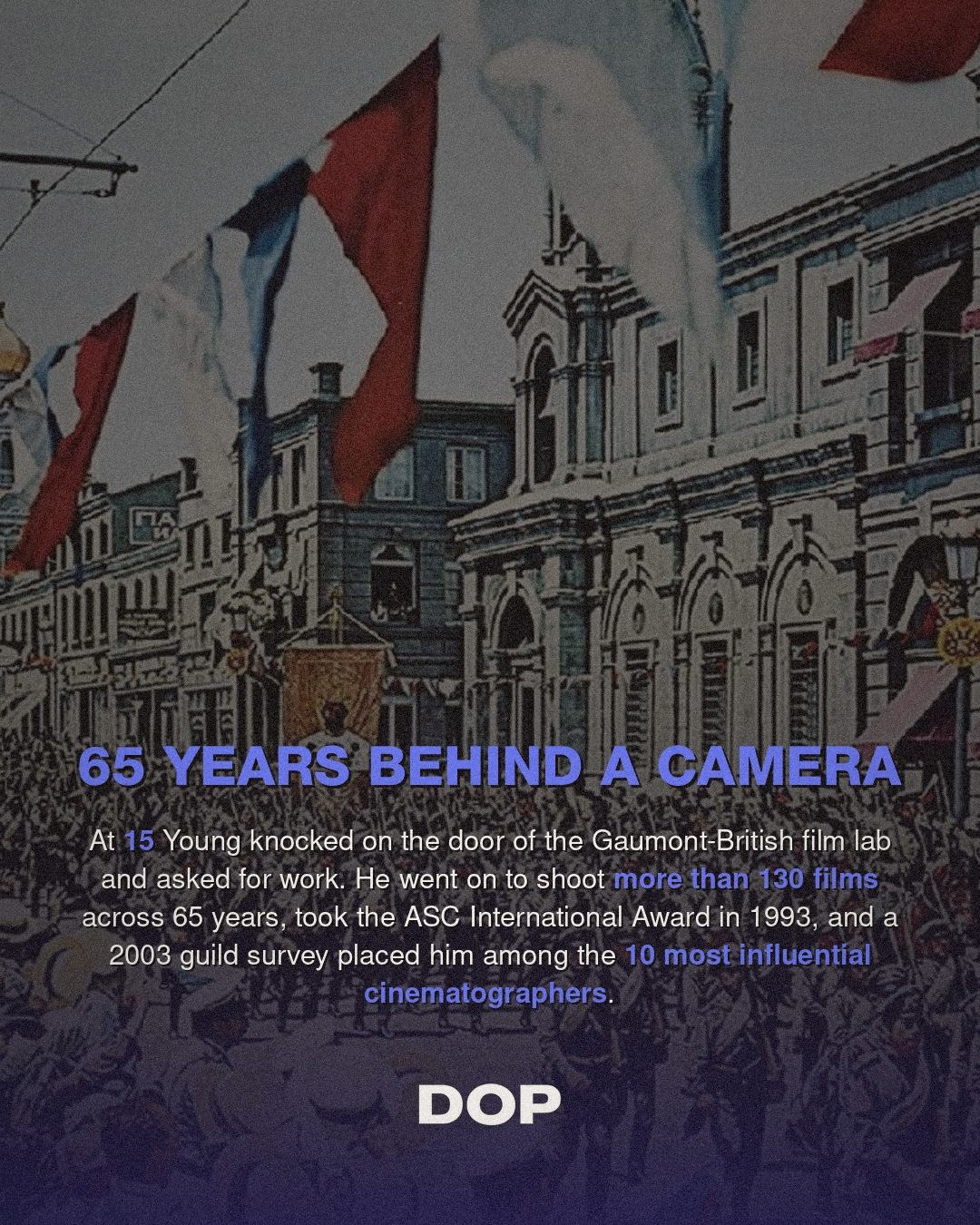
The initial apprehension on Lean's part in 1941, as the Instagram caption highlights, is almost unfathomable in retrospect. Young, already a seasoned veteran with a career stretching back to the silent era, brought a unique blend of classical training and an audacious experimental spirit. His early work showcased a meticulous eye for composition and lighting, but it was his collaboration with Lean that allowed him to truly stretch the boundaries of what was possible on a grand scale. He wasn't just lighting scenes; he was painting landscapes with light and shadow, capturing the very essence of human struggle against vast, indifferent backdrops.
The Desert's Embrace: Lawrence of Arabia
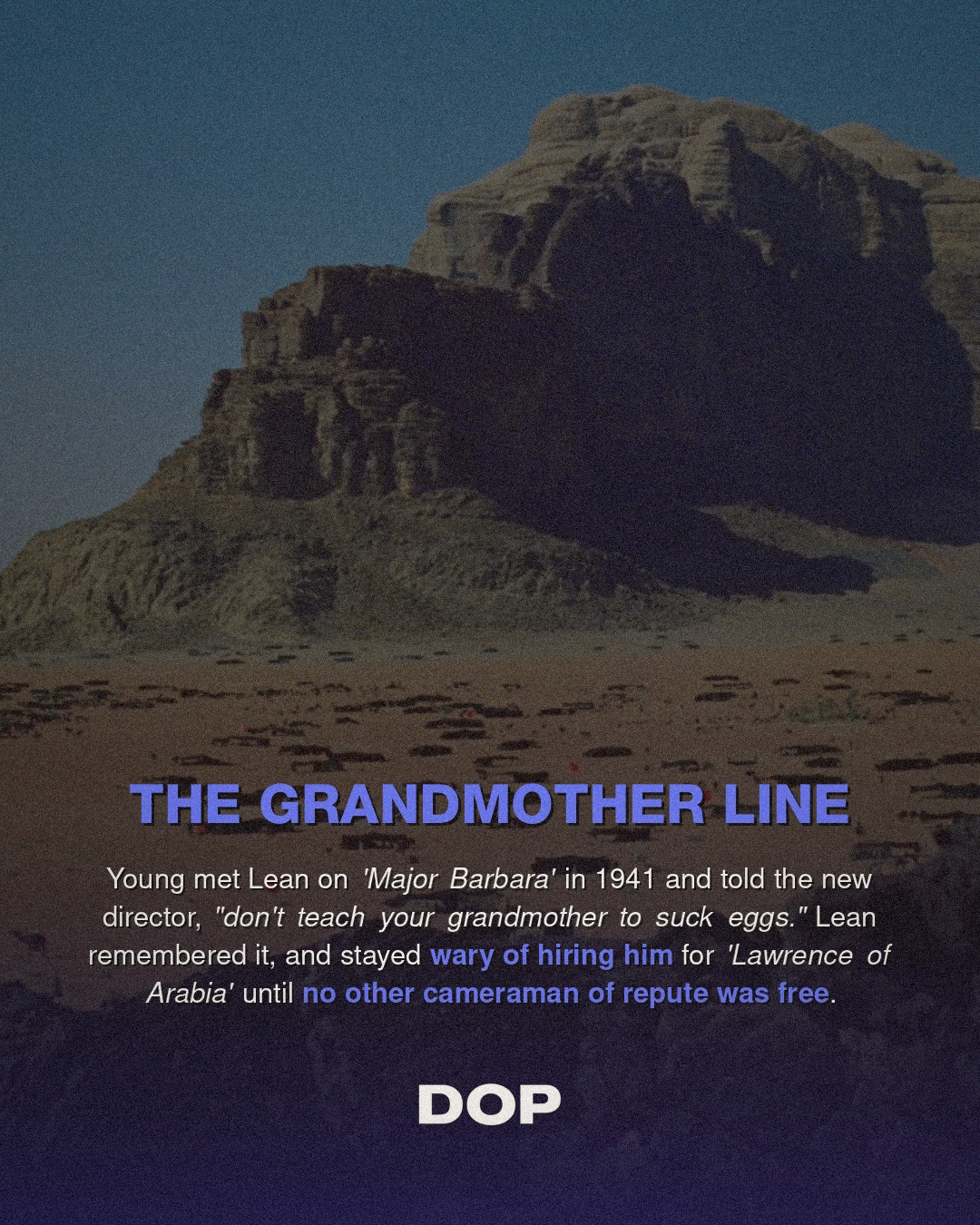
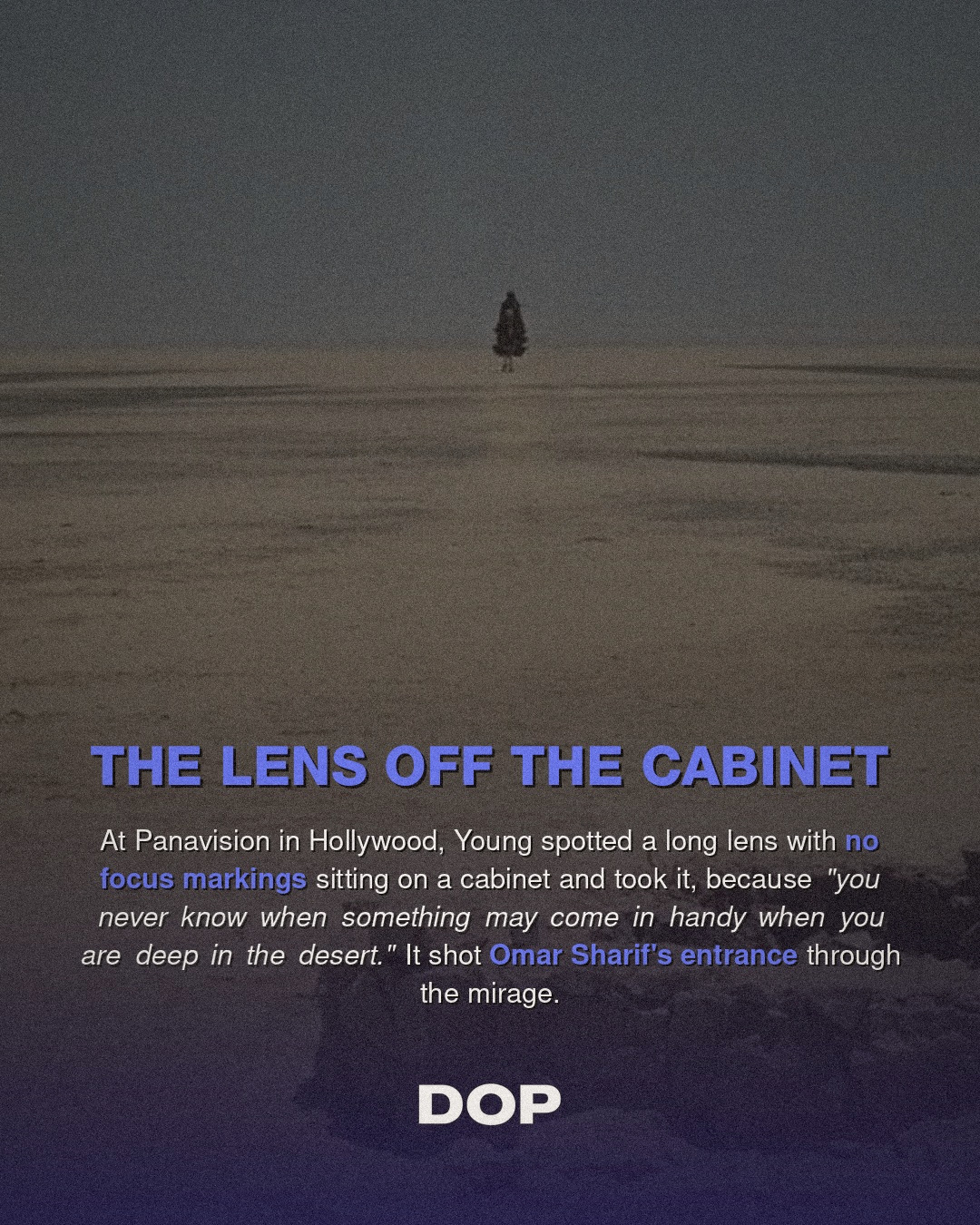
Lawrence of Arabia (1962) stands as a monument to widescreen cinematography. Shot in Super Panavision 70, Young’s work here is a masterclass in scale and immersion. The sheer audacity of his approach is legendary. Consider the iconic entrance of Omar Sharif as Sherif Ali: a shimmering mirage on the horizon, slowly resolving into a figure on horseback. This wasn't achieved with complex rigs or digital trickery. As the caption notes, Young famously plucked a long lens, devoid of focus markings, from a Panavision cabinet. This 'Frankenstein' lens, likely a telephoto prime with an incredibly long focal length, compressed the vast desert expanse, making the heat haze and the distant rider coalesce into an ethereal, almost hallucinatory vision. The lack of focus markings forced a reliance on instinct and experience, a testament to Young's profound understanding of optics and perspective. His use of natural light, often at dawn or dusk, painted the desert in hues of gold, amber, and deep blue, imbuing every frame with a sense of awe and danger.
"Freddie Young didn't just shoot films; he sculpted light and shadow, transforming mere landscapes into living, breathing characters in Lean's grand narratives."
Beyond the Mirage: Technical Mastery and Artistic Vision
Young’s approach extended far beyond singular iconic shots. For Doctor Zhivago (1965), he plunged audiences into the brutal beauty of the Russian winter, contrasting the intimate warmth of forbidden love with the stark, unforgiving landscape. His command of color temperature and exposure in extreme conditions was exemplary, often pushing film stock to its limits to capture the glistening snow and the harsh light, yet always maintaining the delicate balance required for human drama. The film's iconic ice palace, for instance, was a triumph of practical lighting, with Young meticulously crafting the ethereal glow that made the frozen interior feel both magical and desolate.
The Irish Coast: Ryan's Daughter and the 65mm Challenge
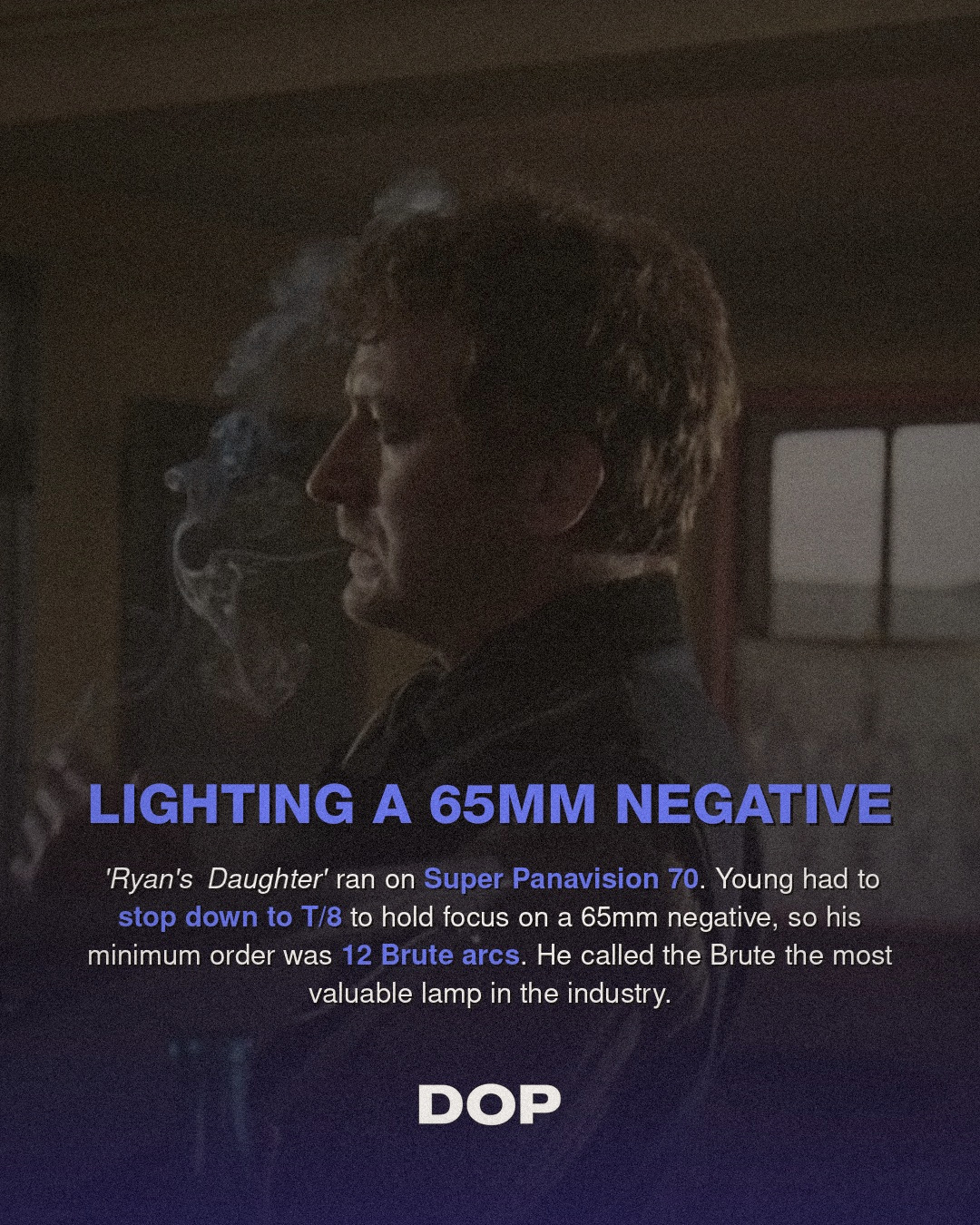
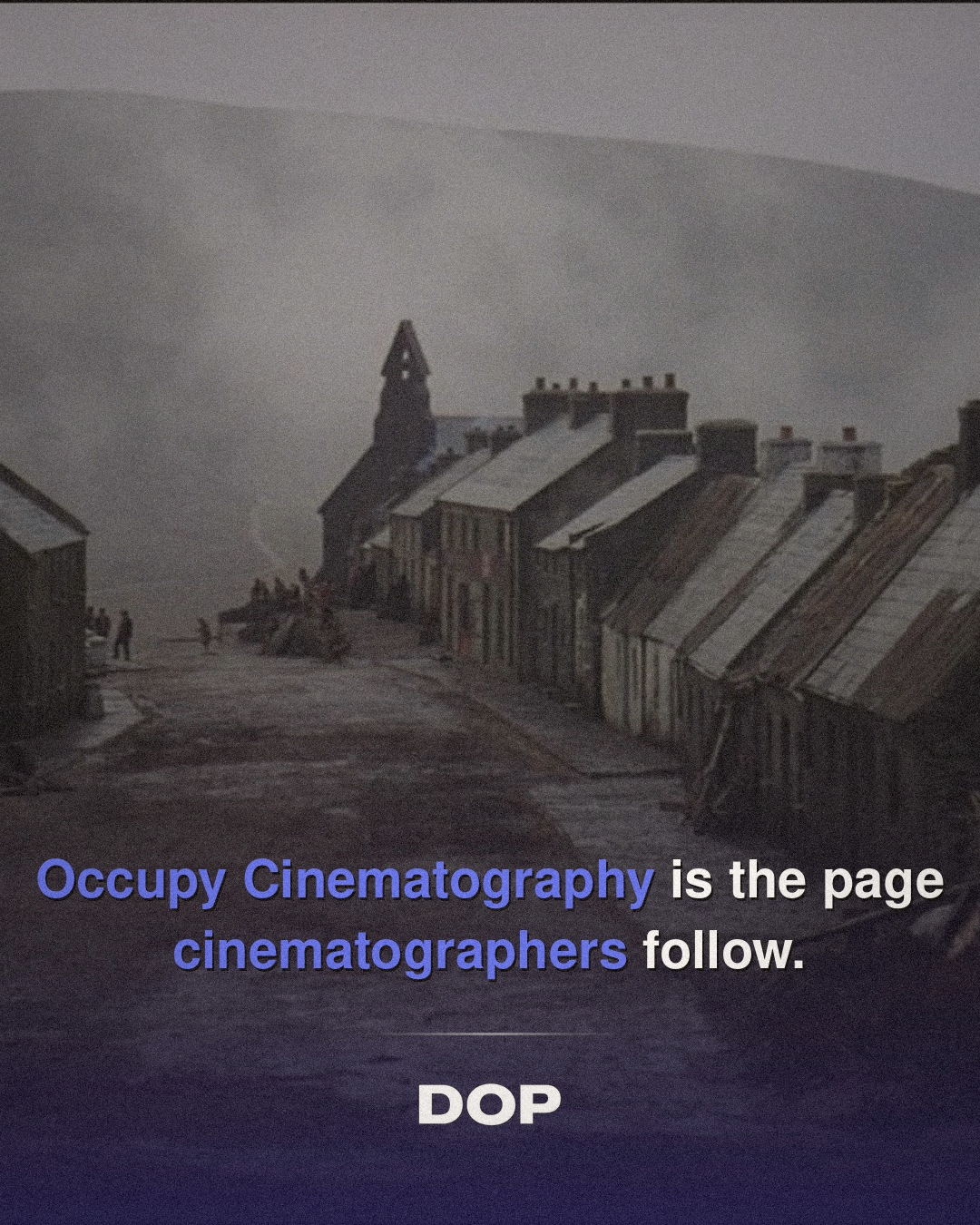
By the time of Ryan's Daughter (1970), Young and Lean were an unstoppable force. Again opting for the immersive canvas of Super Panavision 70, Young faced the challenge of capturing the raw, tempestuous beauty of the Irish coast. The caption's detail about shooting at T/8 and refusing process plates is particularly telling. Shooting at T/8 on 65mm film stock implies an incredible depth of field, ensuring that both foreground and background elements remained sharp and detailed, emphasizing the vastness of the natural environment and the isolation of the characters within it. This deep focus wasn't just a technical choice; it was an artistic statement, grounding the human drama firmly within its epic surroundings.
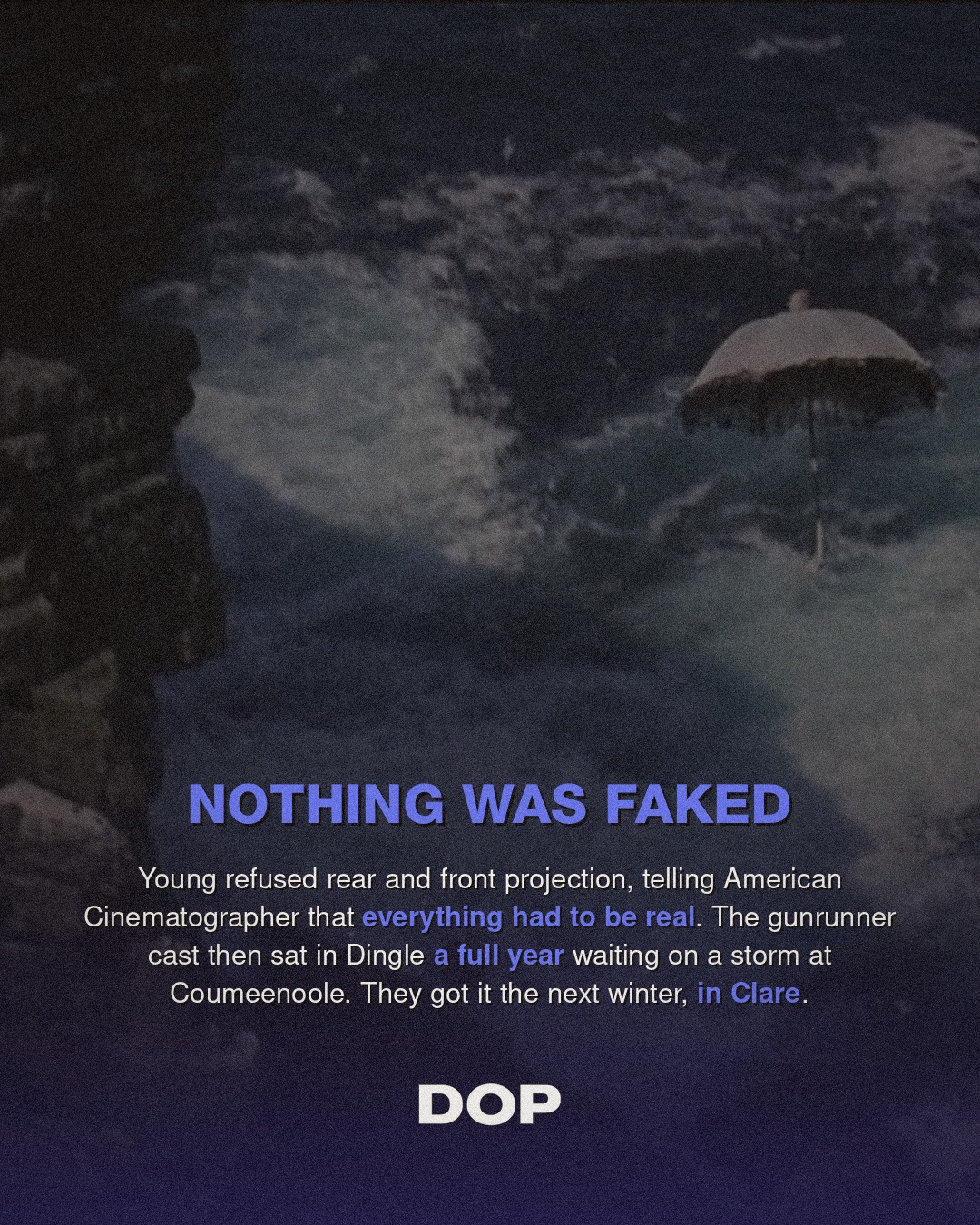
His refusal of process plates, a common technique for combining foreground action with pre-shot backgrounds, speaks volumes about his purist approach. Young believed in capturing everything in-camera, on location, under natural light whenever possible. This commitment to authenticity, even for sequences that would have been far easier to achieve in post-production, underscored his dedication to creating a truly organic and immersive visual experience. He understood that the power of the image lay in its fidelity to reality, however heightened that reality might be. The storm sequences in Ryan's Daughter, for instance, were shot in genuine hurricane-force winds, a testament to Young's bravery and Lean's uncompromising vision.
Freddie Young’s filmography is a testament to a career defined by innovation, precision, and an unwavering artistic integrity. From the stark beauty of the desert to the brutal cold of the Russian winter and the wild grandeur of the Irish coast, he consistently delivered visuals that transcended mere photography, becoming integral to the storytelling itself. His collaboration with David Lean wasn't just a partnership; it was a masterclass in how to wield the camera as a brush, painting unforgettable cinematic landscapes that continue to inspire DPs and film enthusiasts alike.