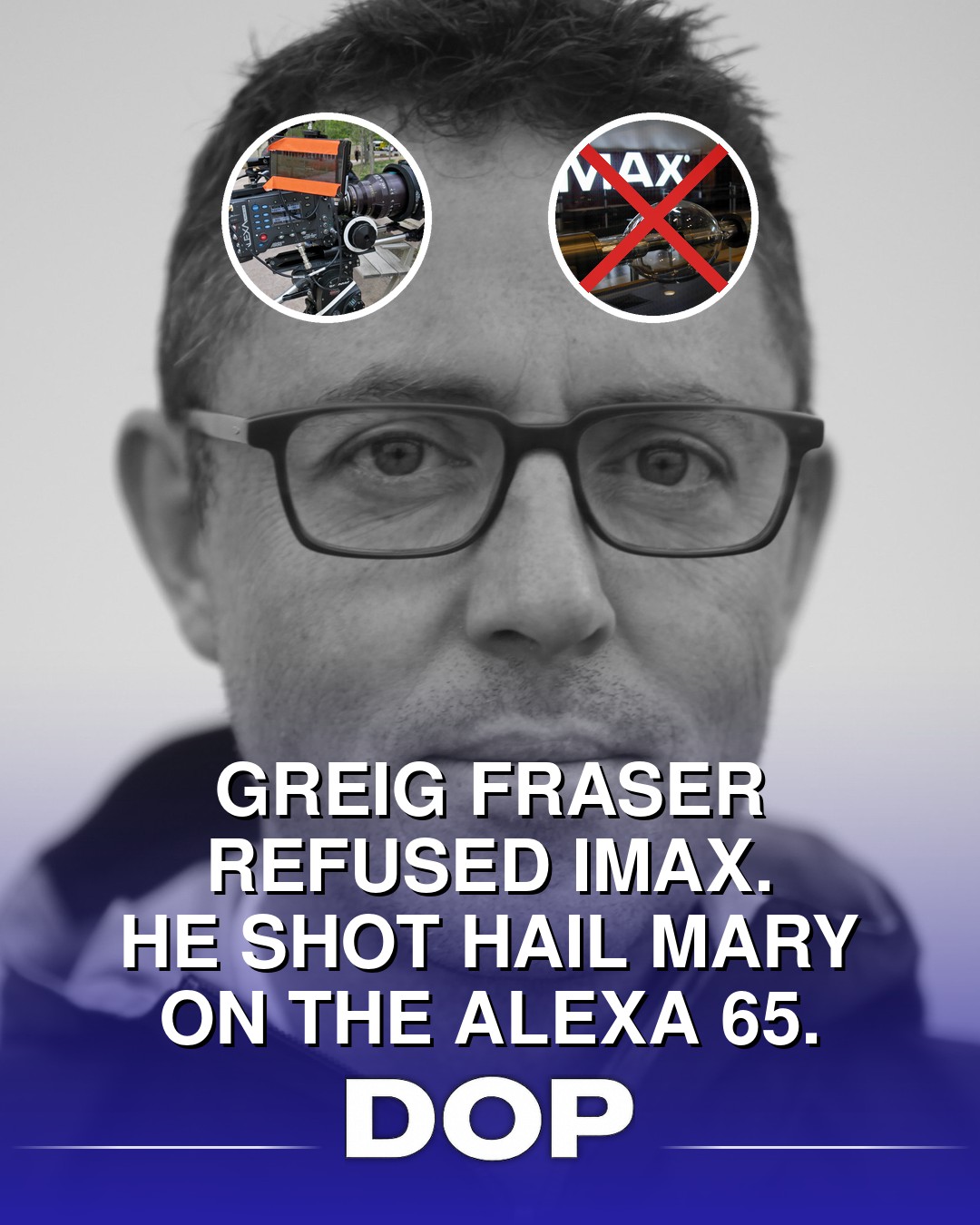
When Greig Fraser, the Oscar-winning cinematographer behind the sweeping vistas of *Dune* and the brooding shadows of *The Batman*, speaks about image acquisition, the industry listens. His recent revelations regarding his approach to *Project Hail Mary* are nothing short of revolutionary, challenging long-held assumptions about 'the IMAX look' and pushing the boundaries of what's technically possible. Fraser's decision to bypass traditional IMAX film cameras, and even their digital counterparts, for a custom-tailored ARRI ALEXA 65 setup is a masterclass in creative problem-solving and a testament to his relentless pursuit of a unique visual language.
Fraser's rationale for this radical departure is compellingly practical. His concerns about the logistical constraints of IMAX film – the notoriously short three-minute rolls, the inherent noise of the camera mechanism – speak to a cinematographer whose priorities extend beyond mere resolution. He understands that the rhythm of a shoot, the immediacy of performance, and the subtle nuances of on-set sound design can be compromised by equipment limitations. For a project as ambitious as *Project Hail Mary*, which promises to be a visually inventive sci-fi epic, these practical considerations directly impact the artistic outcome. Fraser wasn't just chasing a format; he was chasing a feeling, an immersive quality that he felt traditional IMAX methods might inadvertently hinder.
Crafting the Unseen: Custom Glass and Sideways Anamorphic
The technical ingenuity behind Fraser's choice is where the true brilliance lies. By opting for the ARRI ALEXA 65, a large-format digital camera renowned for its exceptional dynamic range and shallow depth of field, Fraser laid the groundwork for a truly bespoke image. But the real magic happened in collaboration with ARRI Rental, where they engineered a completely custom set of anamorphic lenses. The critical innovation? Mounting these lenses sideways. This seemingly simple orientation shift allowed Fraser to achieve the expansive 1.43:1 aspect ratio synonymous with IMAX, but with the distinct character and compressed depth of field inherent to anamorphic glass. It's a bold move that marries the immersive scale of IMAX with the painterly quality anamorphic lenses are celebrated for, creating a visual signature that is both grand and intimately cinematic.
"If we shoot Imax, we've got three-minute rolls. It's loud. It won't give us the film that we're after."
This approach isn't just about technical prowess; it's about artistic control. Fraser wasn't content to simply replicate an existing aesthetic. He sought to invent one. The custom anamorphic lenses, combined with the large sensor of the ALEXA 65, offer a unique blend of resolution, dimensionality, and optical nuance. Unlike the often pristine, almost clinical look of some digital IMAX presentations, Fraser's method promises a more organic, textured image, imbued with the distinctive anamorphic flare and fall-off that cinematographers adore. It’s a testament to his understanding that the lens, not just the sensor, is a crucial brushstroke in the cinematographer’s toolkit.
Beyond the Visible Spectrum: The Infrared Revelation
Further pushing the envelope, Fraser reportedly removed the infrared (IR) filters from his custom setup. This decision is particularly intriguing. Standard digital cinema cameras employ IR cut filters to prevent infrared light from contaminating the image, which can lead to color shifts, particularly in blacks, and an overall muddy appearance. By removing these filters, Fraser is deliberately inviting infrared light into the sensor. The implications for the final image are profound: it can create a heightened sense of atmosphere, render foliage and skin tones in unexpected ways, and potentially unlock a visual quality that truly feels alien and unseen. This isn't a technique for the faint of heart; it requires a deep understanding of light and color science to harness effectively, but in the hands of a master like Fraser, it could elevate *Project Hail Mary* to an entirely new aesthetic plane.
This layered approach – custom large-format anamorphic, sideways orientation for IMAX aspect ratio, and the audacious removal of IR filters – speaks volumes about Fraser's philosophy. He is not merely a technician; he is an artist who understands that every single component of the image-making chain can be manipulated to serve the story. His work on *Rogue One*, *Dune*, and *The Batman* consistently demonstrates a willingness to experiment and push boundaries, always in service of a distinct mood and narrative. His commitment to creating a bespoke visual identity for *Project Hail Mary* positions it as a landmark achievement, potentially offering the most visually inventive sci-fi experience since Roger Deakins' mesmerizing work on *Blade Runner 2049*.
Fraser's 'IMAX rebellion' is more than just a technical workaround; it's a powerful declaration of artistic intent. It reminds us that true innovation often comes from questioning established norms and meticulously crafting solutions that serve a singular vision. For cinematographers and film enthusiasts alike, *Project Hail Mary* won't just be a story to watch; it will be a masterclass in visual invention, a bold new frontier in large-format storytelling achieved not by adhering to rules, but by brilliantly breaking them.