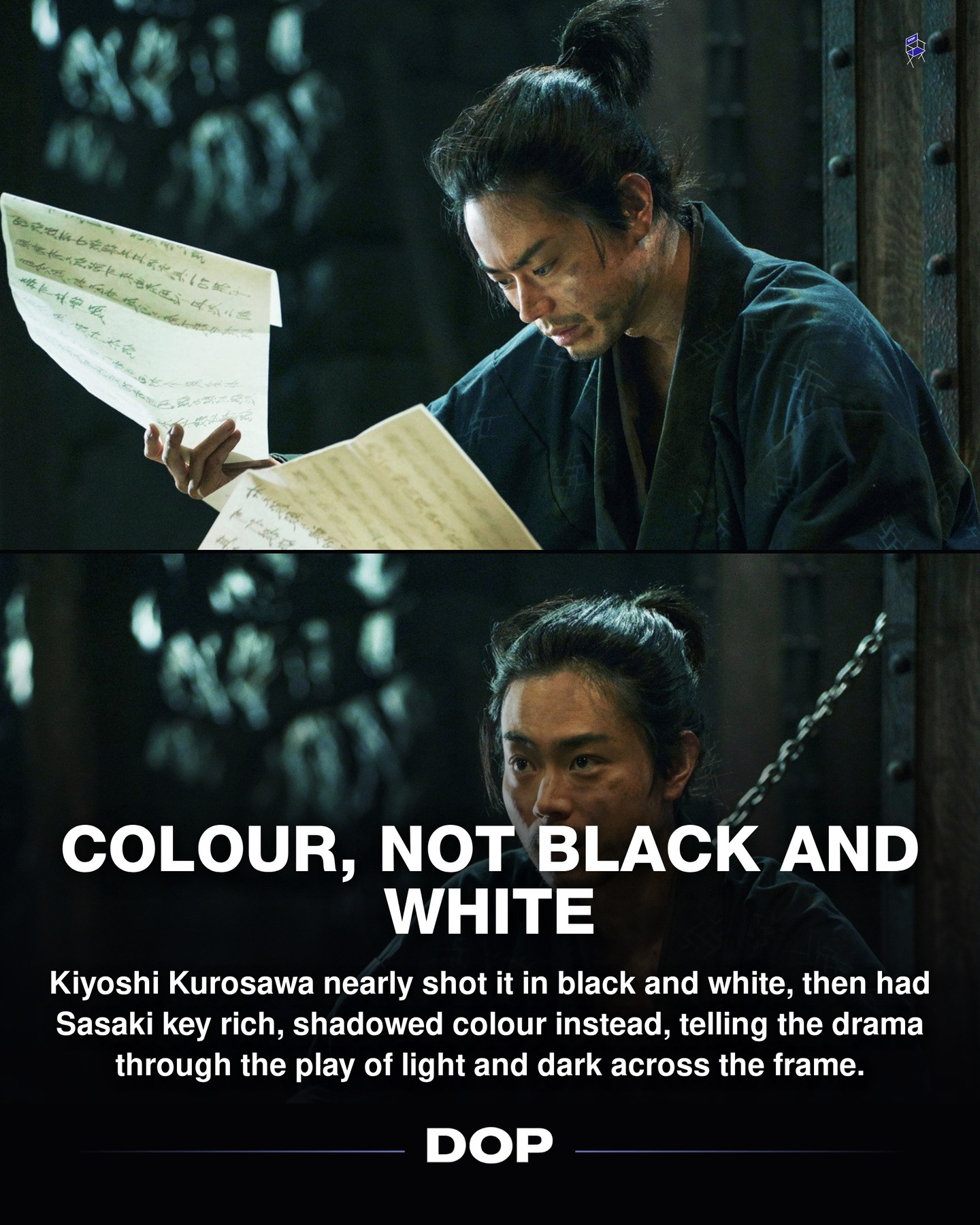
When director Kiyoshi Kurosawa initially toyed with shooting his historical thriller The Samurai and the Prisoner in black and white, it felt like an intuitive impulse. Period cinema often relies on monochrome as a shortcut to historical weight, stripping away color to emphasize texture, tone, and line. However, working alongside cinematographer Yasuyuki Sasaki, the filmmaking team abandoned monochrome in favor of a far more complex visual philosophy: a richly shadowed, high-contrast color palette framed in European Vista.
Rather than draining the image of hue, Sasaki opted for deep shadow density paired with vibrant tone separation. Distributed in the US by Janus Films, the production stands as a masterclass in how aspect ratio, sensor choice, and negative fill can craft psychological tension without relying on genre cliches.
2026-07-31The Geometry of European Vista
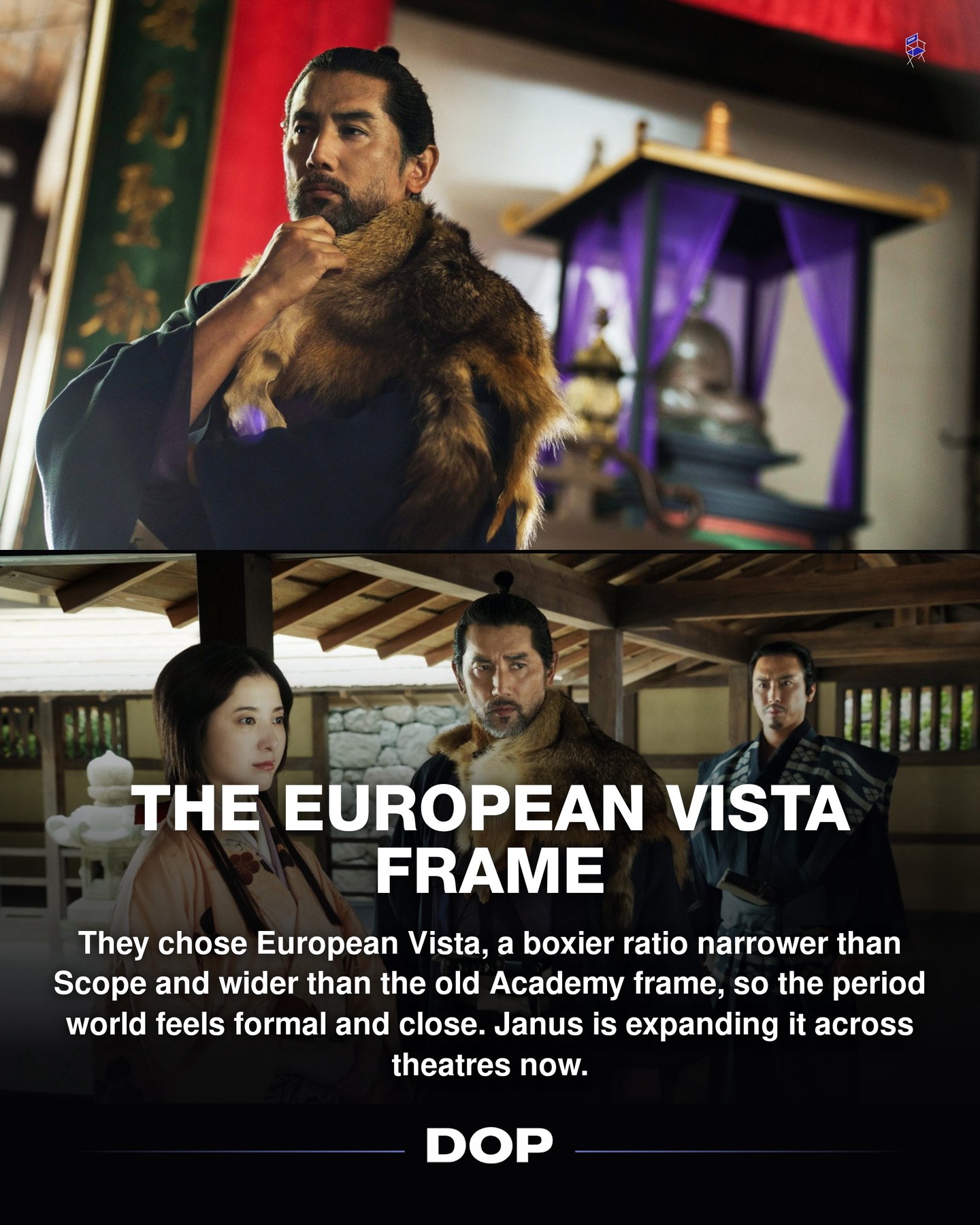
The core structural decision of the film lies in Sasaki's choice of aspect ratio. Instead of opting for standard Anamorphic Scope (2.39:1) or the traditional Academy ratio (1.37:1), Sasaki framed The Samurai and the Prisoner in European Vista (1.66:1). This aspect ratio sits precisely between the tall density of classic framing and the horizontal stretch of modern widescreen.
In broad scope compositions, claustrophobic period interiors often force cinematographers to use extremely wide focal lengths to hold actors and their environment simultaneously. This can distort facial geometry or force excessive negative space onto the horizontal edges of the frame. The 1.66:1 ratio functions as a spatial key: it allows Sasaki to capture a human face in close proximity while holding the surrounding architecture in full context.
The 1.66:1 ratio is the ultimate spatial compromise: it holds the architecture of confinement and the interiority of a face in a single, balanced breath.
Sasaki paired large-format digital sensors with vintage spherical glass to achieve a organic, tactile character. The modern sensor provides pristine dynamic range and noise-free shadow depth, while the older optics soften the harshness of high-resolution digital capture. The resulting images maintain crisp clarity in skin tones while gently falling off into smooth, un-sharpened backgrounds.
Light, Color Science, and Shadow Control
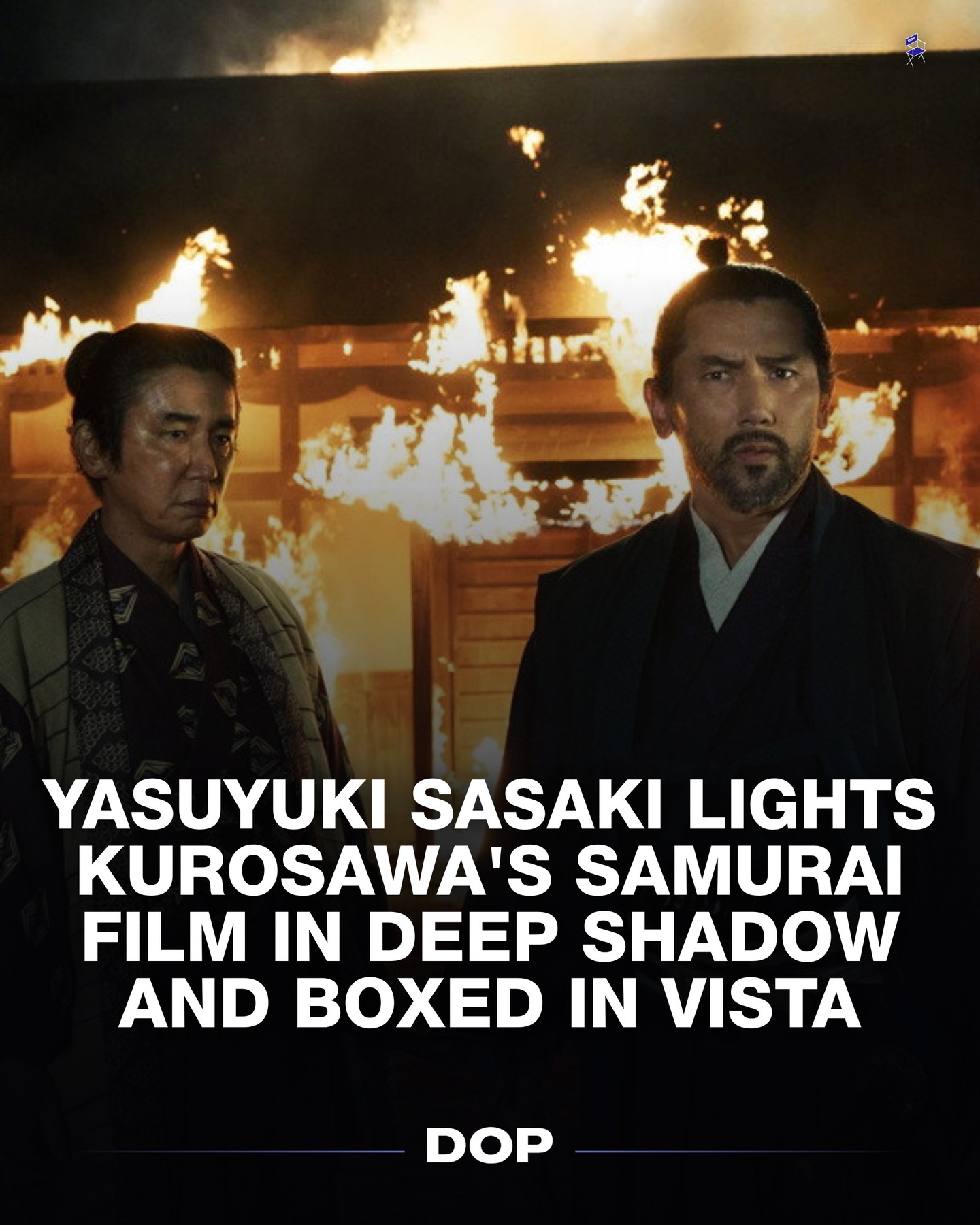
Translating Kurosawa’s signature thematic obsession with spatial dread into a period color piece required disciplined lighting setups. Sasaki relied heavily on heavy negative fill, using large black solids close to the talent, to swallow ambient scatter and create hard contrast boundaries. Shadows in the film do not feel soft or atmospheric; they feel solid, tactile, and heavy.
Rather than relying on flat overall illumination, lighting setups were built around localized, motivated tungsten sources bounced through unbleached linen. This replicated the warm, flicking nature of traditional paper-lantern light against dark cedar beams and shoji screens. When daylight enters the frame, Sasaki introduces cool, cyan-tinted light, creating an intense color contrast between warm interior confinement and cold exterior freedom.
By maintaining sharp separation between warm skin tones, cool exterior ambient light, and dense shadow zones, Sasaki created a rich, saturated world that feels far more haunting than monochromatic photography could have yielded. The shadows carry weight precisely because the color around them is so carefully rendered.
Ultimately, Sasaki’s work on The Samurai and the Prisoner demonstrates that format choices are never arbitrary. Every decision, from aspect ratio to color science, serves the emotional reality of the space. It stands as a vital study for modern DPs: visual impact is not built on maximum resolution or standard framing, but on deliberate spatial restraint.