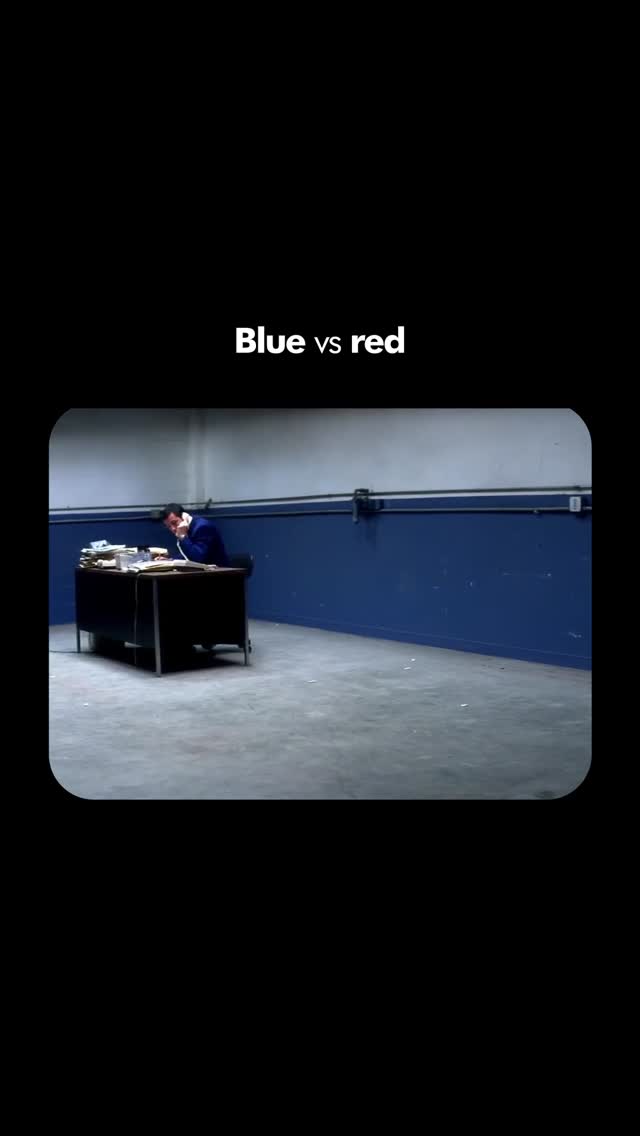
Following the sprawling, ensemble-driven melodrama of Magnolia, director Paul Thomas Anderson pivoted sharply toward intimate, manic minimalism with his 2002 romantic comedy-drama, Punch-Drunk Love. To pull off this tonal recalibration, Anderson turned to his trusted collaborator, director of photography Robert Elswit, ASC. Together, they subverted the visual tropes of conventional romantic cinema, translating sensory overload, social anxiety, and emotional volatility into a striking visual masterpiece.
At the core of the film’s aesthetic is a relentless tension between emotional interiority and external chaos. Rather than shooting Adam Sandler’s protagonist, Barry Egan, with comfortable, flattering portraiture, Elswit weaponized the 2.39:1 anamorphic frame to isolate him. Using Panavision Panaflex Millennium cameras paired with vintage Panavision C-Series and E-Series anamorphic lenses, Elswit created a wide, horizontally dominant field of view that frequently swallows Barry whole within his own life.
Wide-Angle Isolation and Anamorphic Distortions
In the vast, sterile expanse of Barry’s San Fernando Valley novelty warehouse, Elswit routinely opted for wide focal lengths like the 40mm and 50mm anamorphic primes. The optical characteristics of these lenses, subtle edge distortion, shallow depth of field despite wide coverage, and unique horizontal geometry, accentuate Barry’s psychological displacement. He is placed off-center, tiny against endless stacks of cardboard boxes, or trapped against vast, oppressive fluorescent-lit backdrops.
When the camera does move, it moves with purpose. Elswit and operator Colin Anderson utilized dynamic Steadicam sequences that track Barry through claustrophobic corridors and bustling streets. These extended takes refuse to break cut, forcing the audience to endure Barry’s suffocating overstimulation in real time. The camera acts not merely as an observer, but as an active agent of panic, relentlessly pursuing the protagonist through his emotional minefield.
The Chromatic Grammar of Calm vs. Chaos
The visual framework of Punch-Drunk Love relies heavily on a strict chromatic visual system. Elswit captured the project on Kodak Vision 500T 5279 and Vision 200T 5274 film stocks, pushing saturated primary colors to their limits. Royal blue serves as Barry’s sanctuary, represented by his tailored suit and the mysterious harmonium dropped on his street at dawn. In contrast, violent shades of red and harsh, uncorrected fluorescent greens signify chaos, embodied by his oppressive sisters and the extortionist mattress salesman.
blockquote>Elswit transformed the claustrophobia of panic into a hyper-stylized visual language, turning wide open spaces into overwhelming, suffocating traps.
Lighting played a pivotal role in maintaining this expressive color philosophy. Elswit avoided generic romantic soft light in favor of hard-edged, theatrical top lighting, aggressive practical sources, and intentional horizontal anamorphic lens flares. Working in tandem with digital artist Jeremy Blake’s abstract optical interludes, Elswit pushed direct light into the front element of the C-Series glass, creating streaks of intense light that burst across the frame during moments of emotional rupture.
Elevating Performance Through Visual Rigor
Before Punch-Drunk Love, Adam Sandler was primarily defined by broad studio comedies. Elswit’s cinematography fundamentally redefined Sandler’s screen presence, legitimizing his frantic energy by framing it with high-art precision. Elswit, whose storied filmography includes the shadow-drenched noir of Good Night, and Good Luck and the rich, oily textures of There Will Be Blood, brought a classical yet radical rigor to the project.
By grounding Barry Egan in rigorous geometric compositions, controlled color science, and expressive lens choices, Elswit and Anderson constructed a cinematic language where romance feels less like a dream and more like a recovery from a panic attack. The result remains one of the most visually inventive studies of love and anxiety ever committed to 35mm film.