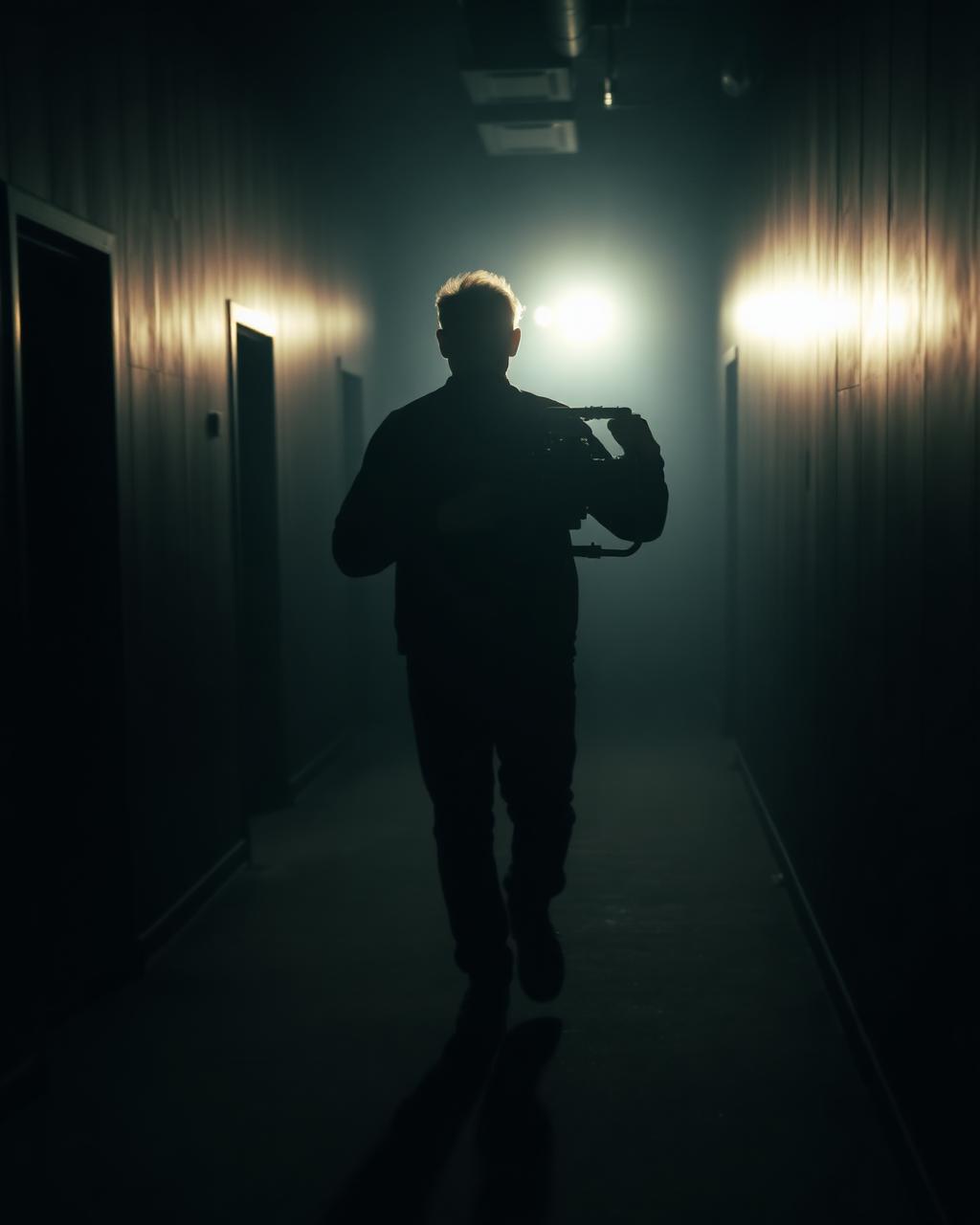
Benjamin Loeb, cinematographer of Zi at Sundance 2026, made a straightforward choice about camera placement: shoot the walking scenes from behind. The character—Michelle Mao—moves through the streets of Hong Kong, and the camera follows her from behind, handheld and uncommitted to knowing what she is thinking. This is not a unique technique. What makes it significant is that Loeb adopted it as a direct citation of the Dardenne brothers' visual language—the Belgian filmmakers who built an entire body of work around this approach to following characters.
The Dardenne brothers—Luc and Jean-Pierre—made films including Rosetta, The Son, The Kid with a Bike, and The Child, all constructed around the principle of following the protagonist from behind. In these films, the camera pursues the character but does not anticipate their movements. It does not cut to show what the character is looking at. It does not use close-ups to read the character's emotional state. It stays at a distance that maintains proximity while withholding privileged access to the character's face and psychology.
THR's review of Zi noted this genealogy explicitly: "Loeb frequently shoots Zi from behind, in the unfussy, handheld style of the Dardenne brothers." This is not accidental similarity. This is conscious adoption of a visual method that carries philosophical weight. To follow a character from behind is to make a specific cinematographic statement: the camera trusts the character to move through space meaningfully, without needing the camera to explain that meaning through close-ups or reaction shots.
For director Kogonada, this approach aligns with consistent career concerns. In Columbus, the architecture of the spaces the characters inhabit does the emotional work because the characters cannot articulate it themselves. The camera observes space with great attention and lets the viewer extract emotional meaning from the environment rather than from the characters' faces. In Zi, the streets and landscapes of Hong Kong—the fluorescent lights, the density of the urban environment, the way pedestrians move through narrow spaces—become the primary subject of visual attention. The character moves through this landscape, and the camera follows without revealing what she is thinking.
Following from behind means the camera refuses privileged knowledge. In conventional cinematography, we use close-ups and reaction shots to give the audience access to a character's internal state. This is a form of narrative power: the camera and the viewer know what the character is feeling even if other characters in the scene do not. By following from behind and refusing close-ups, Loeb surrenders this narrative advantage. The viewer becomes a observer in the world rather than a participant in the character's consciousness.
This approach is specifically effective for stories about contemplation rather than expression. Zi is about a young migrant woman navigating urban Hong Kong, encountering two men, building a relationship that is complicated and unclear. The story is not about dramatic revelation. It is about quiet observation. The camera following from behind communicates: we are watching someone move through a world. We do not have access to her thoughts. We can observe her movement, her choices, the way she occupies space. We must interpret from behavior rather than from sentiment.
The handheld quality—the slight instability, the minor corrections the operator makes as she follows—communicates that this is a real body moving through real space, not a precisely controlled cinematic apparatus. The handheld is not stylization. It is proximity without control. The camera is as close as it can get without fully knowing what the character will do next.
For cinematographers approaching stories about people in transit, in contemplation, or navigating environments that are more interesting than their internal states, the Dardenne brothers' approach—as adopted by Loeb in Zi—offers an alternative to the conventional grammar of close-ups and reaction shots. The cinematography says: I will observe. I will follow. I will not explain.
Gear Recommendations
- DJI RS 4 Pro Gimbal – Amazon
- Easyrig Vario 5 | Adorama – B&H Photo
- DJI Ronin 4D-8K – Amazon
- Tiffen Variable ND Filter | Adorama – B&H Photo
- Blackmagic Pocket Cinema Camera 6K Pro | Adorama – B&H Photo
Note: Links above are affiliate links. Occupy Cinematography may earn a commission on qualifying purchases at no additional cost to you.