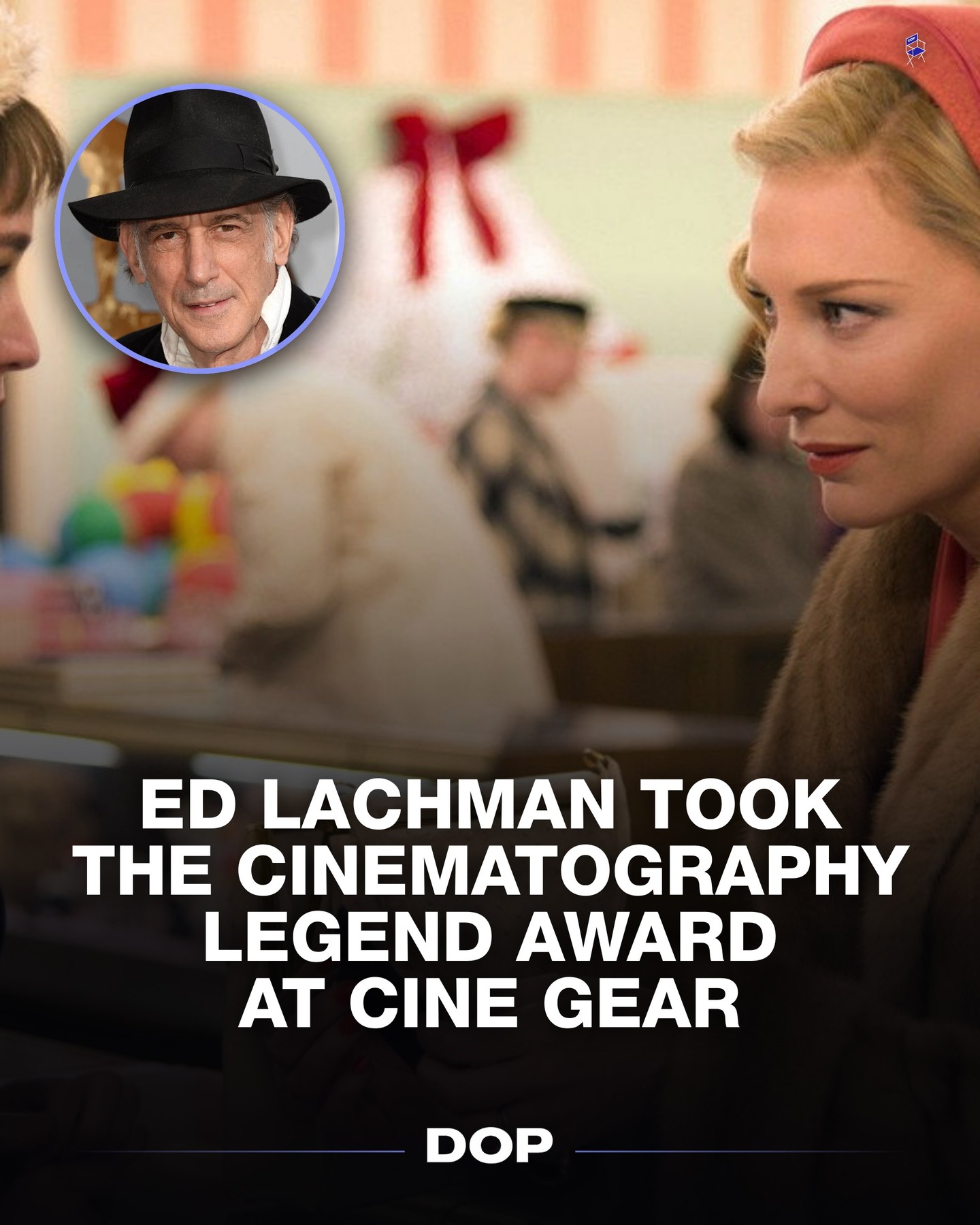
When Hoyte van Hoytema, ASC, FSF, NSC took the stage at Cine Gear Expo in Los Angeles to present Edward Lachman, ASC with the Cinematography Legend Award, the room felt the gravitational pull of two distinct photographic philosophies intersecting. Van Hoytema, the torchbearer of large-format IMAX immersion, handing hardware to Lachman, cinema’s ultimate textural chameleon, was a poignant passing of respect. For cinematographers in attendance, the moment celebrated an artist whose work has persistently challenged the industry's obsession with clean, predictable images.
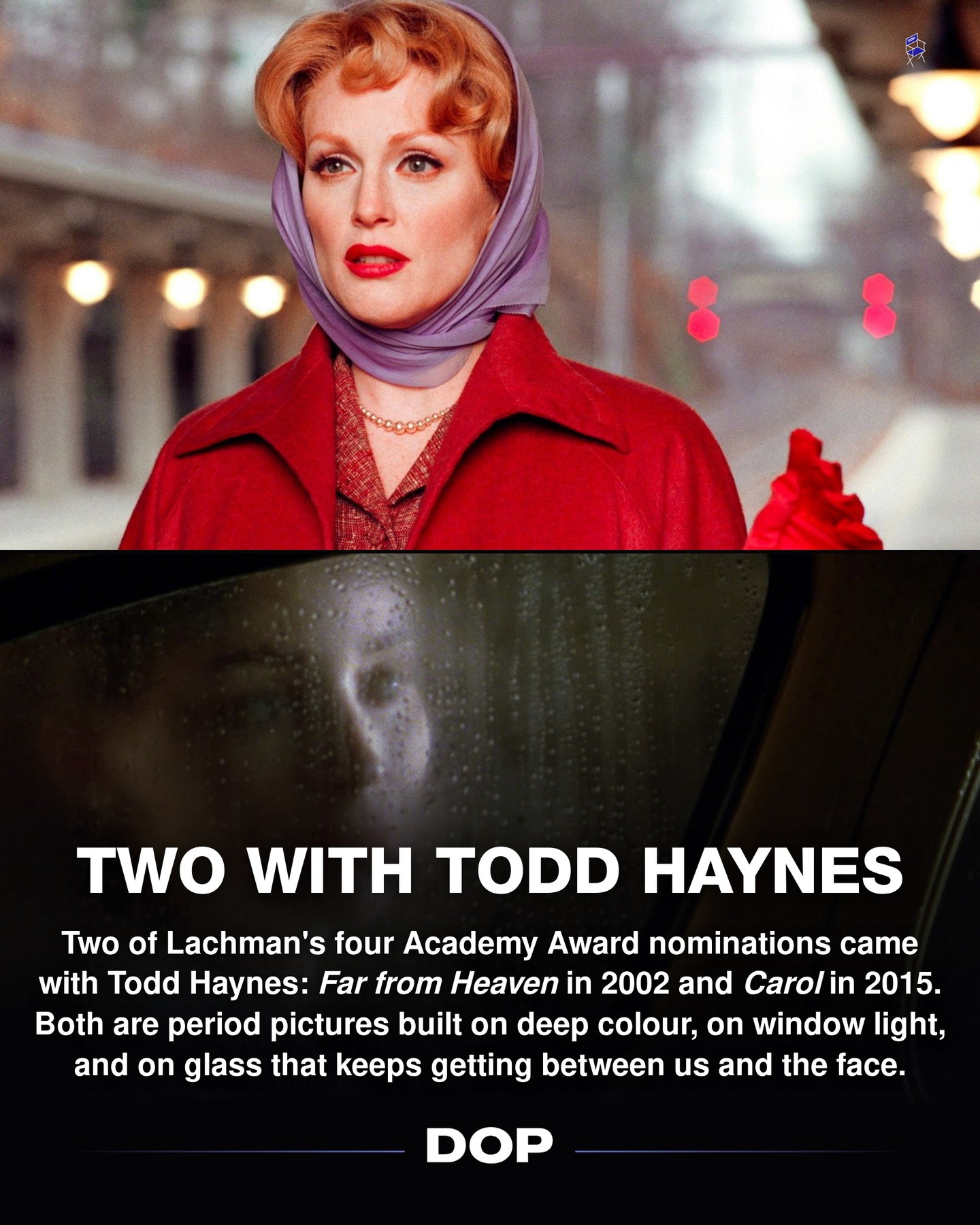
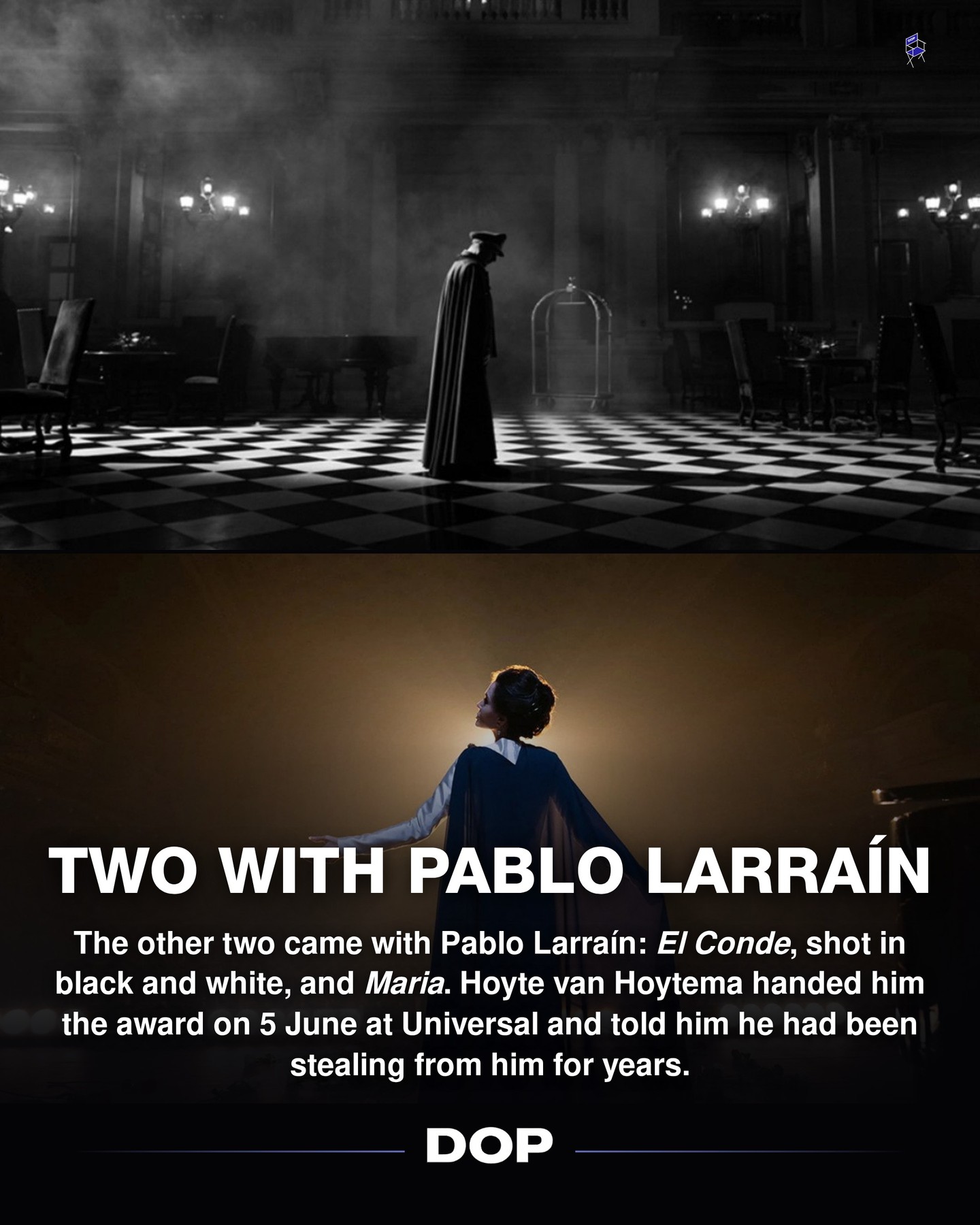
Lachman’s career is punctuated by four Academy Award nominations across four decades: Far from Heaven (2002), Carol (2015), El Conde (2023), and Maria (2024). Many legendary DPs carve out a signature look, a particular high-contrast key, a recurring focal length, or a prized set of vintage anamorphics. Lachman has done the opposite. His visual through line is an absolute refusal to impose a house style, letting each narrative dictate its own optical physics, stock, and spectral palette.
From Sirkian Melodrama to Grain-Soaked Super 16
Consider the chasm between Far from Heaven and Carol, both directed by longtime collaborator Todd Haynes. For Far from Heaven, Lachman paid homage to Russell Metty, ASC and the heightened 1950s three-strip Technicolor aesthetic. Rather than relying on modern digital grading shortcuts, he deployed high-key incandescent fixtures, theatrical gels, hard cuts of lavender and emerald, and deeply calculated exposure ratios on 35mm Kodak negative to evoke lush mid-century repression.
Thirteen years later on Carol, Lachman abandoned glossy three-strip nostalgia entirely. He reached instead for the Arriflex 416 and Kodak Vision3 Super 16mm stocks (principally 7219 and 7207), pushing the negative one stop in development to draw out tactile, emotional grain. Inspired by the street photography of Saul Leiter and Ruth Orkin, Lachman shot through rain-streaked bus windows, reflective storefronts, and dirty leaded glass. The resulting imagery felt less like a pristine period reconstruction and more like a half-remembered personal diary discovered in a shoe box.
The camera should never advertise itself before the character does. Every emulsion, every focal length, and every foot-candle must belong entirely to the interior life of the story.
Engineering the Digital Monochrome Frontier
Lachman’s hunger for technical reinvention did not end with celluloid. When approaching Pablo Larraín’s vampire satire El Conde, he bypassed the standard workflow of desaturating a color digital capture in post. Knowing that native black-and-white sensors record purer tonal transitions and unparalleled micro-contrast, Lachman collaborated directly with ARRI to field a custom-built Alexa Mini LF Monochrome sensor. Paired with vintage 1940s Bausch & Lomb Baltar lenses rehoused by Zero Optik, Lachman produced an arresting gothic chiaroscuro that felt simultaneously ancient and razor-sharp.
He carried this daring optical curiosity straight into Maria, once again teaming with Larraín to capture the twilight of opera diva Maria Callas. Rather than settling into a singular medium, Lachman interwove 35mm, Super 16mm, and specialized black-and-white passes, deploying optical filtration and bespoke flare characteristics to mirror Callas’s deteriorating psychological landscape. It was another masterclass in selecting capture tools based on emotional honesty rather than production convenience.
The Pragmatic Pioneer of Exposure
Beyond his filmography, Lachman’s legacy is physically embedded in the gear bags of working cinematographers through his invention of the EL Zone System. Frustrated by the arbitrary nature of false-color exposure systems tied to camera-dependent IRE values, Lachman partnered with engineers to create an intuitive exposure tool mapped directly to true optical stops based on an 18-percent gray reference. By bringing Ansel Adams’s foundational still-photography theory directly into the digital viewfinder, Lachman gave contemporary operators and DPs a universally consistent metric for lighting with absolute confidence.
As van Hoytema handed over the Legend statuette, the applause recognized more than just technical longevity. It honored a craftsperson who has spent fifty years operating at the edge of the frame, constantly adapting his craft so that light itself might speak in a completely different language for every single story.
This article contains affiliate links. We may earn a small commission at no extra cost to you. Learn more.