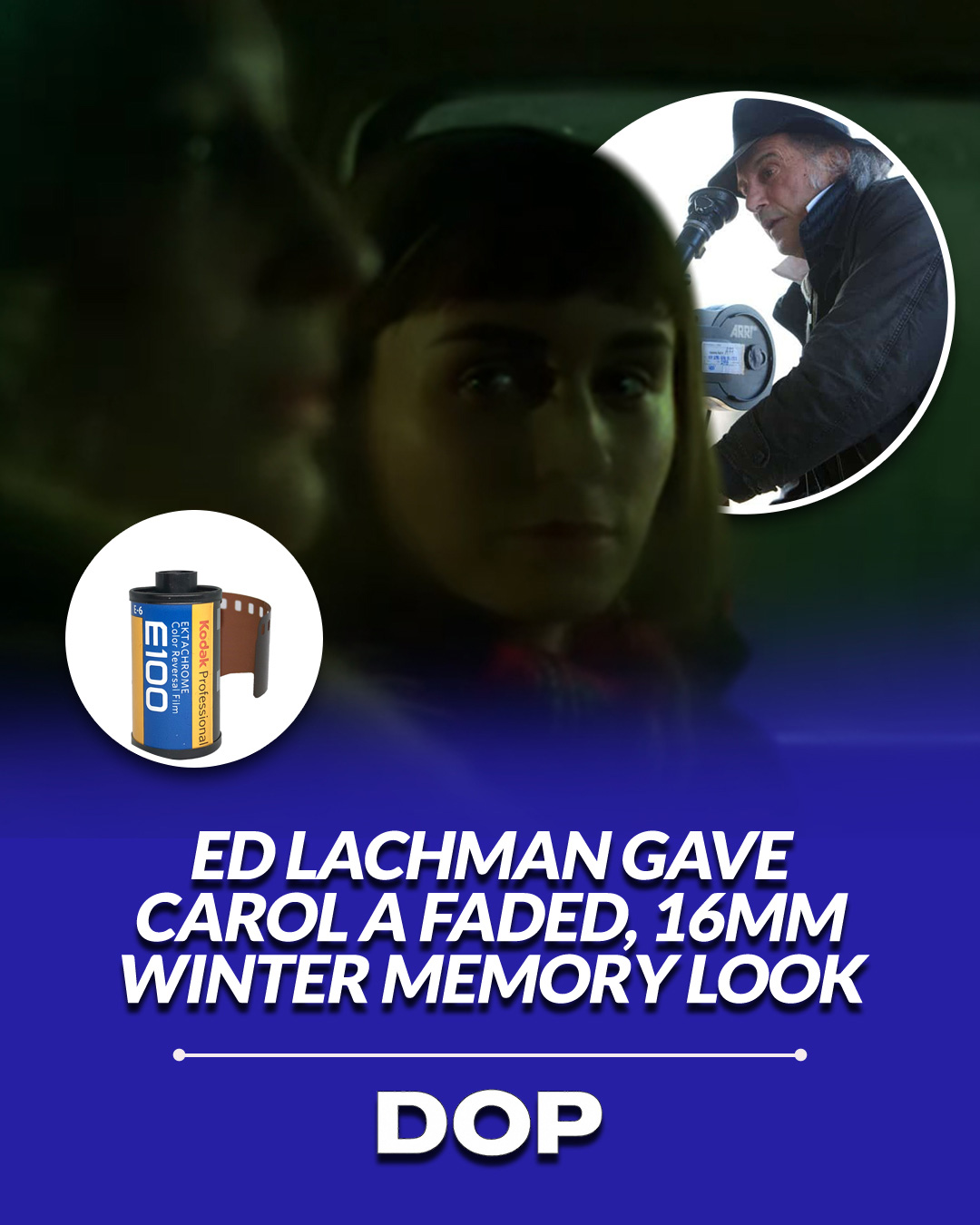
In an era dominated by large-format digital sensors and pristine, clinical glass, Ed Lachman, ASC’s cinematography on Todd Haynes’ 2015 masterpiece Carol stands as a monumental testament to the artistic power of visual imperfection. Rather than opting for the pristine fidelity of 35mm or 6K digital capture, Lachman turned to Super 16mm film, a format historically relegated to documentaries, low-budget indie features, and television. By embracing the format's tight grain structure, muted color space, and organic lower resolution, Lachman transformed a 1950s melodrama into a deeply personal, painterly recollection of love and longing.
The Photochemical Mechanics of Memory
Operating with the ARRIFLEX 416 camera and pairing it with sharp Zeiss Ultra 16 prime lenses, Lachman deliberately contrasted high optical engineering with the coarse, dancing structure of Kodak Vision3 stocks, primarily 500T 7219 and 250D 7207. To heighten the feeling that the imagery was pulled directly from a mid-century photojournalist’s archive, the production carefully pushed and pulled stocks during photochemical processing, leaning into color shifts that mirrored the soft, faded hues of early Ektachrome prints.
The decision to shoot Super 16mm was not merely driven by period nostalgia; it was fundamentally narrative. Where 35mm would have rendered 1950s Manhattan with the immaculate distance of a Hollywood costume drama, Super 16mm pulls the audience into a tactile, subjective intimacy. The organic film grain operates almost like an invisible veil of time, translating Therese’s internal turmoil and Carol’s quiet desperation into a physical, undulating visual surface.
Framing Through Obstruction and Soft Light
Lachman’s lighting philosophy on Carol relies heavily on soft, motivated tungsten sources diffused through environmental obstacles. Instead of clean key lights and sharp rim illumination, the faces of Cate Blanchett and Rooney Mara are continually framed through steam-filled diner windows, raindrop-streaked taxi glass, blurred store displays, and translucent lace curtains. This layering technique draws inspiration from mid-century street photographers like Saul Leiter, Ruth Orkin, and Ernst Haas, whose work favored atmosphere, reflection, and urban abstraction over crisp clarity.
Choosing a smaller gauge and accepting its limitations can add an emotional intimacy that perfect digital formats simply cannot replicate.
To achieve this look, Lachman and his camera team employed modest lighting packages featuring warm tungsten units, soft bounce boards, and heavy diffusion gels. By letting light wrap gently around physical barriers, the shadows remain rich and milk-tinged without ever collapsing into flat, digital black. The dynamic range compression inherent to Super 16mm forces subtle tonalities to blend together, giving skin tones an exquisite, watercolor softness that hyper-resolving contemporary cameras often erase.
The Legacy of Textural Storytelling
Expanding upon his previous collaborations with director Todd Haynes, such as the Douglas Sirk-inspired 35mm Technicolor world of Far From Heaven and the rich HBO miniseries Mildred Pierce, Lachman demonstrates that format selection should always serve as a direct extension of a character’s psychological interior. In Carol, the occasional insertion of reversal-style home-movie footage further reinforces the feeling that we are observing memories that have already begun to fade at the edges.
For contemporary cinematographers working in a landscape obsessed with pixel counts, HDR delivery standards, and ultra-clean optical setups, Carol remains an essential case study in artistic restraint. Lachman proves that visual power doesn't stem from resolution or technical perfection, but from texture, mood, and deliberate intent. By leaning into the physical constraints of Super 16mm, he created an enduring visual poem that feels less like a historical reenactment and more like a genuine artifact of human emotion.