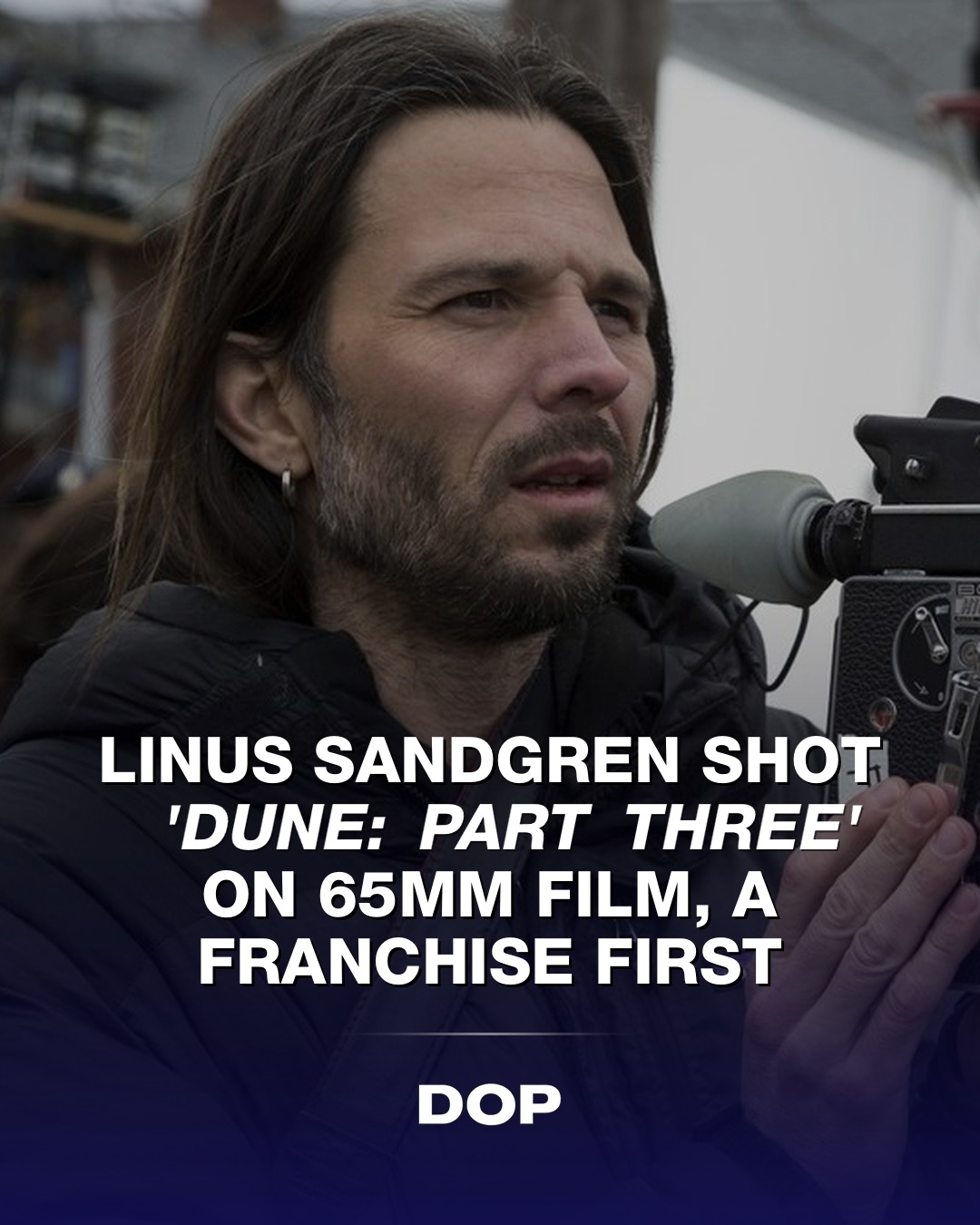
The sands of Arrakis are set to shift once more, not just in narrative but in visual texture. With Linus Sandgren, ASC, FSF stepping into the formidable role of Director of Photography for Denis Villeneuve’s highly anticipated Dune: Part Three, the cinematic landscape of this epic saga is undergoing a profound transformation. While the first two installments, masterfully lensed by Greig Fraser, ASC, ACS, leaned heavily into IMAX-certified digital capture, Sandgren’s approach for the concluding chapter marks a significant, almost philosophical, pivot: a primary capture on 65mm film, augmented by select 15/70mm IMAX sequences for maximum impact.
This isn't merely a change of DPs; it's a deliberate artistic choice, reportedly driven by director Denis Villeneuve, to imbue the brutal majesty of Arrakis with an unparalleled sense of tangibility and scale. The decision to embrace large-format film for Dune: Part Three speaks volumes about the creative team's commitment to pushing the boundaries of immersive storytelling. While Fraser's digital approach delivered breathtaking clarity and dynamic range, Sandgren's filmic choice promises a different kind of visual poetry, one steeped in the organic grain, subtle color rendition, and immense resolution that only large-format celluloid can truly provide.
The Tactile Grit of Celluloid
The move to 65mm film for the bulk of Dune: Part Three is a powerful statement in an era dominated by digital acquisition. Large format film, specifically 5-perf 65mm, offers a negative area significantly larger than Super 35, translating directly to superior image fidelity, finer grain structure when scanned at high resolutions, and an unparalleled depth of field control. This format is renowned for its ability to capture immense detail, render subtle gradations of light and shadow, and produce a truly cinematic aesthetic that often feels more 'present' than its digital counterparts. For a world as richly detailed and environmentally hostile as Arrakis, this tactile quality of film could be precisely what Villeneuve envisions to fully convey its unforgiving nature.
Sandgren, known for his masterful work on films like La La Land (for which he won an Oscar), First Man, and No Time to Die, possesses a deep understanding of how to harness the unique characteristics of film. His filmography showcases a DP who isn't afraid to experiment with formats and lighting to serve the story. One can anticipate a meticulous approach to lighting the vast desert landscapes, perhaps leveraging natural light to its fullest extent, allowing the dynamic range of 65mm film to capture the searing highlights and profound shadows of Arrakis's dual suns and stark dunes. The choice to reserve 15/70mm IMAX for specific, high-impact sequences further underscores a strategic deployment of resolution and immersion, ensuring key moments, perhaps the arrival of the sandworms or pivotal battles, land with maximum visceral force.
"The choice of 65mm film for Dune: Part Three is not just about resolution; it's about imbuing the very fabric of Arrakis with a visceral, almost tangible presence that only celluloid can truly achieve." - Occupy Cinematography Editorial Board
Bridging Analog and Digital Realms
An intriguing aspect of this production split is the designation of “desert material” to IMAX certified digital capture. This suggests a pragmatic yet artful blend of technologies. While the character work and perhaps interiors might benefit from the nuanced texture of 65mm film, the sheer scale and often extreme lighting conditions of exterior desert shoots could find a robust partner in high-end digital IMAX cameras. These cameras, known for their exceptional low-light performance, expansive dynamic range, and robust workflows in challenging environments, can capture the vastness and harshness of Arrakis with remarkable clarity. This hybrid approach allows Sandgren and Villeneuve to cherry-pick the best tools for each specific narrative and environmental demand, creating a seamless yet richly varied visual tapestry.
The previous films, while shot digitally, employed a fascinating post-production workflow: captured on IMAX-certified digital, printed to 35mm film, and then scanned back to digital. This process, often referred to as a 'film-out,' was intended to introduce filmic characteristics like grain and subtle color shifts into the digital image, bridging the gap between digital acquisition and a desired analog aesthetic. With Sandgren's 65mm choice, the filmic texture is baked in from the start, promising an even more authentic and organic feel. The transition from Fraser’s meticulous, often stark digital palette to Sandgren’s likely more painterly, film-native approach will be a fascinating study for cinematographers and film enthusiasts alike.
The production, which ran from July to November 2025 in Budapest and Abu Dhabi, provided ample opportunity for Sandgren to experiment with different lighting philosophies and lens choices across the various formats. One can speculate about the use of Panavision large format glass, known for its beautiful fall-off and cinematic character, or perhaps vintage lenses to introduce subtle imperfections and a unique flares that would complement the film stock. The interplay between the natural light of the desert and controlled studio environments, all captured across different formats, presents a complex yet exciting challenge that Sandgren is uniquely qualified to tackle.
As Dune: Part Three prepares for its December 18 opening, the anticipation isn't just for the resolution of the story, but for the visual spectacle that Linus Sandgren and Denis Villeneuve are poised to deliver. This bold foray into large-format film, alongside strategic digital capture, signals a deep respect for the craft of cinematography and an unwavering commitment to cinematic immersion. It's a testament to the power of format choice in shaping not just how a story looks, but how it feels.