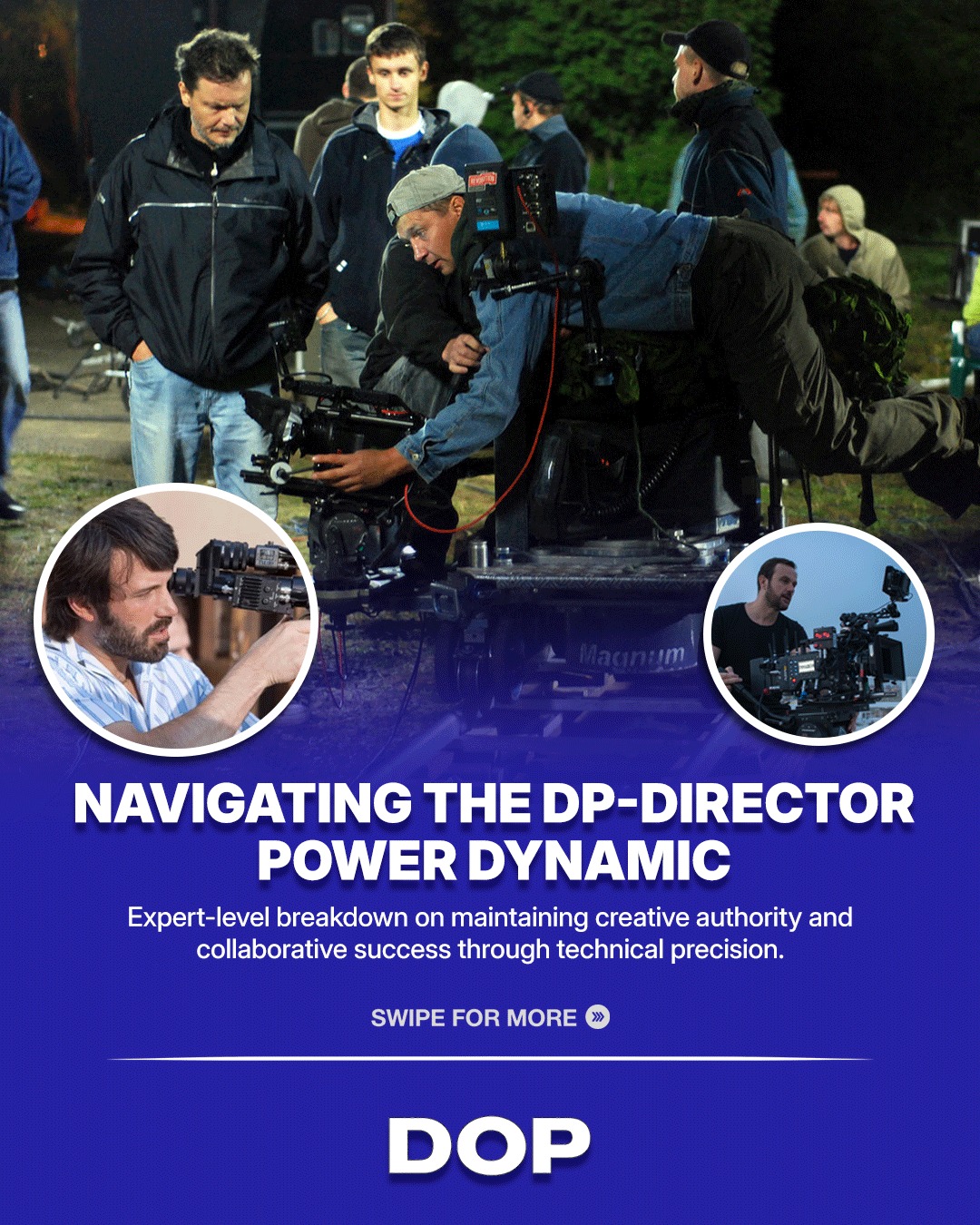
The indelible mark of a truly great film often lies in the seamless, almost telepathic, collaboration between its director and director of photography. Yet, beneath the surface of every frame, there lurks a potential for creative friction, a tension born from the distinct yet intertwined realms of storytelling and visual execution. As the adage goes, the director controls the story, and the DP controls the image. This seemingly clear division, however, is precisely where the most profound production challenges and, paradoxically, the greatest artistic triumphs, often reside.
It’s a delicate dance, this push and pull, where the director’s narrative vision must be translated into the DP’s photographic reality. A director might articulate a feeling, an emotion, a subtext, and it is the DP’s formidable task to find its visual analogue. This isn't merely about pointing a camera; it’s about choosing the right sensor to capture a specific texture, selecting lenses that breathe a particular character into the frame, and sculpting light to evoke the very essence of a scene. Consider the stark, almost painterly chiaroscuro that Roger Deakins, ASC, BSC, masterfully employs in films like Sicario, where the unforgiving landscape becomes a character in itself, or the ethereal, dreamlike quality conveyed by Bradford Young, ASC, in Arrival, where light itself seems to ebb and flow with the characters' understanding. These are not merely technical choices; they are deeply interpretive acts.
The Art of Pre-Production: Forging Consensus
The battle for creative alignment is rarely won on set; it’s forged in the crucible of pre-production. This is where the true work of understanding, negotiation, and synthesis takes place. Location scouts become more than just logistical exercises; they are opportunities for the director and DP to walk through scenes, discussing blocking, light sources, and camera positions. Tone meetings delve into mood boards, photographic references, and even musical cues, all aimed at building a shared visual language. It’s in these crucial stages that potential conflicts are identified and resolved, often through robust, sometimes heated, but always respectful, dialogue.
“By the time the camera rolls, creative disagreements should be resolved. The set is not a battleground for artistic differences; it’s a stage for execution.”
Imagine the pre-production process for a film like 1917, where Deakins and Sam Mendes meticulously planned every single 'continuous' shot. This wasn't just about blocking actors; it was about understanding the sun's path, the terrain, and how every single light source, natural or artificial, would contribute to the illusion of a single take. The technical demands necessitated an unparalleled level of collaborative planning, leaving no room for on-set disagreements about fundamental visual strategy.
On Set Etiquette: Preserving the Hierarchy, Protecting the Vision
Once the cameras are rolling, the dynamic shifts. The set becomes a high-stakes environment where efficiency and clear communication are paramount. This is why the unwritten rule, that a DP who contradicts a director in front of the crew creates a hierarchy problem, holds so much weight. It's not about stifling dissent or creative input; it's about preserving the chain of command and maintaining the momentum of the day. A public disagreement undermines the director's authority and can sow seeds of doubt and confusion among the crew, impacting morale and productivity. The time for philosophical debates about the visual approach has passed.
Instead, the on-set relationship becomes one of trust and swift problem-solving. A director might ask for a subtle shift in mood, and a seasoned DP knows how to achieve this through a slight adjustment in diffusion, a change in lens filtration, or a nuanced tweak to the color temperature. Think of the way Emmanuel Lubezki, ASC, AMC, works with Terrence Malick; their long-standing collaboration is built on an understanding so deep that Lubezki can often anticipate Malick’s desires, translating the director's often abstract requests into breathtaking visual poetry, without the need for lengthy on-set discussions.
The choice of camera, for instance, might be a point of contention in pre-production, perhaps the director favors the organic feel of film, while the DP sees the logistical advantages and dynamic range of a modern digital cinema camera like the ARRI Alexa LF. These discussions need to happen early, weighing the aesthetic impact against practical considerations like budget, post-production workflow, and the specific needs of the story. The DP's role is to advocate for the image, but ultimately, the director's vision guides the ship.
Ultimately, the most successful director-DP partnerships are built on mutual respect, clear communication, and a shared passion for storytelling. It’s about understanding that while their domains are distinct, their ultimate goal is identical: to serve the story with the most compelling and evocative images possible. The tension, when handled with foresight and professionalism, transforms from a potential pitfall into the very engine of innovation and artistic excellence.
This article contains affiliate links. We may earn a small commission at no extra cost to you. Learn more.