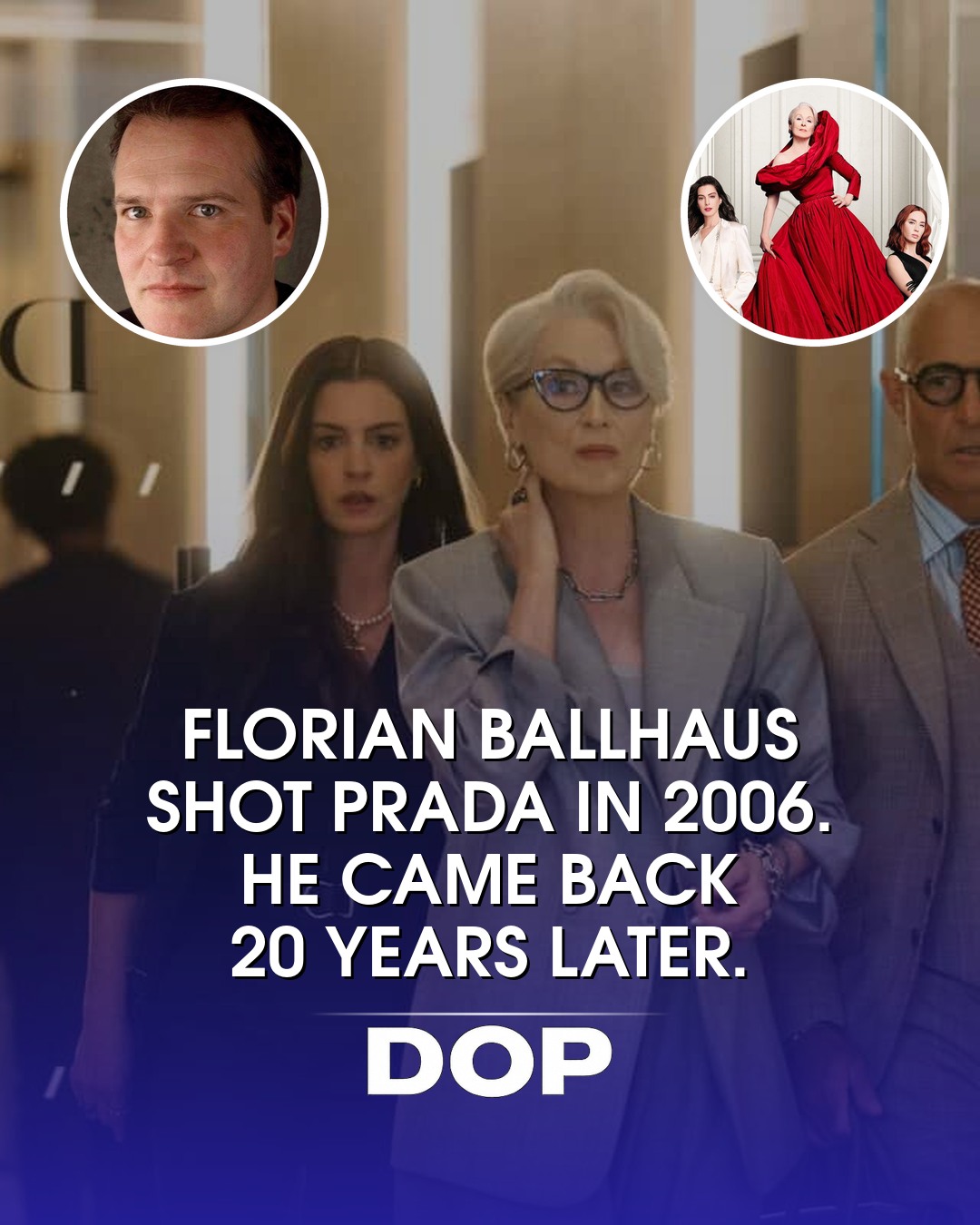
The announcement of Florian Ballhaus lensing Devil Wears Prada 2, two decades after he shot the original, sent a ripple of anticipation through the cinematography community. It’s a rare and often fraught endeavor to revisit a film with such a distinctive aesthetic, particularly when the original was so instrumental in defining a certain visual lexicon for its genre. Yet, Ballhaus, a cinematographer whose lineage includes the legendary Michael Ballhaus, has consistently demonstrated an ability to blend commercial appeal with nuanced visual storytelling. His reunion with director David Frankel for this highly anticipated sequel, charting the titular fashion empire's navigation of the death of print media in 2026, promises a fascinating case study in cinematic evolution.
The original Devil Wears Prada (2006) was a triumph of polished, high-key cinematography that perfectly encapsulated the glossy, aspirational world of high fashion. Ballhaus, working with the then-standard 35mm film, crafted a look that was simultaneously sharp and elegant, utilizing a palette of cool blues and steely grays offset by the vibrant, often audacious colors of the fashion world itself. This wasn't just about making things look 'pretty'; it was about using light and composition to delineate power dynamics, to highlight the intricate textures of haute couture, and to subtly underscore the emotional journeys of its characters. The film's visual language became iconic, a benchmark for how to photograph modern glamour with an underlying current of realism.
Evolving the Aesthetic: From Film to Digital
Fast forward twenty years, and the cinematic landscape has undergone a seismic shift. The transition from photochemical film to digital capture isn't merely a technical update; it's a fundamental change in how light is rendered, how color is perceived, and how dynamic range is managed. For Devil Wears Prada 2, Ballhaus faced the crucial task of maintaining the original's visual DNA while leveraging the capabilities of modern digital cameras. We can speculate that Ballhaus likely opted for a high-end digital cinema camera system, perhaps an ARRI Alexa LF or Sony Venice, known for their exceptional color science and robust dynamic range. The choice of sensor would have been critical in replicating the nuanced skin tones and rich fabric textures that were so central to the first film's appeal.
“The challenge isn't just to make it look 'new,' but to make it feel like a natural continuation, an evolution rather than a complete departure. It's about respecting the visual memory of the audience.”
The original's use of prime lenses, likely a mix of Panavision or Zeiss glass, contributed to its clean, sharp aesthetic. For the sequel, Ballhaus might have explored contemporary anamorphic lenses to introduce a subtle level of optical imperfection and unique bokeh, or perhaps modern spherical primes designed to deliver clinical sharpness with beautiful fall-off. Lens choice, in particular, would be paramount in maintaining that signature blend of realism and aspirational glamour. The character of the glass, its flare characteristics, and its ability to render subtle details would all play a role in bridging the two decades.
Lighting for a New Era: Practicality and Glamour
Lighting in Devil Wears Prada was meticulous, often employing large, soft sources to create a flattering, yet realistic, presentation of its subjects and environments. Given the sequel's narrative focus on the 'death of print media' in 2026, there's an opportunity for Ballhaus to subtly shift the lighting philosophy. While the glossy, aspirational look will undoubtedly remain for certain sequences, perhaps we'll see a more naturalistic, even slightly grittier approach in scenes depicting the decline of traditional media, utilizing practicals or available light to convey a sense of a world in transition. This contrast would be visually compelling and serve the narrative beautifully.
Ballhaus's extensive filmography, including the period drama The Book Thief and the fantastical The Crimes of Grindelwald, showcases his versatility and mastery across diverse genres. He understands how to craft specific looks for different stories, always prioritizing the narrative. His return to Devil Wears Prada is a testament to his ability to not just replicate, but to re-interpret and evolve a visual style. The seamless transition of the original cast, coupled with Ballhaus's visual stewardship, promises a sequel that feels both familiar and refreshingly contemporary, a true masterclass in maintaining cinematic continuity across two decades of technological and cultural change.
This article contains affiliate links. We may earn a small commission at no extra cost to you. Learn more.