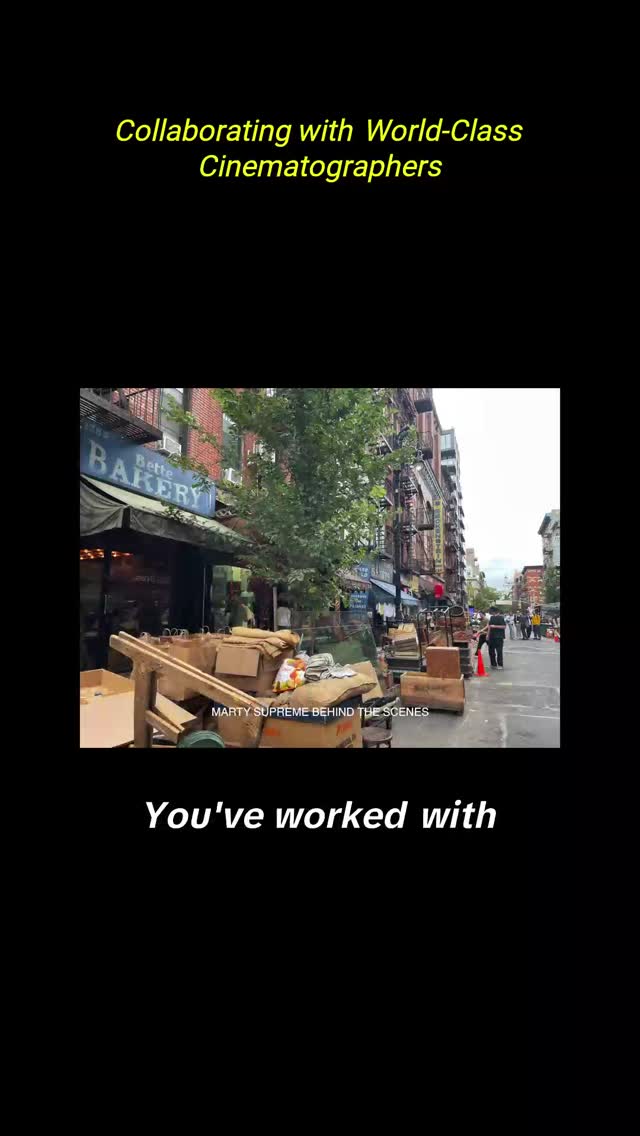
In the grand hierarchy of cinematic craft, few creative partnerships carry as much weight as the alliance between the production designer and the director of photography. When legendary production designer Jack Fisk, the visual architect behind masterpieces like There Will Be Blood and The Revenant, collaborates with a master of light like Darius Khondji ASC, AFC, world-building transcends mere set dressing. It becomes a fluid, dynamic dialogue between spatial architecture and optical physics.
For Fisk, set design is never an isolated exercise in aesthetics. Instead, it is the foundational canvas upon which the cinematographer constructs their lighting strategy. In recent discussions, Fisk pulled back the curtain on this intricate symbiosis, emphasizing that world-class visual storytelling requires integrating the cinematographer’s vision into the earliest phases of location scouting and pre-production.
The Architecture of Light: Early Scouting and Spatial Intent
Long before a single physical wall is raised or a lighting grid is rigged, the groundwork for a film's visual tone is laid during early location walks. When Fisk and Khondji analyze a location, they aren't just looking at frame lines or period accuracy; they are evaluating natural light vectors, window placements, and how deep daylight penetrates an interior space. By designing sets that intentionally leverage natural orientation, Fisk allows DPs to work with soft ambient light rather than fighting against uncooperative architecture.
If you design a room without considering where the sun hits in the late afternoon, you force the cinematographer to rely on artificial workarounds. By embedding architectural motives for light, such as oversized transom windows, exposed beams that cast dramatic shadows, or strategic alcoves, the set itself begins doing the heavy lifting for the lighting department.
"When a set is built with light in mind, every wall, bookshelf, and doorway becomes a modifier for the DP. You aren't just designing space; you are shaping shadow."
Tactile Surfaces and Lens Interaction
Khondji, renowned for his daring contrast, moody undertones, and meticulous exposure control in films like Seven and Uncut Gems, relies heavily on rich, physical textures. When shooting on modern high-resolution digital sensors like the ARRI Alexa 65 or pushing push-processed 35mm film stock, the interaction between surface material and lens coating becomes hyper-critical.
Fisk understands that set dressings, from matte plaster walls to dark mahogany bookshelves, dictate exposure levels and light falloff. A heavily textured wall painted in muted earth tones absorbs harsh key lights, allowing a DP like Khondji to wrap soft bounce sources around an actor without risking blown-out highlights. Conversely, polished wooden surfaces create organic specular highlights that give vintage glass, such as Cooke Speed Panchros or Panavision C-Series anamorphics, rich flare characteristics and dynamic micro-contrast.
Organic World-Building Over Digital Fixes
In an era increasingly dominated by virtual volumes and post-production color manipulation, the physical integration of set design and cinematography remains unbeatable. When a practical location or set is meticulously keyed to natural light pathways, the resulting frames possess a grounding depth that digital manipulation rarely achieves.
For camera operators and gaffers, working within an intelligently designed Fisk environment opens up unprecedented creative freedom. Instead of cluttering the floor with stands and large diffusion frames, lighting instruments can be integrated practically into the set's architecture. Ceiling joists hide LED ribbon rigs, deeply set bookshelves house subtle kickers, and wide windows serve as massive single-source softboxes.
The lesson for emerging directors and DPs is clear: cinematography does not begin at the camera package, nor does production design end at the paint swatch. When space and light are conceived as a singular entity, cinema achieves a rare, tactile magic, where every frame feels utterly lived-in, motivated, and visually resonant.