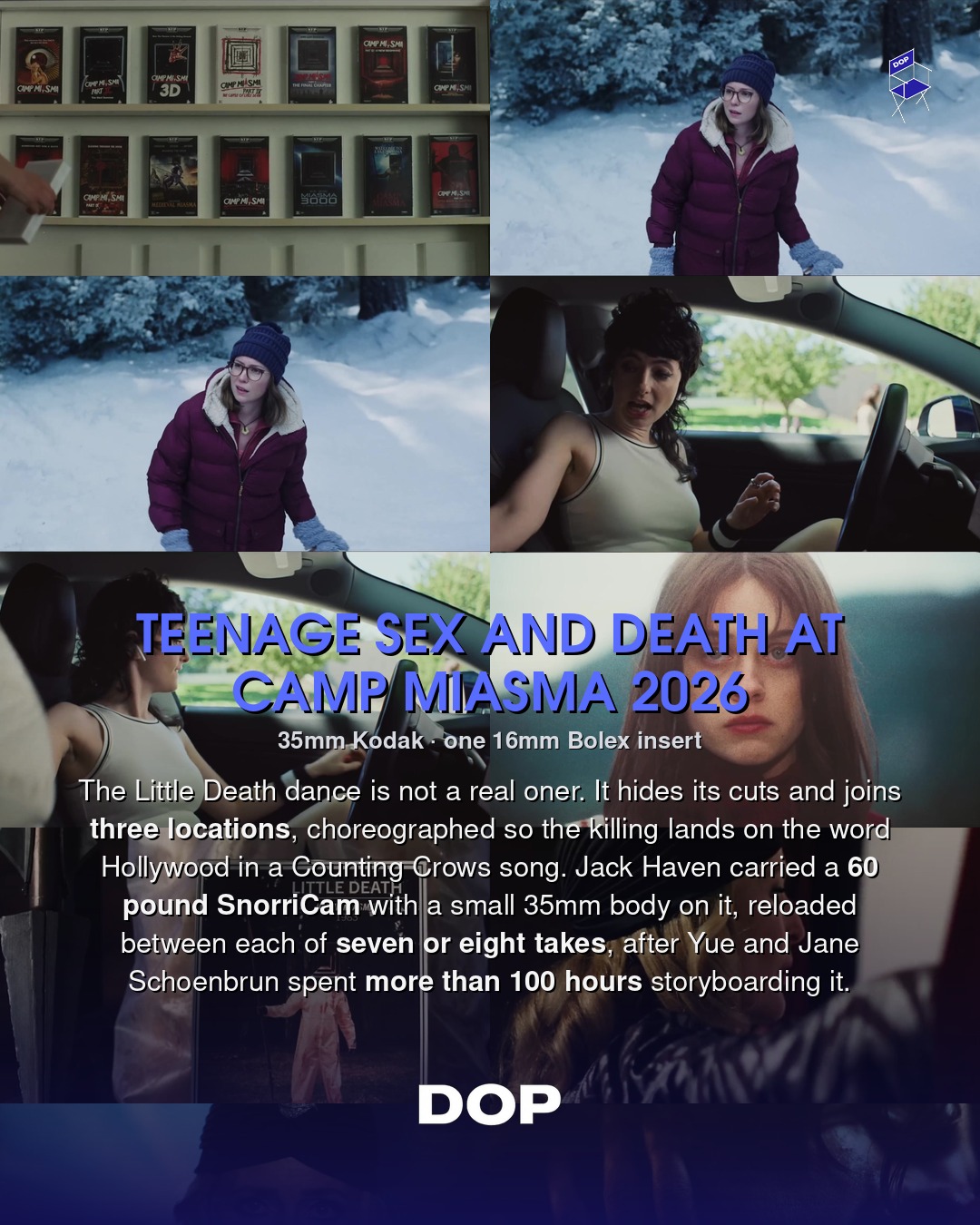
In an era dominated by seamless digital stitch-work and weightless virtual cameras, the physical friction of photochemical filmmaking remains irreplaceable. When director Jane Schoenbrun and director of photography Eric K. Yue conceived the centerpiece Little Death dance sequence for Teenage Sex and Death at Camp Miasma, they deliberately tethered ambition to mechanical reality. What appears on screen as an unbroken, hallucinatory descent into camp-slasher delirium is actually an intricate composite, three distinct geographic locations stitched invisibly together, timed with Swiss-watch precision so that the lethal blow strikes precisely on the word 'Hollywood' in a needle-dropped Counting Crows track.
The Weight of the SnorriCam and Mechanical Limits
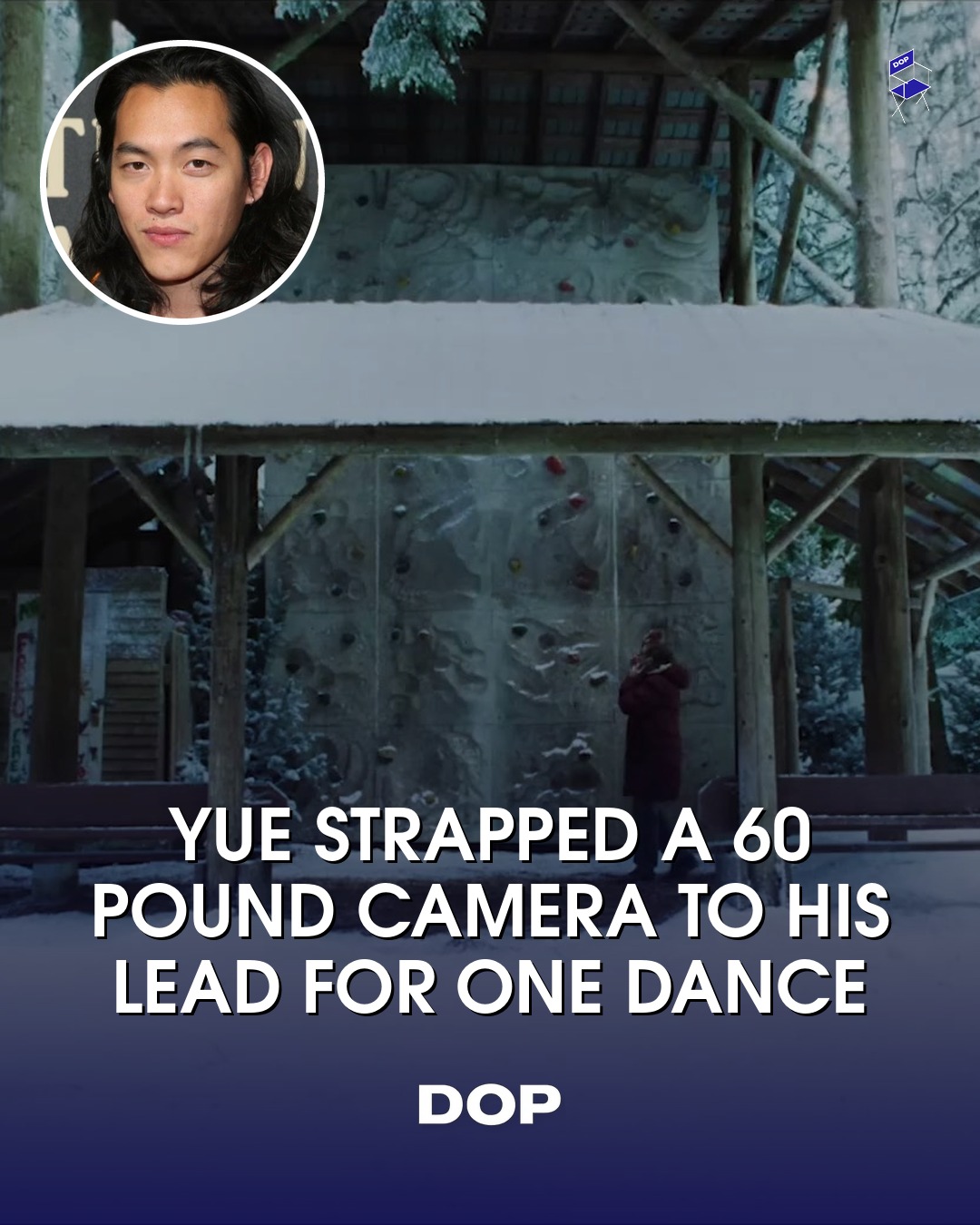
Executing the sequence demanded sheer physical endurance alongside technical finesse. Key grip Jack Haven was outfitted with a custom 60-pound SnorriCam rig counterweighted with a compact 35mm camera body. Unlike lightweight modern digital payloads, carrying a mechanical film magazine on a chest-mounted harness creates punishing kinetic forces with every step, turn, and pivot. The physical momentum had to match the rhythm of the performance precisely without sacrificing frame stability or drifting off the intended optical axis.
Because Yue and Schoenbrun committed to 35mm Kodak stock for the principal photography, each take was dictated by the hard physical limit of the magazine. With the rig requiring complete re-loading between each of the seven or eight exhaustive takes, there was zero margin for casual improvisation. Every camera reset meant re-balancing the harness, checking gate, and verifying focus marks under intense mechanical strain.
"When a camera is physically strapped to a performer's torso on 35mm, you feel the gravitational tax in the grain itself. The illusion of continuity isn't digital trickery, it is athletic, calculated choreography."
Meticulous Previsualization: From iPhone Gimbals to 35mm Film
The illusion of effortless fluidity was forged across more than 100 hours of intense pre-production storyboarding. Yue and Schoenbrun did not rely on complex Unreal Engine previs; instead, they walked the three practical locations repeatedly with an iPhone mounted on a handheld consumer gimbal. This low-fi, high-touch methodology allowed them to map exact focal lengths, plan lighting transitions between interiors and exteriors, and discover natural whip-pans, foreground occlusions, and shadow transitions that could conceal the sequence's two structural cuts.
The deliberate interplay of formats is a hallmark of Yue's visual language. While the Little Death dance utilizes 35mm emulsion for rich tonal latitude and controlled halation, Yue introduced a jarring, visceral break into the grammar: a single 16mm insert of Gillian Anderson staring dead down the barrel of the lens, captured spontaneously on a rented Bolex spring-wound camera. The sudden shift in grain structure, gate weave, and optical degradation jolts the viewer out of the hypnotic momentum, functioning as a psychic punctuation mark.
Optical Separation and Textural Continuity
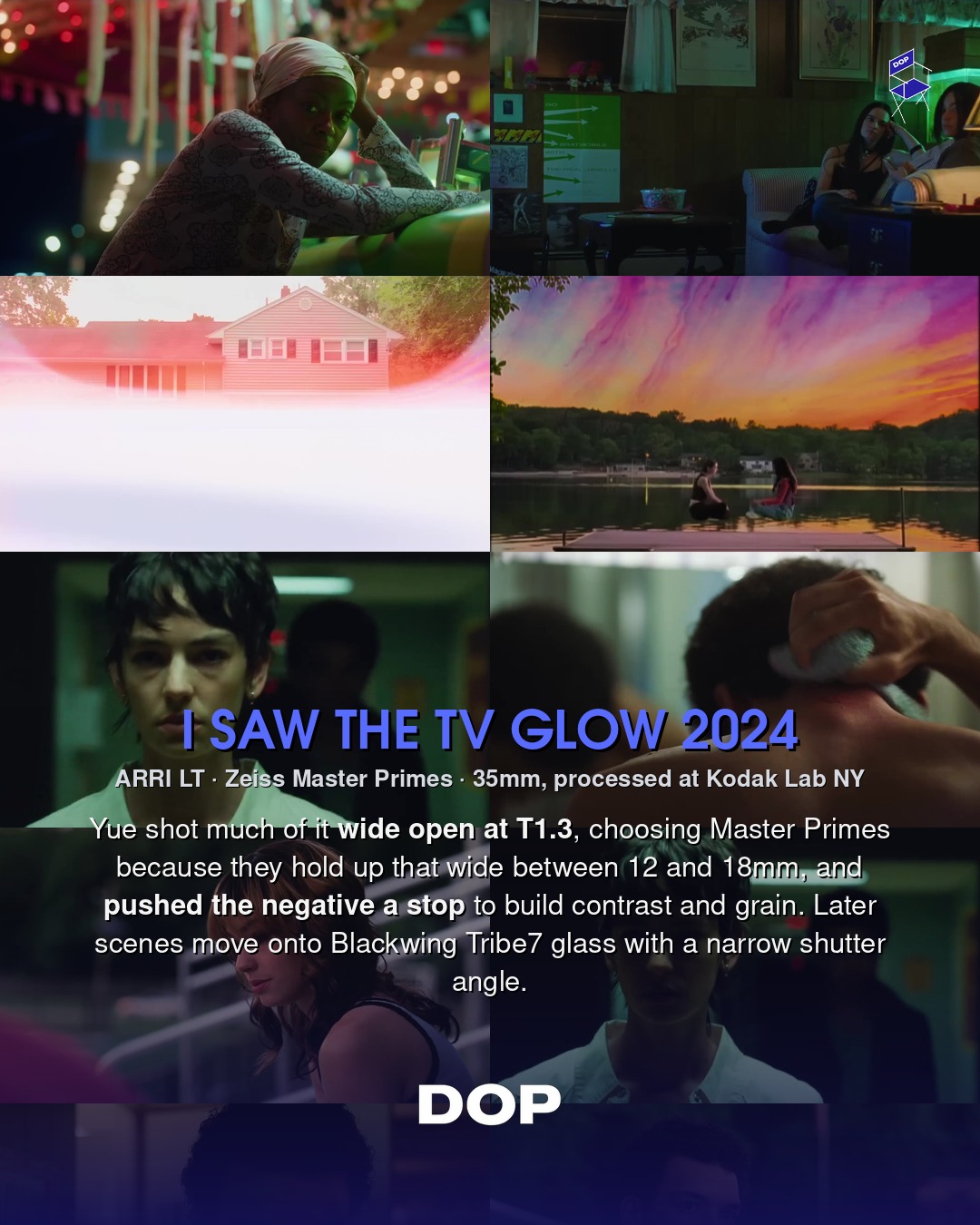
This disciplined approach to format, optics, and exposure reflects the evolution of Yue's distinct cinematography across his recent filmography. On Schoenbrun's I Saw the TV Glow, Yue notoriously lived on the razor's edge of the optical curve, shooting wide open at T1.3 on vintage high-speed glass while pushing the 35mm negative a full stop in the bath. The resulting push-processing accentuated contrast, expanded the toe of the shadows, and lent the film its neon-drenched, phosphorescent nightmare quality.
Similarly, in A.V. Rockwell's A Thousand and One, Yue weaponized glass to delineate temporal shifts across New York City's evolving landscape. The 1990s sequences were captured on classic Zeiss Super Speeds paired with subtle glow diffusion to evoke humid, organic grit, while the post-2000s transition pivoted to Panavision Primo primes stopped down to T2.8 and beyond, rendering the city with architectural sharpness, colder chromatic separation, and clinical spatial isolation.
The Philosophy of the Hidden Stitch
This brings us to a fundamental philosophical question in modern camera craft: when does a hidden cut inside a continuous long take stop counting as a long take? For Yue and Schoenbrun, the conceit of the 'oner' is never a self-congratulatory flex; it is an emotional trap designed to lock the audience into a character's claustrophobic subjectivity. By binding three spaces through invisible transitions and physical celluloid performance, the craft disappears behind pure, rhythmic cinema.
This article contains affiliate links. We may earn a small commission at no extra cost to you. Learn more.