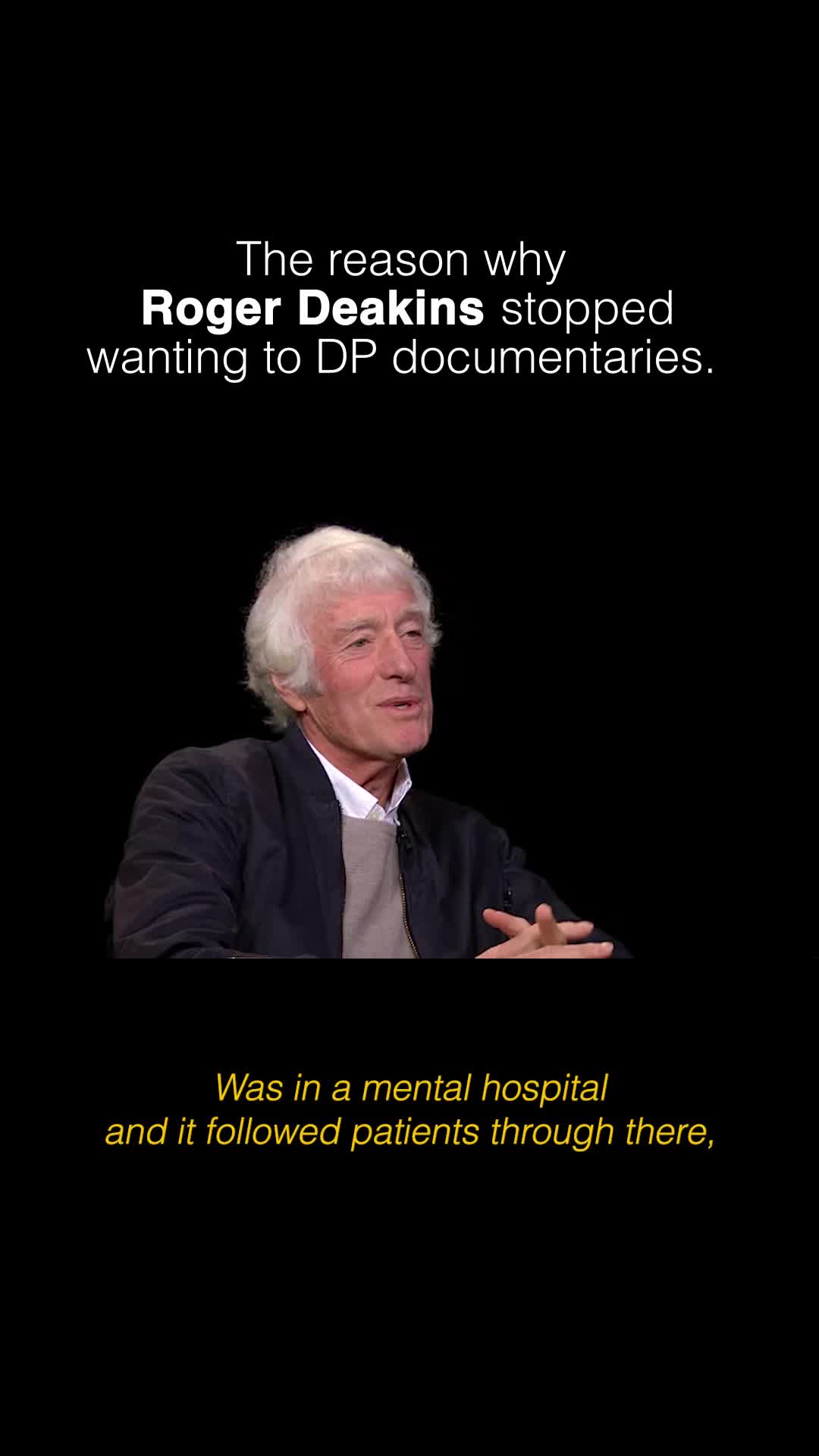
The words of Roger Deakins, ASC, BSC, rarely fail to ignite discussion within the cinematography community. A true titan of the craft, his pronouncements carry weight, stemming from a career defined by visual mastery and an unwavering commitment to storytelling. So, when Deakins revealed his decision to step away from documentary filmmaking due to its potential for becoming “voyeuristic,” it wasn't just a casual observation; it was a profound ethical statement that reverberates through the very core of our profession.
Deakins' discomfort with the voyeuristic nature of documentary work isn't a dismissal of the genre itself, but rather a reflection on the inherent power imbalance between the camera and its subjects. In fiction, every frame is a construct, every emotion orchestrated. The actors are collaborators, aware of the gaze, consenting to their portrayal. In documentary, particularly when dealing with raw, unscripted human experience, the line between observation and exploitation can become perilously thin. The camera, even in the most well-intentioned hands, can become an instrument that extracts moments, sometimes intimate or painful, for an audience's consumption, without the subjects fully grasping the long-term implications or their own agency in that exchange.
The Unseen Scars of the Frame
The veteran cinematographer, known for his meticulous planning and deeply empathetic lens work in films like Sicario, Blade Runner 2049, and 1917, understands the enduring power of an image. He speaks of moments from his documentary past that “stayed with him,” indicating a profound personal impact. This isn't merely about witnessing hardship; it's about the burden of carrying those images, knowing they were captured, and wrestling with the ethical implications of their dissemination. For a DP whose visual language is so often about conveying internal states and complex moral landscapes, this personal connection to the material becomes paramount. The sheer weight of authentic suffering, framed and presented, can leave an indelible mark on the person behind the lens.
“The camera, even in the most well-intentioned hands, can become an instrument that extracts moments, sometimes intimate or painful, for an audience's consumption, without the subjects fully grasping the long-term implications or their own agency in that exchange.”
Consider the technical implications of this ethical stance. While Deakins is renowned for his mastery of digital cinema, often employing ARRI Alexa cameras for their unparalleled dynamic range and organic color science, and favoring prime lenses like the anamorphic K35s or Cooke S4s for their character, in a documentary context, these tools take on added significance. The ability to capture details in extreme shadows and highlights, or the subtle nuances of facial expressions, amplifies the truthfulness of the image. But with that amplified truth comes an amplified responsibility. If a camera like the Alexa Mini LF, paired with a sensitive lens, can render a subject's vulnerability with such stark clarity, the ethical burden on the cinematographer to ensure that vulnerability is not exploited becomes even greater.
Beyond the Technical: A Cinematographer's Conscience
Deakins's philosophy has always been rooted in serving the story and amplifying character. His distinctive lighting, often using naturalistic sources or artfully crafted motivated light, aims to immerse the viewer without drawing attention to the technique itself. In a documentary, this philosophy takes on a different dimension. The "story" is often unfolding in real-time, unscripted, and the "characters" are real people living their lives. The cinematographer's presence, the very act of framing and lighting, inevitably shapes the reality being observed. Even a seemingly neutral choice of a long lens, like a 100mm Cooke S4, to maintain distance, still dictates what is included and excluded from the frame, and thus, what narrative is implicitly constructed.
This ethical dilemma is not unique to Deakins, but his articulation of it serves as a powerful reminder to all DPs. It prompts us to consider not just the technical prowess required to capture an image, but the moral compass guiding our choices. How do we ensure that our pursuit of compelling visuals doesn't inadvertently cross into exploitation? How do we balance the journalistic imperative to document truth with the human imperative to protect dignity?
Deakins's decision is a testament to the profound personal investment cinematographers make in their work. It's a reminder that our craft extends beyond f-stops and color temperature; it delves into the realm of human connection and ethical responsibility. Whether shooting a sprawling sci-fi epic or an intimate portrait, the cinematographer's eye is not just a technical instrument, but a moral one, capable of both revealing and respecting the world it observes. His withdrawal from documentaries, therefore, isn't a retreat, but a powerful act of conscience, urging us all to consider the invisible scars that a voyeuristic frame can leave, not just on the subject, but on the soul of the artist behind the camera.
This article contains affiliate links. We may earn a small commission at no extra cost to you. Learn more.