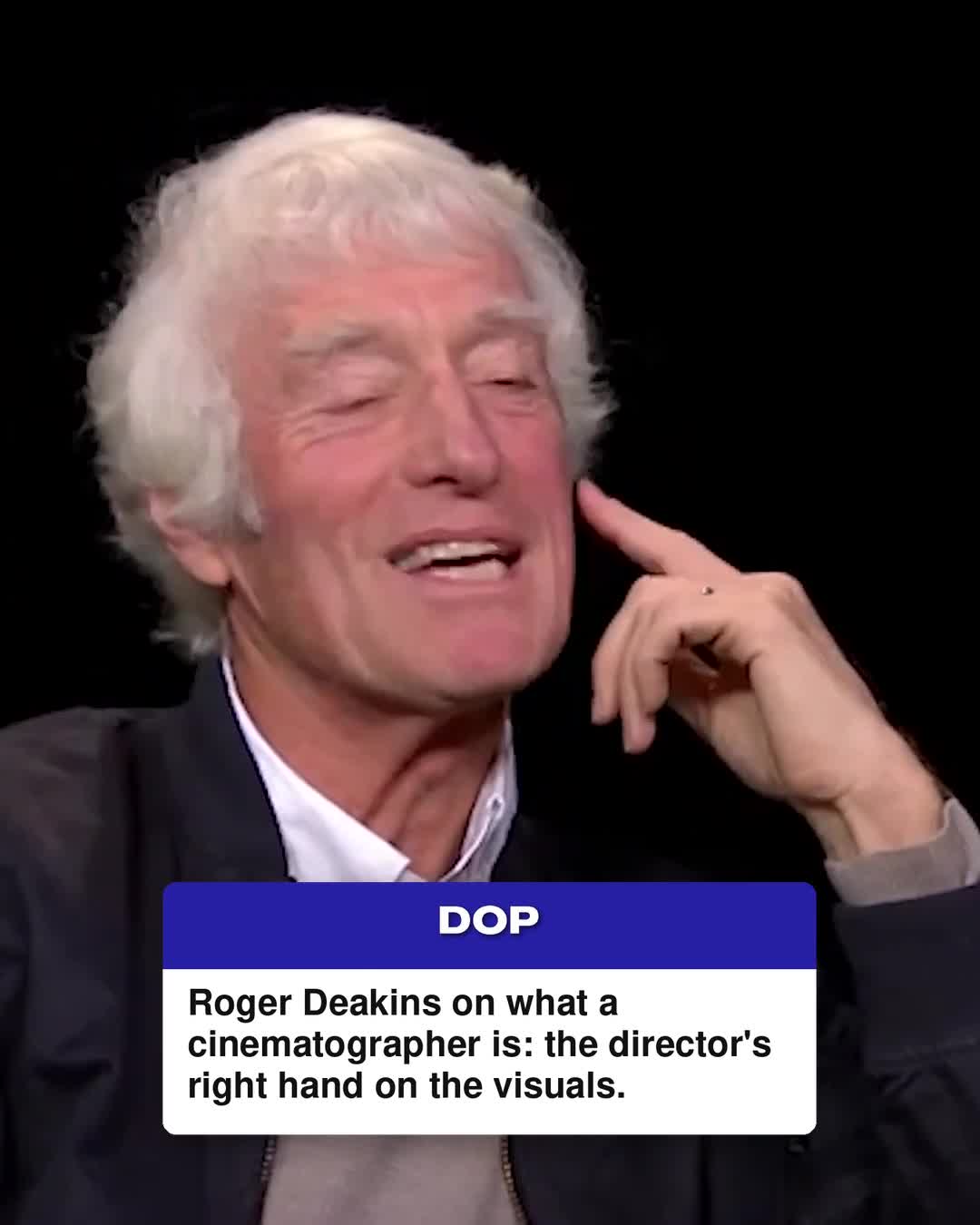
In the vast, intricate tapestry of filmmaking, few relationships are as pivotal and often as delicate as that between a director and their cinematographer. Roger Deakins, ASC, BSC, a name synonymous with visual poetry and meticulous craft, recently offered a candid glimpse into this dynamic. He notes that some directors openly admit their lack of understanding regarding cinematography and lighting, happily ceding that entire domain to him. And while Deakins is, by his own admission, perfectly comfortable with this arrangement, it's his collaborations with directors who possess a deeper, more inherent understanding of the camera's expressive power that truly illuminate the potential of the medium.
This dichotomy speaks volumes about the varying philosophies at play in film production. On one hand, you have directors who see the camera as a mere recording device, a tool to capture performances and story beats, delegating the 'how' of the image to their DP. For a master like Deakins, this can certainly work; his innate talent and established visual language are so potent that he can effectively craft the entire visual narrative. Think of his work on films like The Shawshank Redemption, where Frank Darabont, while clearly a visionary storyteller, largely trusted Deakins to define the visual grammar of hope and despair within those prison walls. Deakins' ability to imbue even the most mundane spaces with profound emotional resonance, often through subtle shifts in naturalistic light and meticulously controlled shadow, speaks to his unparalleled skill.
The Collaborative Alchemy: Director as Visual Partner
However, Deakins' most celebrated and perhaps most challenging work often arises from partnerships where the director is not just aware of cinematography, but actively engages with it as a fundamental storytelling tool. The Coen Brothers are a prime example. Their long-standing collaboration with Deakins, spanning films from Barton Fink to True Grit, is legendary. The Coens' scripts are often so visually prescriptive that they virtually act as storyboards, yet they also foster an environment where Deakins can elevate and interpret their vision with his own inimitable flair. Consider the stark, sun-baked nihilism of No Country for Old Men, where the Arricam ST and LT, often paired with anamorphic lenses, captured the desolate Texan landscape with a precision that amplified the narrative's bleakness. The Coens' understanding of how a wide shot, a specific lens choice, or a particular lighting scheme could communicate character and theme allowed for a true meeting of minds, resulting in images that are both iconic and deeply integral to the films' identities.
Denis Villeneuve is another director who exemplifies this symbiotic relationship. On films like Sicario and Blade Runner 2049, Villeneuve's clear visual language and his profound respect for cinematography allowed Deakins to push boundaries. For Blade Runner 2049, the choice of the Arri Alexa XT Studio and Mini, paired with anamorphic lenses like the Hawk V-Lite and Vantage One, was not merely technical; it was a philosophical statement. The digital sensor's ability to capture extreme dynamic range was crucial for depicting the film's often hyper-stylized, fog-laden, and neon-drenched futuristic landscapes, while the anamorphic glass lent a dreamlike, expansive quality to the urban decay and vast, empty spaces. This was a director who understood that the visual grammar was not just pretty pictures, but the very fabric of the film's world and emotional core.
“The camera is not merely a recording device; it is a paintbrush, a chisel, a storyteller in its own right. When a director understands this, the possibilities become limitless.”
Beyond the Frame: The Language of Light and Lens
What Deakins' observations underscore is the fundamental difference between a director who views cinematography as a service and one who views it as a language. For the latter, discussions move beyond mere coverage to the emotional weight of a particular focal length, the psychological impact of a shadow, or the narrative implications of a color palette. It’s about the deliberate choice of a specific sensor's latitude to hold detail in both highlights and shadows for a gritty realism, or the selection of vintage glass to introduce character and imperfection. It’s the difference between asking for 'more light' and discussing how a hard, directional light source from a specific angle can reveal character or create tension.
Deakins himself is a master of this visual language. His preference for naturalistic lighting, often augmented subtly, creates a sense of authenticity that grounds even the most fantastical narratives. His meticulous approach to framing, often using wider lenses to keep subjects within their environment, speaks to a philosophy where characters are inextricably linked to their surroundings. He's not just lighting a scene; he's sculpting mood, guiding the audience's eye, and subtly revealing character psychology through chiaroscuro and composition. This level of intentionality is amplified when the director speaks the same visual dialect.
Ultimately, Deakins’ insight serves as a powerful reminder for cinematographers and directors alike. While a DP of his caliber can undoubtedly elevate any project, the true magic often happens when both parties share a deep appreciation for the camera's potential as a narrative instrument. It’s in that shared understanding, that collaborative spirit, that some of cinema's most indelible images are born, transcending mere recording to become pure, unadulterated visual storytelling.