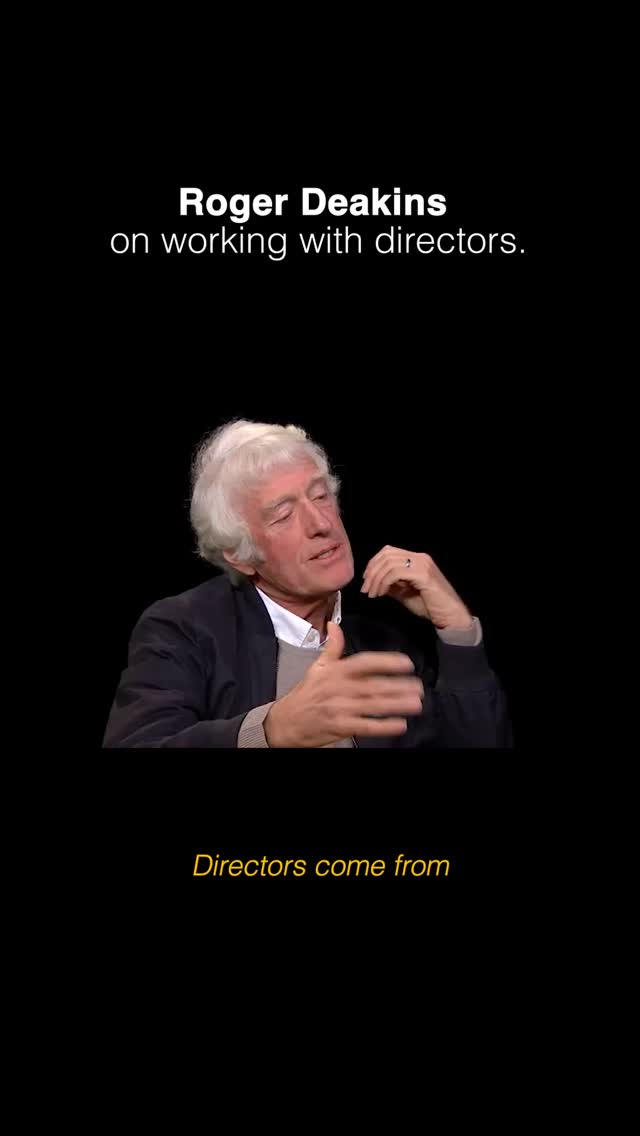
Roger Deakins, ASC, BSC, is not just a cinematographer; he is a titan of visual storytelling, a master craftsman whose name is synonymous with breathtaking imagery and profound cinematic artistry. His insights, therefore, resonate with an unparalleled weight in our industry. When Deakins speaks about the director-cinematographer relationship, it’s not merely an anecdote; it’s a masterclass in collaboration, communication, and the delicate balance of creative control. His recent ruminations on the varying approaches directors take towards the camera — from hands-on engagement to complete detachment — offer a fascinating glimpse into the dynamic that shapes the visual language of a film.
Deakins’ observation that some directors wish to control the camera, while others remain oblivious to its mechanics, highlights a fundamental dichotomy. On one end, you have the auteur with a precise visual blueprint, often with a background in photography or a deep understanding of lensing and framing. On the other, a director whose strength lies primarily in performance, narrative structure, or conceptual vision, leaving the technical execution of the visual entirely to their DP. Neither approach is inherently superior; the true measure of success lies in the synergy between director and cinematographer, and how effectively their individual strengths coalesce into a unified artistic statement.
The Auteurs of Visual Understanding
It's no surprise that Deakins singles out collaborators like the Coen Brothers, Sam Mendes, and Denis Villeneuve as his favorites – directors who, in his words, "truly understand the camera and utilize it in a way that's more than just recording what's in front of it." This isn't about these directors dictating f-stops or lens choices, but rather possessing a profound spatial awareness and an intuitive grasp of how camera placement, movement, and light shape meaning and emotion. Take the Coen Brothers, for instance; their meticulous storyboarding and precise blocking often pre-visualize every frame, allowing Deakins to translate their vision with unparalleled precision, whether it's the stark landscapes of No Country for Old Men or the stark, unsettling interiors of Fargo. Their understanding of the frame is almost architectural.
"The best directors understand that the camera isn't just a recording device; it's a paintbrush, a narrator, a character in itself."
Similarly, Sam Mendes, with whom Deakins crafted the immersive, single-take illusion of 1917, exemplifies a director who not only understands the camera but pushes its boundaries as a storytelling tool. The extensive pre-production, the detailed rehearsals, the intricate choreography of camera and actors – these were all born from Mendes's deep appreciation for how the camera's perspective could embody the film's relentless tension and subjective experience. Villeneuve, too, with features like Blade Runner 2049 and Sicario, consistently demonstrates a profound visual literacy, crafting worlds that are as narratively rich as they are aesthetically stunning. His ability to articulate abstract visual ideas, often referencing art or photography, empowers Deakins to push the boundaries of light and shadow, creating iconic, unforgettable imagery.
The DP's Dilemma: Hands-On Directors
This brings us to a perennial question for cinematographers: how do we navigate a director's desire to physically interact with the camera? For many DPs, the camera is an extension of their eye, a finely tuned instrument that requires a certain touch and understanding of its mechanics. A director grabbing the camera to demonstrate a shot, while perhaps well-intentioned, can sometimes disrupt the flow, or even worse, inadvertently alter settings or damage equipment. It's a delicate dance between respecting a director's creative input and maintaining the integrity of the camera department's workflow and equipment.
The ideal scenario, as hinted at by Deakins' preferred collaborators, is a director who communicates their visual intent through discussion, reference, and blocking, rather than by directly manipulating the camera. This allows the DP to interpret and execute that vision using their technical expertise and artistic sensibility. It’s about speaking the same visual language, even if the dialects differ. For a DP, the goal is always to serve the story and the director's vision, but that service is most effective when it leverages the cinematographer's specialized skill set, allowing them to craft the image with precision and artistry.
Ultimately, Deakins' observations serve as a powerful reminder of the collaborative spirit at the heart of filmmaking. The most impactful cinematic achievements are born from a deep mutual respect and understanding between director and cinematographer. Whether a director is hands-on or hands-off with the camera, their ability to articulate their vision and trust their DP to translate it into compelling imagery is what truly defines a successful partnership. It’s a testament to the fact that while the camera may be a piece of machinery, its operation, and the vision it captures, remain an intensely human endeavor.
This article contains affiliate links. We may earn a small commission at no extra cost to you. Learn more.