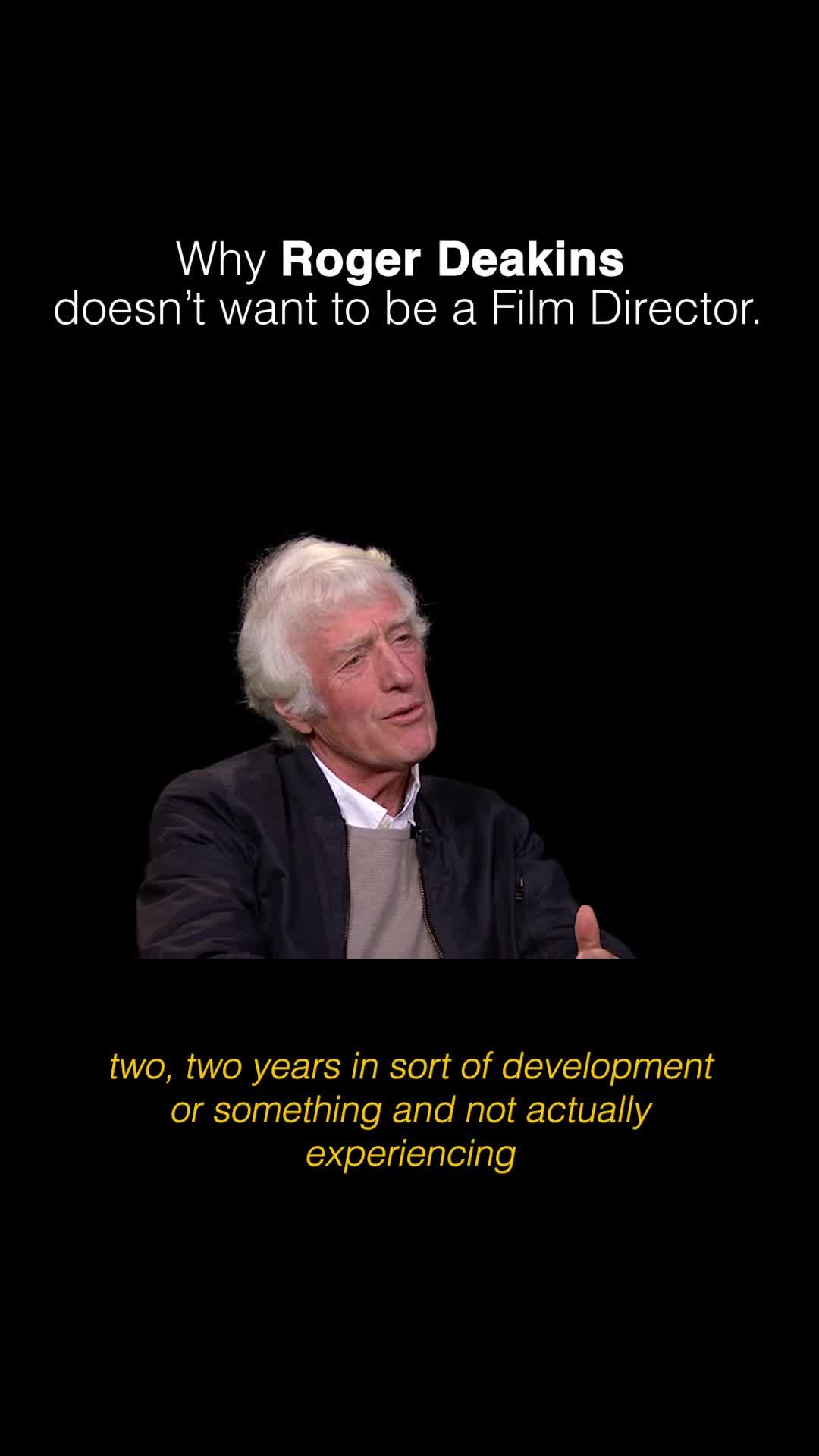
In an industry often obsessed with the director's singular vision, the words of Roger Deakins ASC, BSC, echo with a profound, almost revolutionary, humility. The legendary cinematographer, whose filmography reads like a masterclass in visual storytelling, recently articulated his steadfast commitment to the craft of cinematography, eschewing the director's chair despite a resumé that would undoubtedly guarantee him a blank check from any studio. His insights, shared in a 2025 interview reflecting on his iconic collaborations with the Coen Brothers and Denis Villeneuve, underscore a philosophy where passion trumps ambition, and where the symbiotic relationship between DP and director forms the bedrock of cinematic alchemy.
Deakins's perspective isn't merely a personal preference; it's a profound statement on the division of labor and the specialized artistry required to bring a film to life. He succinctly defines the cinematographer's role: "You're the director's right hand when it comes to visuals." This isn't a passive role; it's an active partnership, a visual translation of the director's intent, infused with the DP's unique understanding of light, shadow, composition, and movement. But Deakins elevates this further, recognizing that the cinematographer's influence extends beyond the frame. "Creating the mood on set and an atmosphere that allows actors to feel comfortable is a huge part of the job. If you don't catch the performance, you don't have anything." This statement is a powerful reminder that technical prowess, while essential, must always serve the narrative and the actors who embody it. A perfectly lit scene is meaningless if the performance within it is stifled or uncaptured.
The Craft of Visual Storytelling
Deakins's work consistently demonstrates this philosophy. Consider the stark, sun-drenched landscapes of No Country for Old Men, where the unforgiving light becomes a character in itself, mirroring the harsh realities faced by the protagonists. Or the ethereal, neon-drenched dystopia of Blade Runner 2049, where every frame is a meticulously crafted painting, each light source telling a story. These are not merely well-shot films; they are films where the cinematography is so deeply interwoven with the narrative that it becomes inseparable from the emotional experience. Deakins, often favoring natural light and a restrained color palette, achieves a realism that paradoxically enhances the film's thematic depth. His choice of camera (often ARRI Alexa, known for its dynamic range and naturalistic color rendition) and lenses (frequently Cooke S4s or similar, prized for their gentle fall-off and organic character) are always in service of the story, never for technical showmanship.
"There's a lot more to directing than understanding cameras. I love being on a set. The idea of spending two years in development and not experiencing working on a set with my family? I work with a group of people I travel with to interesting places."
This candid admission reveals the heart of Deakins's dedication. Directing, he acknowledges, is a vastly different beast, demanding a broader skillset and a significantly longer, often solitary, development period. Deakins, by contrast, finds immense satisfaction in the collaborative, immediate nature of the cinematographer's role. He cherishes the "family" of his crew, the shared experience of traveling to "interesting places" and solving visual puzzles in real-time. This isn't to diminish the director's craft, but rather to highlight the distinct joys and challenges of the DP. It speaks to a profound understanding of one's own strengths and passions, and the wisdom to pursue them without succumbing to the allure of a different, albeit higher-profile, role.
Beyond the Lens: The Human Element
For aspiring cinematographers, Deakins's words offer invaluable guidance. They emphasize that while technical mastery of cameras, lighting, and grip equipment is non-negotiable, the true artistry lies in the ability to collaborate, to understand the director's vision, and to foster an environment where performances can thrive. It's about being a visual psychologist, understanding how light and shadow can manipulate mood, and how composition can guide the audience's eye and emotion. It's about problem-solving under pressure, often with limited resources, to achieve a specific aesthetic and emotional impact. His lighting philosophy, for instance, often prioritizes motivation and realism, using practicals and available light whenever possible, augmented by subtle, carefully placed artificial sources to sculpt and define.
In an era where technology often overshadows artistry, Deakins reminds us that the human element remains paramount. His career is a testament to the fact that true mastery lies not in chasing the next title, but in dedicating oneself fully to a chosen craft, continually refining skills, and collaborating with respect and passion. His refusal to direct isn't a lack of ambition; it's a deep understanding and reverence for the unique, irreplaceable role of the cinematographer – the director's right hand, the visual architect, and the silent guardian of performance.
This article contains affiliate links. We may earn a small commission at no extra cost to you. Learn more.