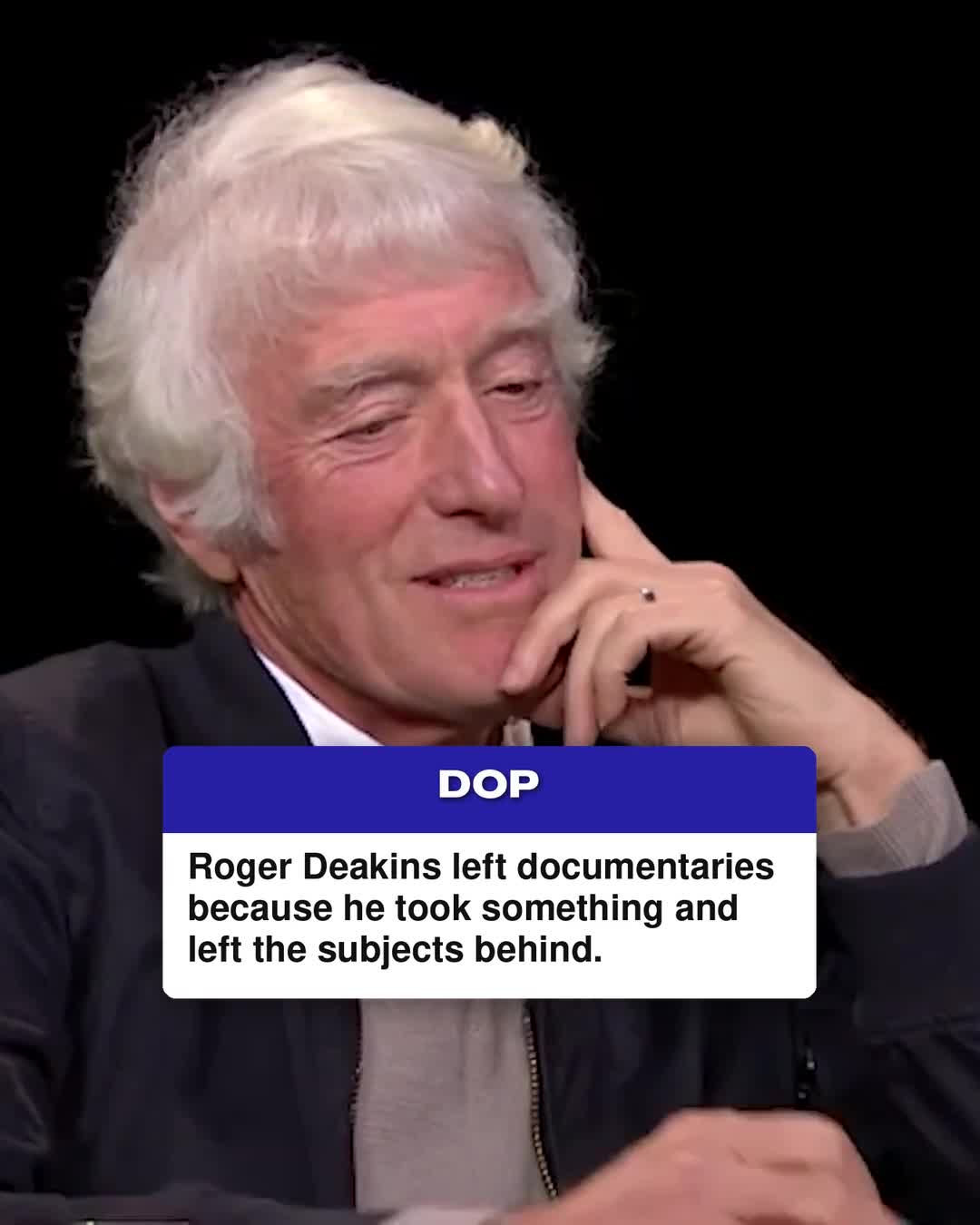
Long before he was painting with light in cinematic masterpieces like Blade Runner 2049 or crafting the stark, visceral beauty of 1917, Roger Deakins, CBE, ASC, BSC, honed his craft in the trenches of documentary filmmaking. It's a seldom-discussed chapter in the career of arguably the most revered cinematographer alive, yet one that offers profound insight into the moral and ethical framework that underpins his unparalleled visual artistry. His early work, particularly one documentary chronicling patients within a mental hospital, wasn't just a technical proving ground; it was a crucible that forged his understanding of the cinematographer's responsibility to their subjects.
Deakins' documentary phase, which included films like Zimbabwe (1980) and Eritrea (1981), often saw him working with relatively portable, rugged 16mm cameras like the Aaton LTR or Éclair NPR, capturing stories of struggle and humanity with an immediacy that narrative features rarely demand. This period, characterized by available light and a fly-on-the-wall approach, taught him invaluable lessons in observation, composition under pressure, and the art of 'seeing' reality without imposing upon it. Yet, it was the intimate, often harrowing experience of documenting individuals in vulnerable states that led him to a pivotal realization, one that ultimately steered him away from the genre.
The Weight of Witnessing: An Ethical Turning Point
The mental hospital documentary, though not widely publicized in terms of its specific title, stands as a stark example of the ethical dilemmas inherent in the form. Deakins, known for his profound empathy and quiet intensity, grappled with the inherent imbalance of power between filmmaker and subject. His reflections on this period articulate a deep-seated concern for the people whose lives he was capturing. He famously articulated his discomfort, stating:
However well you serve the subject, you spend three months taking something and then you leave, and the people you filmed stay in the situation you walked out of.
This sentiment reveals a fundamental ethical dilemma: the transient nature of a documentarian's presence versus the enduring reality of their subjects. For Deakins, the act of filming felt, at some level, like an extraction, a temporary engagement with suffering or vulnerability from which he, as the filmmaker, could always retreat. This wasn't merely about the technical challenges of capturing raw emotion; it was about the moral weight of bearing witness and then departing.
From Observational Reality to Constructed Truth
The transition from documentary to narrative filmmaking wasn't an abandonment of truth for Deakins, but rather a shift in how he sought to express it. In narrative, the 'truth' is constructed, a carefully orchestrated illusion designed to evoke emotional and intellectual resonance. Here, Deakins found a different kind of freedom and responsibility. He could still explore the human condition, portray suffering, joy, and the complexities of existence, but within a framework where the characters were fictional, and the ethical burden on real individuals was alleviated. This allowed him to fully immerse himself in the craft, employing sophisticated lighting, intricate camera movements, and precise compositional choices without the lingering question of exploitation.
Consider his masterful use of low-key lighting in No Country for Old Men, where shadows become characters themselves, reflecting the moral ambiguity of the narrative. Or the ethereal, almost painterly quality of the light in The Assassination of Jesse James by the Coward Robert Ford, achieved with anamorphic lenses and carefully controlled natural and artificial sources, creating a melancholic beauty that transcends mere documentation. These techniques, while technically brilliant, are always in service of the story and its emotional core, a lesson perhaps refined during his documentary days.
Deakins' Enduring Legacy: Empathy Through Artifice
While Deakins stepped away from direct documentary work, the spirit of observation and a profound respect for human experience never left him. His narrative cinematography is imbued with a realism that often feels as authentic as any documentary, yet it is meticulously crafted. His preference for naturalistic lighting, even when entirely artificial, speaks to this. He doesn't aim for flashy, overt cinematography; instead, he seeks to create environments that feel lived-in, where light behaves as it would in the real world, albeit with artistic enhancement. This approach, whether he's using ARRI Alexa cameras with Cooke S4 primes or large-format lenses for IMAX, is always about serving the narrative and its characters with an almost documentary-like honesty, but through the controlled medium of fiction.
Ultimately, Deakins' journey from raw documentary to refined narrative is a testament to his evolving understanding of the cinematographer's role. It highlights that the craft is not merely about technical prowess, but also about a deep ethical engagement with the stories being told and the people, real or imagined, who inhabit them. His decision to leave documentaries was not a rejection of their value, but a profound acknowledgment of the moral complexities inherent in capturing unvarnished reality, and a pivot towards a form where he felt he could contribute to storytelling with a clearer conscience and an equally powerful, albeit constructed, truth.
This article contains affiliate links. We may earn a small commission at no extra cost to you. Learn more.