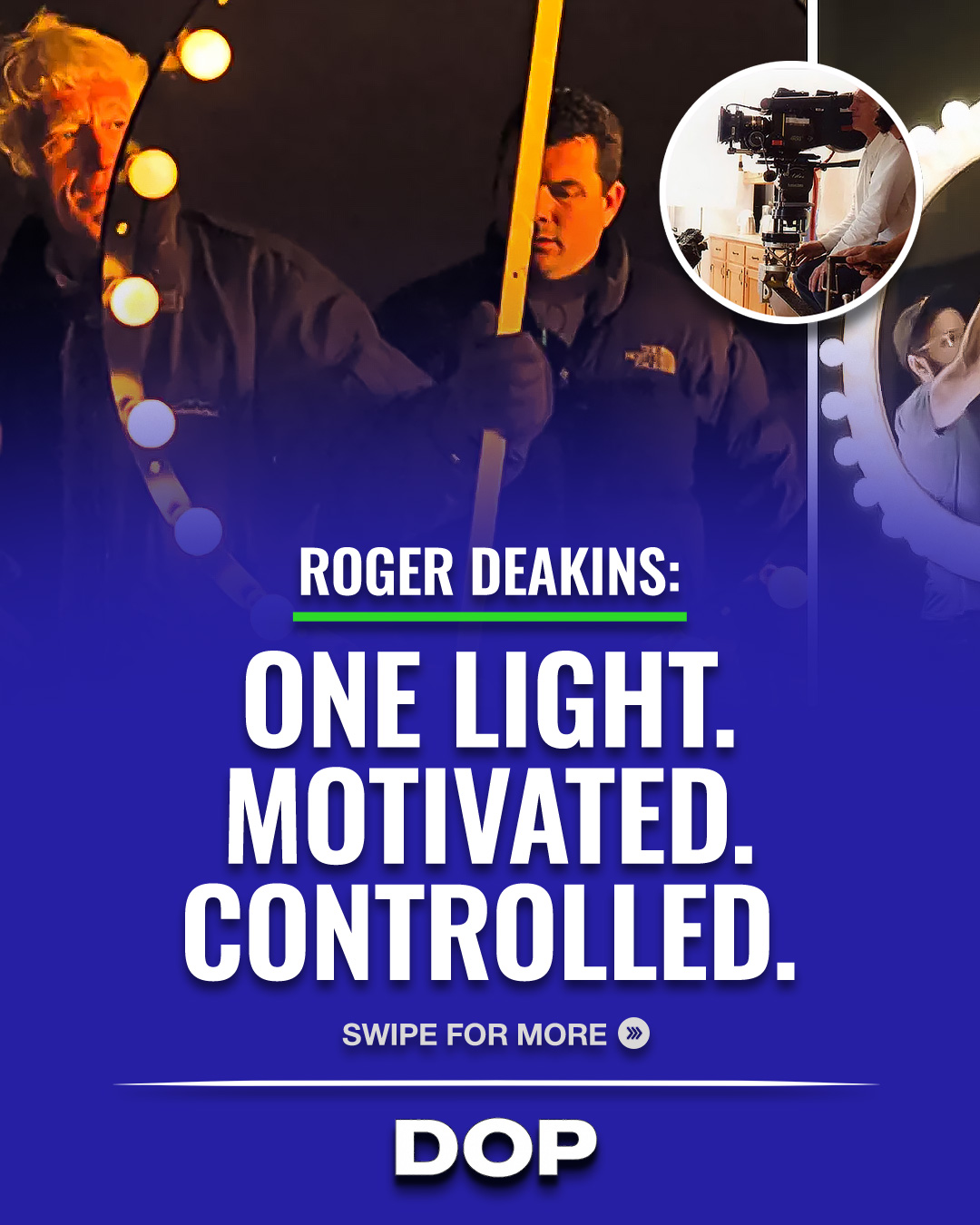
In the pantheon of contemporary cinematographers, few names resonate with the same reverence and admiration as Roger Deakins. His work, characterized by its profound depth, striking beauty, and often breathtaking realism, has redefined what's possible in visual storytelling. Yet, beneath the surface of his visually arresting frames lies a foundational philosophy that is deceptively simple: light exists only where the story provides motivation. This isn't just an aesthetic preference; it's a profound commitment to authenticity that elevates his cinematography from mere technical brilliance to an art form deeply intertwined with narrative.
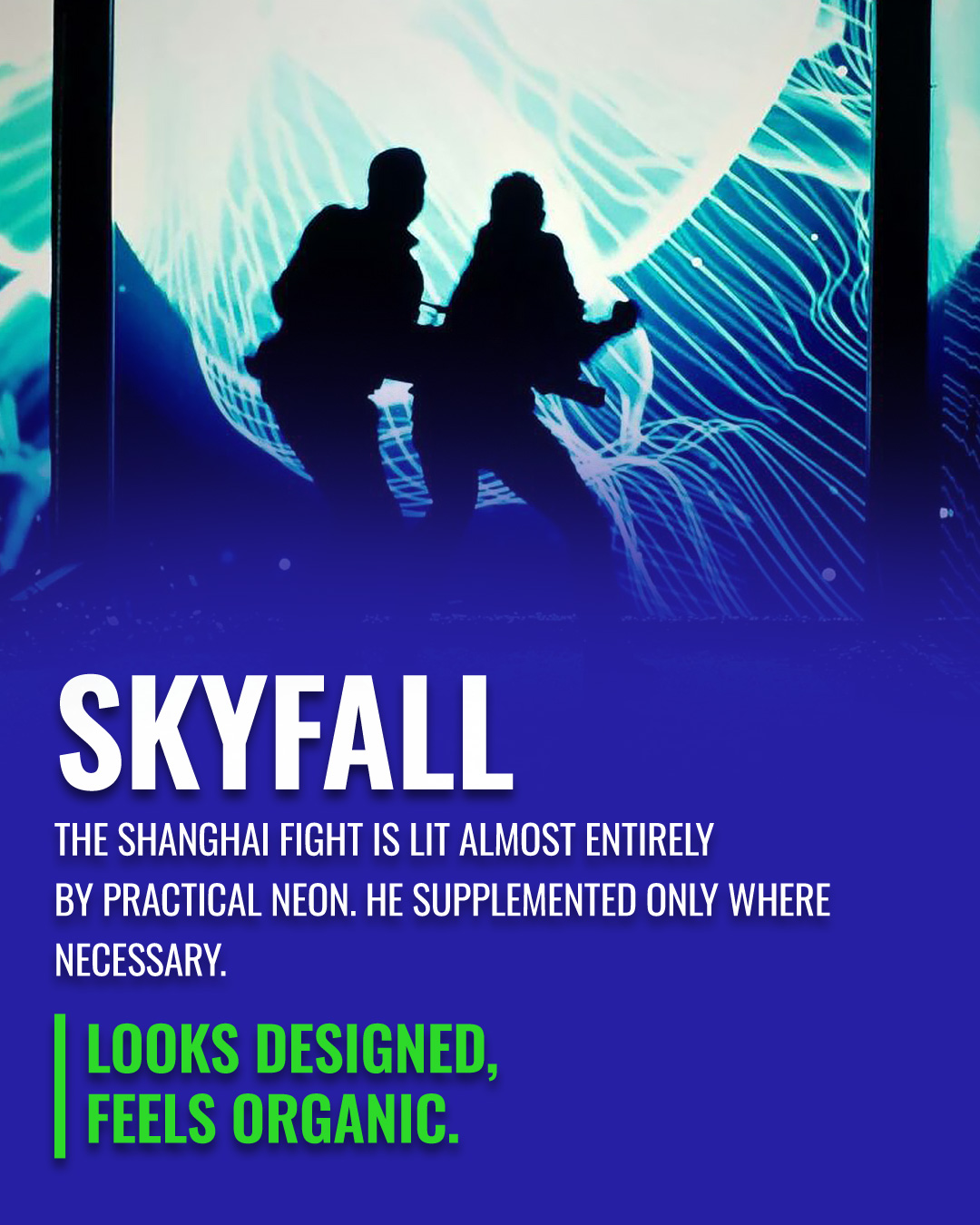
Deakins' approach begins not with an abundance of light, but with darkness. He meticulously sculpts illumination, adding it only where a natural, in-world source would plausibly exist. This dedication to motivated lighting is a cornerstone of his legendary filmography. Consider the seminal Shanghai sequence in Skyfall. Here, the visual language is dictated almost entirely by the neon glow of the city. Practical signs, in-frame light sources, and the atmospheric haze of an urban night become the primary illuminators. Deakins, shooting on the ARRI Alexa Studio with anamorphic lenses, supplements these sources with an almost imperceptible touch, ensuring that the audience feels the raw, unadulterated energy of the environment, rather than the hand of a gaffer.
The Illusion of Unseen Lighting
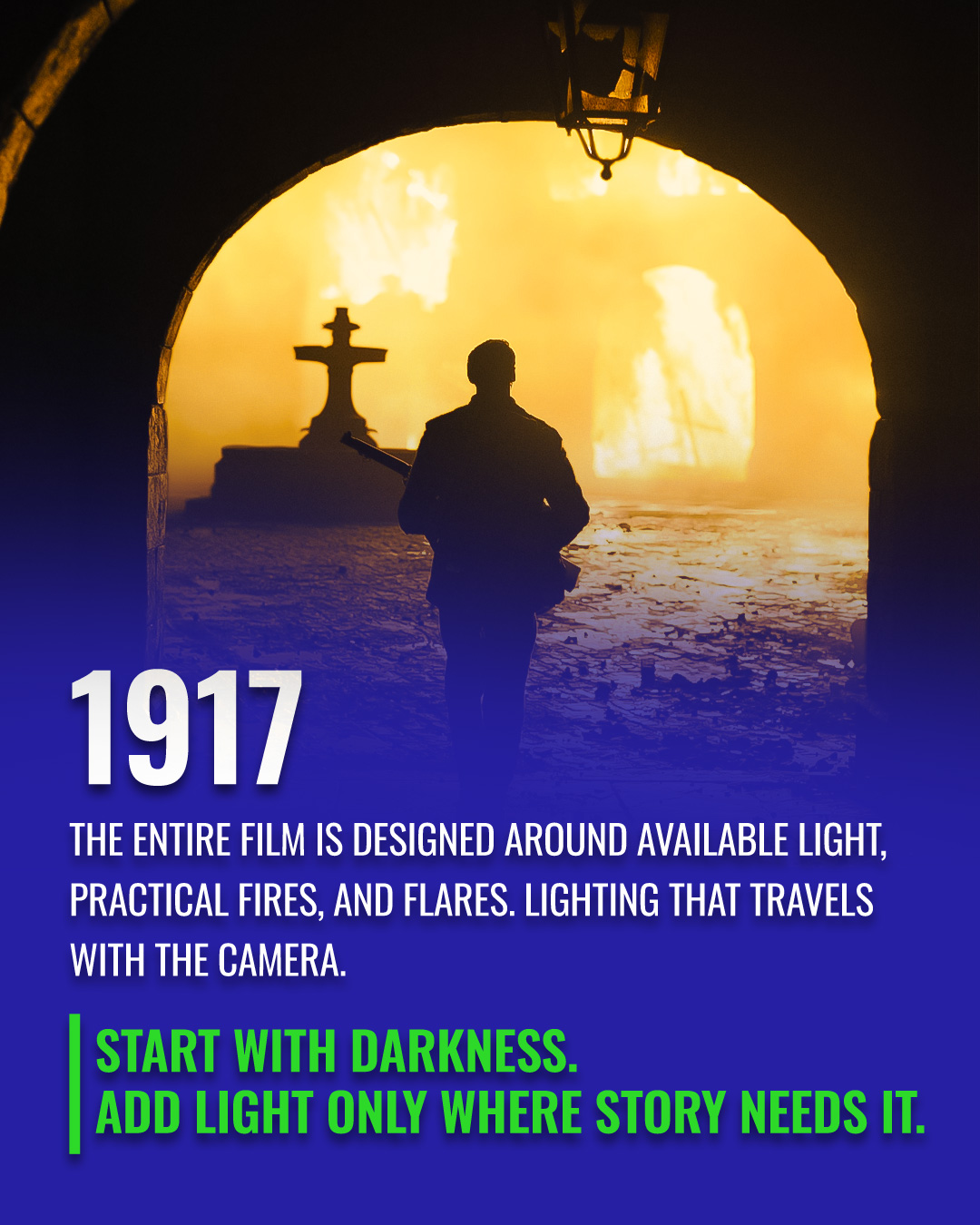
The pursuit of motivated light reaches its zenith in films like 1917. The challenge of creating a seamless 'single-take' illusion demanded a lighting strategy that was nothing short of revolutionary. Deakins, again leveraging the ARRI Alexa LF for its dynamic range and naturalistic color rendition, built the entire visual schema around available light, practical fires, and military flares. The light doesn't just exist; it travels with the camera, evolving organically with the narrative. Each flicker of a distant shell, each glow from a dugout fire, is not merely a source of illumination but an integral part of the story's fabric, guiding the audience through the harrowing journey.
"My philosophy is to use light sources that have a reason to exist within the physical reality of the scene, so the audience perceives lighting as a natural feature of the environment rather than a construction imposed from outside the frame."
This commitment to internal motivation ensures that the audience's immersion is never broken. They aren't consciously aware of 'lighting'; they are simply experiencing the world as the characters do. It's a testament to Deakins' mastery that such intricate and carefully orchestrated lighting feels utterly effortless and natural. The technical prowess involved in achieving this, from custom-built LED fixtures to sophisticated rigging for controlled practicals, is immense, yet the end result is always seamless.
Color, Contrast, and Restraint
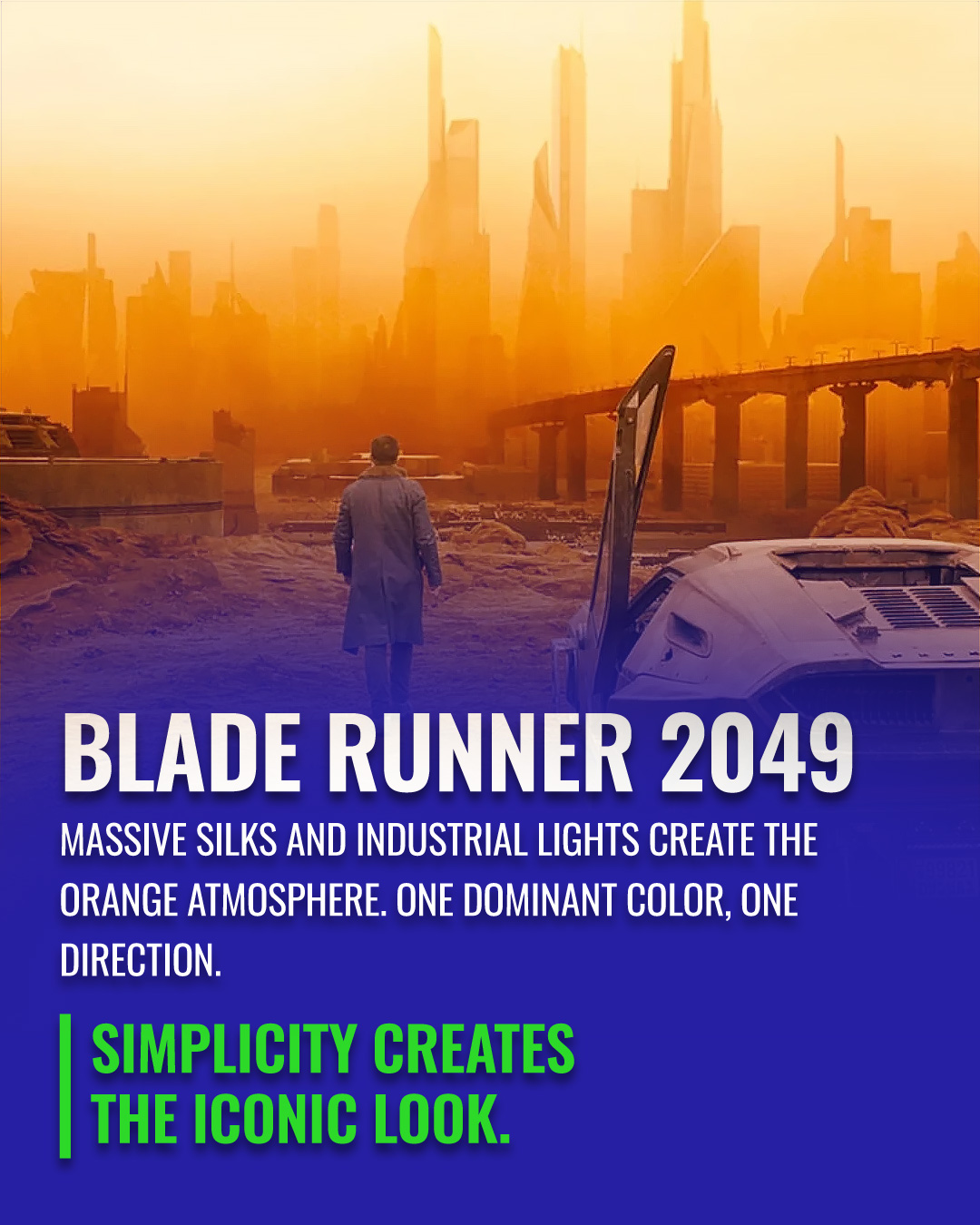
While the principle of motivated light remains constant, Deakins' application of it is incredibly versatile. Blade Runner 2049 offers a stark contrast, yet the underlying philosophy holds true. The orange-hued, dust-choked vision of Las Vegas is not achieved through arbitrary color grading but through massive diffusion silks and industrial-grade lights, meticulously positioned to mimic a perpetual, oppressive sunset. Here, the motivation is atmospheric – the remnants of a cataclysmic event, perpetually dyeing the air. The ARRI Alexa XT and anamorphic lenses once again served as his tools, capturing the monumental scale and subtle textures of this dystopian landscape.
What ties these disparate projects together is Deakins' unwavering commitment to simplicity. One dominant color direction, one primary light motivation. This restraint, far from limiting his creativity, amplifies it, forcing him to find elegant solutions that resonate deeply. The result is iconic imagery that feels both grand and intimate, epic and grounded. His color science, often leaning towards a desaturated, naturalistic palette, further enhances this sense of realism, allowing the motivated light to truly sing.
Deakins doesn't just light a scene; he defines its emotional and narrative core through illumination. His work is a masterclass in using light as a storyteller, transforming mere photons into profound emotional resonance. It's an approach that demands immense technical skill, an artist's eye, and an unwavering respect for the integrity of the narrative. For aspiring cinematographers and seasoned DPs alike, Deakins' luminous restraint offers an invaluable lesson: true mastery often lies not in what you add, but in what you choose to illuminate.