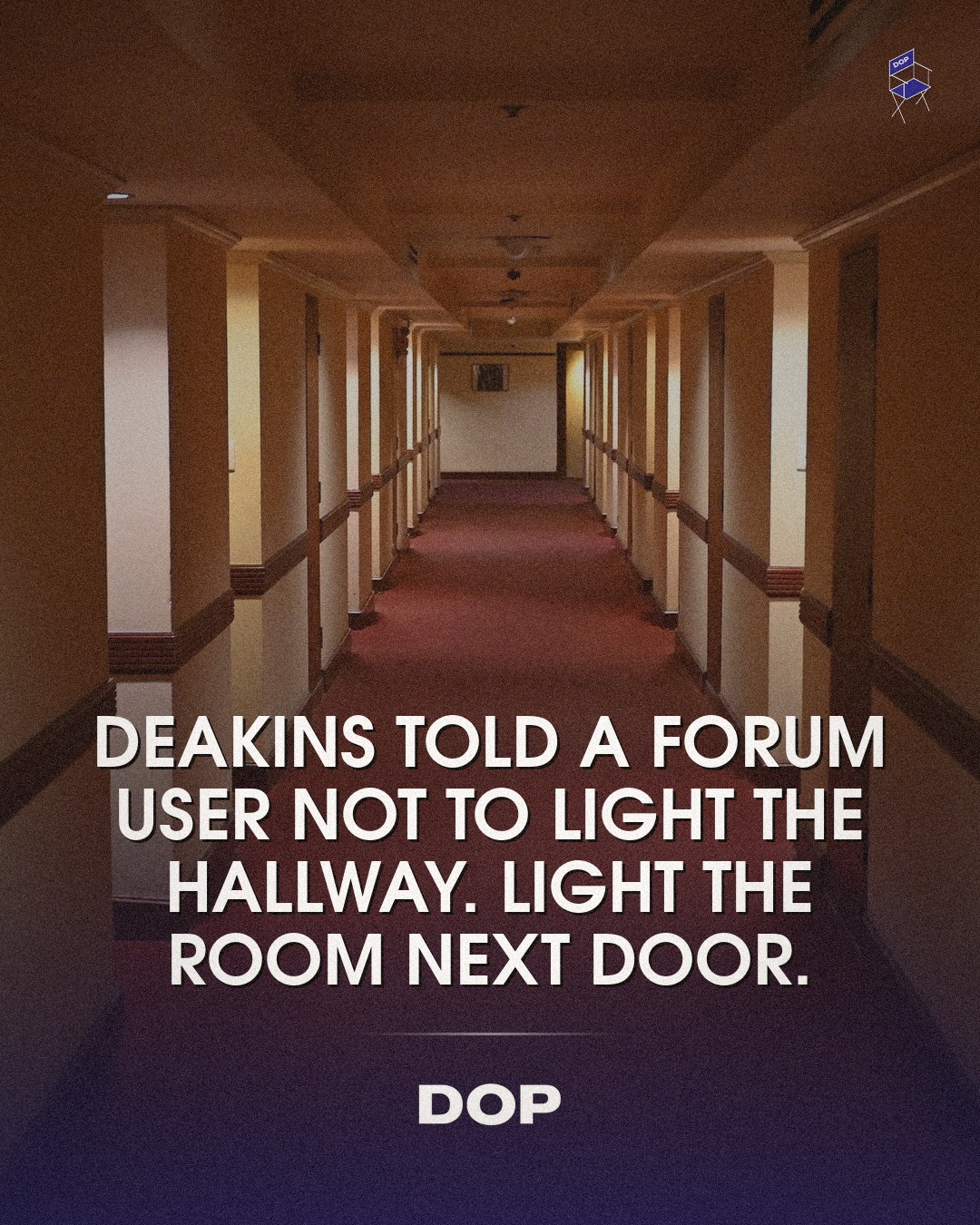
The adage, "The best light in a hallway is not in the hallway," attributed to the legendary Roger Deakins, isn't just a clever turn of phrase; it's a foundational principle that encapsulates the essence of intelligent lighting design. This seemingly counter-intuitive piece of wisdom, originally shared on his eponymous forum, speaks volumes about the meticulous planning and innovative problem-solving that defines world-class cinematography. It’s a testament to understanding light not merely as illumination, but as a sculpted element, shaped and directed to serve the narrative.
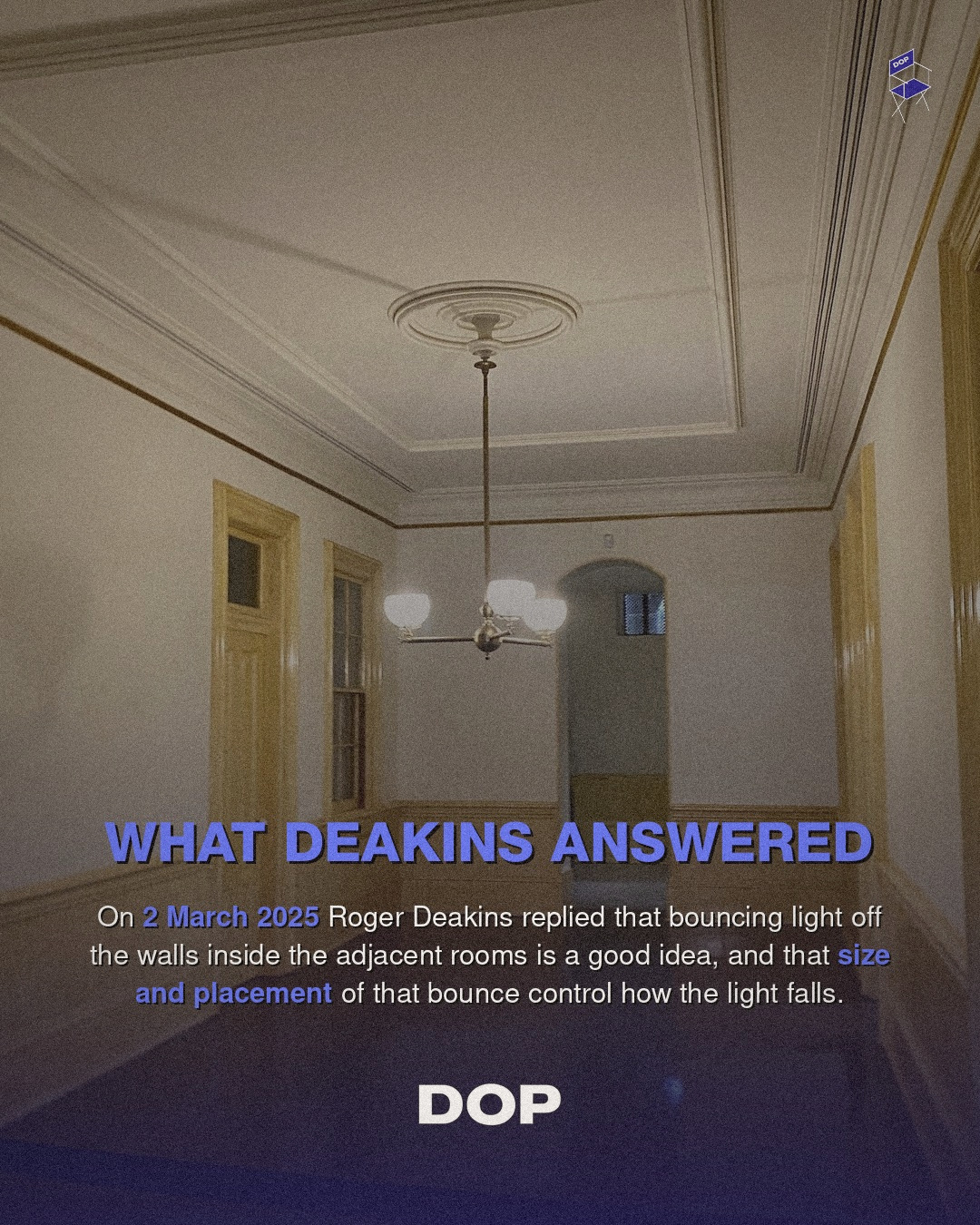
The scenario presented by forum user Max2204 on rogerdeakins.com was a common one: a long, dark corridor, a director's request for natural morning light, and an actor traversing its length. The intuitive, perhaps amateur, approach would be to bring powerful lights directly into the hallway, attempting to mimic sunlight. However, this often results in flat, unconvincing illumination, lacking the nuanced fall-off and organic quality of actual indirect light. Deakins' response, delivered just days later, cut straight to the core of the issue with elegant simplicity: "Bounce the light off the walls inside the adjacent rooms, and control how it falls by controlling the size and placement of that bounce."
The Philosophy of Indirect Light
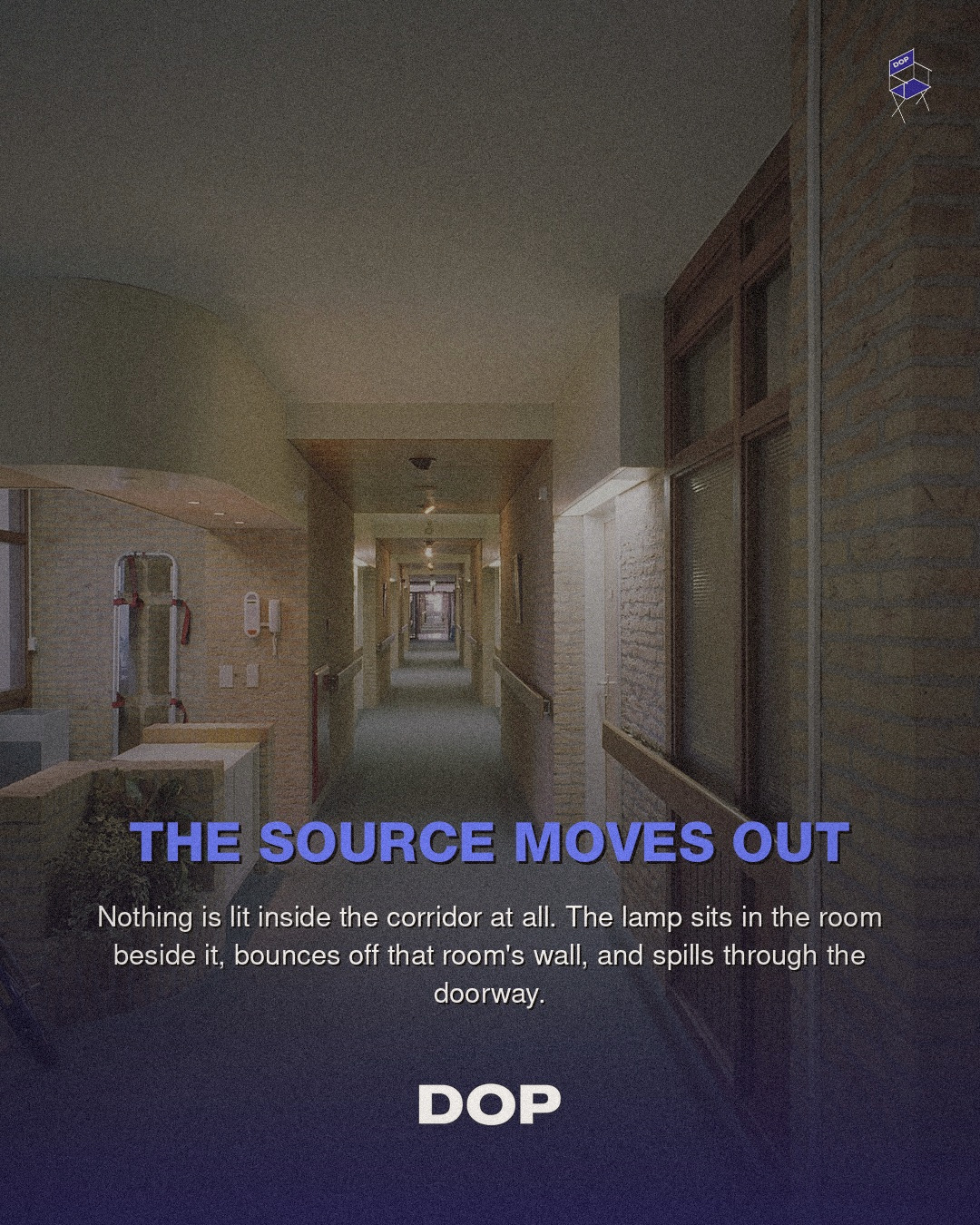
Deakins' philosophy here is deeply rooted in the observation of natural light. True morning light, especially indoors, rarely comes directly from the sun hitting an object. More often, it enters a space, bounces off a surface, a wall, a ceiling, a curtain, and then diffuses into the room. This indirect approach softens the light, creates more pleasing shadows, and avoids the harshness of direct illumination. By placing the light source (often a powerful HMI or LED fixture) outside the immediate frame, and then bouncing it off a large, neutral surface, the cinematographer essentially creates a giant, soft light source that mimics the diffuse quality of an overcast sky or ambient window light.
"The best light in a hallway is not in the hallway. Bounce the light off the walls inside the adjacent rooms, and control how it falls by controlling the size and placement of that bounce."
This technique is not just about softness; it's about control. The "size and placement of that bounce" becomes paramount. A larger bounce surface will yield a softer, more enveloping light, while a smaller, more strategically placed bounce can create a more directional, yet still pleasingly soft, key light. The choice of bounce material also plays a crucial role. A white card will offer a neutral reflection, while a silver bounce might add a bit more punch and specularity. Even the color of the adjacent wall can be utilized, adding a subtle warmth or coolness to the reflected light, depending on the desired mood. This granular control allows for the subtle shaping of light and shadow that defines Deakins' signature style, often naturalistic, yet meticulously crafted.
Technical Execution and Creative Impact
Consider the technical implications. For a long corridor, instead of rigging multiple fixtures within the tight confines of the hallway itself, one might position a powerful Arri M-Series HMI or a large-format LED panel like an Aputure 600d outside a doorway or window of an adjacent room. This light is then aimed at a large foam core board, a bleached muslin, or even a pre-existing white wall. The reflected light then spills into the corridor, creating a seamless, naturalistic effect. This approach not only looks more organic but also offers practical advantages: less equipment clutter in the shooting space, easier adjustment of light intensity and quality, and often, a wider spread of light that can cover the length of a moving shot more effectively.
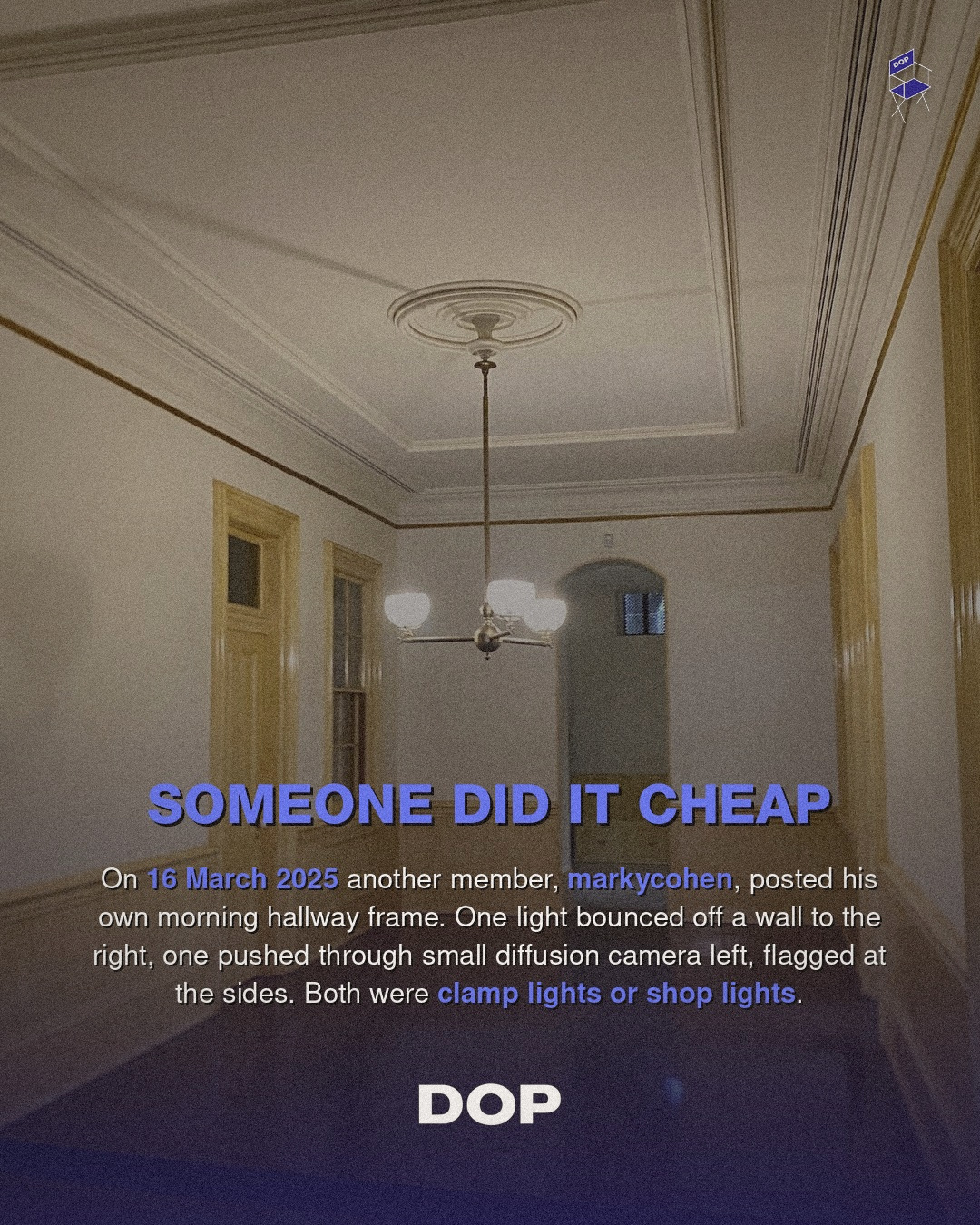
The subsequent post by markycohen, demonstrating the same solution with simple clamp lights, further underscores the universality of this principle. It’s not about having the most expensive gear; it’s about understanding the physics of light and applying creative problem-solving. Whether with high-end HMIs or humble clamp lights, the core idea remains: indirect, controlled bounce light is often superior to direct, brute-force illumination. This is a hallmark of Deakins' work, evident in films from No Country for Old Men, where sparse, motivated light enhances the desolate landscapes, to Blade Runner 2049, where complex, layered practicals and bounces create the film's iconic neon-noir aesthetic.
Deakins often pairs such lighting techniques with specific camera and lens choices. For instance, shooting on an ARRI Alexa LF with Signature Primes, known for their clean, naturalistic rendering, would perfectly complement this indirect lighting approach, preserving the subtle gradations of light and shadow. The sensor's dynamic range would faithfully capture the delicate fall-off created by the bounce, ensuring that the naturalistic look is maintained from set to screen. His preference for minimal filtration and a clean image means that the light itself must be inherently beautiful and controlled at the source, rather than relying heavily on post-production fixes.
This profound yet simple lesson from Deakins reminds us that cinematography is as much about what you *don't* do as what you do. It's about shaping absence as much as presence. The space outside the frame, the surfaces light interacts with, and the thoughtful manipulation of reflectivity are all critical components of crafting compelling visual narratives. It's a masterclass in seeing beyond the obvious and engineering light to serve the story with unparalleled elegance.
This article contains affiliate links. We may earn a small commission at no extra cost to you. Learn more.