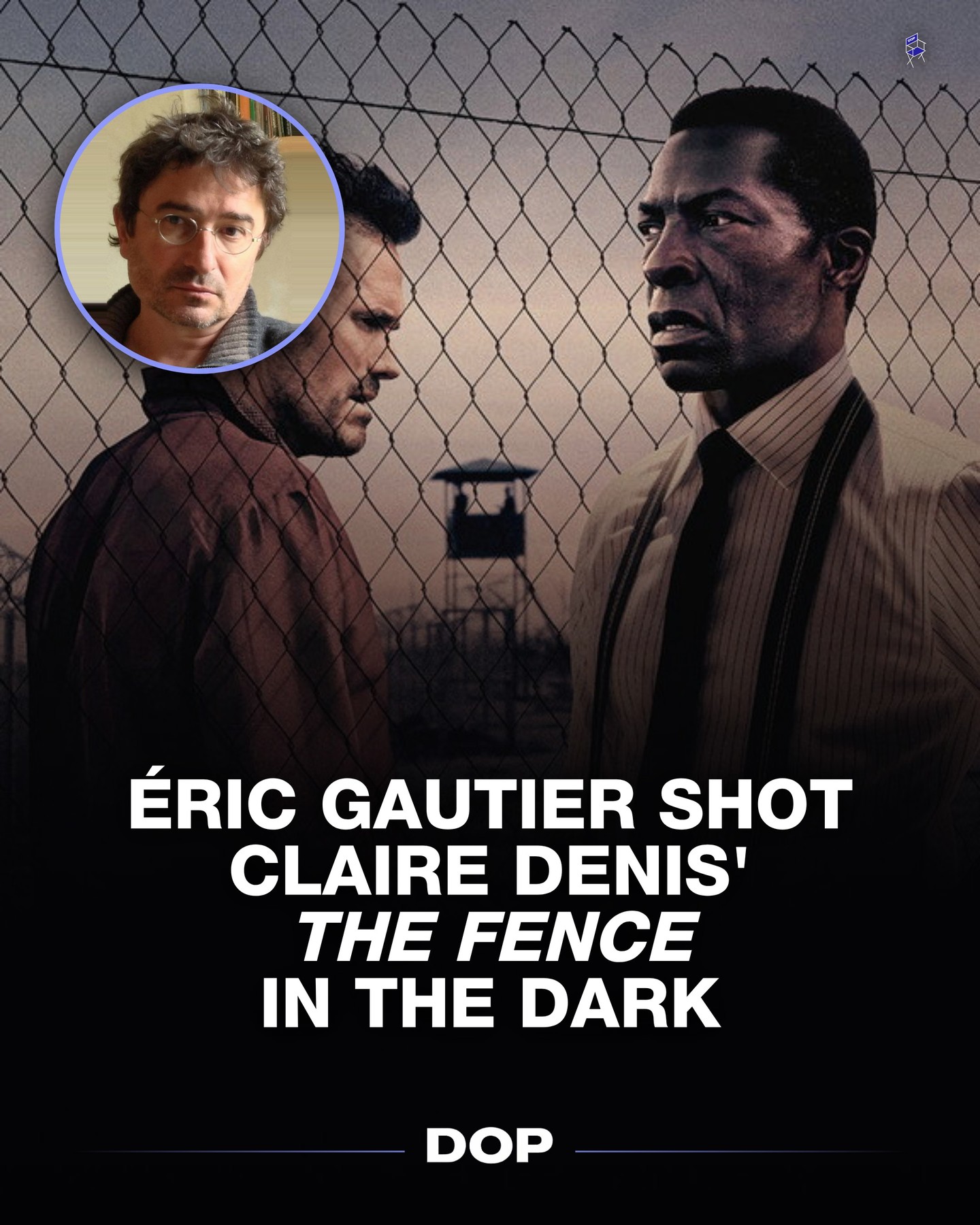
Few directors understand the physical weight of atmosphere quite like Claire Denis. From the sun-scorched colonial architecture of White Material to the neon-drenched confines of Stars at Noon, her collaborations with master cinematographers have long redefined how cinema registers heat, skin, and tension. For her latest feature, The Fence, Denis reunited with French master Éric Gautier, AFC, to construct a nocturnal crucible set entirely across a single, suffocating night inside a guarded compound in West Africa.
Carving Form from the Threshold of Black
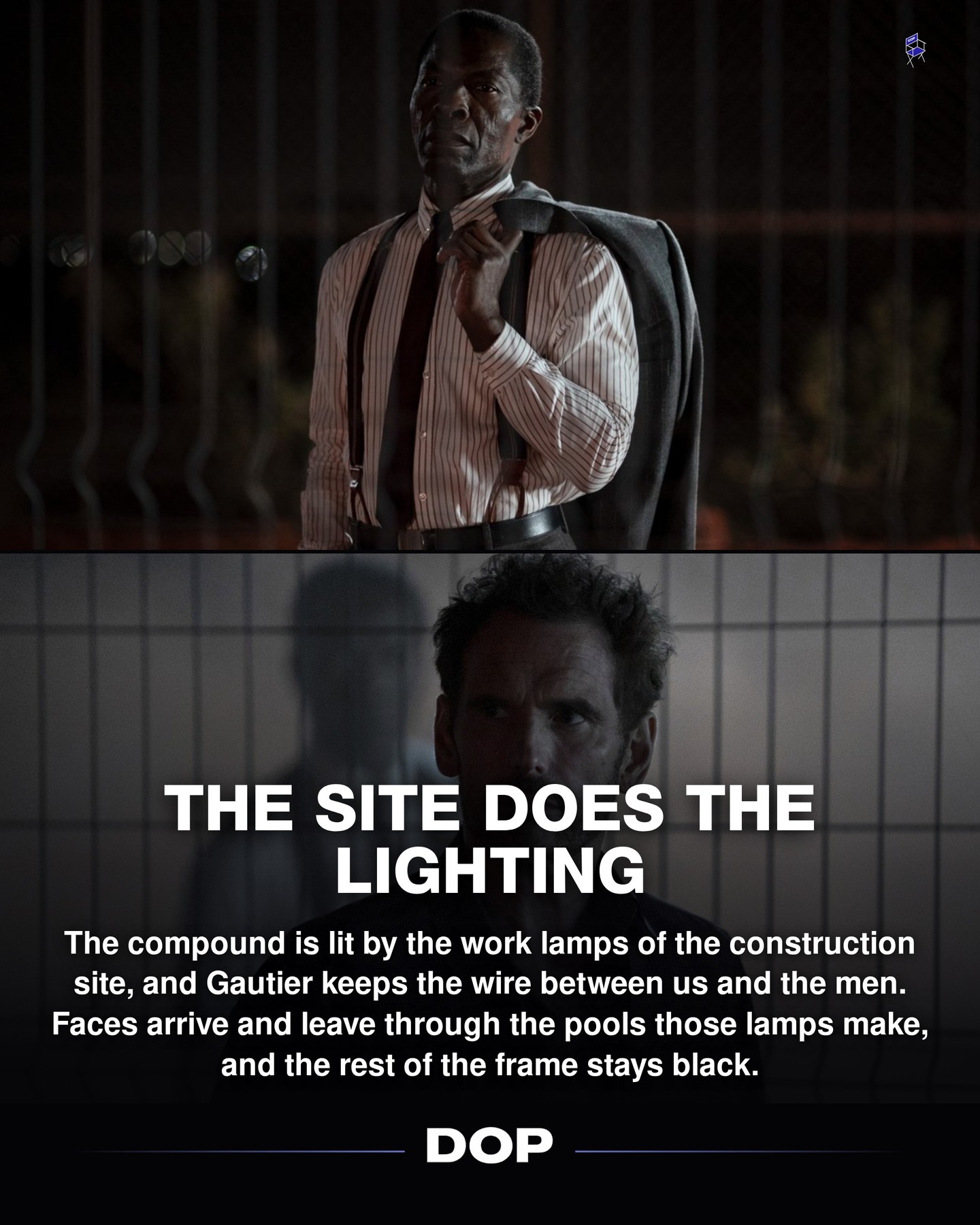
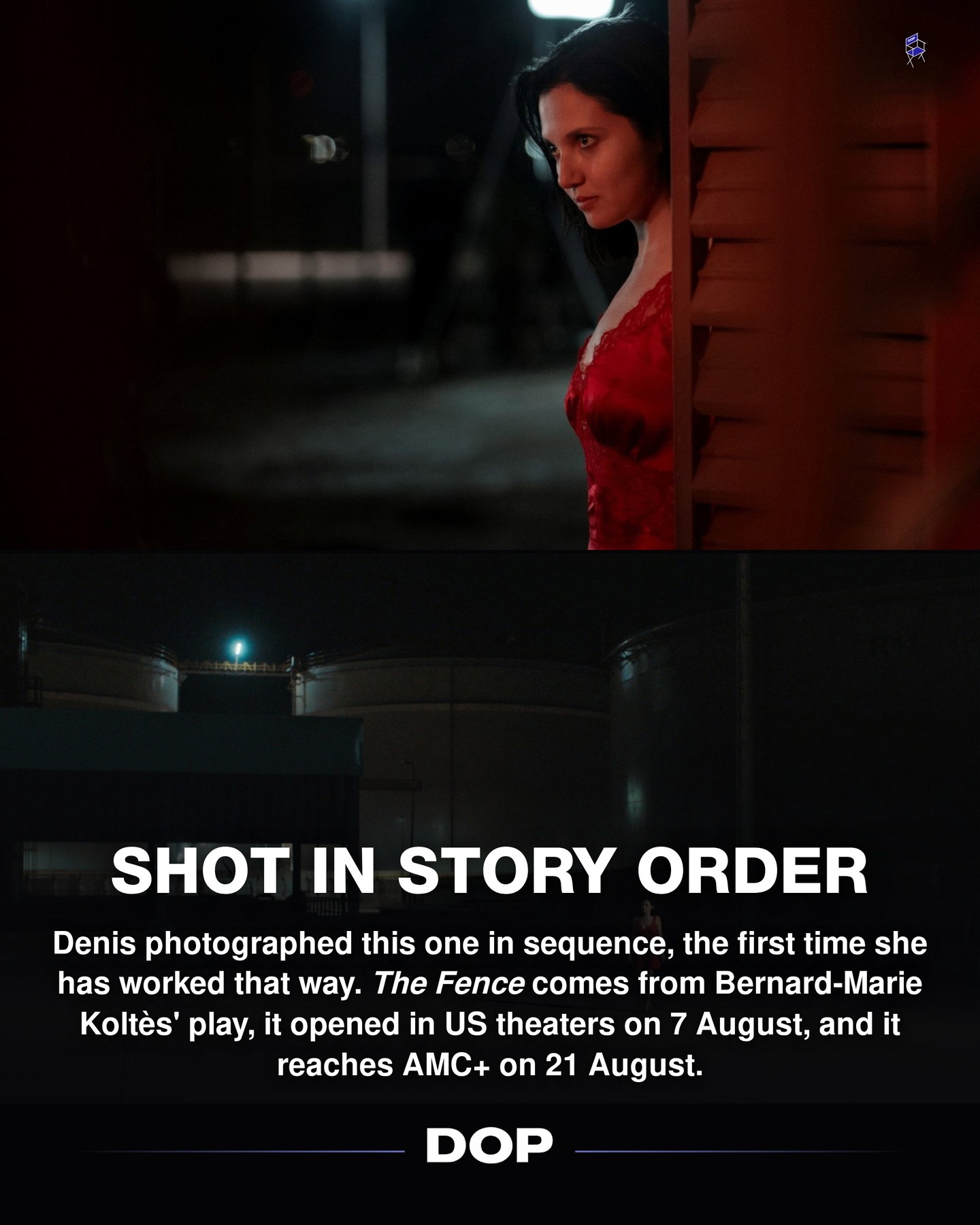
Starring Isaach de Bankolé and Matt Dillon as men caught on opposite ends of an ideological and physical standoff, the narrative operates with a relentless compression of time and space. Flanked by perimeter floodlights and the menacing silhouettes of armed watchtowers, the film presented Gautier with a formidable optical challenge: shooting a large-scale exterior and interior story almost entirely in low-light conditions without succumbing to the sterile, clinical glow that often plagues modern digital night-shoots.
Gautier chose the ARRI Alexa Mini LF as his canvas, framing for a 2.35:1 aspect ratio extracted from the large-format sensor. The larger photosite architecture of the LF provided the necessary dynamic range and signal-to-noise ratio to dig into the foot of the exposure curve, allowing the team to capture subtle skin-tone gradations on deep shadow values without introducing destructive electronic artifacting.
“We didn't want the night to look illuminated; we wanted the darkness to feel like an active, breathing presence surrounding the characters.”
Master Primes and Optical De-tuning
To capture maximum light while maintaining absolute optical control wide open, Gautier paired the Mini LF with ARRI/Zeiss Master Primes. Renowned for their blistering T1.3 speed, edge-to-edge sharpness, and chromatic aberration suppression, the Master Primes allowed Gautier to shoot at near-maximum aperture throughout the night. However, to counteract the hyper-clinical resolution that can arise when pairing clinical modern glass with a 4.5K sensor, Gautier introduced heavy optical diffusion.
By softening the high-frequency edge transitions and blooming the harsh specular highlights from tungsten security halogen lamps and mercury-vapor perimeter lights, Gautier imparted a tactile, filmic gentleness to the image. Skin tones, critical to Denis’ tactile visual language, retain their organic texture, glowing subtly against the dense, unlit background of the compound.
Embracing the Texture of 1600 ISO
Rather than lighting the entire compound to a safe base exposure, Gautier rated the Alexa Mini LF at 1600 ISO and frequently pushed beyond. Rating the camera above its native 800 ISO shifted the dynamic range distribution further into the highlights, protecting the intensely hot practicals mounted on the guard towers while letting the shadows sink into an expressive, painterly murk. The resulting luminance noise behaves much like high-speed 35mm grain, adding grit and temporal vibration to the film's tense, real-time pace.
The lighting package remained deliberately austere. Practical fixtures, sodium-vapor wash, halogen tower beams, and warm tungsten domestic interiors, did the heavy lifting, supplemented by soft, diffused LED panels dialed to precise, unconventional color temperatures. The result is a masterclass in cinematic restraint, proving once again that Gautier and Denis are peerless when it comes to turning the limits of light into pure emotional resonance.
This article contains affiliate links. We may earn a small commission at no extra cost to you. Learn more.