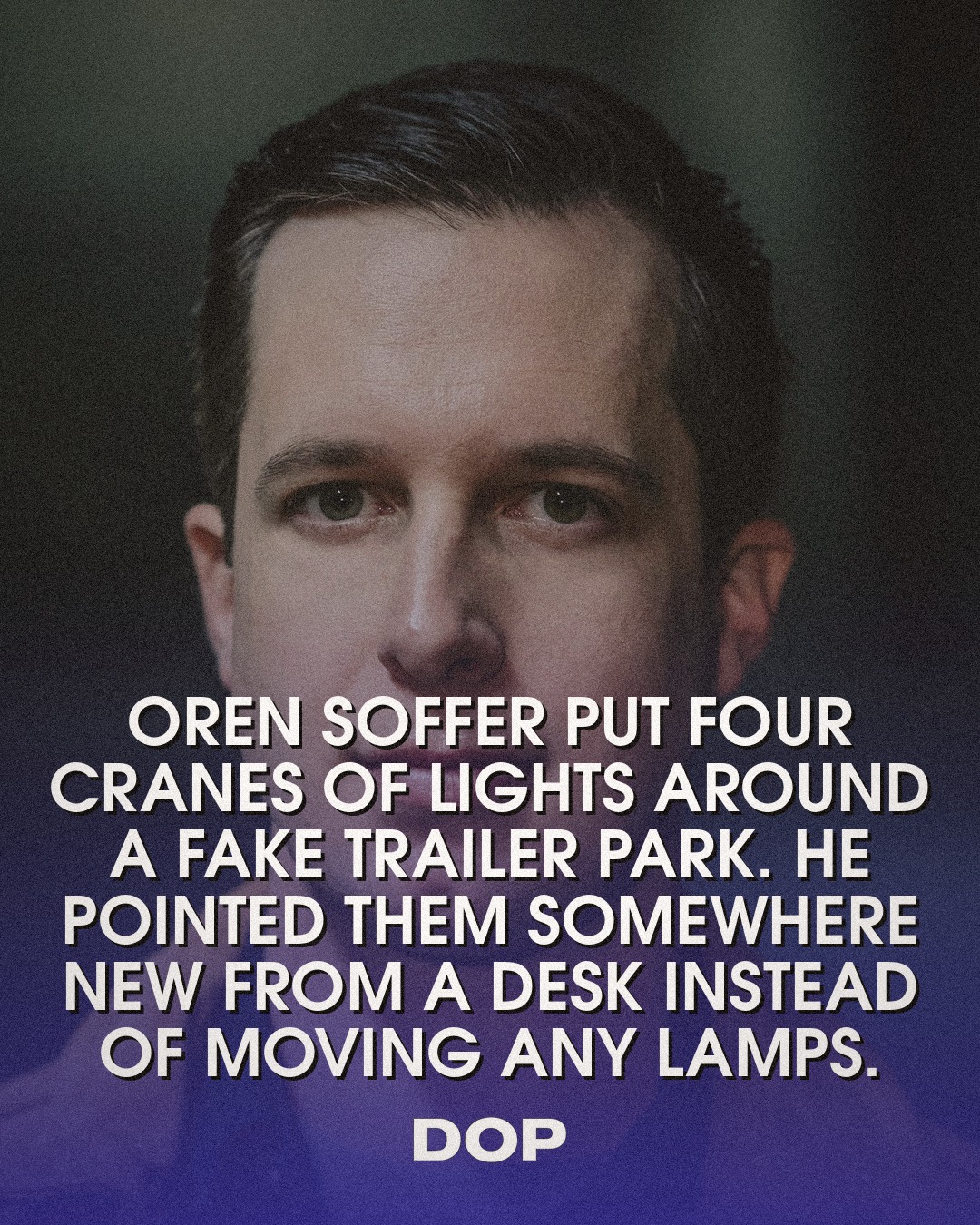
In an era where visual effects often conjure entire worlds, there’s a profound satisfaction in witnessing the tangible artistry of practical filmmaking. Adam Wingard’s latest thriller, Onslaught, offers a masterclass in this philosophy, particularly through the lens of its cinematographer, Michael Soffer. The Instagram caption offered a tantalizing glimpse into the painstaking efforts behind the film’s central location, the 'Windy Oasis' trailer park. But to truly appreciate the scale of this achievement, one must look beyond the surface, into the intricate dance of production design, lighting, and camera work that forged a place that, by all accounts, “did not exist.”
The creation of Windy Oasis wasn't merely set dressing; it was an act of architectural genesis. Production designer Tom Hammock, a frequent collaborator with Wingard, erected this entire trailer park from scratch, 20 minutes outside Albuquerque. This commitment to practical environments immediately sets a foundation of authenticity that digital backdrops often struggle to replicate. For cinematographers like Soffer, a physical set offers unparalleled control over light interaction, spatial relationships, and the nuanced textures that define a visual world. It’s a testament to Wingard’s vision and the production’s ambition that such an undertaking was greenlit, providing Soffer with a rich, tactile canvas.
Illuminating the Mirage: Soffer's Lighting Philosophy
Michael Soffer’s approach to lighting Windy Oasis is where the true genius of Onslaught’s visual language shines. The description of four condors, each carrying three Elation Proteus Maximus moving lights, surrounding the set speaks volumes about the scale and ambition of the nighttime sequences. The Proteus Maximus, a powerful IP65-rated LED moving head, offers immense flexibility in color temperature, intensity, and beam shaping. This choice suggests a desire for dynamic, controllable light sources that could simulate everything from moonlight to more aggressive, almost otherworldly illumination, perhaps hinting at the genre's underlying tension or supernatural elements. It’s a sophisticated array, allowing for precise sculpting of the environment, crucial for a location that is meant to feel both isolated and menacing.
“The decision to mix Astera bulbs with ordinary hardware store bulbs within each trailer wasn't merely a cost-saving measure; it was a deliberate artistic choice to create a chaotic, unsettling visual texture.”
But it's the granular detail of the trailer interiors that truly captures the cinematographer's subversive artistry. The decision to mix Astera bulbs with ordinary hardware store bulbs within each trailer wasn't merely a cost-saving measure; it was a deliberate artistic choice to create a chaotic, unsettling visual texture. Astera Titan Tubes, known for their precise color control and high CRI, would have been expertly managed to produce specific hues. However, by interspersing them with consumer-grade incandescent or LED bulbs, Soffer deliberately introduced color inconsistencies, a subtle, yet powerful, means of visual dissonance. This technique prevents the scene from feeling too polished or 'cinematic' in a conventional sense, instead imbuing it with a raw, almost verité quality that enhances the trailer park's gritty realism and underlying unease. This kind of nuanced imperfection is often what separates truly compelling cinematography from merely technically proficient work.
The Technical Canvas: ARRI Alexa 35 and Panavision Anamorphics
Soffer's camera and lens choices further underscore his meticulous approach. The ARRI Alexa 35, a powerhouse in digital cinematography, was the camera of choice. Its native 6400 ISO setting is a game-changer for low-light scenarios, offering an unprecedented level of clean detail even in extreme darkness. Shooting at 6400 ISO at night, as mentioned, suggests Soffer was either pushing the boundaries of available light, aiming for a deeply moody aesthetic, or perhaps leveraging the sensor's incredible dynamic range to capture subtle nuances in shadow detail without resorting to excessive artificial illumination. This choice provides immense flexibility in post-production for color grading, allowing for deep blacks and finely graduated tones, essential for a film steeped in mystery and suspense.
Paired with the Alexa 35 were Panavision E Series anamorphics. The E Series lenses are renowned for their vintage character, distinctive oval bokeh, and subtle optical imperfections, qualities that often add a layer of organic texture and dimensionality. They are known for their beautiful flaring, slightly softer contrast, and a unique way of rendering skin tones. For a film like Onslaught, which thrives on atmosphere and psychological tension, these lenses would have imbued the images with a classic, cinematic feel, perhaps evoking the gritty thrillers of the 70s or 80s. The anamorphic squeeze also lends itself to wide, expansive desert vistas and claustrophobic interior shots, allowing Soffer to play with compositional breadth and depth of field in a distinct way.
The Art of Preparation and Execution
The logistical undertaking behind Onslaught is just as impressive as its artistic ambition: eight weeks of prep for 35 days of filming. This extensive preparation period is a testament to the complexity of the project, allowing ample time for Hammock to build Windy Oasis, for Soffer and his gaffing team to meticulously plan the elaborate lighting setups, and for the entire crew to choreograph the intricate dance of storytelling. In an industry increasingly pressured by tight schedules, such a commitment to pre-production is a luxury that pays dividends in the final product, ensuring that every frame is thoughtfully considered and flawlessly executed.
Michael Soffer’s work on Onslaught appears to be a masterclass in controlled chaos and intentional imperfection. By building a world from the ground up and then meticulously, almost subversively, lighting it with a blend of high-tech precision and deliberate color discord, he crafts an environment that feels both utterly real and deeply unsettling. This blend of technical prowess and artistic daring is the hallmark of great cinematography, reminding us that sometimes, the most compelling visuals are born not just from what exists, but from the audacious creation of what doesn’t.
This article contains affiliate links. We may earn a small commission at no extra cost to you. Learn more.