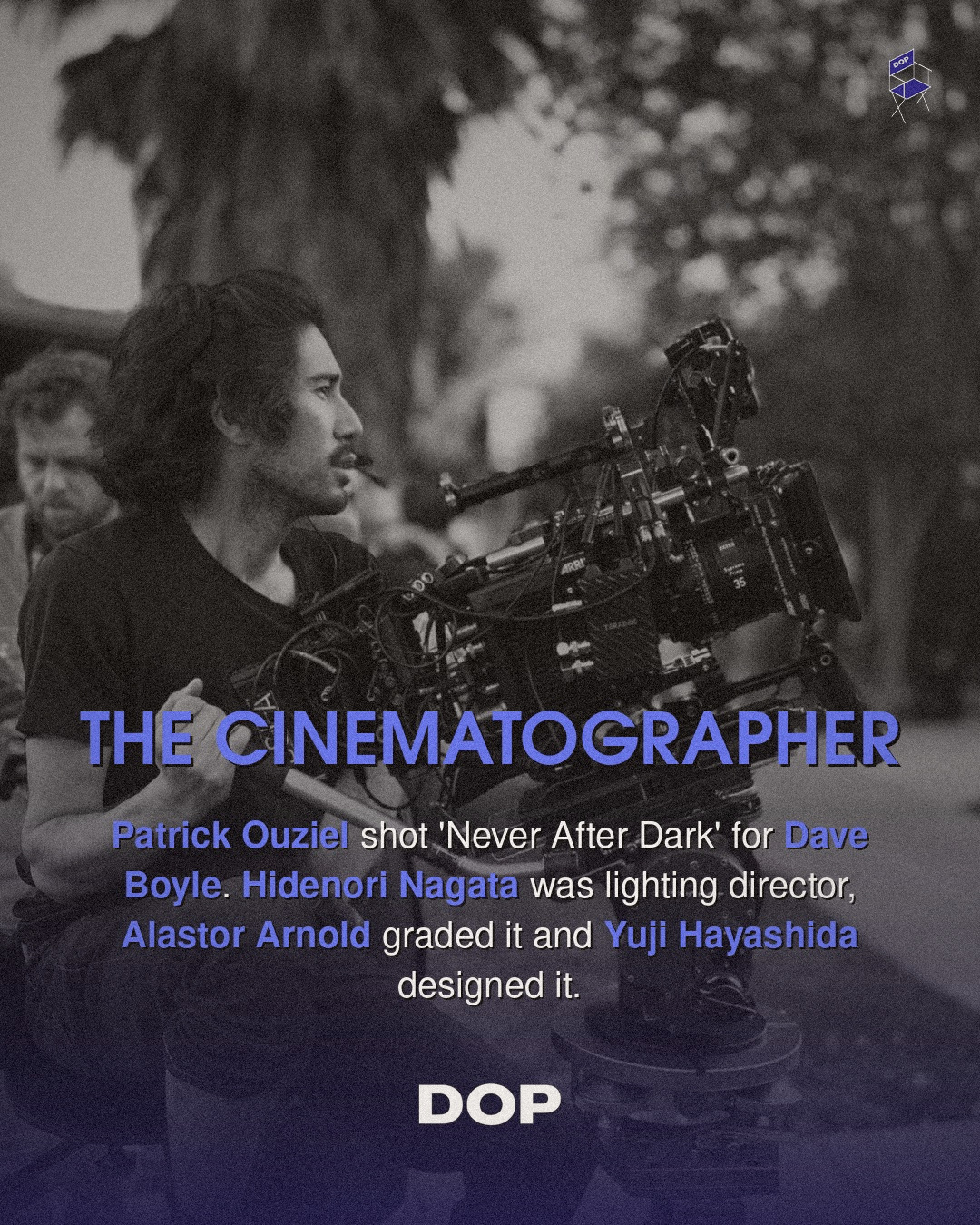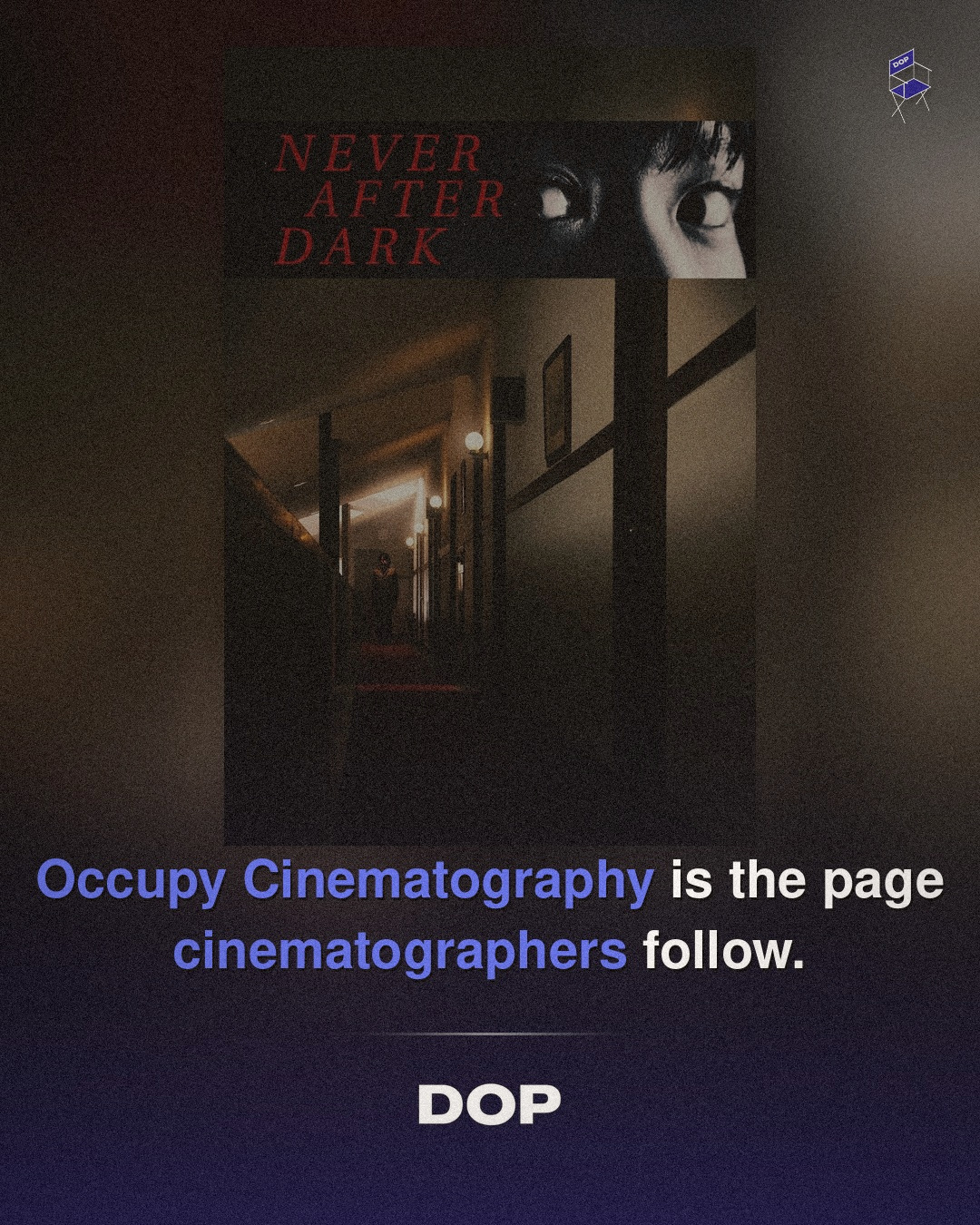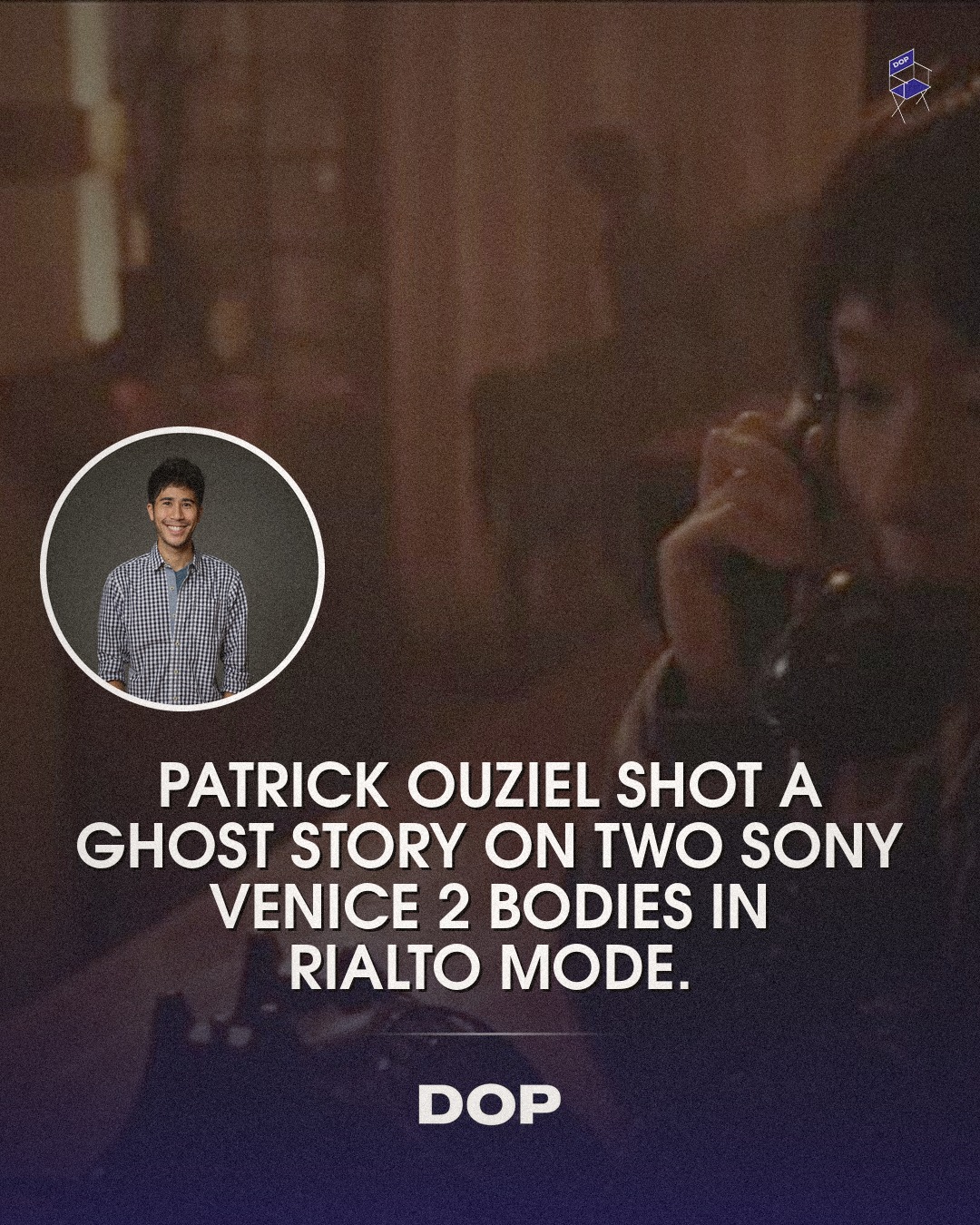
In the ever-evolving landscape of independent horror, a film often distinguishes itself not just by its narrative, but by the audacious vision of its collaborators behind the lens. Dave Boyle's 'GHOSTLIGHT,' a supernatural thriller that has captivated audiences and critics alike, is a masterclass in atmospheric cinematography, largely thanks to the inventive work of its Director of Photography, Ouziel. Winning accolades from SXSW to Brussels, the film's visual language is as much a character as its lead, Moeka Hoshi, whose portrayal of a medium navigating the spectral plane demands a distinct aesthetic.
Ouziel's approach to 'GHOSTLIGHT' was a bold amalgamation of modern versatility and classic cinematic techniques. The core optical package centered on Sigma FF High Speed primes, known for their sharpness, consistent color rendition, and excellent low-light performance. These primes would have provided a clean, precise base, allowing the filmmakers to maintain a high level of control over image quality. However, the true character of the film’s look emerges from the strategic deployment of supplementary glass. The Fujinon Cabrio 19-90mm zoom, a workhorse in independent and documentary filmmaking, offered invaluable flexibility for dynamic shot changes and quick adjustments, crucial for maintaining momentum in a fast-paced genre piece. But perhaps the most intriguing choice was the Laowa 24mm probe lens. This specialized optic, with its elongated, waterproof barrel and wide-angle perspective, opens up a world of creative possibilities, allowing for impossibly close-up, distorted perspectives that can visually represent the uncanny or the supernatural, perfectly suited for a film about spirits moving between realms.
The Unconventional Canvas: Cameras, Lenses, and Rigging
While the Sigma primes handled the bulk of the narrative, the decision to use a Sony FX3 for rigged shots speaks volumes about the pragmatic yet ambitious nature of the production. The FX3, with its compact form factor, impressive low-light capabilities, and robust internal recording, is an ideal candidate for situations where a larger cinema camera might be cumbersome or impractical. This choice suggests a nimble production style, enabling Ouziel to achieve unique perspectives, perhaps strapped to an actor, mounted in tight spaces, or used for POV shots that immerse the audience directly into Hoshi’s character's unsettling experiences. The combination of high-end primes, a versatile zoom, a specialty probe, and a compact camera for specific applications illustrates a DP who understands how to leverage diverse tools to serve a singular vision, rather than being beholden to one system.
“The marriage of precise primes, a flexible zoom, and the audacious Laowa probe lens paints a picture of a cinematographer unafraid to push boundaries, crafting a visual language that is both technically refined and artistically daring.”
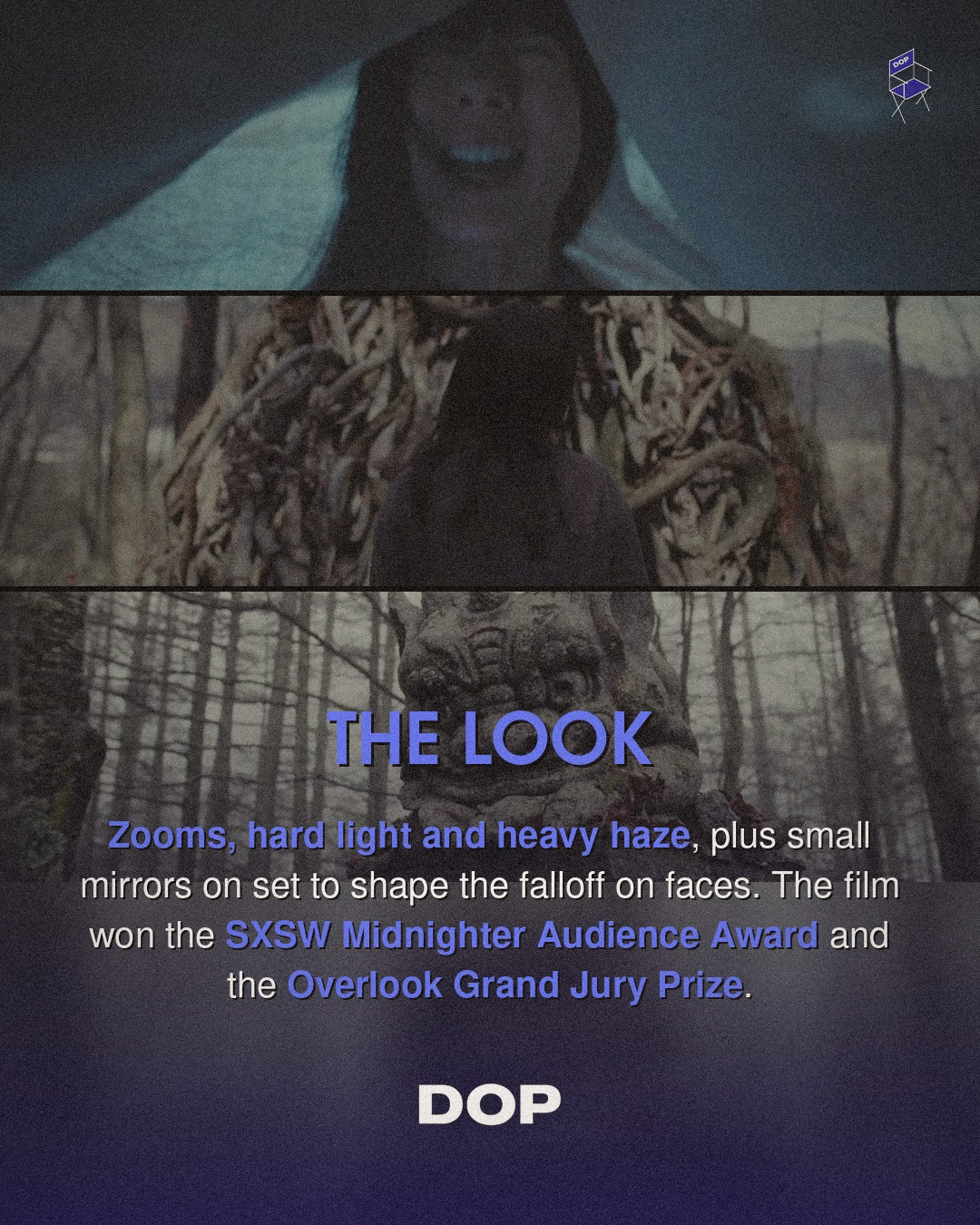
The film's distinctive aesthetic, however, wasn't solely a product of the glass and sensors. Ouziel deliberately leaned into specific lighting and atmospheric techniques to sculpt the 'GHOSTLIGHT' universe. The use of “hard light and heavy haze” is a foundational element. Hard light creates sharp, defined shadows, adding a sense of drama, contrast, and often, an unnerving edge. When combined with heavy haze, a staple in atmospheric cinematography, the hard light rays become visible, creating tangible beams and shafts that slice through the air. This effect can evoke dust motes in a forgotten room, ethereal energy, or the very presence of unseen spirits, lending a palpable texture to the supernatural elements of the story. It transforms empty space into a dynamic, visual stage.
Shaping Light and Shadow: The Art of Subtlety
Beyond the broad strokes of hard light and haze, Ouziel employed a fascinating, granular technique: “small mirrors on set to shape the falloff on faces.” This detail is a testament to a cinematographer's meticulous craft. Rather than relying solely on large sources or diffusion, using small mirrors allows for incredibly precise sculpting of light. A mirror can bounce a hard light source onto a specific part of an actor's face, creating a sharp highlight or a subtle kick, while leaving other areas in deeper shadow. This control over 'falloff', how quickly light transitions to shadow, is crucial for adding depth, dimension, and shaping mood. It can emphasize a character’s internal state, highlight a significant detail, or even introduce a glint that feels otherworldly. This technique speaks to a deep understanding of light physics and a desire for absolute control over the image's emotional impact.
The final layer of this visual tapestry was woven by colorist Alastor Arnold. While Ouziel laid the groundwork with camera choices, lighting, and atmospheric effects, the grade is where the film's overall tone and color science are cemented. Arnold's work would have refined the contrast, manipulated the color palette to enhance the eerie mood, and ensured that the hard light and haze effects translated into the desired spectral quality. Given the film’s genre, one might anticipate a desaturated, cool palette, perhaps with selective pushes of unsettling greens or deep blues, or conversely, a grade that highlights the warmth of the living world against the coldness of the spiritual. The synergy between DP and colorist is paramount, ensuring that the visual intent established on set is fully realized and amplified in post-production.
'GHOSTLIGHT' stands as a compelling example of how thoughtful cinematography can elevate a genre film into an immersive, award-winning experience. Ouziel’s innovative blend of cutting-edge and classic techniques, from the adventurous lens choices to the surgical precision of mirror-based lighting, creates a visual language that is both technically sophisticated and deeply resonant. It’s a powerful reminder that in the hands of a skilled DP, light, shadow, and glass can truly bring unseen worlds to vivid, terrifying life.
This article contains affiliate links. We may earn a small commission at no extra cost to you. Learn more.