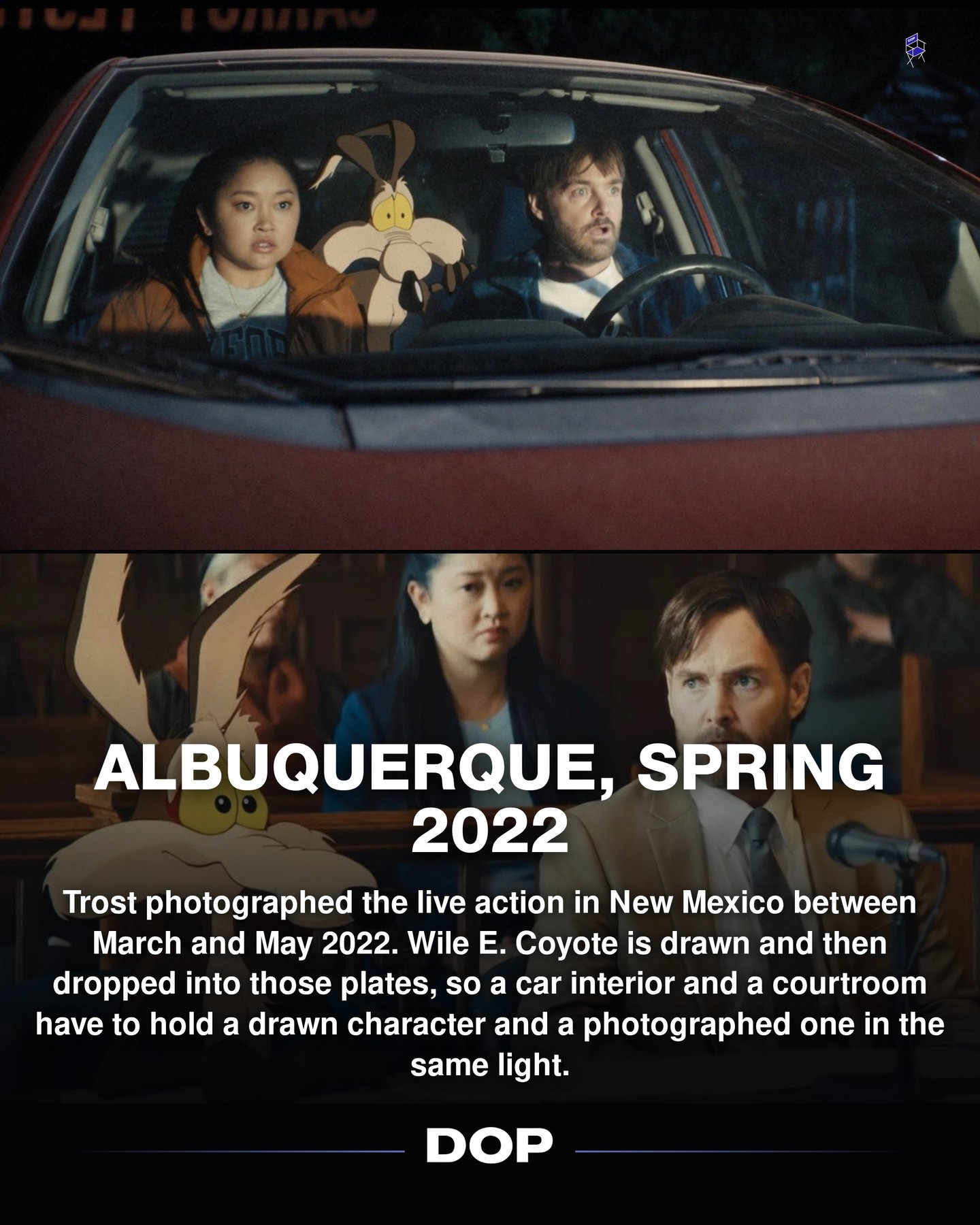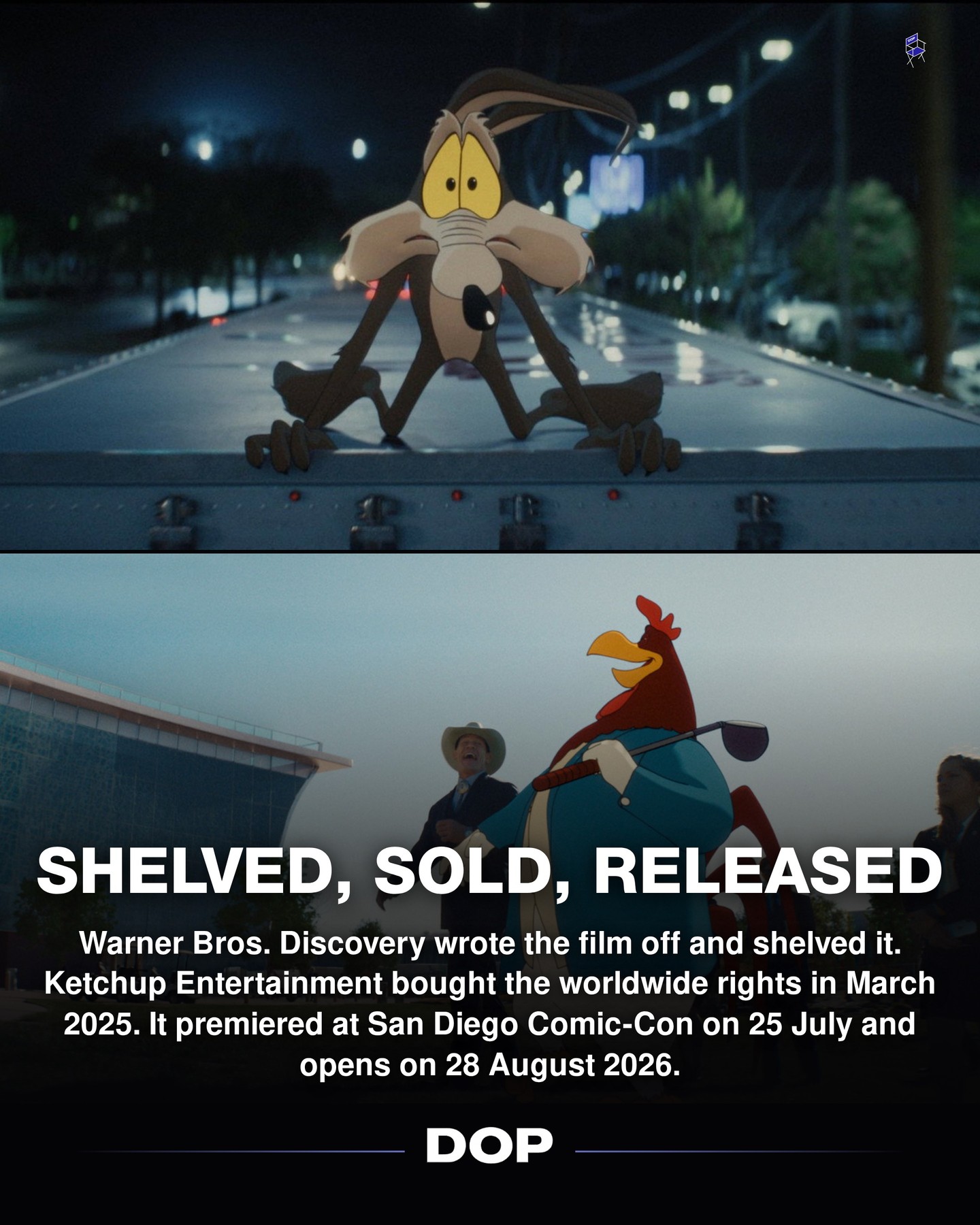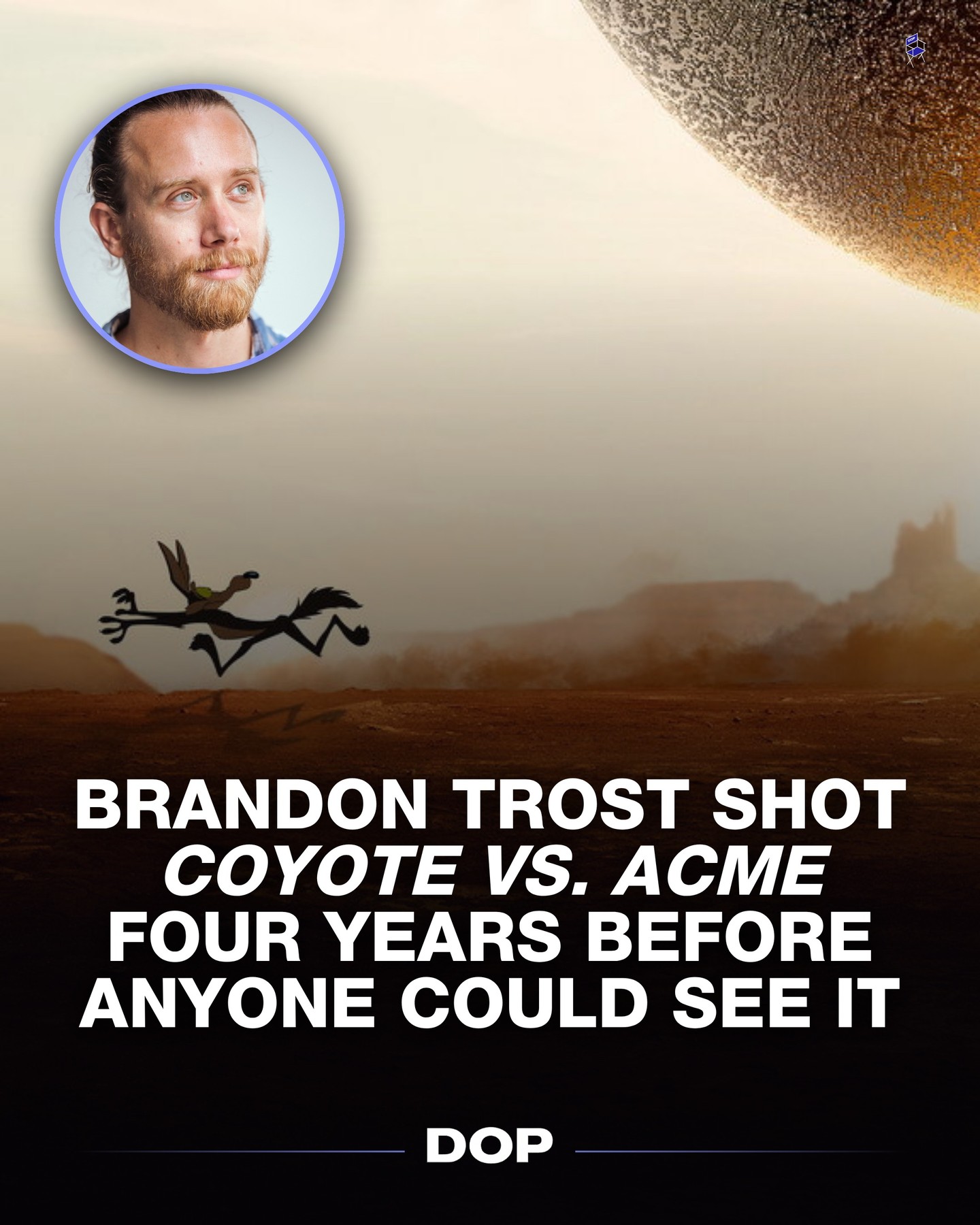
In the modern studio ecosystem, few tragedies are as quietly corrosive as the corporate tax write-off. When Warner Bros. Discovery shelved Coyote vs. Acme in late 2023, it was not merely a financial maneuver; it was the erasure of months of intense, collaborative physical craft. Principal photography wrapped between March and May of 2022 in Albuquerque, New Mexico. For nearly four years, the negative remained trapped on server drives, rendered invisible by balance sheets until Ketchup Entertainment stepped in to guarantee a theatrical release.
Directed by Dave Green, the film represents an increasingly rare cinematic discipline: the full-scale integration of a classic 2D/3D animated icon into authentic, tactually grounded live-action environments. The man tasked with building that bridge was director of photography Brandon Trost, whose idiosyncratic career spans everything from the grainy, nostalgic texture of Can You Ever Forgive Me? to high-concept kinetic comedy in Neighbors and the hyper-saturated comic energy of Sonic the Hedgehog 2.
Grounding Cartoons in Practical Light
Shooting a hybrid feature requires an exacting mathematical approach to exposure and volume that purely live-action films rarely demand. When lighting a scene for an animated co-star like Wile E. Coyote, the cinematographer is essentially pre-visualizing shadow density, bounce direction, and ambient fill for an actor who isn’t in the room. The Albuquerque desert offers notoriously uncompromising natural light, blistering midday key values, sharp specular roll-off, and high ambient contrast ratios that can easily blow out highlights or swallow shadow detail.
To make an animated character feel physically present beside human counterparts like Will Forte and John Cena, the interactive lighting must be surgically precise. Every practical explosion, misfiring rocket, and falling ACME anvil requires calibrated practical fixtures and dynamic lighting cues on set. Trost’s established sensibility has long favored giving heightened, absurd premises a grounded, cinematic weight rather than flattening them out with generic, low-contrast high-key sitcom illumination.
Cinematography in a hybrid film is not merely about capturing the actors; it is about establishing an unbroken physics of light that convinces the brain a cartoon shares our atmosphere.
The Geometry of Slapstick and High-Desert Texture
Classic Looney Tunes animation relies fundamentally on spatial clarity, geometric staging, and relentless horizontal motion. Translating Chuck Jones’s visual language into three-dimensional space requires disciplined focal length selection. Wide-angle glass close to the action exaggerates perspective distortion, ideal for visual gags and anvil drops, while medium telephoto setups compress the sun-drenched New Mexican mesas to create that unmistakable, painterly desert backdrop familiar to generations of viewers.
On set, this workflow demands continuous data capture: chrome and gray ball passes, motorized light meters tracking fluctuating desert cloud cover, and custom 360-degree HDRI maps shot for every single setup. This ensures that the downstream lighting artists and compositors can match the exact optical characteristics of Trost’s physical lenses, from subtle chromatic aberrations at the frame edges to natural anamorphic barrel distortion and flare characteristics.
Reclaiming the Craft from the Vault
Because the production was locked away in corporate storage for years, Trost and his crew were denied the traditional press cycle where department heads unpack their lighting schematics, camera packages, and LUT profiles. Yet the release of the film serves as a vital reminder that cinematography is an enduring physical artifact, not an intangible asset line.
When Coyote vs. Acme finally projects onto theatrical screens, audiences will see more than just a resurrected studio comedy. They will witness four-year-old frames that survived an existential threat to film preservation, frames exposed with intention, shaped by desert sunlight, and crafted to prove that slapstick remains one of cinema’s most demanding visual arts.