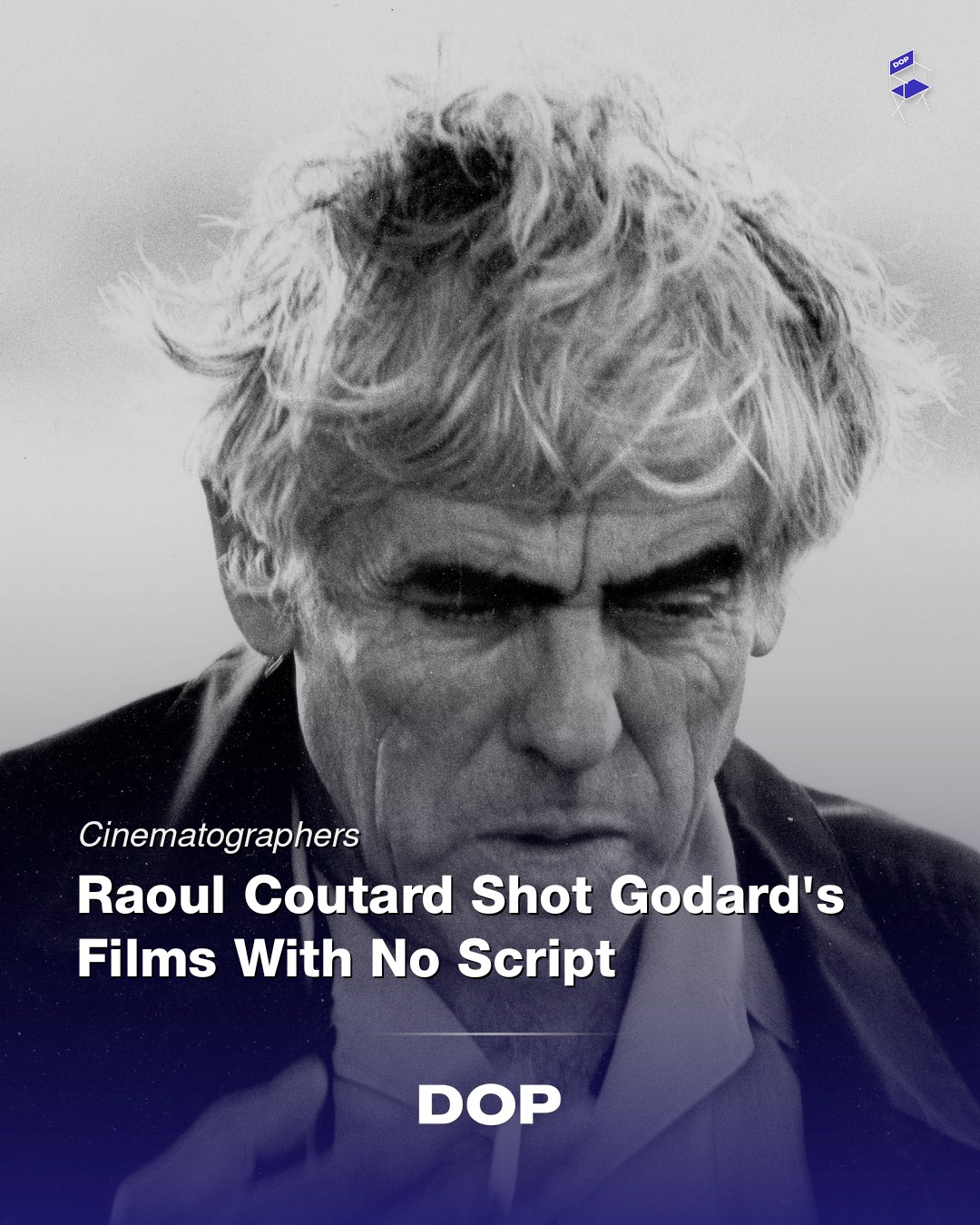
The name Raoul Coutard is synonymous with the French New Wave, a movement that shattered cinematic conventions and redefined visual storytelling. As the principal cinematographer for Jean-Luc Godard, Coutard didn't just film movies; he helped invent a new way of seeing. His work on seminal films like Breathless, Contempt, and Pierrot le Fou wasn't merely a technical exercise; it was a philosophical statement, a rebellion against the staid studio systems and polished aesthetics that preceded it. Coutard's approach, often born out of necessity and a radical embrace of spontaneity, became the very visual language of a generation.
Godard's filmmaking process, famously improvisational, demanded a cinematographer who could not only adapt but thrive in chaos. Coutard, with his background in photojournalism, was uniquely suited to this challenge. He understood the immediacy of capturing a moment, the raw energy of an unscripted reality. This collaboration was a dance between two creative titans, as Coutard once described it: "Working with Godard is at the same time complicated and simple, because you have to shoot everything in order. Because there's no script, he's writing it every day." This quote perfectly encapsulates the demanding yet liberating environment in which some of cinema's most iconic images were forged.
The Handheld Revolution and Natural Light
Before Coutard, much of cinema was defined by static cameras, elaborate lighting setups, and meticulously planned compositions. The New Wave, and Coutard's cinematography in particular, blew these traditions apart. His pioneering use of handheld cameras on films like Breathless imbued the narrative with an unprecedented sense of intimacy and urgency. The camera was no longer a detached observer but an active participant, weaving through Parisian streets, capturing the restless energy of Michel Poiccard and Patricia Franchini. This technique, initially employed due to budget constraints and a desire for verisimilitude, became a defining characteristic, pulling audiences directly into the subjective experience of the characters.
Equally revolutionary was Coutard's embrace of available and natural light. While earlier films often relied on heavy, artificial lighting to sculpt every frame, Coutard sought authenticity. He understood that the imperfect, sometimes harsh, sometimes soft, light of the real world could convey more emotional truth than any meticulously gelled setup. This wasn't just about speed; it was about stripping away artifice, allowing the natural environment to become an integral part of the visual tapestry. This philosophy extended to his choice of film stock, often pushing the boundaries of what was considered acceptable, embracing grain and contrast as expressive tools rather than flaws.
"Working with Godard is at the same time complicated and simple, because you have to shoot everything in order. Because there's no script, he's writing it every day."
Technical Innovation and Enduring Influence
Coutard's technical innovations were often born out of necessity and a willingness to experiment. For Breathless, faced with low light conditions and a desire for a gritty, documentary feel, he famously pushed Ilford HPS still photography film, rated at 400 ASA, through a movie camera. This unorthodox approach yielded a high-contrast, grainy aesthetic that perfectly complemented the film's rebellious spirit. Later, for Contempt, while working in Techniscope, a widescreen process that used only two perforations per frame, essentially creating a 2-perf 35mm negative, Coutard masterfully balanced the grandeur of Cinemascope with a nuanced, almost melancholic color palette, reflecting the film's themes of marital discord and artistic compromise. His lens choices were often pragmatic, favoring wide-angle lenses for their immersive qualities and deep focus, allowing multiple planes of action to coexist within the frame.
The impact of Coutard's work cannot be overstated. He liberated cinematography from its perceived constraints, demonstrating that rawness and spontaneity could be as profound, if not more so, than polished perfection. His influence can be seen in countless films that followed, from the American New Wave to contemporary independent cinema. Directors and cinematographers continue to draw inspiration from his fearless experimentation, his commitment to naturalism, and his uncanny ability to capture the fleeting, authentic moments that truly resonate. Raoul Coutard didn't just shoot films; he taught us how to look at the world, and cinema, anew. His legacy is a testament to the power of a cinematographer who dares to break the rules, proving that sometimes, the most profound artistry emerges from the most unconventional methods.
This article contains affiliate links. We may earn a small commission at no extra cost to you. Learn more.