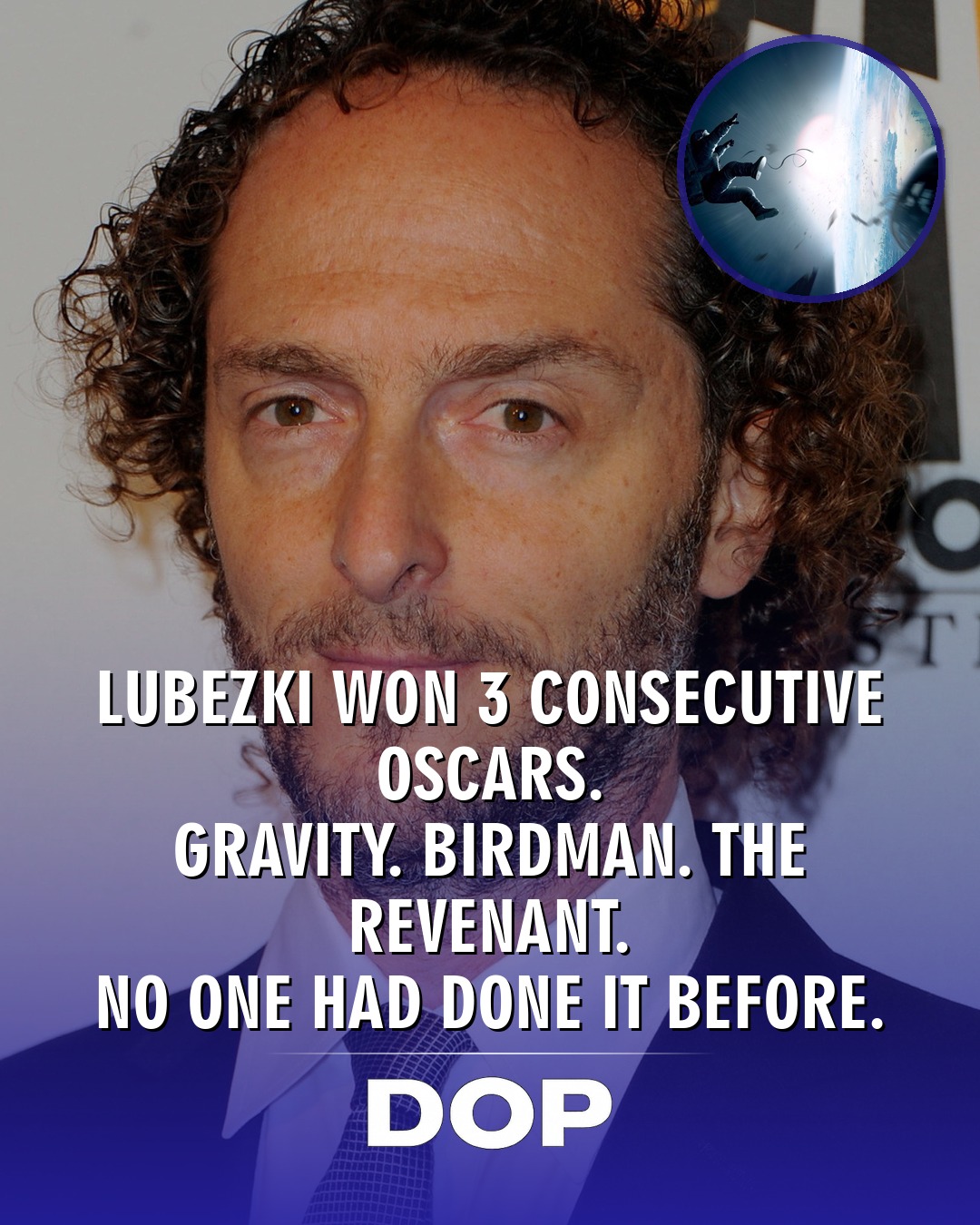
In the annals of cinematic achievement, few streaks shine as brightly as Emmanuel Lubezki's unprecedented run of three consecutive Academy Awards for Best Cinematography. From 2014 to 2016, 'Chivo' – as he's affectionately known – redefined what was possible behind the lens, not through a signature aesthetic, but through a chameleon-like ability to sculpt light and movement to serve the story's core. His work on Gravity, Birdman, and The Revenant stands not just as a testament to his individual genius, but as a profound exploration of modern cinematography's boundless potential.
What makes this achievement so extraordinary isn't merely the hat-trick itself, but the radical divergence in technical and philosophical approaches across these three projects. Each film presented a unique set of challenges, demanding an entirely distinct visual vocabulary. Lubezki didn't merely apply a tried-and-true formula; he reinvented the very process of image-making, proving that the cinematographer's role extends far beyond merely capturing light – it is about inventing worlds.
The Weightlessness of Innovation: Gravity (2013)
Gravity was a film that dared to ask: how do you shoot in space without going to space? Lubezki's collaboration with director Alfonso Cuarón on this project was a groundbreaking exercise in pre-visualization and technological innovation. The traditional set was largely replaced by a revolutionary 'light box' – a massive cube lined with 1.8 million individual LED lights. This wasn't merely a backdrop; it was a dynamic, programmable light source that could precisely mimic the ever-shifting, diffuse, and often singular light of Earth and the distant sun as seen from orbit.
"With Gravity, we were essentially creating a new way of shooting, where the light itself was a character, constantly moving and reflecting the emotional state of the isolation."
The actors, primarily Sandra Bullock, were often suspended in elaborate rigs, and the camera movements were meticulously pre-programmed, allowing for an unprecedented level of control over reflections, shadows, and the illusion of weightlessness. This digital-first approach, often utilizing ARRI Alexa cameras for their dynamic range and clean image, blurred the lines between live-action cinematography and visual effects, proving that even in a highly artificial environment, the cinematographer's eye for realism and emotional impact remains paramount.
The Relentless Dance: Birdman (2014)
Following the cosmic ballet of Gravity, Lubezki plunged audiences into the claustrophobic, neurotic world of Riggan Thomson in Birdman. Here, the technical challenge was diametrically opposed: to create the illusion of a single, continuous take, a 'one-shot' film. This wasn't achieved through CGI trickery but through an exquisite, almost impossibly complex ballet of camera choreography, set design, and actor blocking.
Working again with Alejandro G. Iñárritu, Lubezki's camera became an omnipresent, restless character, weaving through the labyrinthine backstage corridors of Broadway's St. James Theatre, gliding seamlessly from tight close-ups to expansive master shots. The ARRI Alexa again proved its mettle, its latitude essential for navigating the dramatic shifts between the dim, moody backstage and the harsh, bright stage lights. Hidden cuts, disguised in whip pans, blacks, or behind passing objects, were meticulously planned and executed, demanding an almost superhuman level of precision from the entire crew. This approach wasn't a gimmick; it was a narrative choice, trapping the audience in Thomson's spiraling psyche, intensifying the manic energy and existential dread.
The Raw Primalism: The Revenant (2015)
For his third triumph, Lubezki embarked on perhaps his most audacious experiment: The Revenant. Here, the innovation was in a radical return to fundamental principles – shooting almost exclusively with natural light. In the unforgiving, remote landscapes of the Canadian Rockies and Argentina, Lubezki embraced the elements, working with the fleeting magic hour, the stark midday sun, and the ethereal glow of fire and moonlight.
This commitment wasn't born of Luddism but a profound desire for authenticity. Using large-format digital cameras like the ARRI Alexa 65, Lubezki captured immense detail and dynamic range, essential for rendering the subtle nuances of natural light and the brutal textures of the wilderness. The challenges were immense: short shooting windows, extreme weather, and the sheer unpredictability of nature. Yet, it was precisely these constraints that forged the film's visceral, immersive aesthetic. The sun wasn't just a light source; it was a narrative force, dictating the rhythm of the day and the mood of survival. Lubezki's mastery here lay in his ability to harness the untamed, to find beauty and drama in the raw, unadulterated world, proving that sometimes, the most profound visual statements come from simply observing and framing what nature provides.
The Enduring Legacy
Emmanuel Lubezki's unparalleled Oscar hat-trick is more than a statistical anomaly; it is a masterclass in cinematic versatility and creative courage. He demonstrated that the cinematographer is not merely a technician but an artist whose canvas is light, whose brushstrokes are camera movements, and whose palette is the very fabric of visual storytelling. From the digital fabrication of space to the meticulously choreographed dance of a 'one-shot' film, to the primal embrace of natural light, Lubezki consistently pushed the boundaries, always in service of the narrative. His legacy is a powerful reminder that true innovation in cinematography stems from a deep understanding of craft, coupled with an unwavering commitment to the story at hand, no matter how unconventional the path to telling it may be.