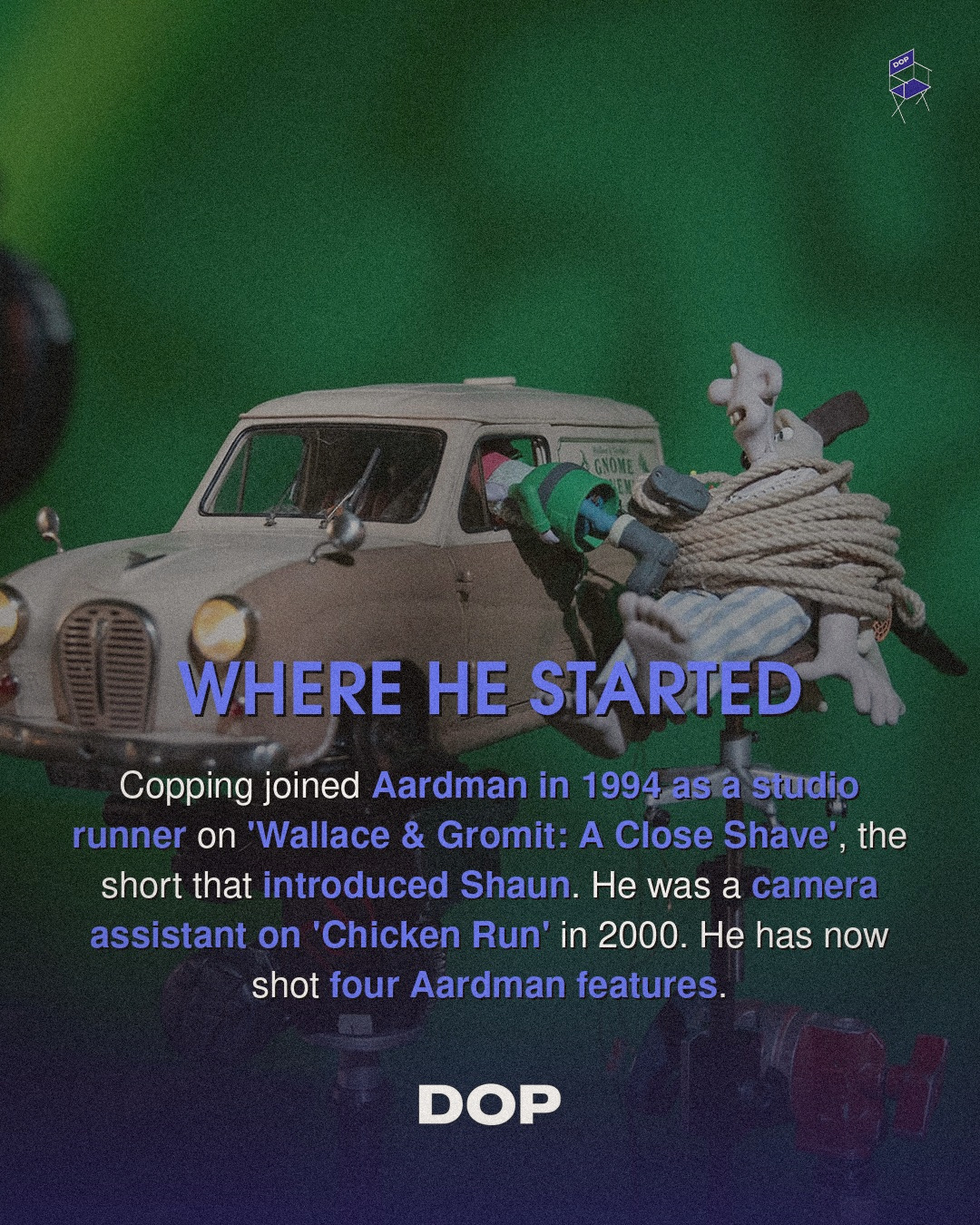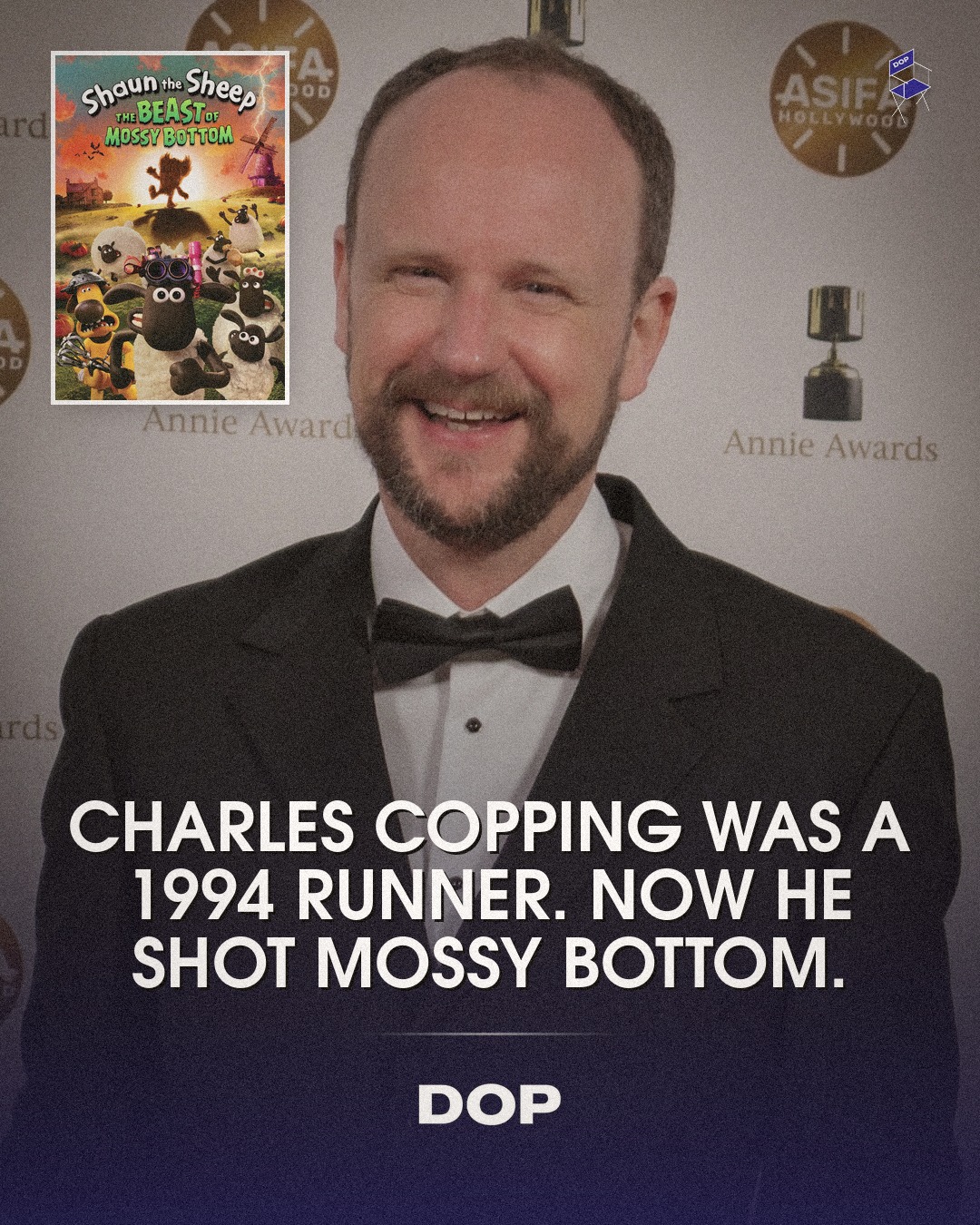
When Charles Copping walked through the doors of Aardman Animations in 1994, he was hired as a studio runner on an ambitious 30-minute stop-motion short titled Wallace and Gromit: A Close Shave. It was the film that introduced the world to Shaun the Sheep, but for Copping, it served as the proving ground for a lifelong masterclass in miniature cinematography. After rising to camera assistant on Peter Lord and Nick Park’s watershed feature Chicken Run in 2000, Copping quietly became one of the most prolific and technically adept directors of photography working in stop-motion today.
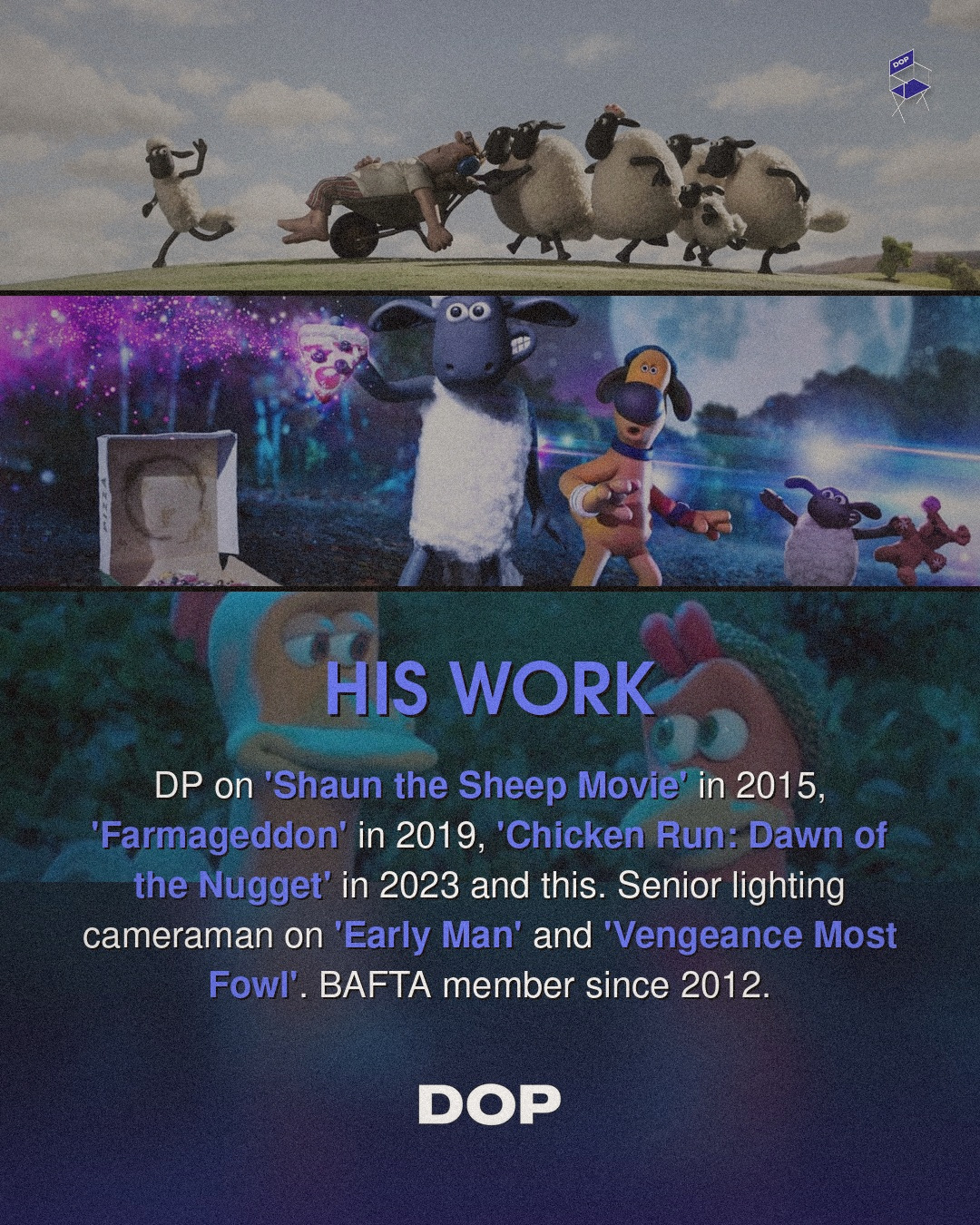
Having served as cinematographer on Shaun the Sheep Movie, Farmageddon, Chicken Run: Dawn of the Nugget, and Early Man, Copping returned to Aardman’s signature duo for Wallace & Gromit: Vengeance Most Fowl. The film marks a visual watershed for the studio, operating not merely as nostalgic plasticine comedy, but as a deliberate subversion of the British gothic horror tradition.
The Anti-Gothic Lighting Philosophy
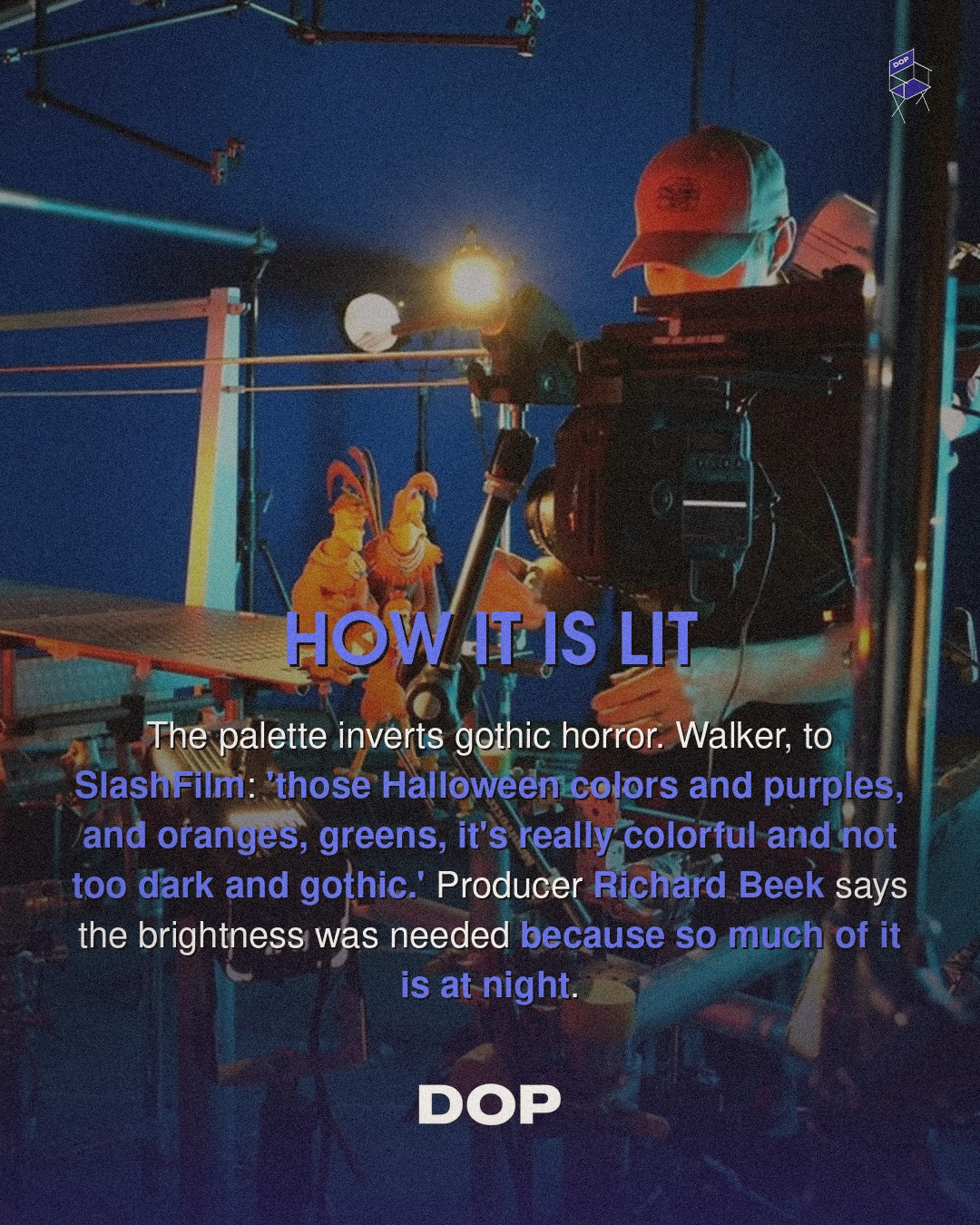
The narrative stakes of Vengeance Most Fowl demanded tension: the return of Feathers McGraw, the sociopathic penguin from 1993’s The Wrong Trousers, introduces genuine suspense to Wallace’s basement laboratory and the cobblestone alleys of northern England. Yet, Copping and director Matthew Walker actively avoided the desaturated, monochromatic chiaroscuro historically associated with Hammer Horror or classic expressionism. Instead, the team pivoted hard toward a vibrant, hyper-saturated Halloween palette built on electric purples, radioactive greens, and deep ambers.
“The brightness was needed because so much of it takes place at night. The lighting inverts gothic horror on purpose, leaning into rich purples, oranges, and greens rather than cold, impenetrable darkness.”
In stop-motion, lighting night exteriors presents an inherent paradox. In live action, a cinematographer can underexpose an Arri Alexa or Sony VENICE, leaning on deep dynamic range to protect shadow detail while rolling off soft street lamps. In scale photography, if an animator’s miniature set falls into muddy, low-key murk, the audience loses the tactile essence of the medium: the thumbprints on Gromit’s brow, the hand-painted gloss on Wallace’s knitwear, and the detailed craft of miniature props. Copping resolved this by elevating ambient foot-candles while saturating his fill and key sources with bold, complementary color gels.
Taming the Miniature Sensor
Scale cinematography operates under punishing optical physics. Shooting on digital stills bodies rigged to industrial motion control tracks, Copping and his camera department routinely battle depth-of-field collapse. At macroscopic working distances, shooting wide open is out of the question; lenses must be stopped down to f/11 or f/16 to maintain acceptable focus across a single miniature character, demanding astonishingly high lux levels from the lighting package.
Historically, flooding claymation sets with intense tungsten fixtures meant risking set deformation and melting Plasticine characters under blistering heat. On Vengeance Most Fowl, Copping leveraged the evolution of micro-LED technology and fully addressable DMX networks. Compact, high-CRI LED pucks and fiber-optic scale lights were buried directly into the practical architecture of Wallace’s workshop, allowing the gaffing crew to balance complex, multi-light cues across shots that take weeks to animate frame by frame.
Repeatability is the ultimate technical hurdle. Over the course of a three-week shot, a shift of half a millivolt or a fraction of a Kelvin degree can ruin hours of painstaking physical animation with perceptible visual flicker. Copping’s lighting setups utilize locked-off power supplies, rigorously stabilized color temperatures, and Dragonframe software integration, giving the camera team absolute control over exposures that stretch across microscopic increments of time.
A Kinetic Visual Evolution
Copping’s cinematography honors the cinematic grammar pioneered by Tristan Oliver and Dave Alex Riddett on the early Wallace and Gromit films, yet elevates it with contemporary kinetic energy. Camera moves are longer, sweeping gracefully on motion-control heads that mimic the language of a high-end Fincher thriller rather than a static puppet show. By clashing sinister shadow-play against confectionery tertiary hues, Copping proves that scale photography remains one of the purest, most demanding frontiers of the cinematographer’s craft.
This article contains affiliate links. We may earn a small commission at no extra cost to you. Learn more.