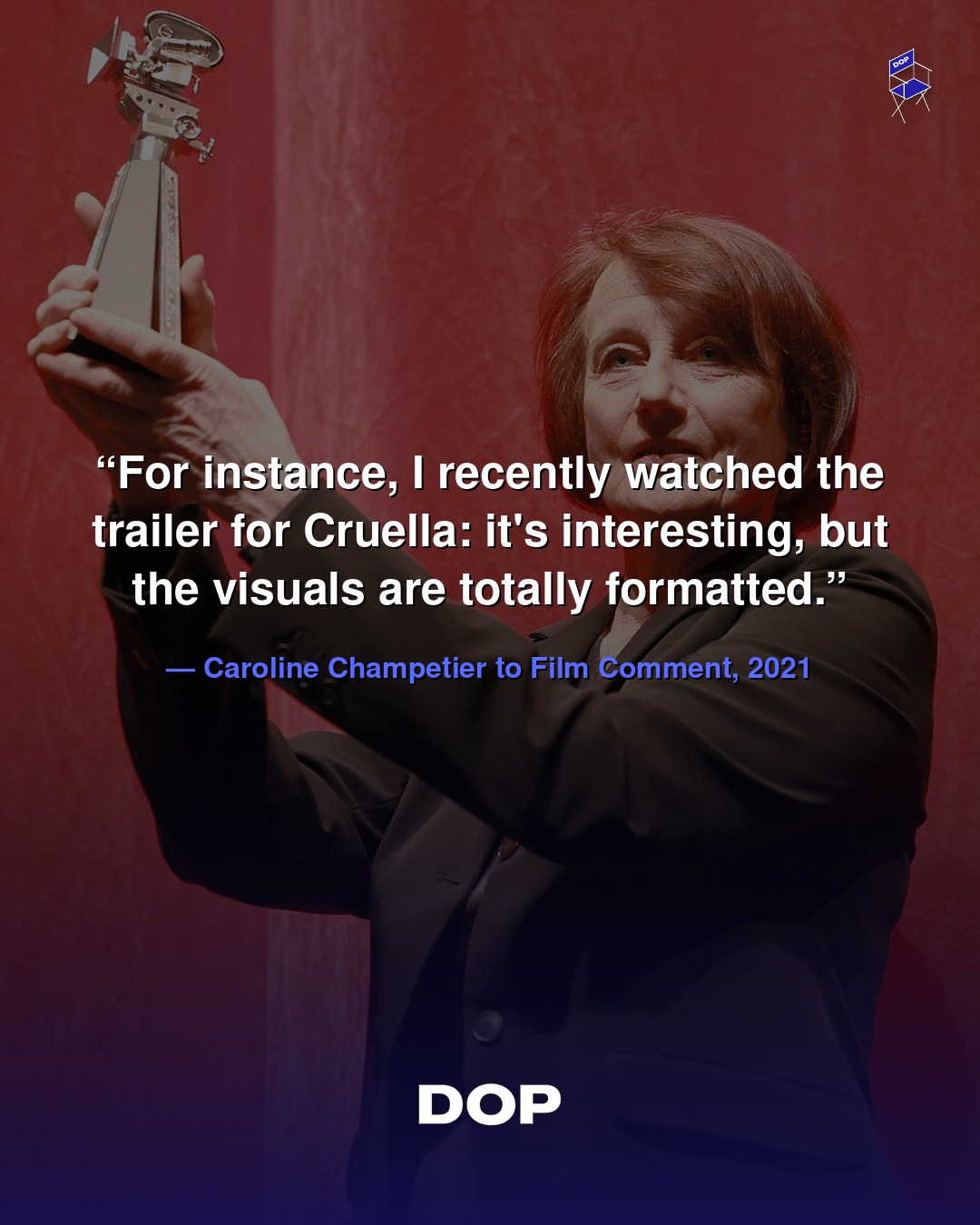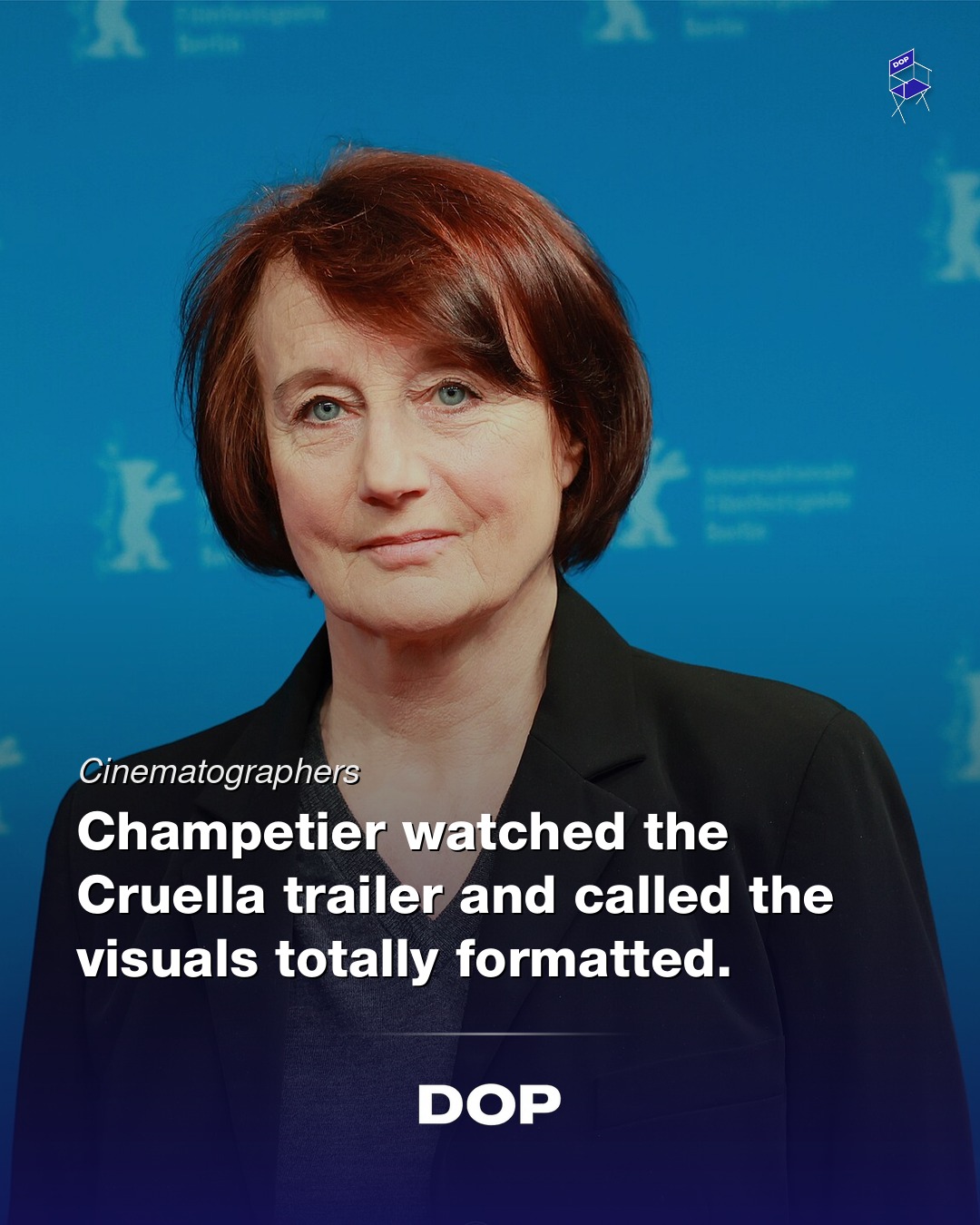
In the hallowed halls of Cannes 2021, a quiet observation from French cinematography titan Caroline Champetier sent ripples through the discourse, an insight that continues to resonate with alarming clarity. Discussing the trailer for Disney’s Cruella, Champetier, the visionary behind the haunting frames of Holy Motors and the stark beauty of Of Gods and Men, offered a concise yet profound assessment: the visuals were “interesting, and formatted.” This seemingly innocuous phrase, delivered with the weight of decades spent shaping light and shadow, was not merely a casual remark but a pointed critique of an industry trend, the insidious creep of pre-solved, homogenized imagery.
Champetier’s observation speaks directly to a growing concern among cinematographers and serious film enthusiasts alike: the diminishing space for genuine visual authorship in big-budget productions. When she says “formatted,” she’s not just talking about resolution or aspect ratio. She’s dissecting a pervasive aesthetic where images arrive pre-digested, optimized for maximum legibility and immediate consumption, often at the expense of nuance, ambiguity, and the very ‘decisions’ that imbue a frame with a director of photography’s unique signature. It’s a world where the ‘look’ is determined by algorithms and market research as much as by artistic intent.
The Erosion of Visual Voice
Consider the films Champetier herself has lensed. Her work on Leos Carax’s Holy Motors is a masterclass in visual fluidity and emotional depth, shifting seamlessly between stark digital realism and dreamlike, almost painterly compositions. The film’s visual language is not merely functional; it’s an active participant in its thematic exploration of identity, performance, and the nature of cinema itself. Similarly, in Xavier Beauvois’s Of Gods and Men, Champetier’s cinematography is restrained yet deeply expressive, using natural light and a deliberate, contemplative pace to evoke the spiritual struggle and quiet dignity of its subjects. These are images born from specific, deeply considered choices, choices of light source, lens focal length, camera movement, and color palette, all serving a singular artistic vision.
“The danger of 'formatted' visuals is that they strip away the very essence of what makes cinematography an art form: the intentional, often challenging, choices that define a film's visual soul.”
The ‘formatted’ aesthetic, by contrast, often prioritizes a bland perfection. It’s an image where every shadow is lifted, every color is vibrant but generically so, and every composition adheres to a safe, universally palatable standard. This isn't to say modern blockbusters lack technical prowess; often, they are astounding feats of engineering. But technical perfection without artistic soul leads to a visual sameness, a kind of globalized aesthetic that makes it difficult to distinguish one film from another purely by its visual texture. It’s the visual equivalent of a meticulously constructed pop song that hits all the right notes but lacks a distinctive voice.
Reclaiming the Decision-Making Process
What Champetier is advocating for, implicitly, is a return to the cinematographer as a true co-author of the film’s visual narrative. This means moving beyond the mere execution of a pre-visualized plan and engaging in a deeper dialogue with the director, the story, and the very act of seeing. It involves making bold choices, embracing imperfections, and allowing the film’s visual style to emerge organically from its thematic core, rather than being imposed as a pre-packaged template.
This challenge is particularly acute in an era dominated by high-resolution digital capture and extensive post-production pipelines. While tools like sophisticated color grading suites and advanced CGI offer unprecedented creative freedom, they also risk becoming crutches that smooth over genuine artistic decisions. The temptation to ‘fix it in post’ can lead to a reliance on digital manipulation rather than meticulous on-set lighting and framing. Champetier’s work, often characterized by its thoughtful use of available light and a deep understanding of naturalistic textures, stands as a powerful counterpoint to this trend.
For DPs, gaffers, and camera operators, Champetier’s words serve as a rallying cry. It’s a call to resist the gravitational pull of the generically 'perfect' image. It’s about fighting for the integrity of the frame, for the intentionality behind every flicker of light and every inch of camera movement. It's about remembering that true cinematography is not just about recording an image, but about crafting a visual experience that is unique, resonant, and unmistakably ‘somebody’s.’ As the recipient of the Berlinale Camera in 2023, Champetier continues to inspire a generation to seek out and defend that vital authorial spark in every frame.