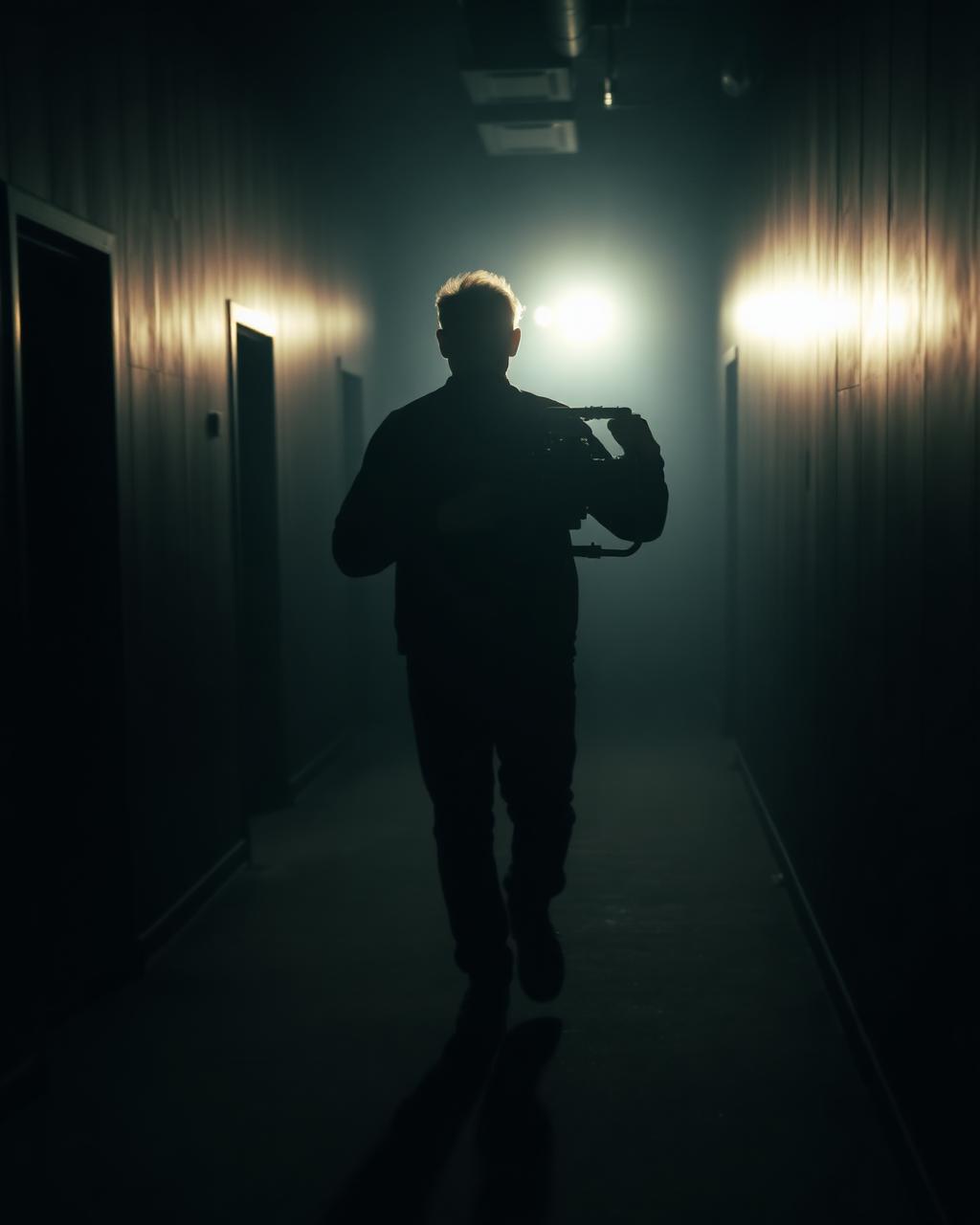
Camera movement is perhaps the most visceral cinematographic choice, yet it's often the least intentional. A producer wants "energy," so movement is added. An actor is static, so the camera pushes in. Budget dictates a handheld shot over a tracked dolly. But the cinematographers reshaping festival cinema in 2026 are treating movement as a compositional language equivalent to lighting design or lens selection. Greta Zozula's committed handheld on Josephine, which doesn't attempt to smooth or stabilize but rather commits to specific gestures of instability. The reactive handheld of Zi, which moves in response to actor blocking rather than preceding it. The radical stillness of films that employ no movement whatsoever.
Movement, in this framework, is never neutral. It's either intentional or accidental. Contemporary cinematography is increasingly trending toward intention.
The Committed Handheld Philosophy
Greta Zozula's Josephine employs handheld cinematography that refuses contemporary stabilization conventions. There's no pretense of smoothness. The camera moves with the operator's breathing, shifts with subtle weight transfers, accelerates and decelerates according to the human choreography of following an actor through space.
This is not the jittery, documentary-style handheld of digital cinema verite. Nor is it the smoothly-stabilized gimbal work that's become standard in prestige television. Zozula's approach is something more specific: the handheld camera as an active compositional presence. The movement isn't trying to hide the fact that someone is holding the camera. It's acknowledging it as part of the visual experience.
The practical result is that handheld shots don't feel like video. They feel like experienced photography—like the viewer is a photographer actively composing in real time rather than watching a pre-composed image. This creates a particular kind of psychological engagement. The slight instability, the moment-to-moment adjustments, the emphasis on the operator as active presence—these convey that the image is being made rather than simply captured.
Technically, this requires a different camera rig than stabilized handheld. You need a camera that responds intuitively to operator movement without electronic stabilization flattening the gesture. You need lenses that provide useful framing without requiring extreme repositioning. You need an operator with the specific skills to move the camera with intention and rhythm rather than attempting to maintain perfect horizontal/vertical axes.
Reactive Handheld and Blocking Choreography
The handheld approach in Zi, which Benji Loeb employs as reactive rather than predictive movement, represents a different philosophy. Where traditional handheld often leads actor movement or attempts to anticipate blocking, Loeb's camera follows and responds. The movement is always slightly behind the action, always adjusting to accommodate what the actors are doing rather than prescripting the frame.
This requires a particular skill set from the cinematographer: the ability to understand spatial geography with precision, to know in real time how to reframe as actors move, to maintain compositional logic while constantly adjusting framing. It's more demanding than locked-off cinematography, but it also creates images that feel more organic to the action rather than imposed upon it.
Practically, this means minimal crew during handheld sequences. You don't need focus pullers constantly adjusting lens elements; you manage focus yourself or employ extremely deep depth of field. You don't need grips repositioning equipment; you're moving with the actors. The reduced crew footprint actually serves the aesthetic: fewer people on set means the actors can move more naturally, and the cinematographer can respond more intuitively.
Steadicam and the Grammar of Float
Steadicam technology—the mechanical gimbal system that decouples camera movement from operator movement—creates a specific visual grammar: the floating camera. Steadicam shots can follow actors through architectural space, moving through doorways and around obstacles with the smoothness of a gliding presence rather than the weight and intention of a handheld operator.
In 2026 festival cinematography, Steadicam is experiencing a recalibration. For two decades, it became the default tool for sophisticated camera movement, often employed for "fluid energy" or "premium look." Now, it's being deployed more selectively and with greater intention about what the floating camera aesthetic communicates emotionally.
A Steadicam shot that floats alongside an actor conveys a particular kind of narrative proximity: you're accompanying them, moving at their pace, maintaining a consistent distance. This creates intimacy without claustrophobia. But it also creates a formal distance—the audience is aware that there's a mediating presence, a floating camera, between them and the action. It's not point-of-view cinema. It's accompanied cinema.
The discipline being introduced into 2026 festival work is about using Steadicam for this specific aesthetic purpose, not as a default for "smooth movement." A Steadicam shot in a contemporary festival film is usually chosen because the film needs the specific emotional quality that a floating camera creates. If stillness would serve better, the cinematographer chooses stillness. If handheld intimacy would work better, handheld is employed.
Gimbal Sophistication and Its Limitations
Gimbal technology—the electronic three-axis stabilization systems that allow simultaneous pan, tilt, and roll correction—has improved dramatically. But sophisticated cinematographers are increasingly aware of gimbal's aesthetic limitations. Gimbal-stabilized footage has a particular quality: it's perfectly level, perfectly smooth, yet somehow hollow. The smoothness is too smooth. It doesn't read as human presence; it reads as automated movement.
The 2026 festival circuit shows cinematographers deliberately limiting gimbal use or avoiding it entirely. Where gimbal was once employed for "premium stabilization," it's now often reserved for very specific shots where that algorithmic smoothness serves a thematic purpose: perhaps a shot of automated systems, of mechanical violence, of emotional distance.
This represents a philosophical shift: gimbal is understood as a tool with specific aesthetic properties, not as an "upgrade" over other camera movement methods. A handheld shot might be preferable because it's more human. Stillness might be preferable because movement isn't necessary. A Steadicam float might be preferable because it creates a particular narrative distance. The gimbal, for all its technical sophistication, is just one tool among many.
The Discipline of Stillness
Paradoxically, one of the most significant camera movement trends in 2026 festival cinematography is the absence of movement. Films that employ locked-off, perfectly still frames, perhaps for entire sequences. This isn't static cinematography as a budget accommodation; it's static cinematography as a compositional philosophy.
When a frame is held absolutely still, the emphasis shifts entirely to the action within the frame and the composition of space. There's no movement to mask compositional weakness. There's no camera energy to compensate for narrative stasis. What remains is pure compositional language: the relationship between objects in space, the blocking of actors, the depth planes within the frame.
Cinematographers employing this discipline are essentially saying: "The composition itself is sufficient. The movement is in the actors and the action, not in the camera." This requires extraordinary attention to framing, blocking, and spatial planning. But the visual results are remarkable. Without camera movement to provide energy or visual interest, the composition has to be absolutely precise and absolutely intentional.
Gimbal vs. Dolly: The Tracking Question
Gimbal technology promises what dolly and track systems have traditionally provided: smooth lateral movement of the camera. But gimbal and dolly are not equivalent. A dolly shot moves the camera smoothly through real space along a physical rail. The perspective shift is mathematically precise. A gimbal shot achieves smoothness through algorithmic stabilization of operator movement. The psychological experience is different.
In 2026 festival cinematography, the choice between gimbal and dolly is becoming more intentional. If you want the camera to physically move through space, creating genuine perspective shifts and spatial relationships, you use a dolly or crane. If you want smooth operator movement that might approximate spatial motion, you use gimbal or Steadicam. These are not interchangeable.
The practical implication is that cinematographers with access to proper grip equipment are using it more deliberately, not as a default but as a choice that serves the specific narrative and compositional needs of the film. Conversely, independent and low-budget filmmakers using gimbal understand that they're employing a tool with specific aesthetic properties, not a perfect replacement for traditional camera movement.
The Operator as Collaborator
The sophistication of contemporary handheld and gimbal cinematography requires repositioning the camera operator as a collaborator rather than a technician. The operator isn't executing predetermined camera moves from a shot list; they're actively participating in compositional decision-making in real time.
This requires cinematographers to trust their operators, to give them comprehensive briefing on blocking and framing intent, to allow them agency in how they respond to actors and action. It also requires that cinematographers are training operators with the specific skills these approaches demand: understanding depth and spatial relationships, ability to adjust framing intuitively, knowledge of focal length behavior and compositional geometry.
The result is cinematography that feels more collaborative, more organic to the production. The operator becomes part of the visual language creation rather than simply executing predetermined moves.
Conclusion: Movement as Meaning
Camera movement in 2026 festival cinematography is understood as a compositional choice equivalent to any other. Handheld isn't cheaper than Steadicam or gimbal; it's a different aesthetic choice. Stillness isn't a compromise; it's an intentional compositional strategy. Gimbal smoothness isn't superior to Steadicam float; it's a different visual language.
The cinematographers leading in 2026 understand that every movement, or every absence of movement, communicates meaning. The discipline being established is that this communication should be intentional, not accidental. Camera movement should serve the story and the visual language, not compensate for compositional weakness or provide unneeded energy.
Gear Recommendations
- DJI RS 4 Pro Gimbal System | Adorama, B&H Photo
- Easyrig Vario5 Support System | Adorama, B&H Photo
- Steadicam Sled and Arm Kit, Amazon
- Sachtler Speed Lock Tripod System | Adorama, B&H Photo
- Manfrotto Dolly System with Rails | Adorama, B&H Photo
- Tiffen Steadicam Arm Counterweight System, Amazon
Note: Links above are affiliate links. Occupy Cinematography may earn a commission on qualifying purchases at no additional cost to you.