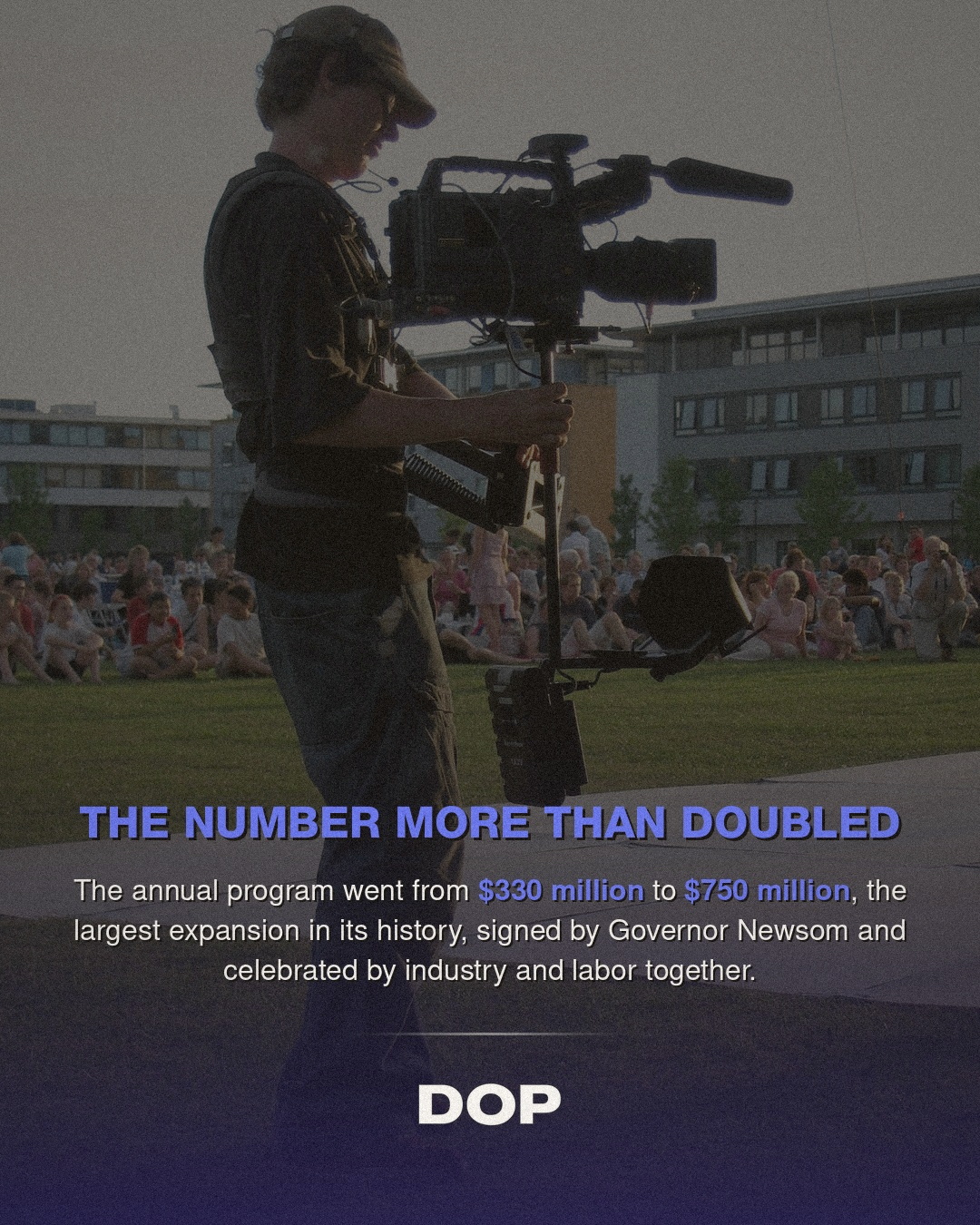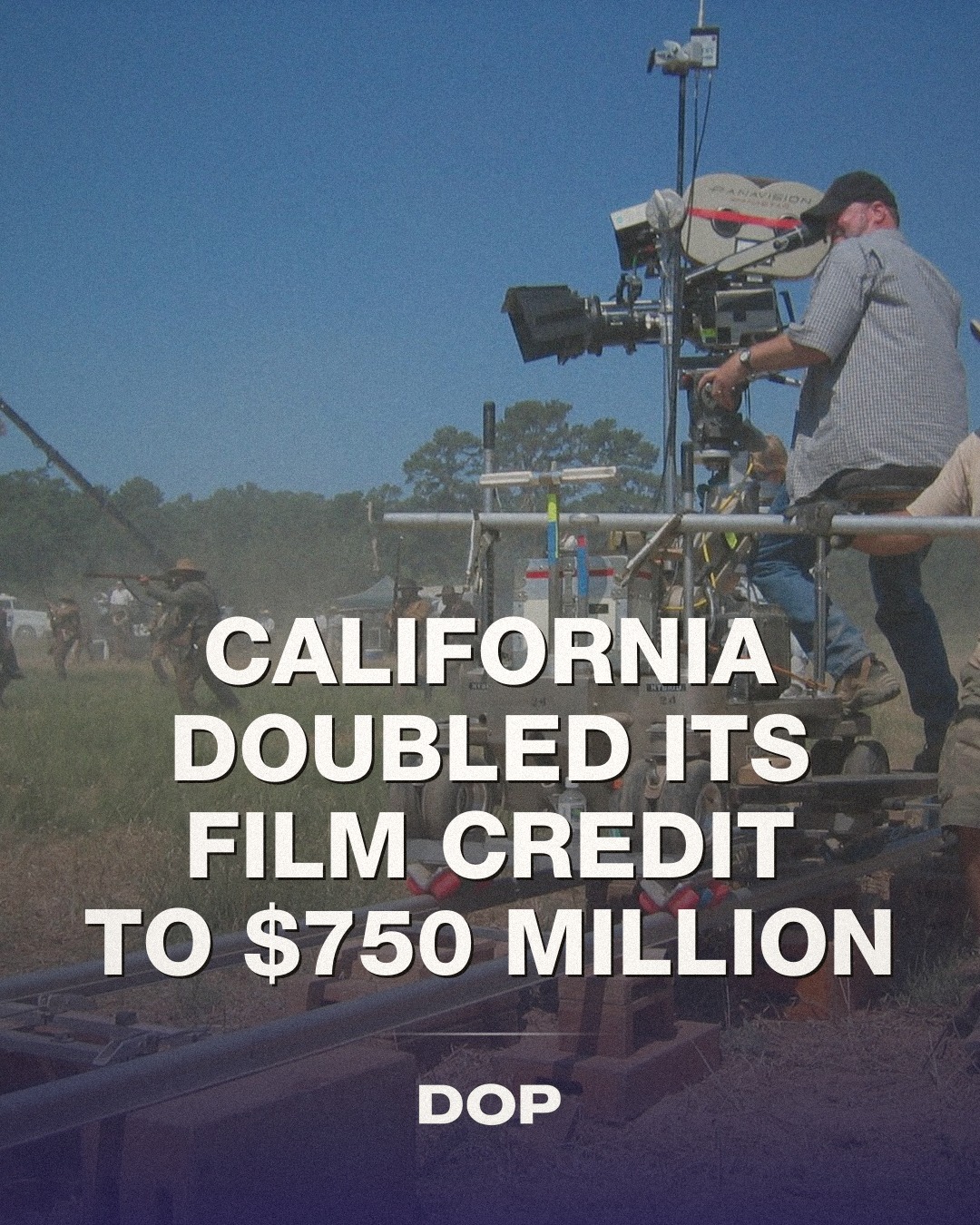
For all our romanticism about anamorphic flares, naturalistic negative fill, and the texture of photochemical grain, the most consequential variable in contemporary cinematography often comes down to an incentive line item. Production geography dictates the physical reality of the camera department. When productions scatter across the globe chasing rebates, crews are routinely separated from their trusted technical networks, bespoke rental houses, and long-standing collaborative rhythms. With California more than doubling its annual tax credit cap from $330 million to an unprecedented $750 million, the industry is witnessing a structural correction that reaches straight to the camera truck.
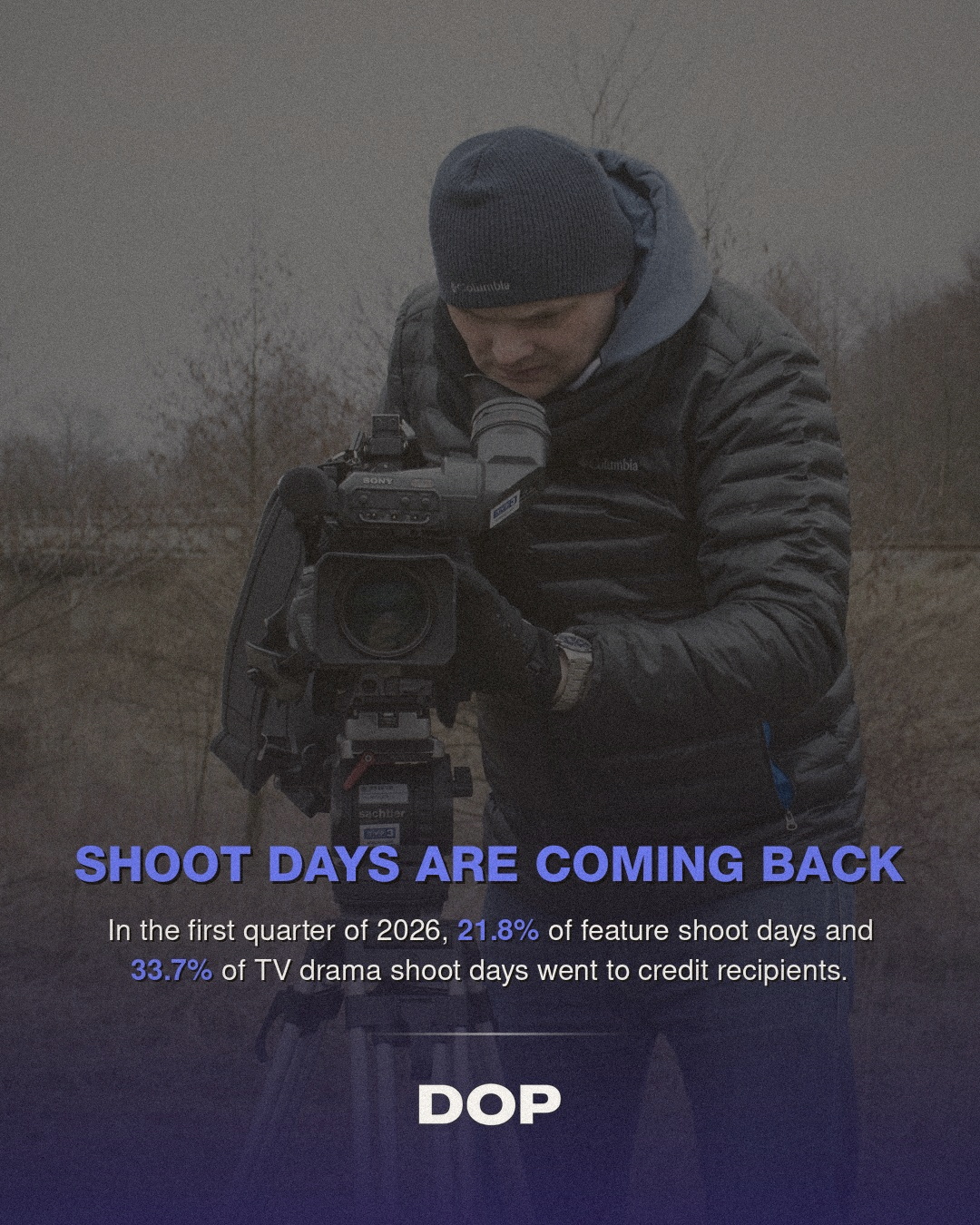
The immediate fallout has been staggering: the California Film Commission recorded a 400 percent surge in television series applications during the initial July 2025 filing window. By the opening quarter of 2026, the data showed concrete results. Over a fifth of feature shoot days and more than a third of scripted television drama days in the state belonged to credit recipients. Productions like Searchlight's Behemoth!, Amazon MGM's thriller Nightwatching, and the second season of CBS's Matlock represent more than statistical upticks, they signal the return of seasoned cinematographers to the soundstages where the language of classical Hollywood lighting was originally codified.
The Rental Ecosystem and Lens Pipeline
The practical implications for cinematographers working locally cannot be overstated. When a director of photography mounts a production out of Los Angeles, their technical pipeline looks fundamentally different than on a distant location shoot. The proximity to flagship rental hubs, from Panavision's Woodland Hills facility to Otto Nemenz and Keslow Camera, allows for an intimacy of prep that runaway productions rarely afford. Lens technicians can detune anamorphic elements in real time, swap optical coatings to tweak halation thresholds, and calibrate custom optical configurations across multiple camera bodies over days of rigorous bench testing.
Instead of relying on whatever spherical primes happen to be sitting in a regional depot in Eastern Europe or the UK, DPs shooting on Southern California lots have the full depth of Hollywood glass at their disposal. Custom sets of detuned ARRI DNA glass, vintage Cooke Panchros meticulously matched across seven focal lengths, and bespoke Panavision C and T-Series anamorphics are suddenly viable options for mid-budget television rather than perks reserved solely for tentpole features.
"When your prep happens ten minutes from the optical bench, the camera ceases to be an off-the-shelf rental unit and becomes a truly bespoke instrument tailored to the script."
Stage Infrastructure and the Mastery of Local 728
Beyond the sensor and the mount, the return of production to California directly impacts the quality of lighting design on set. The historic stage infrastructure at studios like Warner Bros., Radford, and Sony Pictures was engineered specifically for complex, high-output overhead rigging. Gaffers and rigging crews from IATSE Local 728 carry generational knowledge of these spaces, understanding the exact weight distributions, power grid capacities, and acoustic profiles of stages that have stood for nearly a century.
In an era dominated by high-efficiency LED arrays, where vast computational networks of ARRI SkyPanel X fixtures, Creamsource Vortex8s, and soft-source LiteMat Spectrums are patched through DMX profiles to simulate dynamic natural light, having an experienced, local technical crew makes the difference between clinical illumination and rich, dimensional storytelling. The speed at which a seasoned local crew can turn around a lighting setup for an episodic schedule like Matlock allows the DP to spend their time carving shadows, dialing in color temperature balance, and maintaining intentional contrast ratios rather than troubleshooting unfamiliar regional gear.
Sustaining the Visual Identity of American Cinema
Runaway production has spent two decades eroding the continuity of local film crews, forcing directors of photography to continually rebuild their working units from project to project. Cinematography is inherently a team sport; the micro-shorthand between a DP, their A-camera operator, and their key grip is forged over tens of thousands of hours on set. By anchoring productions like Behemoth! and Nightwatching in California, the industry protects those vital creative synergies.
A budget line may have caused the flight of American filmmaking, but this legislative expansion proves that visual craft responds swiftly to economic stability. When crews sleep in their own beds, prep in their home facilities, and shoot on stages built for light and shadow, the work on screen inevitably elevates. For the cinematographers who have fought to preserve the standard of the image amidst budget cuts and geographic compromises, California's resurgence is more than an economic victory, it is a renewal of the craft itself.
This article contains affiliate links. We may earn a small commission at no extra cost to you. Learn more.