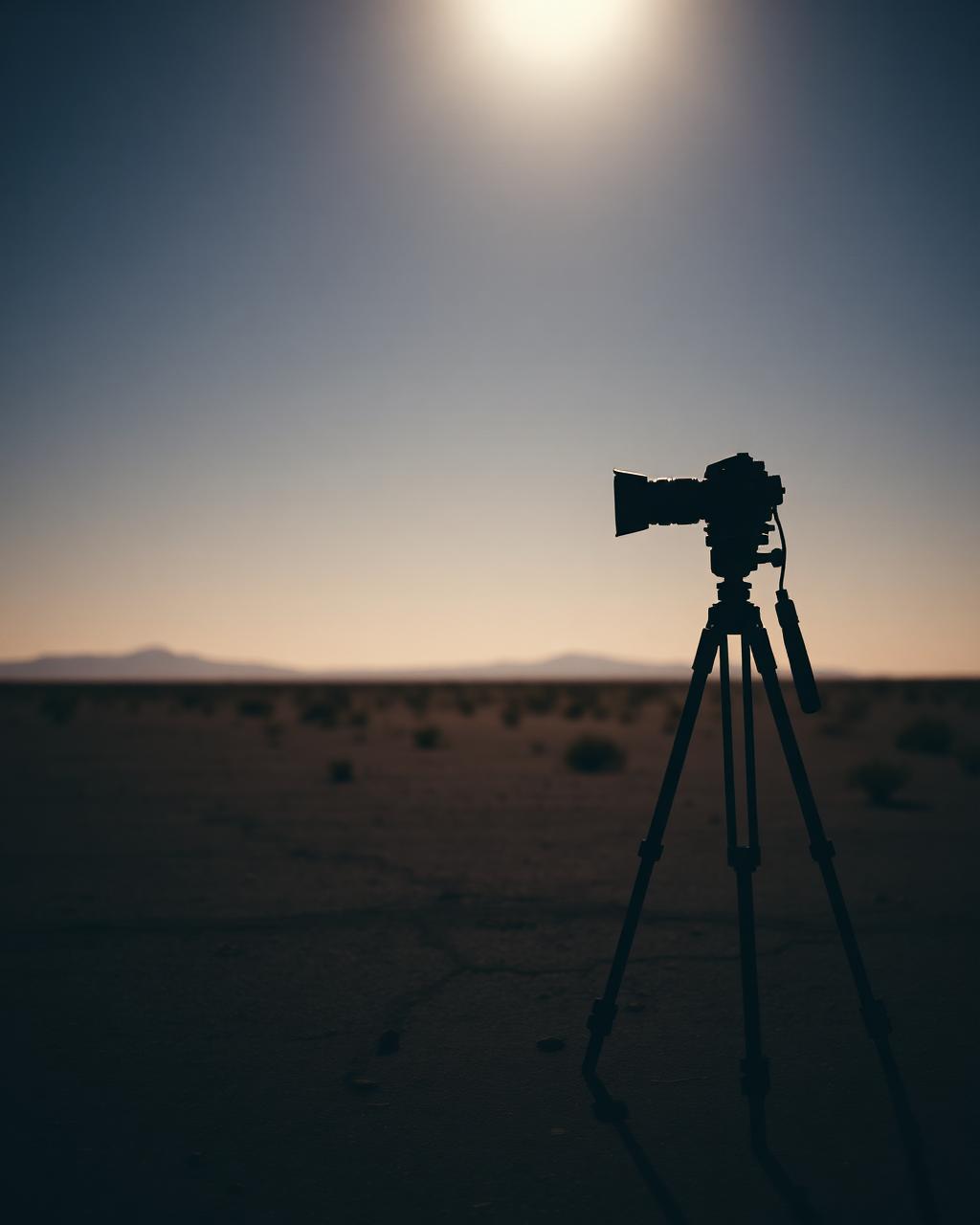
The sunset silhouettes in Wolfram—Warwick Thornton's Berlinale 2026 film shot in the Australian Northern Territory—are among the most visually striking images in contemporary cinema. Figures stand against the Australian sky in extreme widescreen. Lens flares bloom from the unshielded desert sun. The light is spectacular. But Thornton made these images hostile, not beautiful. This distinction is not semantic. It is the entire point of the cinematography.
Thornton was explicit about his intent in interviews with The Hollywood Reporter: he wanted "a brutalist film. A tough, rough cinematic visual style. None of this floaty stuff, but getting right in there, with lens flares in the hot sun and lots of flies." The lens flares are not romantic. They are not the soft golden light that makes deserts appealing to tourists. They are the glare of heat and hostility. The cinematography is designed to make the audience understand that this is somewhere "you do not want to be."
The critical reception reveals something instructive about how visual language operates. Slant Magazine described the film's cinematography as having "a flat, over-lit sheen and fondness for lens flares"—a reading that emphasizes visual excess and aesthetic compromise. FirstShowing.net, observing the same images, praised "spectacular sunset silhouette shots, all captured in glorious old school extreme widescreen framing." The same cinematography. Opposite interpretations. The disagreement is not about what Thornton filmed. It is about whether brutalism in cinematography is a valid artistic position or a failure of conventional elegance.
Thorn ton answered this by committing fully to the brutalist position. He did not soften the light. He did not add fill or bounce to reduce the contrast. He did not choose a moment of the day when the light was more romantic. He used the Northern Territory light at its most extreme: harsh, direct, visibly hot, filled with actual flies that no production could have excluded. The extreme widescreen—wider than the standard academy ratio—amplifies the effect. The landscape fills the frame. The characters are small in that landscape. The vastness is not poetic; it is crushing.
Lens flares in cinematography exist on a spectrum. They can be controlled, subtle, almost invisible additions to the image that add dimensionality. Or they can be aggressive, unshielded, allowed to bloom across the frame. Thornton chose aggressive. The flares are not compositional tools. They are evidence of the sun's power. The viewer is not supposed to admire the flares. The viewer is supposed to feel uncomfortable in their presence, the way a person actually feels standing in 42-degree heat in the Australian desert when the sun is bright enough to hurt.
For cinematographers working with available light in extreme environments, Thornton's approach demonstrates something important: commitment to a visual argument matters more than pursuit of conventional beauty. The cinematography does not apologize for its harshness. The over-lit sheen that Slant interprets negatively is exactly what Thornton intended. The lens flares are not mistakes or excess. They are the point. The flies are not unfortunate facts of location shooting. They are part of the image.
The extreme widescreen format reinforces the brutalist position. An extreme ratio forces the viewer to consider the frame's shape, to work harder to process the information, to feel less comfortable than they would in a standard ratio. The film's cinematography is ergonomic in reverse: it makes viewing slightly difficult. This discomfort is intentional. The cinematography argues that beauty and brutalism are not compatible, that a landscape can be visually striking without being beautiful, and that an audience can engage with images that repel as intensely as they attract.
Gear Recommendations
- Atlas Lens Co. Orion 2x Anamorphic | Adorama – B&H Photo
- Vazen 40mm 1.8x Anamorphic | Adorama – B&H Photo
- Aputure 600d Pro LED | Adorama – B&H Photo
- Nanlite Forza 300B | Adorama – B&H Photo
- Tiffen Black Pro-Mist 1/4 | Adorama – B&H Photo
Note: Links above are affiliate links. Occupy Cinematography may earn a commission on qualifying purchases at no additional cost to you.